





What Is Gardening and Why It Matters: How Small Gardens Heal the Planet
There is the smell of damp earth after rain, the tiny green of a seed cotyledon unfurling toward light, and the quiet, repetitive rhythm of hands that prune and plant. What is gardening? At its simplest: the practice of growing and cultivating plants. But that answer is only the opening gate. Gardening is also an art, a science, a form of play and work, a ritual of care and an act of stewardship. It lives in window sills and allotments, on rooftops and in community plots. This guide will define gardening, outline the major types, explain why people garden (for body, mind, and planet), and give a practical roadmap for beginners and returning gardeners who want to garden smarter and more sustainably.
More Than Just Dirt: A Simple Definition what is gardening?
Gardening is the practice of growing and cultivating plants for food, beauty, habitat, or therapeutic benefit. It is an interaction between humans and nature that involves observation, planning, physical labor, and patience. The gardener is part planner, part scientist (horticulture), part artist (landscape design), and part caregiver. Whether you’re tending one pot of herbs or designing a layered perennial border, you are engaging in a process that improves soil health, supports pollinators, and creates living systems that can feed, calm, and connect.
The Many Faces of Gardening (Types and Styles)
Gardening wears many clothes. Each style has its own tools, language, and rewards.
Ornamental Gardening
This is gardening for beauty and atmosphere: flower beds, sculpted shrubs, borders, and hardscape that frame views. Ornamental gardening often blends design principles — balance, contrast, repetition — with plant knowledge: perennial vs. annual, bloom times, and texture. It’s where landscape design meets seasonal poetry.
Food Gardening (Victory Gardens)
Vegetable patches, herb beds, fruit trees, and edible-perennial borders live here. Food gardening is practical and joyful: the immediate feedback of harvests, the nutrition of home-grown produce, and the resilience of local food systems. Recent decades have seen renewed interest in “grow your own” movements — from microgreens in apartments to neighborhood orchards driven by food security, taste, and health.
Indoor Gardening
Houseplants, terrariums, container herbs on a sunny sill, and high-tech systems like hydroponics and aeroponics. Indoor gardening brings greenery into living spaces, cleans the air in a limited way, and lets those without yards experience growth cycles year-round.
Community and Urban Gardening
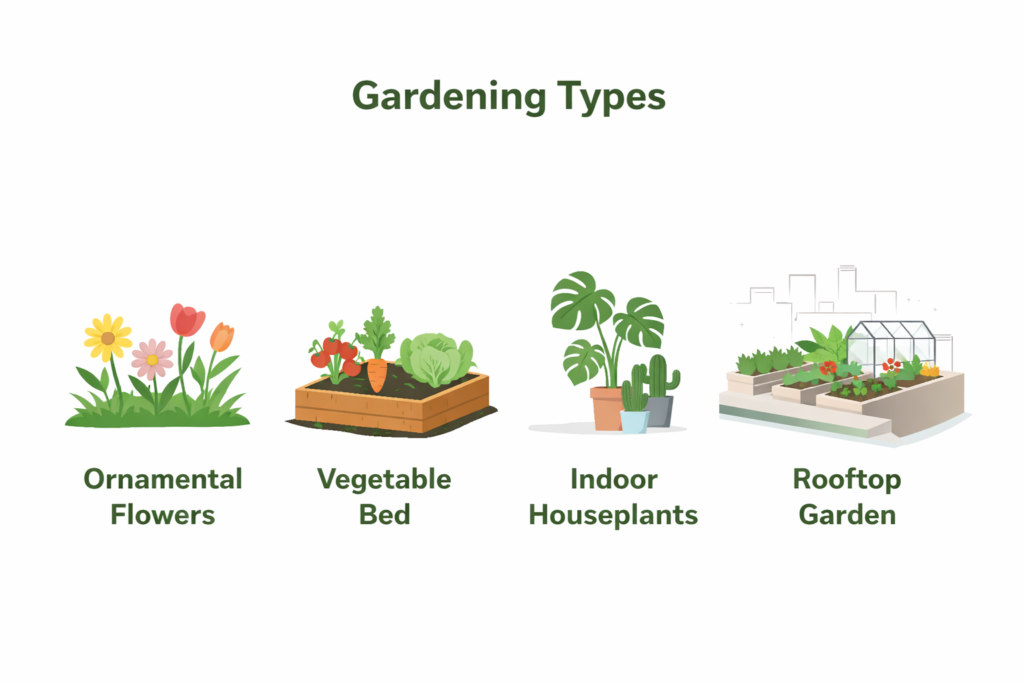
Shared plots, rooftop gardens, balcony planters, and community orchards convert wasted or hard surfaces into green pockets. These spaces build social capital, improve urban biodiversity, and make fresh produce accessible in neighborhoods that might otherwise be food deserts.
Why Do We Garden? (The Physical and Mental Benefits)
A Physical Workout
Gardening is honest physical activity: digging engages the legs and core; hauling soil or compost is resistance work; pruning and planting use fine motor skills. For many people, gardening provides low-impact cardiovascular exercise and helps with flexibility and strength.
Mental Wellness and Therapy
There’s a growing body of evidence supporting horticultural therapy. Time in the garden lowers cortisol (a stress hormone), increases feelings of well-being, and supports mindfulness. The repetitive actions of planting, weeding, or watering have meditative qualities — grounding the nervous system and giving the mind a constructive focus.
The Nutritional Payoff
Growing your own tomatoes, beans, or herbs delivers fresher produce and a tangible link between work and reward. The taste difference is real; the nutritional value is often higher when picked at maturity. And eating something you grew reduces food miles and reconnects you with seasonal rhythms.
Gardening for the Planet (The Ecological Impact)
Modern gardening can be a positive ecological force. Thoughtful practices help local ecosystems rather than harm them.
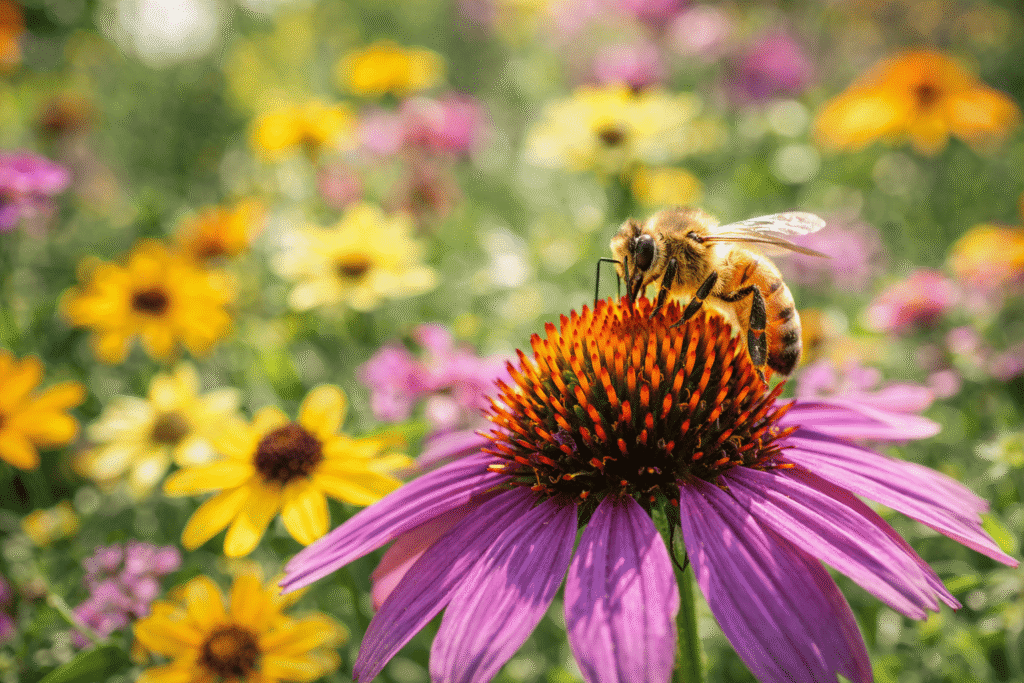
- Pollinator-friendly planting supports bees, butterflies, and other insects critical to food crops. Plant diverse flowering species and avoid blanket pesticide use.
- Composting returns carbon and nutrients to the soil, fostering soil health and microbial diversity.
- Rain gardens and permeable surfaces manage storm water, reduce runoff, and recharge groundwater.
- Avoiding neonicotinoids and broad-spectrum pesticides protects non-target species and preserves ecological balance.
Gardening done with ecological awareness becomes small-scale ecosystem restoration: you are not only cultivating plants but creating habitat, recycling organic matter, and contributing to local resilience.
Gardening for Beginners: How to Start Your First Garden
Start here. Please, don’t dig up the whole yard and despair. Keep it simple.
Step 1: Observe Your Space
- Watch sunlight through the day. Note which spots are full sun (6+ hours), partial sun, or shade.
- Check drainage and soil texture. Is the soil heavy clay, sandy, loamy, or mostly compacted?
- Know your climate zone and typical frost dates — this will guide plant choices.
Step 2: Start Small
- Begin with a single container, a raised bed, or a small 3×3 or 4×4 plot.
- Small is easier to manage and forgiving of mistakes.
Step 3: Choose Easy Wins
Foolproof starter plants:
- Vegetables: lettuce, radishes, spinach, green beans.
- Herbs: basil, mint (be careful: aggressive), chives, parsley.
- Flowers: marigolds, pansies, nasturtiums.
Microgreens provide rapid payback and abundant nutrients in a tiny footprint, perfect for interiors.
Step 4: Embrace the Learning Curve
- Expect losses. Pests, weather, and fungal issues are teachers. Learn from them, adjust, and try again.
- Keep a simple journal: what you planted, when, and what happened. Over seasons this becomes priceless feedback.
Practical starter supplies: a sharp trowel, a rake, pruning shears, a watering can or hose with adjustable nozzle, quality compost, and seeds or seedlings from reputable sources.
Practical Fundamentals (Soil, Water, Propagation)
- Soil health matters most. Good soil holds water, drains well, and teems with life. Build it with compost, mulches, and minimal tilling.
- Water deeply and infrequently to encourage deep roots; avoid shallow, daily sprinkles unless plants are very young.
- Propagation (seed sowing, cuttings, division) is one of gardening’s best skills. It saves money and deepens your plant understanding.
Pests, Diseases, and Troubleshooting (Short Guide)
- Identify, don’t guess. A correct ID prevents wasted remedies.
- Use cultural controls first: rotate crops, remove diseased material, improve airflow.
- Encourage beneficial insects: ladybugs, lacewings, and predatory beetles.
- Chemical pesticides are a last resort; even then, choose targeted, least-toxic options.
Sustainable Gardening Practices
- Compost kitchen and yard waste. It closes nutrient loops.
- Practice crop rotation and polyculture (mixing species) to reduce pest pressure.
- Choose native plants to support local fauna and reduce water needs.
- Collect rainwater if possible and use mulches to retain moisture.
Design and Aesthetics (Making Space Feel Like Home)
Gardening is also composition: balance tall and low plants, mix textures and leaf shapes, and repeat colors or forms to create rhythm. Think about seasonal interest bulbs in spring, summer blooms, autumn foliage — so the garden gives rewards year-round.
Reclaiming Gardening After a Break
If you’ve gardened before but drifted away, start with reconnaissance:
- Assess what still survives. Cut back and observe.
- Bring back one reliable crop or plant you love. Success builds momentum.
- Relearn basics: soil, water, timing. New tools and sustainable approaches (composting, pollinator gardens) can make gardening feel fresh.
The Philosophy: Gardening as Optimism
To garden is to assume a future. You plant for tomorrow’s food, next season’s bloom, the bees that won’t survive without flowers next year. It’s a practice of patience and hope — a small but persistent belief that care matters.
Final Words
Gardening is never only one thing. It is part craft, part biology, part therapy, and part civic service. Whether you are planting your first seed or returning to an old patch of earth, the act is humble and radical: you decide to tend, and in doing so, you transform soil into shelter, food into communion, and small patches of land into living hope.
Frequently Asked Questions
Is gardening expensive to start?
No. You can start cheaply with seeds, recycled containers, and improvised tools. A modest initial investment in good compost and a few tools helps, but the hobby scales to any budget.
Do I need a yard to be a gardener?
Not at all. Gardening lives on windowsills, balconies, and compact raised beds. Indoor gardening and container gardening make plant cultivation possible in apartments and small spaces.
What is the easiest vegetable to grow for a beginner?
Lettuce and radishes are excellent first crops: fast, forgiving, and productive. Herbs like basil and chives are also low-maintenance wins.
How much time does gardening take per week?
How much time does gardening take per week?
It varies. A small container garden might need 15–30 minutes several times a week; a larger plot can require several hours on weekend days. Time commitment scales with ambition.
