
How to Do Teeth Cleaning at Home Safely
Have you ever brushed your teeth, but they still didn’t feel clean? Maybe your teeth felt rough near the gums, or your breath didn’t stay fresh for long. Many people…
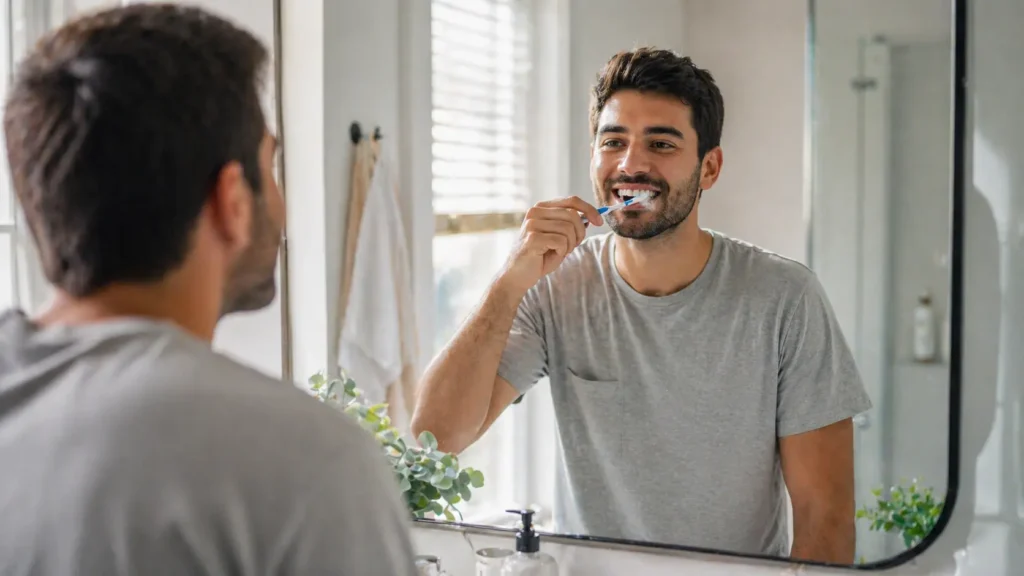
Have you ever brushed your teeth, but they still didn’t feel clean? Maybe your teeth felt rough near the gums, or your breath didn’t stay fresh for long. Many people search for how to do teeth cleaning at home because they feel worried, embarrassed, or want to avoid expensive dental visits. It’s a common problem. You try different methods, maybe even some DIY tricks, but you’re not sure what actually works and what could damage your teeth.
From expert dental guidance, one thing is very clear: you can safely remove plaque at home, but you should not try to remove tartar yourself. Daily brushing, flossing, and the right tools can keep your teeth clean and healthy. The American Dental Association recommends brushing twice daily with fluoride toothpaste and cleaning between teeth every day. But if buildup becomes hard, it needs professional care.
Key Takeaways: Teeth Cleaning at Home
- You can remove plaque at home, but not tartar.
- Brush twice daily for 2 minutes with fluoride toothpaste.
- Clean between your teeth once daily.
- Do not scrape teeth or use sharp tools at home.
- Avoid harsh DIY methods like lemon, vinegar, or charcoal powder.
- See a dentist if your teeth feel rough, painful, or your gums bleed.
In this guide, you’ll learn the safest and most effective way to clean your teeth at home, without risking damage
Quick Answer: Can You Clean Your Teeth at Home?
Yes, you can clean your teeth at home.
You can:
- Remove plaque
- Freshen breath
- Clean between teeth
- Keep gums healthy
But you cannot:
- Remove hard tartar
- Replace a dentist cleaning
Tartar must be removed by a dentist or dental hygienist.
Why At-Home Teeth Cleaning Matters
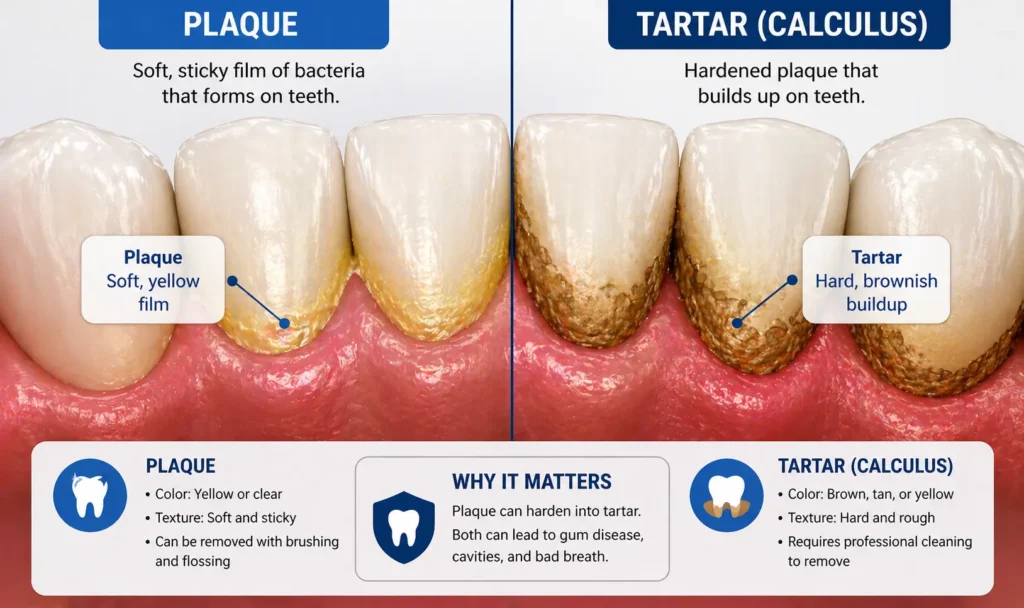
Plaque forms on your teeth every day. It is a soft, sticky layer of bacteria.
If you do not remove it, it turns into tartar.
Good home care helps:
- Prevent cavities
- Reduce bad breath
- Protect your gums
- Slow tartar buildup
Daily habits make the biggest difference.
Plaque vs Tartar: Know the Difference
| Feature | Plaque | Tartar |
|---|---|---|
| Texture | Soft | Hard |
| Color | Clear/yellow | Yellow/brown |
| Remove at home? | Yes | No |
| Risk | Cavities | Gum disease |
If your teeth feel rough, it may be tartar.
How to Do Teeth Cleaning at Home: Daily Routine
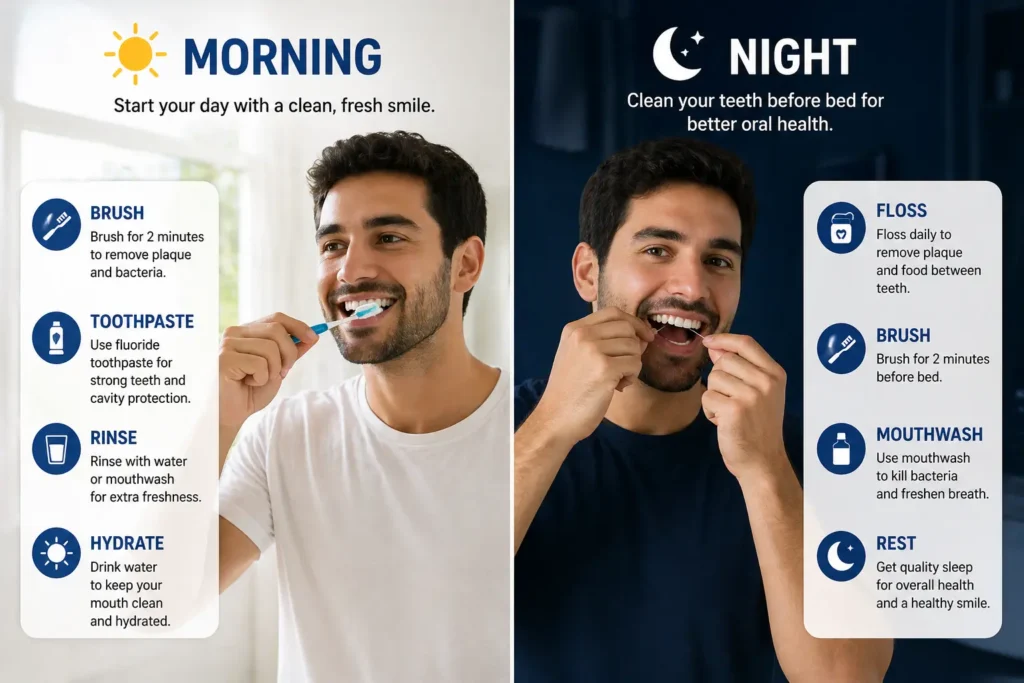
Morning Routine
- Brush for 2 minutes
- Use fluoride toothpaste
- Brush tongue
- Drink water after meals
Daily Teeth Cleaning Checklist
Brush in the morning
Brush before bed
Clean between teeth once daily
Clean your tongue
Drink water after meals
Avoid snacks after night brushing
Replace toothbrush every 3–4 months
Night Routine
- Clean between teeth first
- Brush for 2 minutes
- Clean tongue
- Use mouthwash if needed
- Avoid late-night snacks
Step-by-Step Teeth Cleaning at Home
Step 1: Brush Your Teeth
- Brush twice daily
- Use a soft brush
- Angle toward gums
- Use gentle strokes
2-Minute Brushing Guide
| Time | Area to Brush |
|---|---|
| 0–30 seconds | Upper right teeth |
| 30–60 seconds | Upper left teeth |
| 60–90 seconds | Lower right teeth |
| 90–120 seconds | Lower left teeth |
Brush all surfaces:
- Front
- Back
- Chewing
- Gumline
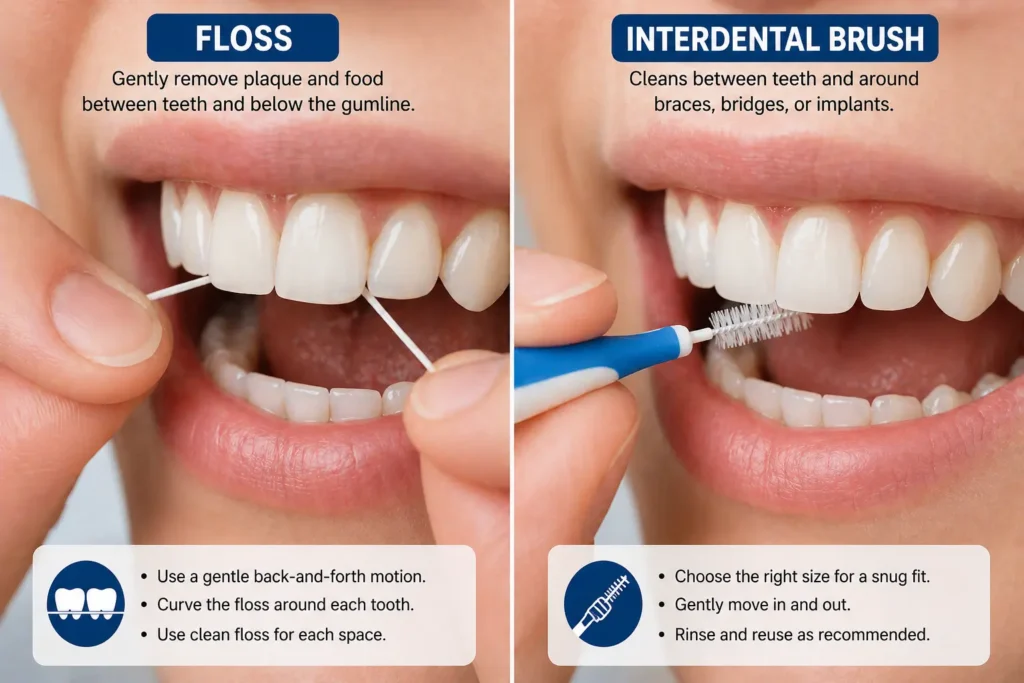
Step 2: Clean Between Your Teeth
Your toothbrush cannot reach tight spaces.
Use:
- Floss
- Interdental brush
- Water flosser
Do this once daily.
Step 3: Use the Right Mouthwash
Mouthwash can help, but it is not enough alone.
It can:
- Freshen breath
- Reduce bacteria
But it does not replace brushing or flossing.
Essential Tools for Teeth Cleaning at Home
- Soft toothbrush
- Fluoride toothpaste
- Floss or interdental cleaner
- Mouthwash (optional)
- Tongue scraper
- Water flosser (optional)
Must-Have vs Optional Teeth Cleaning Tools
Must-Have
- Soft toothbrush
- Fluoride toothpaste
- Floss or interdental cleaner
Helpful Extras
- Electric toothbrush
- Water flosser
- Mouthwash
- Tongue scraper
Avoid
- Metal dental scalers
- Sharp tools
- DIY scraping kits
Electric vs Manual Toothbrush
Both work well.
Electric is helpful if:
- You rush brushing
- You miss spots
- You want a timer
Technique matters more than the tool.
Floss vs Water Flosser
- Floss removes plaque directly
- Water flosser helps in hard areas
Best option: use what you can do daily.
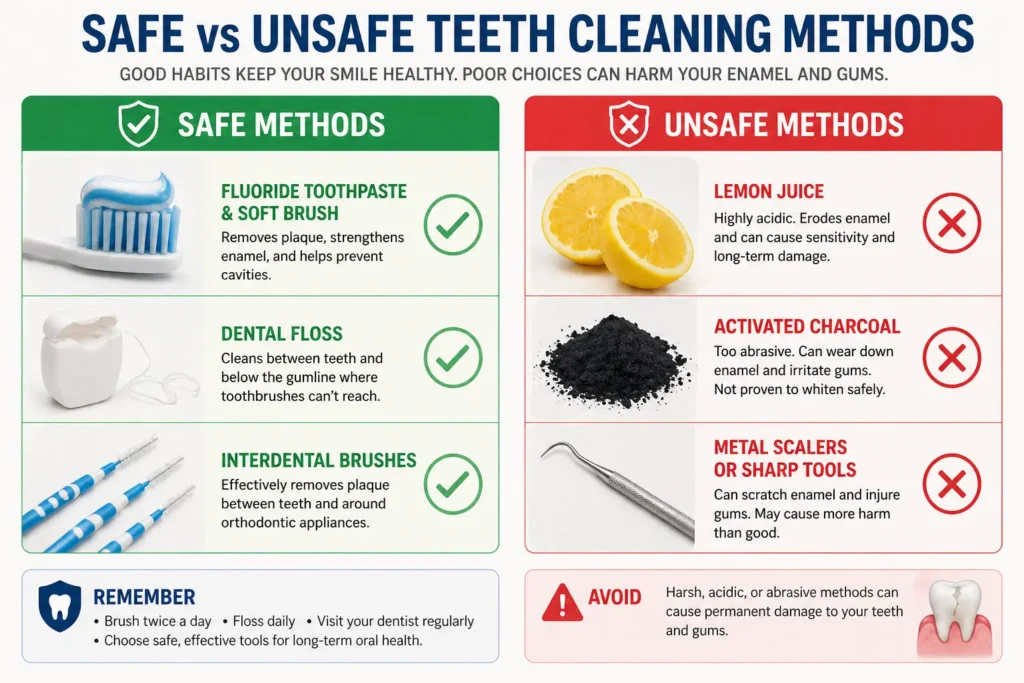
Safe and Unsafe Teeth Cleaning Methods
| Method | Safe? | Important Note |
|---|---|---|
| Fluoride toothpaste | Yes | Best for daily plaque control and cavity prevention. |
| Floss | Yes | Use gently once daily. |
| Water flosser | Yes | Helpful for braces and hard-to-reach areas. |
| Mouthwash | Yes | Helpful extra, but not a replacement. |
| Lemon or vinegar | No | Acid can damage enamel. |
| Dental scaler | No | Can hurt gums and scratch enamel. |
How to Remove Plaque at Home
To remove plaque:
- Brush twice daily
- Clean between teeth
- Drink water
- Reduce sugar
- Visit dentist regularly
Plaque can be removed. Tartar cannot.
Baking Soda for Teeth
Use baking soda toothpaste if needed.
Do NOT scrub with raw powder.
It can damage enamel if used wrong.
Oil Pulling
Oil pulling is not proven.
It cannot:
- Remove plaque
- Remove tartar
It should not replace brushing or flossing.
Teeth Cleaning Myths vs Facts
| Myth | Fact |
|---|---|
| Lemon removes tartar. | Lemon is acidic and can damage enamel. |
| Hard brushing cleans better. | Hard brushing can hurt gums and enamel. |
| Mouthwash replaces floss. | Mouthwash does not clean between teeth like floss. |
| You can scrape tartar safely at home. | Tartar should be removed by a dental professional. |
| Oil pulling replaces brushing. | Oil pulling is not a replacement for brushing or flossing. |
Special Situations
Braces
Use:
- Interdental brushes
- Water flosser
Retainers / Aligners
Clean before wearing.
Crowns / Implants
Clean near gumline daily.
Sensitive Teeth
Use soft brush and gentle pressure.
Bleeding Gums
May be early gum disease. See a dentist if it continues.
What Happens If You Don’t Clean Teeth
You may get:
- Bad breath
- Cavities
- Gum disease
- Tartar buildup
- Tooth loss (severe cases)
Signs Your Teeth Cleaning Routine Is Not Working
Can You Scrape Tartar at Home?
No.
This can:
- Damage gums
- Scratch enamel
- Cause infection
Always see a dentist.
Best Toothpaste for Home Cleaning
Choose based on your needs:
- Cavities → Fluoride toothpaste
- Sensitivity → Sensitive toothpaste
- Gums → Gum-care toothpaste
- Stains → Whitening toothpaste
What NOT to Do
Avoid:
- Scraping teeth
- Lemon juice
- Vinegar
- Hard brushing
- Charcoal powders
- Skipping floss
Good vs Bad Teeth Cleaning Habits
| Bad Habit | Better Habit |
|---|---|
| Brushing too fast | Brush for the full 2 minutes |
| Skipping floss | Clean between teeth daily |
| Scraping teeth | See a dentist for tartar removal |
| Using lemon or vinegar | Use fluoride toothpaste |
| Ignoring bleeding gums | See a dentist early |
When to See a Dentist
Visit a dentist if you have:
- Bleeding gums
- Pain
- Loose teeth
- Bad breath
- Hard buildup
- Swollen gums
See a Dentist If:
- Your teeth feel rough after cleaning.
- Your gums bleed often.
- You have tooth pain.
- Your breath stays bad.
- You see hard yellow, brown, or black buildup.
How Often Should You Get Dental Cleaning?
Most people need cleaning every 6 months.
Some may need more often.
Low-Cost Dental Options (USA)
If cost is a problem, try:
- Dental schools
- Community clinics
- Medicaid / CHIP
- Health centers
Do not risk your teeth with DIY scraping.
FAQs
Can I remove tartar at home?
No. Only a dentist can remove tartar.
Can I remove plaque at home?
Yes, with brushing and flossing.
Is mouthwash enough?
No. It does not replace brushing.
Can I use a dental scaler?
No. It is unsafe at home.
Why do teeth feel rough?
It may be tartar. See a dentist.
Golden Rule of Teeth Cleaning
Clean plaque daily at home. Let dentists remove tartar safely.

Final Thoughts
If your teeth don’t feel clean even after brushing, you’re not alone—many people face this and try to fix it at home. The key is to focus on what actually works: remove plaque daily with brushing, cleaning between your teeth, and simple habits you can follow every day. Avoid risky methods like scraping or harsh DIY remedies, because they can damage your gums and enamel. From a dental safety perspective, the goal is not to replace professional care, but to prevent problems before they start. If buildup feels hard or your gums keep bleeding, it’s a sign to see a dentist. A simple, consistent routine at home, combined with timely professional care, is the safest way to keep your teeth clean and healthy long-term.

Muhammad Muaz
Muhammad Muaz shares practical cleaning, home care, improvement and everyday living guides for Urban Home Guide readers.
Related Home Guides