
How to Start a Home Cleaning Business (Complete Step-by-Step Guide)
If you’re wondering how to start a home cleaning business, here’s the truth: you don’t need a degree, a fancy office, or investors. What you really need is a clear…
If you’re wondering how to start a home cleaning business, here’s the truth: you don’t need a degree, a fancy office, or investors. What you really need is a clear plan, basic equipment, a proper legal structure, and the discipline to stay consistent.
Cleaning is one of the lowest barrier-to-entry service businesses, and demand remains strong due to busy lifestyles, dual-income households, aging homeowners, and constant property turnover. Many people underestimate how quickly this business can grow. I’ve seen individuals start with basic supplies and secure recurring clients within their first month—the difference is not luck, but structure, pricing, and consistency.
With the right foundation, many small cleaning businesses scale into six-figure operations within just a few years. This guide covers the legal, financial, operational, and marketing steps you need to start professionally—no shortcuts..
Key Takeaways
- You can start a home cleaning business with a relatively low budget.
- Recurring residential cleaning is often the most stable niche for beginners.
- Pricing, structure, and consistency matter more than fancy tools.
- Insurance and legal setup help protect and legitimize your business.
- Referrals, reviews, and local visibility are key to early growth.
How to Start a Home Cleaning Business
To start a home cleaning business:
- Choose your niche (residential, deep cleaning, etc.)
- Research local competitors and pricing
- Register your business legally (LLC recommended)
- Get insurance and necessary permits
- Buy essential cleaning equipment
- Set your pricing model (hourly or flat rate)
- Market your services and get your first clients
Phase 1: Planning & Niche Selection
Before buying supplies, define your direction.
Choose Your Cleaning Business Niche
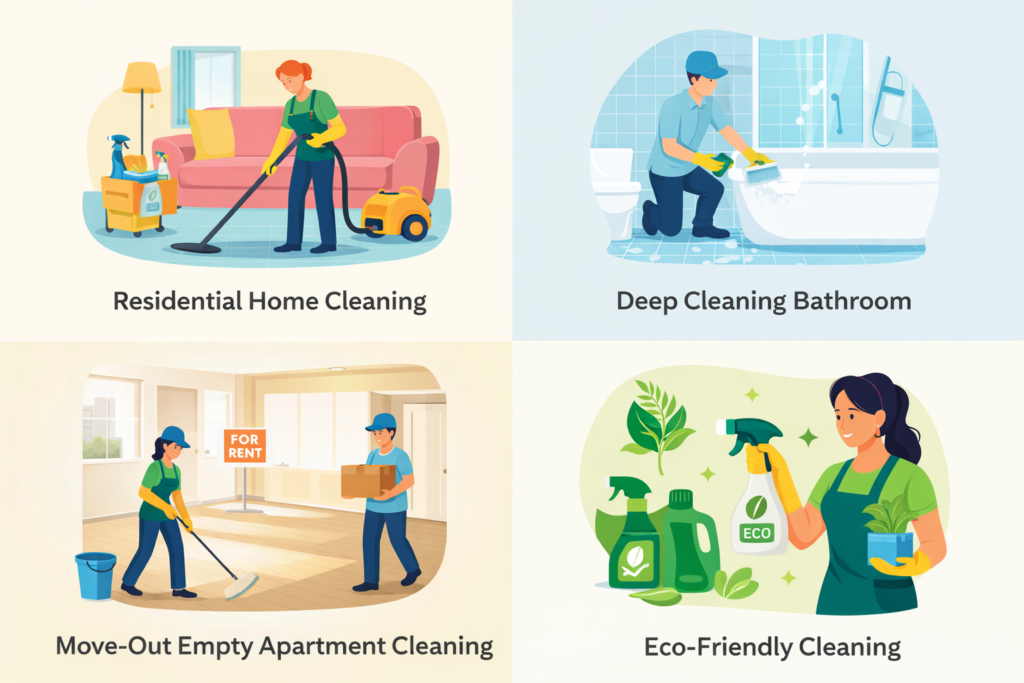
Not all cleaning businesses are the same:
1. Residential Cleaning (Recurring)
- Weekly or bi-weekly services
- Stable recurring revenue
- Predictable schedules
2. Deep Cleaning
- One-time intensive cleaning
- Higher pricing
- Ideal for first-time clients
3. Move-In / Move-Out Cleaning
- Real estate-driven demand
- Property managers as key clients
- Fast-paced deadlines
4. Eco-Friendly Cleaning
- Non-toxic products
- Appeals to families, pets, allergies
- Premium pricing potential
SEO Tip (Keyword Use): This section reinforces “home cleaning business” relevance naturally.
Best starting point: Recurring residential cleaning for stable income.
Market Research (Critical Step)
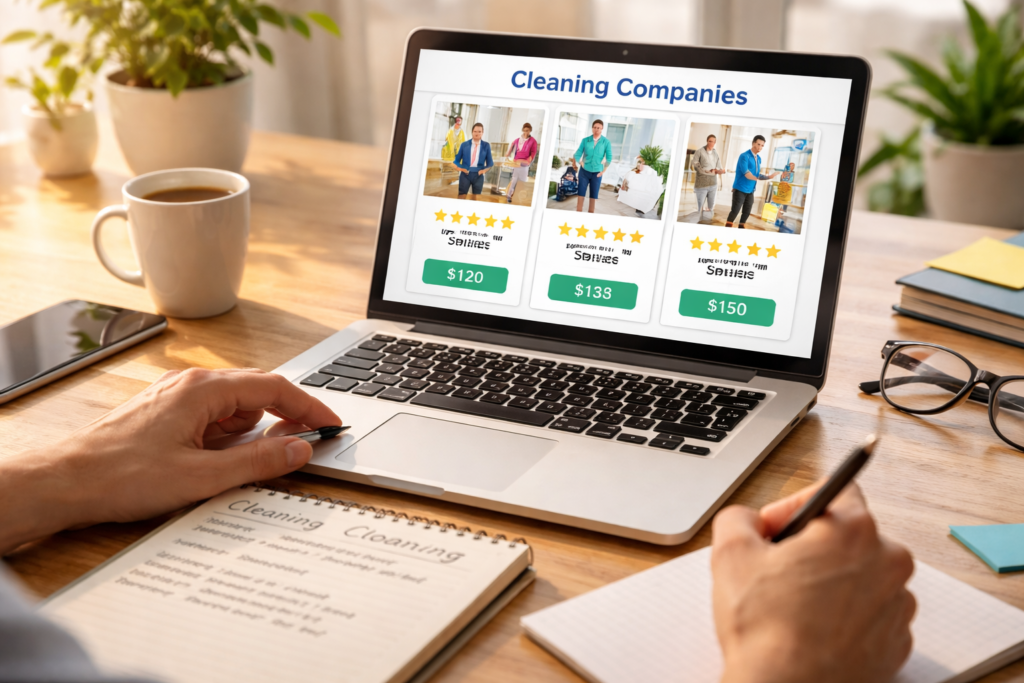
Do not guess pricing research it.
- Search local cleaning companies
- Call as a potential customer
- Analyze:
- Pricing models
- Service packages
- Reviews
- Professionalism
This prevents underpricing, one of the biggest beginner mistakes.
Phase 2: Legal Requirements
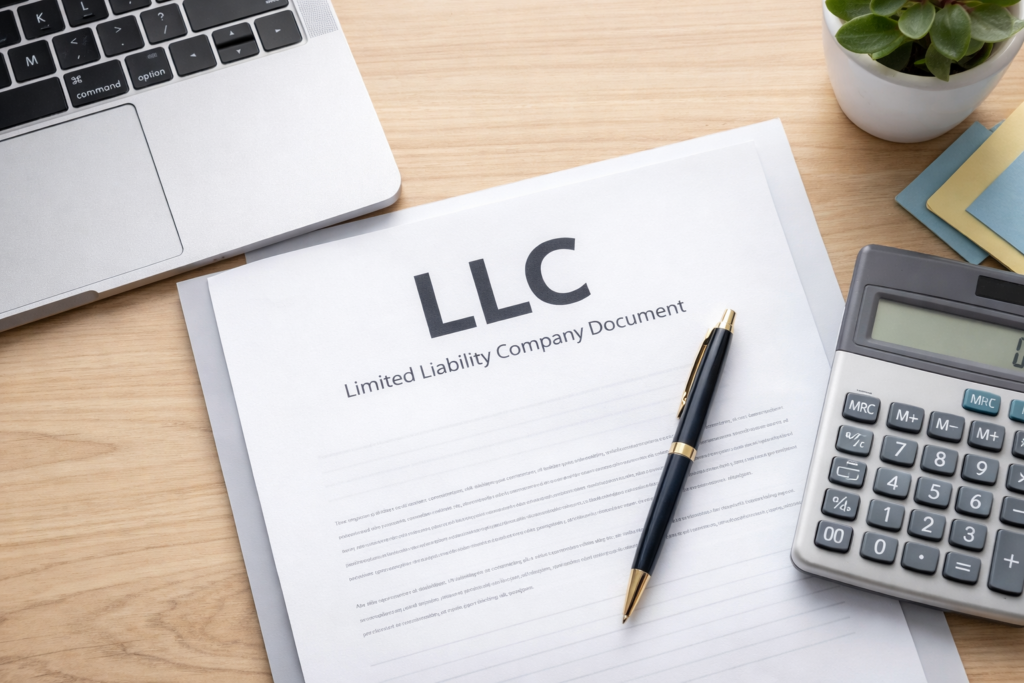
Choose a Business Structure
Sole Proprietorship
- Easy to start
- No legal separation
- Personal liability risk
LLC (Limited Liability Company)
- Protects personal assets
- Builds credibility
- Recommended for growth
✔ Fact Check: LLCs are widely recommended for small service businesses due to liability protection.
Insurance & Bonding (Essential)
Never enter a client’s home uninsured.
You need:
- General Liability Insurance (covers damage)
- Bonding (protects against theft concerns)
- Workers’ Compensation (if hiring employees)
✔ Fact Check: Many clients and agencies require proof of insurance.
Licensing & Permits
Requirements vary by location.
Check:
- Local business registration office
- Tax authorities
- Municipal permits
✔ Fact Check: In many regions, a general business license is required even for home services.
Phase 3: Equipment & Supplies
Start lean no need for expensive tools initially.
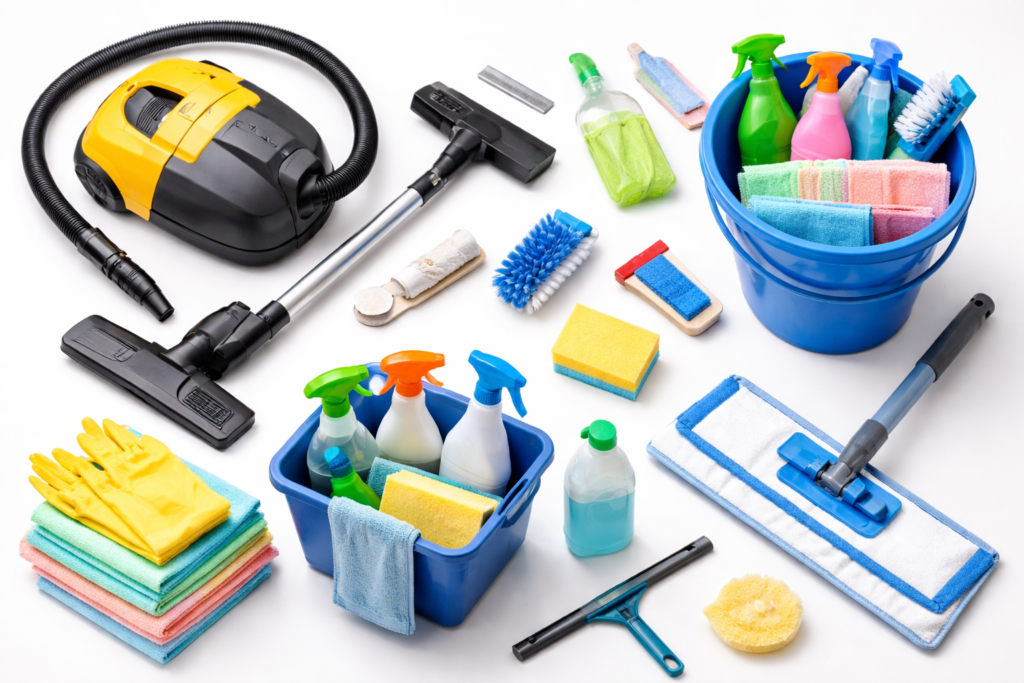
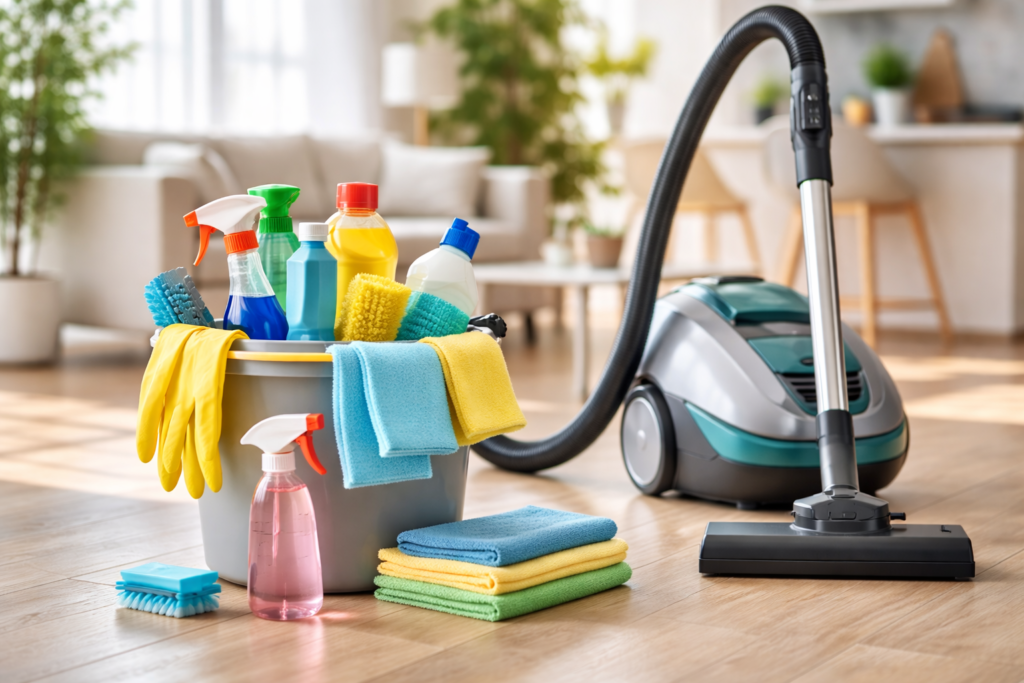
Basic Cleaning Equipment List
Equipment:
- Vacuum cleaner
- Mop & bucket
- Microfiber cloths
- Duster
- Scrub brushes
- Spray bottles
Supplies:
- All-purpose cleaner
- Glass cleaner
- Bathroom disinfectant
- Floor cleaner
- Gloves
- Trash bags
✔ Fact Check: These are standard starter supplies used across the cleaning industry.
When to Upgrade
Once revenue grows:
- Commercial vacuum
- Steam cleaner
- Eco-friendly products
- Branded uniforms
- Vehicle signage
Upgrade only when financially justified.
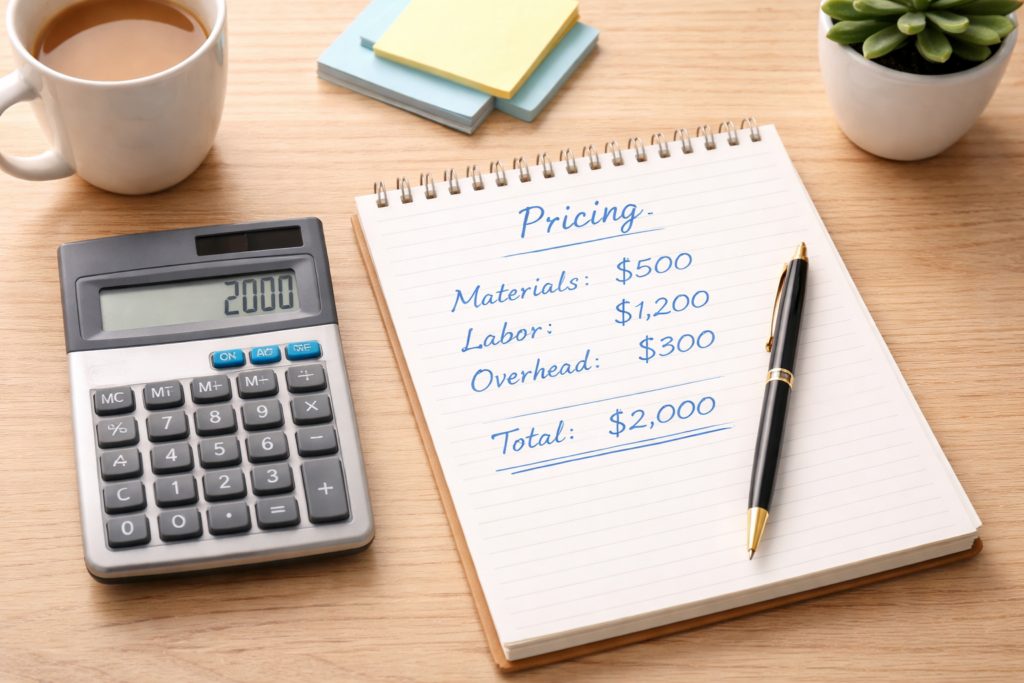
Phase 4: Pricing Your Cleaning Services
Pricing Models
Hourly Pricing
- Simple to start
- Transparent
- Less predictable profits
Flat-Rate Pricing
- Based on property size/condition
- More professional
- Higher efficiency
✔ Industry Insight: Most established cleaning businesses prefer flat-rate pricing.
Pricing Formula
Use this:
(Labor + Supplies + Overhead + Profit) = Final Price
Example:
- Labor: $60
- Supplies: $5
- Overhead: $15
- Profit: $30
Total = $110
Never price based on emotion—always use data.
Define Scope of Work
Always clarify:
- Included services
- Exclusions
- Add-ons (oven, fridge, windows)
✔ Best Practice: Written estimates prevent disputes.
Phase 5: Getting Your First Clients
Digital Marketing (Low-Cost)
- Create a Google Business Profile
- Set up a Facebook page
- Share before/after photos
- Ask for reviews
✔ Fact Check: Google Business Profile is one of the top local SEO tools.
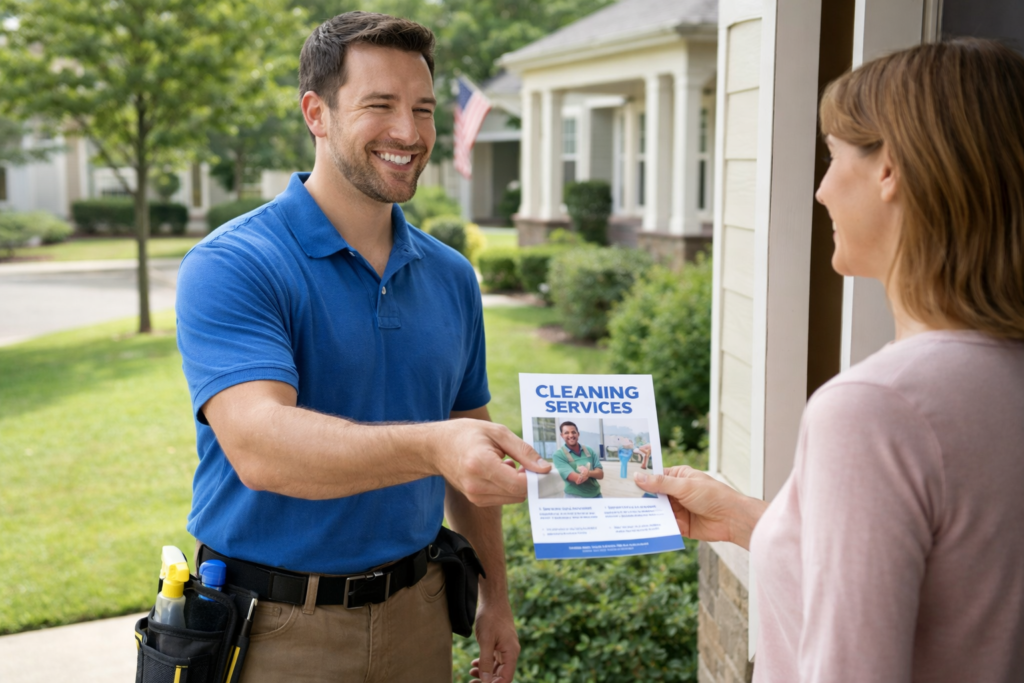
Offline Marketing
- Flyers in target neighborhoods
- Door hangers
- Real estate partnerships
- Community boards
Focus on homeowners, not apartments initially.
Referrals (High ROI Strategy)
Ask satisfied clients:
“If you’re happy with my service, I’d appreciate a review or referral.”
✔ Fact Check: Referral marketing is one of the highest-converting channels in service businesses.
Pro Tips for Faster Growth
- Focus on recurring clients instead of chasing only one-time jobs.
- Ask for reviews immediately after a successful cleaning.
- Use checklists to deliver consistent quality every time.
- Respond quickly to inquiries to increase booking chances.
- Operate professionally from day one, even if you start small.
Phase 6: Systems for Scaling
To grow beyond a solo operation:
Simple Growth Framework
- Scheduling software (Jobber, Housecall Pro)
- Digital invoicing
- Service agreements
- Cancellation policies
✔ Fact Check: Operational systems significantly improve scalability and client retention.
Common Mistakes When Starting a Home Cleaning Business
Starting a home cleaning business is simple, but many beginners fail due to avoidable mistakes. Understanding these early can save you time, money, and frustration.
Avoid These Common Beginner Mistakes
Most home cleaning businesses do not fail because the demand is low. They struggle because of avoidable issues like underpricing, weak systems, lack of insurance, and poor client communication. Fix these early and growth becomes much easier.
1. Underpricing Your Services
Many beginners set low prices just to attract clients. While this may work short-term, it leads to burnout and unsustainable profits. Always price based on your costs, time, and desired profit margin.
2. Skipping Insurance
Trying to save money by avoiding insurance is a major risk. Accidental damage or disputes can cost far more than insurance premiums. Being insured also builds trust with clients.
3. No Clear Scope of Work
Not defining what is included in your service can lead to misunderstandings. Always specify tasks, exclusions, and additional charges before starting the job.

4. Trying to Serve Everyone
Taking every type of cleaning job (residential, commercial, deep cleaning, etc.) without focus can slow your growth. Choose a niche and build expertise in it.
5. Ignoring Online Presence and Reviews
Many new businesses rely only on word-of-mouth and ignore digital platforms. Today, most clients search online. Without reviews or a Google Business Profile, you lose visibility and credibility.
6. Lack of Systems and Organization
Operating without schedules, checklists, or proper invoicing creates chaos as you grow. Even if you’re working alone, set up basic systems early.
Avoiding these mistakes will give your cleaning business a strong, professional foundation from day one.
Cleaning Business Startup Costs
Estimated startup range:
$300 – $1,500
Breakdown:
- Equipment: $200–$600
- Insurance: $300–$800/year
- Marketing: $100–$300
- Registration: varies
✔ Fact Check: This aligns with typical small service business startup costs.
Startup Checklist
Before your first client:
- Business registered
- Insurance active
- Pricing defined
- Equipment ready
- Scope documented
- Marketing live
- Payment system set up
Operate professionally from day one.
Ready to Start Your Home Cleaning Business?
Start simple, stay consistent, and focus on building trust with every client. A strong foundation in pricing, systems, and service quality can turn a small start into a long-term business.
Conclusion
Starting a home cleaning business requires discipline, not glamour.
Success comes from:
- Planning strategically
- Legal setup
- Smart pricing
- Consistent marketing
- Systemized operations
The demand is constant. Execution is the difference.
FAQ’s
Do I need a license to start a home cleaning business?
In many locations, yes. Requirements vary, but registration improves credibility even if not mandatory.
How much does it cost to start a cleaning business?
Typically between $300–$1,500, depending on insurance and setup.
What if a client refuses to pay?
Use written agreements
Send reminders
Issue formal notices
Consider small claims court if necessary
Prevention is key—define payment terms upfront.

Muhammad Muaz
Muhammad Muaz shares practical cleaning, home care, improvement and everyday living guides for Urban Home Guide readers.
Related Home Guides