
How to Keep Cats from Scratching Furniture Without Punishment
YYou didn’t bring a tiny tiger into your home so it could turn your sofa into abstract art. And yet, here you are staring at shredded upholstery, wondering how to…
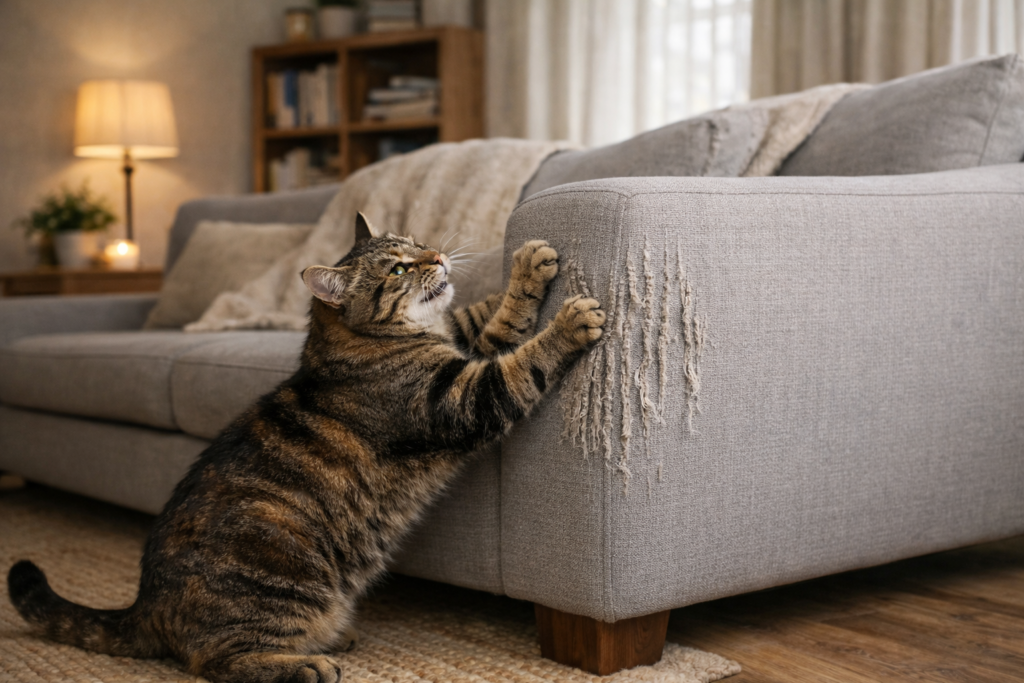
YYou didn’t bring a tiny tiger into your home so it could turn your sofa into abstract art. And yet, here you are staring at shredded upholstery, wondering how to keep cats from scratching furniture without becoming the villain in your own home.
Here’s the first truth you need to hear: scratching is not bad behavior. It’s biology.
Cats scratch furniture to maintain their claws, mark their territory, and stretch their muscles. Your cat isn’t plotting against your couch—this behavior is healthy, instinctive, and emotionally regulating.
Once you understand why cats scratch, it becomes much easier to redirect the behavior humanely.
In this guide, you’ll learn:
- How to keep cats from scratching furniture naturally
- How to stop cats scratching sofa corners without punishment
- How to choose the right scratching posts
- Which deterrents actually work
Yes you can protect your couch from cat damage. But you do it by working with your cat, not against it.h instinct, not against it.
How to Keep Cats from Scratching Furniture: Quick Answer
To keep cats from scratching furniture, redirect the behavior instead of punishing it.
- Provide a sturdy scratching post or pad
- Place it near the furniture your cat already scratches
- Reward your cat for using it
- Use humane deterrents on furniture temporarily
- Trim nails regularly and reduce stress or boredom
Why Do Cats Scratch? (Understanding the Instinct)
To successfully stop unwanted scratching, you need to understand feline behavior.
How Cat Scratching Behavior Works
This simple flow helps readers understand why redirection works better than punishment.
Cats scratch for three core reasons:
1. Marking Territory (Even Indoor Cats)
When your cat scratches, they leave:
- Visible marks
- Scent signals from glands in their paw pads
That shredded sofa corner is essentially a message: “This is mine.”
Scratching often happens near:
- Entrances
- Sofas
- High-traffic areas
These locations matter socially to your cat.
2. Nail Maintenance
Cats naturally shed the outer layer of their claws. Scratching removes dead nail sheaths and keeps claws healthy.
Think of it as a manicure but louder and more destructive when misdirected.
3. Full-Body Stretching
Scratching also serves as a deep stretch for:
- Shoulders
- Spine
- Back legs
If you observe closely, cats stretch first—then scratch.
This leads to a key insight:
You cannot stop scratching. You can only redirect it.
The Golden Rule: Don’t Declaw Redirect
Declawing is not a simple nail trim. It is the surgical removal of the last bone in each toe.
It can lead to:
- Chronic pain
- Altered walking (gait issues)
- Litter box avoidance
- Behavioral problems
Because of this, declawing is banned or restricted in many regions.
If you’re searching for declawing alternatives, you’re already on the right path.
The real solution:
Meet your cat’s needs properly, and your furniture becomes less appealing.
How to Keep Cats from Scratching Furniture with the Right Scratching Post
Best Scratching Options Comparison
Compare different scratcher types to find the best fit for your cat’s habits and your furniture protection goals.
| Type of Scratcher | Best For | Pros | Cons |
|---|---|---|---|
| Vertical Post | Stretching + sofa scratchers | Natural posture, full-body stretch, highly effective | Needs good height and stability |
| Horizontal Scratcher | Carpet scratchers | Easy to use, compact, affordable | Less support for upright stretching |
| Sisal Rope/Fabric | Most cats | Durable, satisfying texture, widely preferred | Can wear out over time |
| Cardboard | Budget option | Low cost, lightweight, replaceable | Less durable, can create mess |
| Wall-Mounted Scratcher | Active cats | Very stable, space-saving, modern | Requires installation |
Most owners fail here. They buy one small scratching post, place it in a corner, and expect miracles.
Let’s fix that.
Choose the Right Material
Cats have strong texture preferences. The best scratching surfaces include:
- Sisal rope or fabric (highly durable)
- Corrugated cardboard
- Natural wood
- Carpet (only if it doesn’t match your actual carpet)
Pro tip:
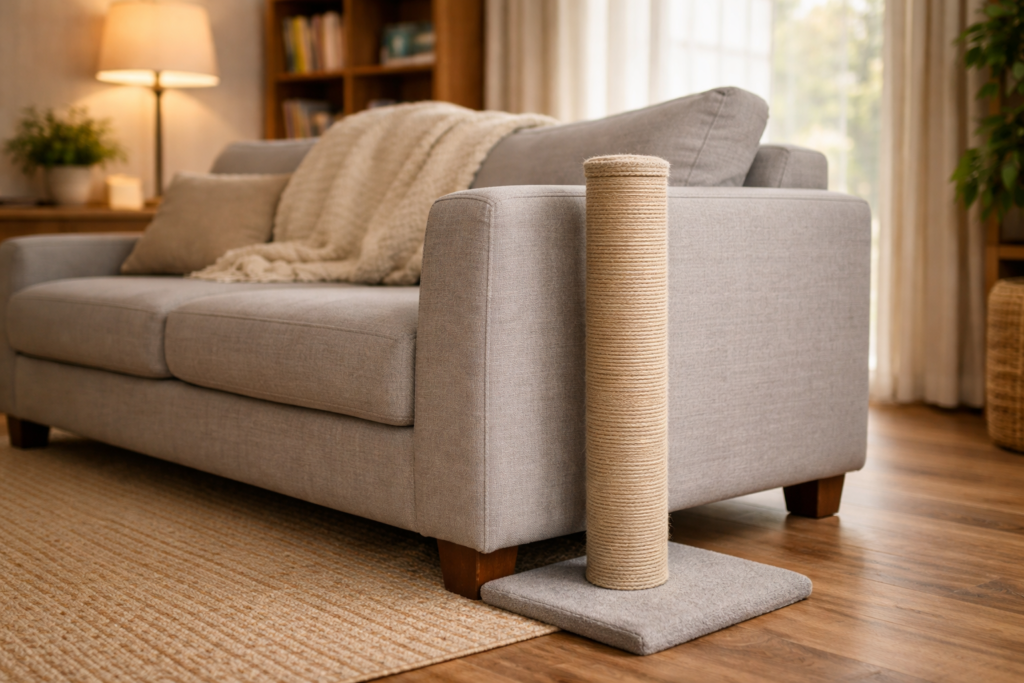
If your cat loves your sofa, match the texture in a scratching post.
Place It Strategically
Placement matters more than the post itself.
Put scratching posts:
- Next to the furniture they scratch
- Near sleeping areas (cats stretch after waking)
- In social zones or near entrances
If your goal is to stop cats scratching sofa corners, place the post directly beside that spot.
Ensure Stability and Height
Cats avoid unstable posts.
Look for:
- A heavy, sturdy base
- Minimum height of 30–32 inches
- Wall-mounted options for extra stability
Also consider:
- Vertical scratchers
- Horizontal scratchers
Different cats prefer different styles.
How to Train Your Cat to Use a Scratching Post
Punishment does not work. It increases stress—and stressed cats scratch more.
What Not to Do When Your Cat Scratches Furniture
Avoiding the wrong response is just as important as choosing the right one.
-
Do not yell or punish. It increases stress and can make scratching worse.
-
Do not use water sprays. Fear does not teach the desired behavior.
-
Do not hide the scratching post. Your cat needs easy access to it.
-
Do not rely only on deterrents. A better scratching option must be nearby.
-
Do not remove all scratching options. Scratching is a normal biological need.
-
Do not declaw. It is harmful and does not solve the root problem.
Instead, use positive reinforcement.
Simple Training Formula
- Place the post in the right location
- Add catnip or silvervine
- Reward immediately when used
Rewards include:
- Treats
- Gentle praise
- Interactive play
If your cat scratches furniture:
Calmly redirect them to the post. No yelling. No punishment.
Consistency builds habits—and habits replace destructive behavior.
Best Cat Scratch Deterrents That Actually Work
Deterrents are temporary tools, not permanent solutions.
If you’re looking for the best cat scratch deterrent, these are effective and humane:
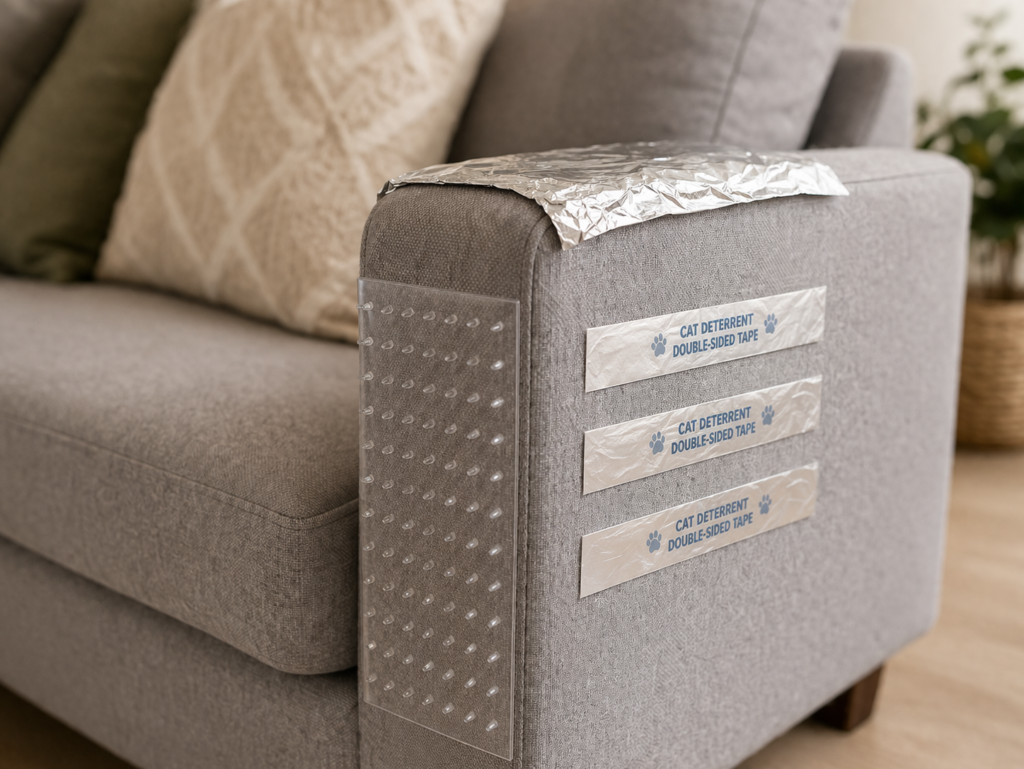
1. Double-Sided Sticky Tape
Cats dislike sticky textures. Apply it to problem areas.
2. Aluminum Foil
The texture and sound deter many cats, especially on flat surfaces.
3. Furniture Protectors
Clear plastic guards help protect your couch during training.
4. Motion-Activated Air Sprays
These release harmless air bursts to interrupt behavior safely.
Important:
Deterrents only work if a better scratching option is available nearby.
Additional Tips to Prevent Cat Scratching
Trim Your Cat’s Nails Regularly
Trim every 2–4 weeks to reduce damage.
If unsure, ask your vet or groomer for guidance.
Reduce Stress and Anxiety
Cats scratch more when stressed.
Common triggers:
- Moving homes
- New pets
- Routine changes
- Owner absence
Consider pheromone diffusers like Feliway, which can help reduce stress-related scratching.
Provide Environmental Enrichment
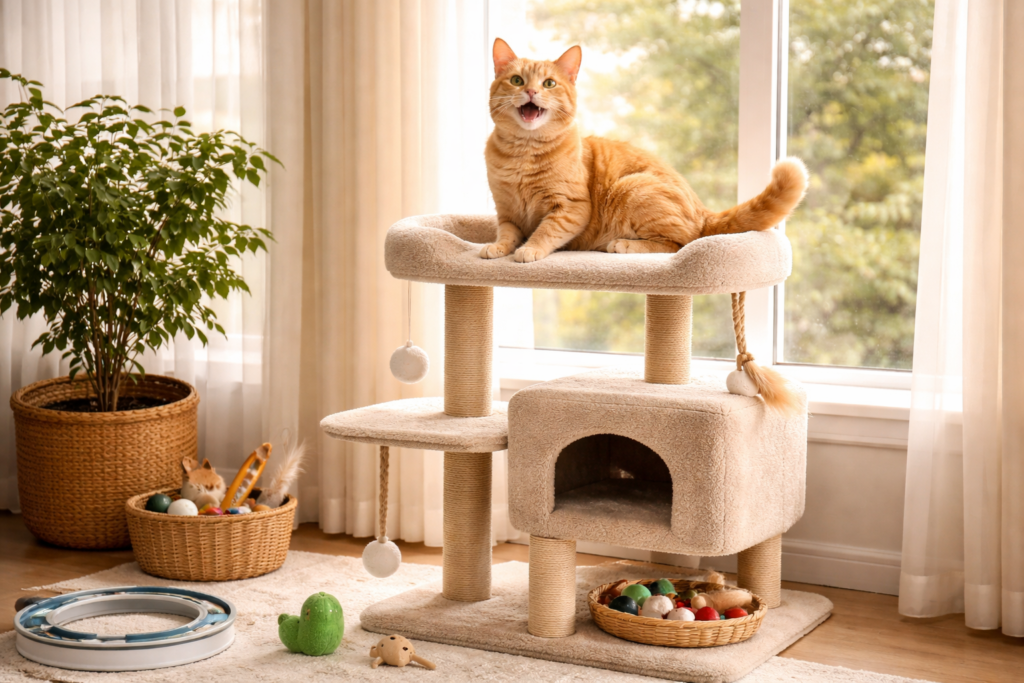
A bored cat is more likely to destroy furniture.
Provide:
- Cat trees
- Window perches
- Daily play sessions
- Puzzle feeders
Mental stimulation reduces destructive behavior.
How to Keep Cats from Scratching Furniture (Quick Summary)
If you remember nothing else, remember this:
- Scratching is natural
- Provide better alternatives
- Place scratchers strategically
- Reward good behavior
- Use deterrents temporarily
- Maintain nails and reduce stress
Consistency is everything.
Most cats develop better habits within a few weeks.
You cannot stop scratching — you can redirect it.
The most effective way to keep cats from scratching furniture is to provide a better scratching option, place it where your cat already wants to scratch, and reward its use consistently. Punishment fails. Redirection works.
Final Words
From experience, the biggest shift happens when you stop seeing scratching as bad behavior and start seeing it as communication. I’ve worked through this with my own cat, and the difference came down to consistency, placement, and patience not punishment. When you provide the right scratching options in the right places and reinforce them consistently, your cat naturally chooses those over your furniture. The methods shared here aren’t shortcuts they’re reliable, humane strategies grounded in how cats actually behave. Stick with them, and over time, you’ll notice not just less damage to your home, but a calmer, more confident cat as well.
Frequently Asked Questions
Why does my cat scratch the sofa when I come home?
This is usually territorial or excitement-based behavior. Your return changes the environment, and your cat re-marks their space.
Is my cat scratching furniture out of spite?
No. Cats do not act out of spite. Scratching is instinctive and stress-relieving.
Do citrus sprays stop cats from scratching?
Some cats dislike citrus, but results vary. These sprays work best when combined with proper training and scratching alternatives.

Muhammad Muaz
Muhammad Muaz shares practical cleaning, home care, improvement and everyday living guides for Urban Home Guide readers.
Related Home Guides