- Your cart is empty Browse Shop
Furniture
How Much Does Furniture Cost in the United States?
An empty room can make moving into a new home feel more expensive than expected. So, how much does furniture cost? The short answer: Opendoor’s typical mid-range budget for furnishing…
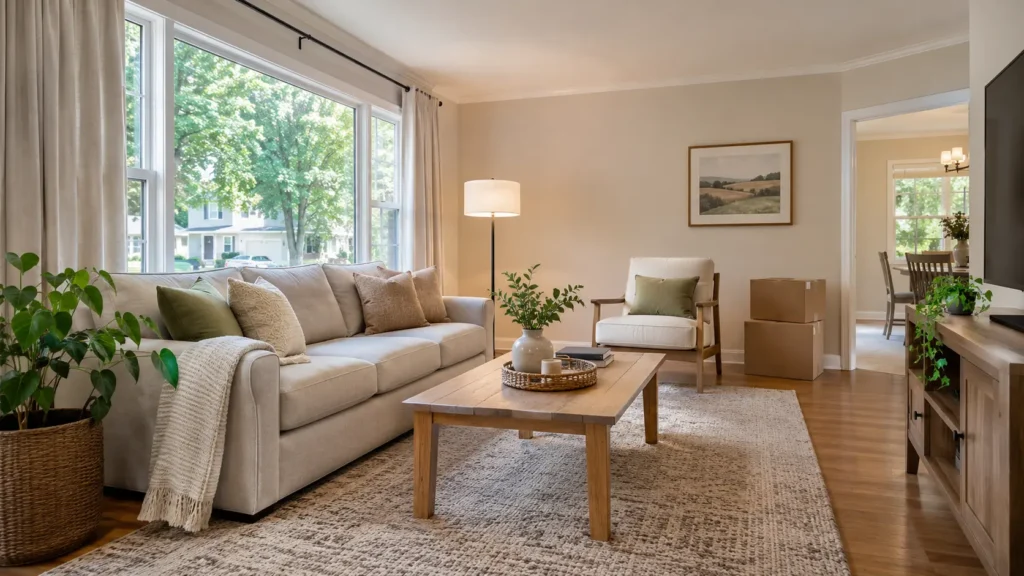
An empty room can make moving into a new home feel more expensive than expected. So, how much does furniture cost? The short answer: Opendoor’s typical mid-range budget for furnishing a whole home is $10,000–$30,000. Published estimates vary considerably, though — Angi reports a $10,000–$40,000 range and a $16,000 national average for 2026.
Your actual budget, however, depends on the rooms you furnish, the quality you choose, and the pieces you already own. A small apartment requires a different plan from a large family home.
Let’s break down the costs so you can plan your spending without buying things you don’t need.
How Much Does Furniture Cost?
Furniture costs depend on what you purchase and how much space you need to furnish. Here are the main cost categories:
- Individual furniture: Prices depend on the product, materials, brand, and retailer.
- Single-room furnishing: Living rooms and bedrooms require several different furniture pieces.
- Apartment furnishing: Your budget depends on the rooms and essentials you need.
- Whole-home furnishing: Larger homes generally require more furniture and additional storage.
Treat these figures as starting points, not guaranteed prices. The sections below break them down by home size, room and item.
Average Furniture Budget for a Whole Home
The total cost becomes easier to understand when you consider your home’s size. Opendoor provides the following estimates for different property sizes:
| Home size | Mid-range furnishing budget |
|---|---|
| Studio or one-bedroom, under 800 sq. ft. | $3,000–$12,000 |
| Two-bedroom, 800–1,200 sq. ft. | $7,000–$20,000 |
| Three-bedroom, 1,500–2,200 sq. ft. | $15,000–$35,000 |
| Four-bedroom, 2,500+ sq. ft. | $25,000–$60,000 |
Source: Opendoor, “Setting a Furniture Budget for Your New Home.” These are published estimates, not guaranteed shopping quotes.
A larger property usually needs more furniture. Additional bedrooms, for example, require beds, storage, and other essential pieces.
But buying everything from scratch isn’t necessary. Furniture you already own can reduce your initial spending, so calculate the cost of the missing items instead of automatically budgeting for an entirely new home.
What Individual Furniture Pieces May Cost
Individual prices can differ significantly, even within the same furniture category. Walmart’s furniture listings provide useful examples of actual retail prices. These examples illustrate available listings rather than national averages:
| Furniture item | Example listed price |
|---|---|
| Sofa, 74 in (Mainstays Westley Swoop Arm Sofa) | $248 |
| 5-piece dining set (Better Homes & Gardens Windsor) | $578 |
| TV stand for 65 in TV (farmhouse style) | $103.99 |
| Six-drawer dresser | $438 |
| Queen mattress | $169.95 |
| Standing desk, 44 in (Mainstays Electric) | $149 |
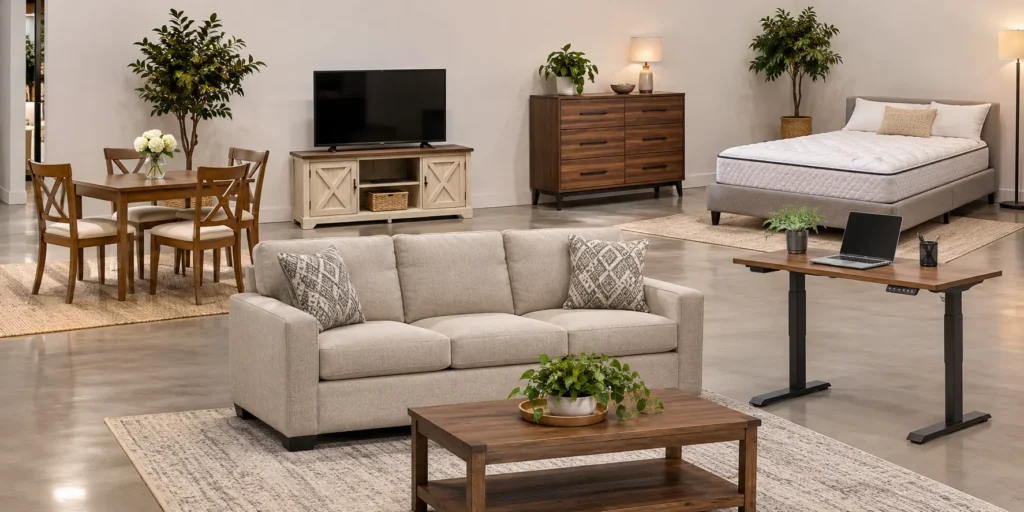
Source: Walmart furniture listings reviewed November 2026. Prices and availability can change.
Notice how wide the spread is: a TV stand can cost less than a third of a dining set, and a sofa less than half. Product size, construction, and materials all affect the price, so two items in the same category can still sit far apart.
My advice is to compare the specifications before comparing prices. A lower price alone doesn’t tell you whether two products offer similar value.
Room-by-Room Cost Breakdown
Breaking your furniture budget into individual rooms makes planning easier. You can identify essential purchases first, then decide which additional items can wait.
Living Room
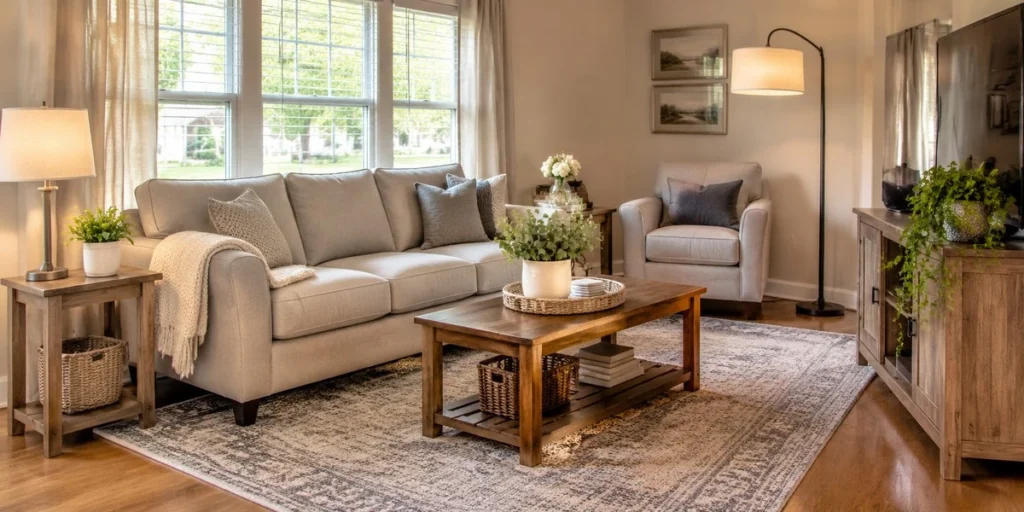
The living room often requires several large furniture pieces. These commonly include:
- Sofa or sectional
- Coffee table
- Television stand
- Accent chairs
- End tables
- Area rugs
- Lighting and decorations
According to Opendoor, furnishing a living room can cost $1,500–$25,000, with a typical mid-range estimate of $3,000–$7,000.
The sofa and seating arrangement are major parts of this budget. A simple setup requires fewer pieces than a fully furnished living space, so consider your room’s actual needs before buying additional furniture.
Dining Room
A dining room needs furniture that supports everyday meals and gatherings. Its main purchases include:
- Dining table
- Dining chairs
- Sideboard or buffet
- Storage furniture
- Lighting
- Decorative accessories
Opendoor estimates dining room furnishing costs at $1,000–$18,000, with a typical range of $2,500–$5,500.
The table and chairs form the main investment. Formal dining spaces may require additional storage and decorative furniture, so keep those optional buys separate from your essential budget.
Primary and Secondary Bedrooms
Bedroom furniture requirements depend on who uses the room. A primary bedroom commonly needs:
- Bed frame
- Mattress
- Nightstands
- Dresser
- Closet storage
- Lighting
Secondary bedrooms may need fewer pieces, depending on their purpose. Opendoor provides these furnishing estimates:
| Bedroom type | Estimated cost | Typical range |
|---|---|---|
| Primary bedroom | $1,500–$20,000 | $3,000–$6,000 |
| Secondary bedroom | $1,000–$15,000 | $2,500–$5,000 |
Source: Opendoor’s room-by-room cost breakdown.
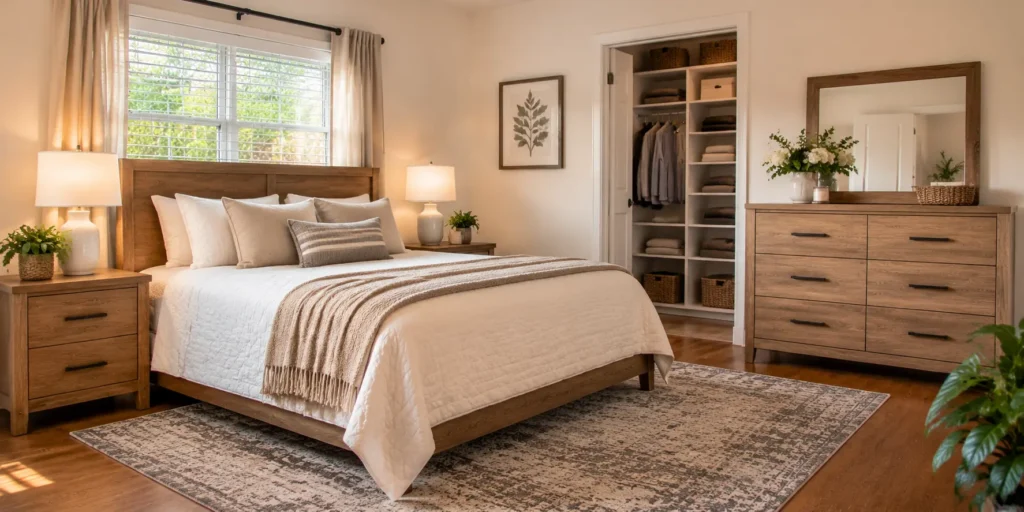
For guest rooms, avoid purchasing unnecessary furniture. A suitable bed and practical storage may be enough for the room’s intended use.
Home Office
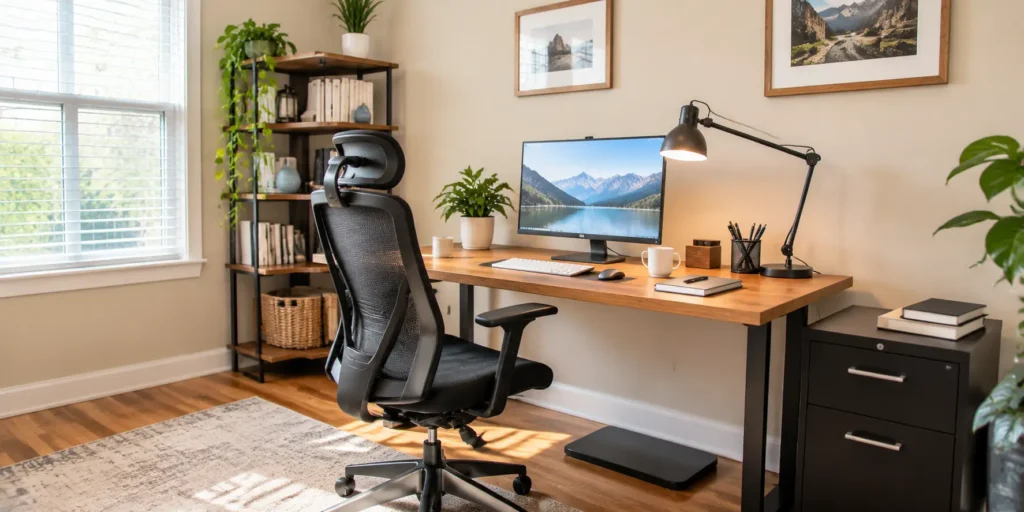
A home office needs furniture that supports comfortable daily work. Its main requirements include:
- Desk
- Office chair
- Bookshelves
- Filing cabinet
- Task lighting
- Storage furniture
Opendoor estimates home office furnishing costs at $500–$12,000, with a typical range of $1,000–$2,500.
The desk and chair deserve particular attention. A functional setup matters more than filling the room with decorative furniture, so start with the essential working pieces.
Outdoor Space
Outdoor furniture can require a separate budget. Common purchases include:
- Patio tables
- Outdoor chairs
- Lounge seating
- Umbrellas
- Outdoor storage
Opendoor estimates outdoor furnishing costs at $500–$25,000. The large difference reflects the variety of outdoor setups included in its estimates.
A small patio requires a different setup from a large outdoor entertainment area. Also consider the materials before choosing outdoor furniture, since weather exposure affects how long pieces last.
Apartment Furnishing Costs
Apartment furnishing budgets usually focus on the rooms you actually use. Urban Furnished provides the following estimates in its apartment furnishing breakdown:
| Apartment area | Estimated cost |
|---|---|
| Living room | $1,050–$4,300 |
| Bedroom | $1,050–$3,800 |
| Kitchen and dining | $700–$2,900 |
| Optional home office | $250–$1,400 |
Source: Urban Furnished, “How Much Does It Cost to Furnish an Apartment?” (December 27, 2024).
These are room-level estimates, not a universal apartment total. Added together, the living room, bedroom and kitchen-and-dining figures come to roughly $2,800–$11,000 — which lines up well with Opendoor’s $3,000–$12,000 estimate for a studio or one-bedroom home under 800 sq. ft. The two sources measure in different ways, but they land in the same range.
One caution: Urban Furnished published these figures in December 2024, so treat them as a starting point and check current prices before you buy. Your final budget still depends on which areas need furnishing and which items are already available.
Key Drivers That Raise or Lower Your Budget
Two people can furnish similar properties and still spend very different amounts. Several factors explain the difference.
Square Footage
Larger rooms usually require more furniture or larger pieces. An open living room, for example, may need larger seating and rugs, while smaller rooms may work with compact furniture. Opendoor identifies square footage and furniture quantity as important budget factors, so measure your rooms before choosing large furniture.
Quality of Materials
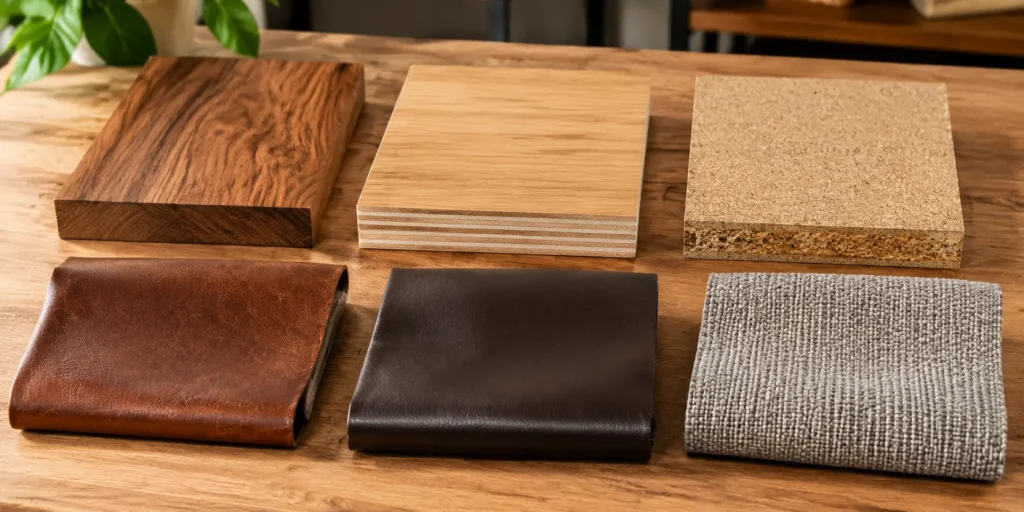
Furniture materials influence both purchase prices and maintenance needs. Common options include:
- Solid hardwood: A more expensive material option that can be repaired or refinished.
- Engineered wood: A different construction option, often selected for its balance of strength and price. If you are weighing it up, it helps to know what engineered wood furniture is before you buy.
- Particleboard and MDF: Budget-friendly materials used in many affordable furniture products.
- Genuine leather: A higher-cost upholstery option requiring care.
- Faux leather: An alternative with a different price and durability profile.
- Performance fabric: Designed with stain resistance and easier cleaning in mind.
Opendoor discusses these materials and their differences in its quality-of-materials section. The right choice depends on how frequently you use the furniture.
Custom Versus Ready-Made
Custom furniture gives buyers more control over dimensions, materials, finishes, and design, but it can cost more than ready-made alternatives. Opendoor estimates custom or made-to-order furniture can cost 20%–50% more than ready-made pieces.
Custom furniture may suit unusual room dimensions or specific design requirements. For standard spaces, ready-made furniture may offer a more practical purchasing option.
Location, Style, and New Versus Used
Your location and personal preferences can also affect your spending. Urban Furnished identifies apartment size, location, style preferences, and new-versus-used furniture as cost factors.
Choosing designer furniture, for example, creates a different budget from selecting basic everyday pieces. Used furniture can cut costs further, especially solid-wood pieces that hold up well secondhand — just check the condition carefully before you buy.
Price Tiers: When to Save and When to Splurge
Furniture generally falls into different quality and price categories. Understanding these differences helps you distribute your budget more carefully.
| Price tier | General characteristics | Suitable applications |
|---|---|---|
| Economy | Basic construction and affordable materials | Temporary spaces and low-use rooms |
| Mid-range | Better construction and material options | Everyday household furniture |
| Premium | Higher-end materials and construction | Frequently used or important pieces |
Source: Opendoor’s furniture price-tier discussion.
To see what the tiers mean in dollars: Opendoor doesn’t publish a separate economy range by home size — its broad whole-home range starts at $5,000, which is effectively the economy end. For the tiers it does break out, its size table prices a two-bedroom home at $7,000–$20,000 mid-range and $30,000 or more at premium, and a three-bedroom home at $15,000–$35,000 mid-range and $50,000–$80,000 at premium.
Economy Furniture
Economy furniture can work well when you need a basic setup. It may suit temporary housing, guest rooms, or furniture you expect to replace. In dollars, this is the bottom of Opendoor’s broad whole-home range, which starts at $5,000.
However, Opendoor advises against choosing economy-tier options for high-use items such as primary sofas, daily dining chairs, and mattresses.
Mid-Range Furniture
Mid-range is where most whole-home budgets land: Opendoor’s typical mid-range budget for a whole home is $10,000–$30,000. Opendoor identifies improved structural materials, cushions, and performance fabrics as common features of this tier.
It can be a sensible choice when you want practical furniture without moving into premium pricing.
Premium Furniture
Premium furniture can make sense for pieces that receive frequent use — and the money shows in the totals: Opendoor’s premium estimate for a four-bedroom home runs to $100,000–$150,000 or more. Opendoor identifies mattresses, primary sofas, ergonomic office chairs, and solid dining tables as potential premium investment pieces.
Still, you don’t need premium furniture in every room. Spend according to actual use rather than appearance alone.
Hidden Costs Most Shoppers Forget
The furniture’s displayed price isn’t always the final amount you pay. Several additional expenses can increase your purchasing budget:
- Sales tax: Opendoor’s guide discusses state-dependent sales tax as an additional furnishing expense. The applicable amount depends on the purchase location.
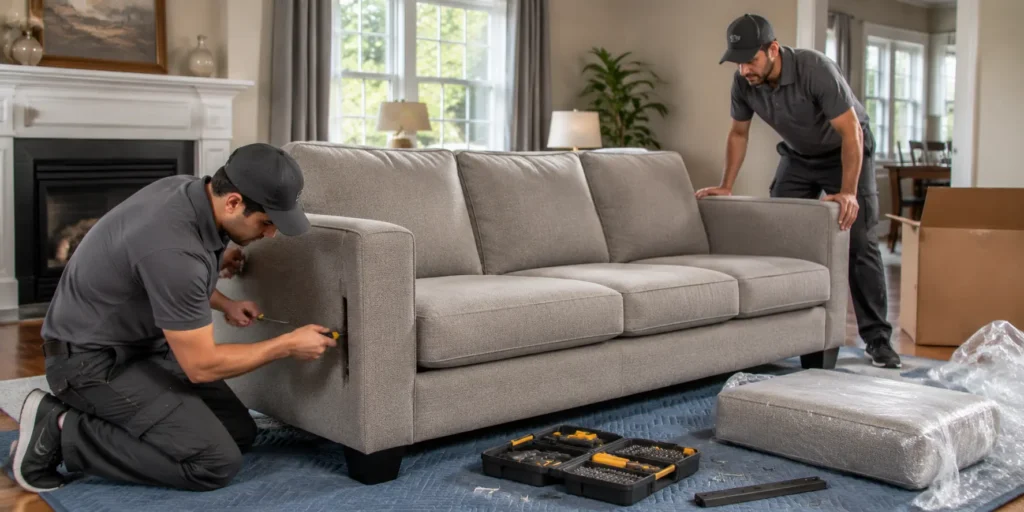
- Delivery: Large items often carry delivery fees, and scheduled or room-of-choice delivery costs more than a standard doorstep drop-off.
- Assembly: Some furniture requires professional assembly. Check whether the service is included.
- Design services: Hiring an interior designer adds another expense. Opendoor lists hourly and flat-fee design arrangements.
- Protection plans: Optional furniture protection plans may increase the purchase price.
- Returns and restocking: Some retailers charge fees when customers return furniture. Opendoor reports restocking fees of 10%–25% in its cost guide.
Before placing an order, check the complete checkout cost and return policy. That small step can prevent an unpleasant surprise.
Five Steps to Build Your Personalized Furniture Budget
A practical furniture budget starts with a clear list. You don’t need to purchase everything immediately. Instead, organize your requirements and compare prices.
1. List Every Room and Needed Piece
Write down the rooms that require furniture. Next, create a list of essential and optional purchases. A bedroom’s essential list, for example, might include a bed, mattress, and storage, while decorative items can remain on a separate list.
2. Set a Price Tier for Each Item
Decide whether each purchase should fall into the economy, mid-range, or premium category, and consider how frequently you’ll use each item. A frequently used sofa may deserve a different budget from an occasional guest-room table.
3. Research and Record Current Prices
Compare furniture prices across different retailers. Check product dimensions, materials, construction, and customer reviews, and compare delivery and assembly charges before deciding.
4. Identify Which Purchases Can Wait
You don’t have to furnish every room immediately. Opendoor recommends prioritizing frequently used spaces before adding furniture to secondary rooms. This approach gives you more flexibility when managing your spending.
5. Track Your Spending
Maintain a simple record of planned and actual expenses, including the furniture price and any extra charges on top of it. If one category exceeds its budget, review your remaining purchases before placing more orders. A clear record makes it easier to control the final cost.
Tips for Furnishing Your Home on a Budget
You can furnish a home without purchasing the most expensive products. The key is choosing suitable furniture and avoiding unnecessary purchases. Here are practical options identified in Urban Furnished’s apartment budgeting guide:
- Prioritize essentials: Purchase the main furniture pieces before decorative extras.
- Consider secondhand furniture: Explore estate sales, thrift shops, and online marketplaces.
- Compare seasonal sales: Check retailer promotions before making larger purchases.
- Consider DIY décor: Create suitable decorative items instead of purchasing every accessory.
- Compare furnished rentals: For some renters, an already furnished property may be an alternative to purchasing furniture.
However, don’t buy something simply because it has a discount. A suitable product at a fair price is more useful than an unnecessary purchase on sale.
Conclusion
The smartest furniture budget isn’t necessarily the biggest one. It’s the budget that covers your actual needs without unnecessary purchases.
Start with the rooms you use most. Choose suitable quality levels, compare real product prices, and account for additional charges.
My view is simple: prioritize furniture that supports everyday living. Decorative purchases can wait until your essential spaces are ready.
A thoughtful buying plan makes furnishing a new home much easier to manage.
Frequently Asked Questions
How much does it cost to furnish an entire house?
Opendoor’s typical mid-range budget for a whole home is $10,000–$30,000, and Angi’s 2026 national average is $16,000. The broad published range runs from $5,000 to $100,000 or more, depending on the home’s size, the furniture you already own, and the quality level you choose.
How much should I budget for apartment furniture?
For a studio or one-bedroom apartment, budget roughly $3,000–$12,000 (Opendoor’s estimate for homes under 800 sq. ft.). Urban Furnished’s room-by-room figures point the same way: about $1,050–$4,300 for the living room, $1,050–$3,800 for the bedroom and $700–$2,900 for the kitchen and dining area.
What makes furniture more expensive?
Size, materials and construction are the big drivers: solid hardwood costs more than MDF or particleboard, and Opendoor estimates custom or made-to-order pieces at 20%–50% more than ready-made ones. Delivery and assembly fees then add to the final amount.
Is expensive furniture always better?
No. Economy furniture can suit temporary or low-use spaces — a guest room, for example. But for pieces you use every day, such as a primary sofa, dining chairs or a mattress, Opendoor advises against the cheapest tier and recommends better construction and materials instead.
What additional costs should I consider when buying furniture?
Budget for sales tax, delivery and assembly on top of the sticker price, plus optional protection plans. Returns can bite too: Opendoor reports restocking fees of 10%–25%. Check the retailer’s full terms before you order.

Muhammad Muaz
Muhammad Muaz shares practical cleaning, home care, improvement and everyday living guides for Urban Home Guide readers.
Keep Exploring
Related Home Guides