- Your cart is empty Browse Shop
Furniture
What Is Engineered Wood Furniture? Types, Pros, Cons & Buying Tips
Introduction When you are buying a dresser, bookshelf, or TV stand, the material matters. But furniture descriptions can make choosing the right material confusing. So, what is engineered wood furniture?…
Introduction
When you are buying a dresser, bookshelf, or TV stand, the material matters. But furniture descriptions can make choosing the right material confusing.
So, what is engineered wood furniture? It is furniture made from wood-based materials bonded together to form solid panels. These materials include wood fibers, chips, particles, strands, and veneers. Manufacturers use adhesives, heat, and pressure to form them into boards that are then built into furniture.
Engineered wood is not automatically cheap or poor quality. Different types offer different levels of strength, stability, and durability. Understanding those differences helps you avoid buying furniture that does not meet your expectations.
What Is Engineered Wood Furniture?
Engineered wood furniture is made using manufactured wood panels rather than only solid pieces of natural timber.

Manufacturers combine real wood materials with adhesives and press them into panels. The raw materials can include real wood fibers, veneers, and strands, and the manufacturing process uses heat and pressure to form the finished material.
You may also see engineered wood described as:
- Manufactured wood
- Composite wood
- Processed wood
- Engineered wood panels
Manufactured wood and engineered wood are often used interchangeably in home furnishings.
The important thing to understand is that engineered wood is not one specific material. Plywood, MDF, and particleboard all belong to this category, but their construction and performance differ.
Some engineered wood furniture also has a decorative surface. This might be natural wood veneer, laminate, or paint. That is why the material underneath the finish matters just as much as the appearance.
How Is Engineered Wood Made?
The manufacturing process depends on the type of engineered wood being produced, but the basic idea stays similar. Manufacturers can use wood offcuts, chips, fibers, and thin wood sheets, and combine these materials with adhesives to create furniture panels.
Here is a simplified explanation of the process:
- Preparing the wood: Manufacturers process wood into thin veneers, strands, chips, or fine fibers.
- Adding adhesives: The processed material is combined with resin or other bonding agents; wax is added to some panels for water resistance.
- Arranging the material: Manufacturers arrange the wood components according to the required panel type.
- Applying pressure: Heat and pressure bond the materials into dense panels.
- Finishing the surface: The panels can receive veneer, laminate, paint, or other decorative finishes.
Not every engineered wood product follows exactly the same process. Plywood uses layers of wood veneer. MDF uses fine wood fibers, while particleboard uses larger wood particles. As a result, the finished products have different characteristics and furniture applications.
Types of Engineered Wood Used in Furniture
Three types dominate furniture — plywood, MDF, and particleboard. A fourth, OSB, is included because it belongs to the same family and appears in some furniture designs. Each type has a different construction method and different practical uses.
1. Plywood
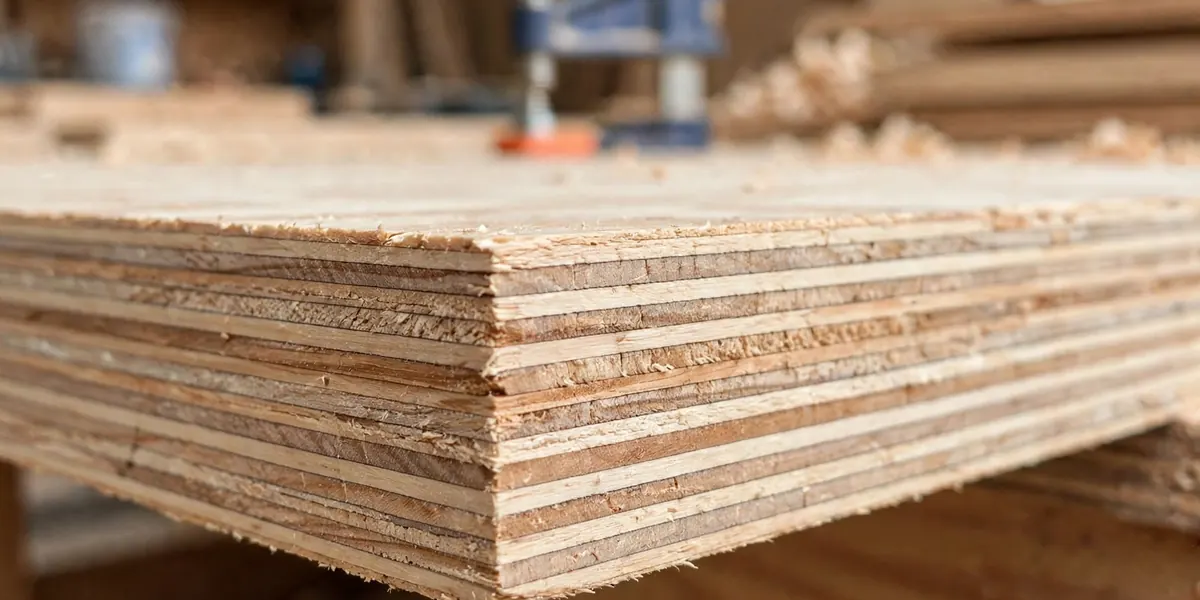
Plywood is made by joining thin layers of real wood veneer. Each layer has its grain running at right angles to the adjacent layer. This cross-layer construction gives plywood its strength and stability, and it is commonly used for cabinet boxes and drawer components.
Main characteristics:
- Made from layers of real wood veneer
- Has a cross-layer construction
- Offers good structural strength
- Can provide better stability than some other panel materials
Where it is used: cabinet construction, drawer sides, shelving, and furniture frames.
Plywood is often a stronger engineered wood option. However, its quality still depends on its construction and materials.
2. Medium-Density Fiberboard (MDF)
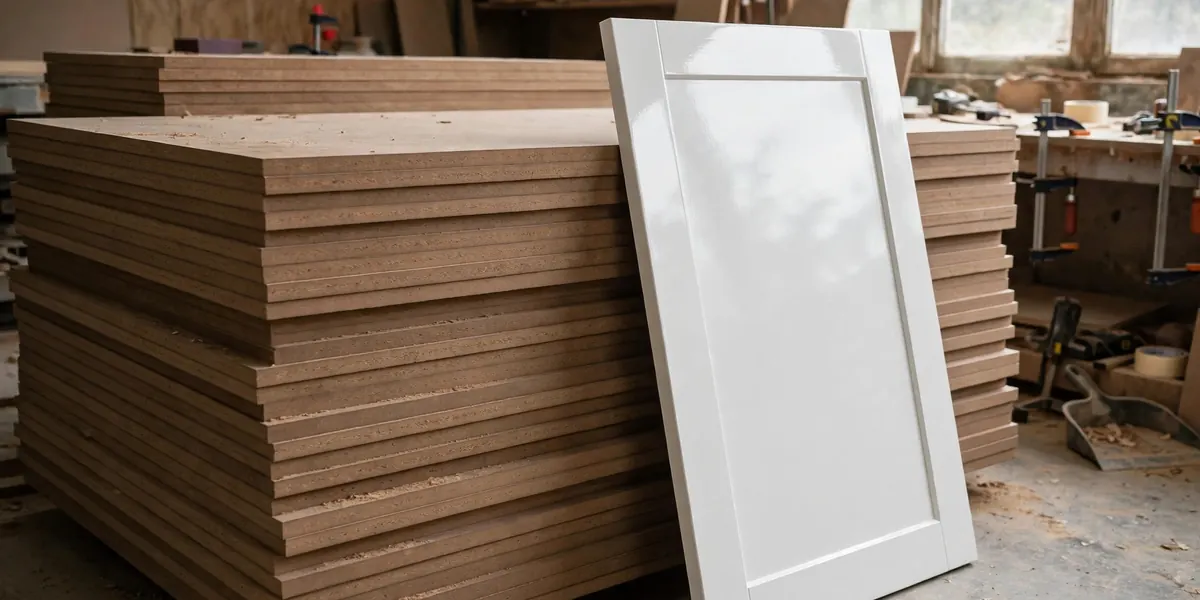
MDF stands for Medium-Density Fiberboard. Manufacturers create it by breaking wood down into fine fibers and combining them with resin and wax. They then press the mixture into dense panels. A denser relative, HDF (high-density fiberboard), is made the same way but pressed harder; it is used where a thinner, tougher panel is needed, such as door skins and furniture backs.
MDF has a smooth surface without natural wood grain or knots. This makes it suitable for painted furniture and detailed cabinet doors.
Main characteristics:
- Smooth and consistent surface
- Made from fine wood fibers
- Suitable for painted finishes
- Offers a uniform appearance
Where it is used: cabinet doors, dressers, decorative furniture, and painted panels.
One limitation is moisture exposure. MDF can swell when exposed to water, particularly when moisture reaches vulnerable areas such as unsealed edges.
3. Particleboard or Chipboard
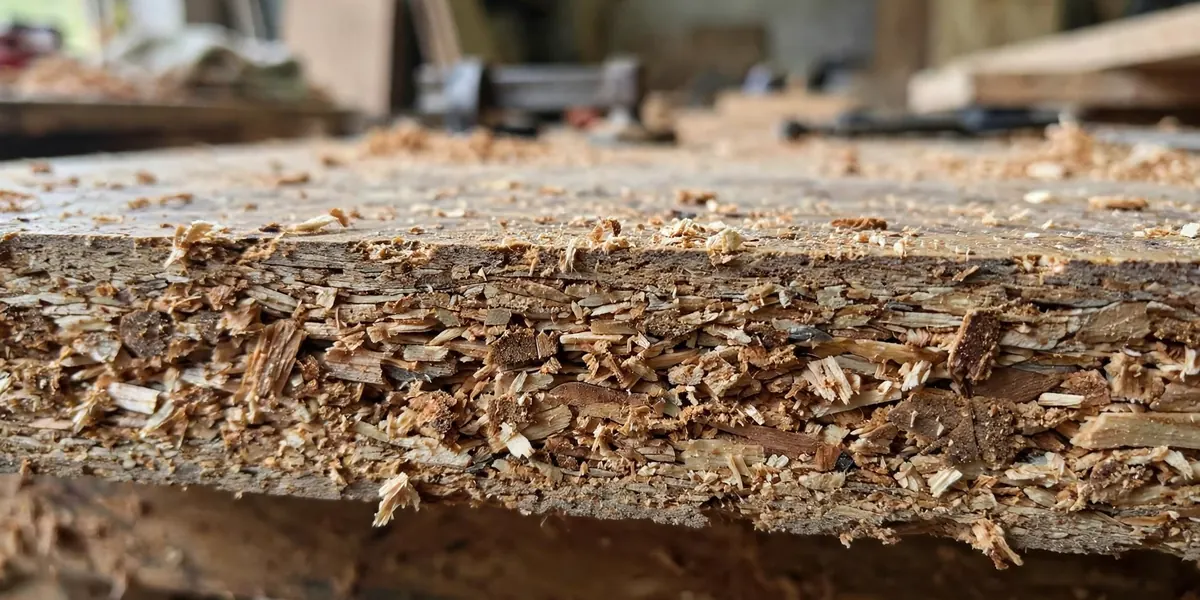
Particleboard is manufactured using wood chips, sawdust, and shavings. Manufacturers combine these materials with adhesives and compress them into sheets.
Particleboard is generally lighter and less dense than MDF. It is also commonly used in lower-cost furniture.
Main characteristics:
- Made from compressed wood particles
- Usually an economical panel option
- Has a less uniform internal structure than MDF
- Can be vulnerable to moisture damage
Where it is used: budget furniture, storage cabinets, desks, and furniture panels.
That does not make particleboard unsuitable for home furniture. However, you should pay attention to its construction and surface protection. Lower-grade particleboard can also have problems holding screws securely, which is a potential weakness in furniture made from lower-quality panels.
4. Oriented Strand Board (OSB)
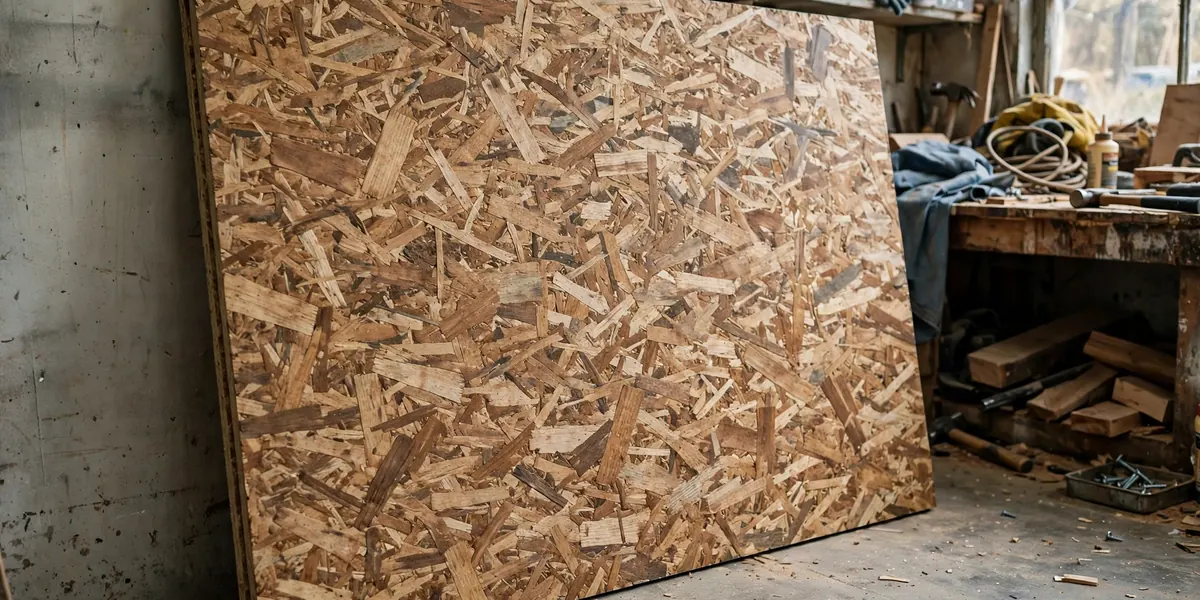
OSB stands for Oriented Strand Board. It is made from long, thin wood strands arranged in different directions and bonded together.
OSB is commonly used in residential construction. However, it also appears in some shelving, wall panels, and industrial-style tabletops.
Main characteristics:
- Made from long wood strands
- Has a distinctive visible texture
- Uses cross-oriented layers
- Has applications in construction and some furniture designs
OSB is not as commonly associated with everyday finished furniture as MDF or particleboard. Still, it belongs to the engineered wood family.
Engineered Wood, Veneer, and Laminate: What’s the Difference?
These three terms often create confusion when shopping for furniture, but they do not describe the same thing. The biggest difference is their role in furniture construction.
Engineered wood describes the panel or core material. It can consist of plywood, MDF, particleboard, or another engineered panel such as OSB or HDF. Manufacturers bond wood fibers, particles, strands, or layers to create these panels.
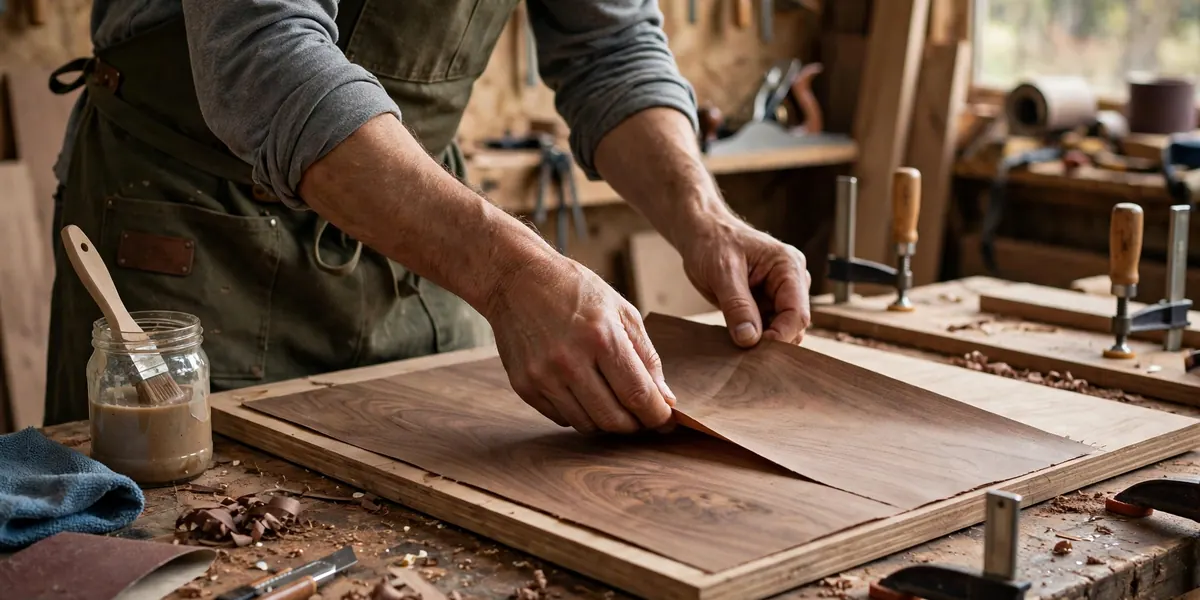
Wood veneer is a thin layer of real wood applied over another material. The underlying core might be plywood, MDF, particleboard, or a similar engineered panel, so a piece of veneered furniture can contain both natural wood and engineered materials. Veneer provides a genuine wood surface, but its thin construction limits future sanding and refinishing.
Laminate is a manufactured surface finish designed to imitate wood or provide another decorative appearance. Unlike veneer, it is not a thin slice of natural timber. Laminate is a synthetic material designed to emulate real wood.
Quick comparison:
| Material | What it actually means |
|---|---|
| Engineered wood | Manufactured wood-based core or panel |
| Wood veneer | Thin layer of genuine wood |
| Laminate | Synthetic decorative surface |
This distinction matters because two furniture pieces can look almost identical while having completely different internal construction.
Pros and Cons of Engineered Wood Furniture
Engineered wood has several advantages. However, it also has limitations that buyers should understand.
Main Advantages
- More affordable options — Engineered wood can make furniture more affordable than comparable solid wood construction. Cost efficiency is one of its main benefits.
- Consistent appearance — Manufactured panels offer relatively uniform surfaces. For example, MDF provides a smooth base for painted furniture.
- Different design options — Manufacturers can apply veneer, laminate, or paint to create different furniture appearances.
- Better dimensional stability in some products — Certain engineered wood constructions can be less prone to seasonal movement than solid timber.
- Efficient use of wood materials — Engineered wood manufacturing can use offcuts and residual wood fibers that might otherwise go unused.
Main Disadvantages
- Moisture damage — Unsealed edges can allow water to reach the internal material. As a result, some panels can swell, weaken, or warp.
- Limited repair options — Deep scratches and damage can expose the panel underneath. Unlike solid wood, many engineered surfaces cannot be sanded and refinished repeatedly.
- Different quality levels — Plywood, MDF, and particleboard do not have identical strength or performance. The material type matters.
- Surface damage — Thin veneer can chip or become damaged around edges and corners. Repairs can also be difficult to hide.
- Potential adhesive emissions — Some engineered wood products use resins that can release volatile organic compounds (VOCs), although low-emission options are also available. For indoor furniture, buyers concerned about air quality can ask manufacturers about emissions information and available product documentation. The standards to look for are E1, or the stricter E0 class, on the European emission scale, and CARB Phase 2 / TSCA Title VI compliance in the US — these are the formaldehyde limits that low-emission panels are certified against.
Engineered Wood vs. Solid Wood: Which Is Better?
This is one of the most important comparisons to understand before purchasing furniture.
Solid wood comes from natural timber boards. Engineered wood uses processed wood materials bonded into panels. Both have useful qualities, but they suit different priorities.
Side-by-Side Comparison
| Feature | Engineered wood | Solid wood |
|---|---|---|
| Construction | Bonded wood materials | Natural timber boards |
| Price | Often more affordable | Usually higher initial cost |
| Appearance | Depends on surface finish | Natural grain and variations |
| Stability | Can offer dimensional stability | Can move with humidity |
| Moisture | Depends on core and sealing | Also requires appropriate care |
| Repairability | Often limited | Can often be sanded and refinished |
| Surface damage | Repair can be difficult | More options for refinishing |
| Material quality | Varies by panel type | Varies by timber and construction |
Durability and Lifespan
Solid wood has an advantage when long-term repairability matters. Scratches on suitable solid wood surfaces can often be sanded out and the piece refinished. Engineered wood with thin veneer or laminate has more limited repair options.
As a rough guide to lifespan in dry indoor conditions, well-made plywood furniture commonly lasts around 15–25 years, MDF pieces around 8–12 years, and basic particleboard furniture roughly 5–10 years. Moisture, heavy loads, and rough use shorten all three, which is why the same material can perform very differently in two different homes.
That does not mean every engineered wood product is poorly made. A well-constructed plywood furniture piece can offer good structural performance. Meanwhile, a poorly constructed solid wood product is not a better purchase just because it is solid. If you are considering solid timber, it helps to research the species as well — our guide on whether mango wood is good for furniture shows how much quality can vary within solid wood itself.
Appearance and Design
Solid wood offers natural grain variations. Each piece can have its own visual character.
Engineered wood offers more consistent surfaces. It can also feature natural wood veneer for a timber appearance.
Which One Should You Choose?
Choose engineered wood when:
- You want a more affordable furniture option
- You prefer smooth, painted surfaces
- You want consistent panel construction
- The product’s material and construction meet your needs
Choose solid wood when:
- You value natural timber grain
- You want more opportunities for future refinishing
- You prefer furniture with repairable natural wood surfaces
- Long-term ownership is a major priority
The simple rule is this: do not judge furniture by its material name alone. Look at how the entire piece is constructed.
How to Identify Engineered Wood Furniture
Furniture photographs do not always reveal the materials underneath the finish. However, you can use a few practical checks before purchasing.
1. Check the Edges
Look at exposed edges around tabletops, shelves, and drawer fronts. Engineered wood may show distinct internal layers or a uniform manufactured core. Solid wood usually shows natural grain continuing through the material. For example, on a typical flat-pack bookshelf, the shelf edges show a smooth, uniform core under the edge banding — a clear sign of MDF or particleboard rather than solid timber.
2. Examine the Surface Grain
Pay attention to repeated grain patterns. Natural timber has variations in its grain and appearance, while veneer and laminate surfaces can show repeating decorative patterns. However, this is only a visual clue. It does not prove the material by itself.
3. Read the Product Description
Do not rely only on phrases such as “wood finish” or “natural wood appearance.” Look for the actual material specification. Check whether the furniture uses:
- Solid wood
- Plywood
- MDF
- Particleboard
- Wood veneer
- Laminate
Also ask whether the decorative surface covers an engineered wood core.
4. Ask About the Construction
When buying furniture, ask the retailer a few direct questions:
- What material forms the main structure?
- Is the furniture made with plywood, MDF, or particleboard?
- Does it have real wood veneer?
- How are the exposed edges protected?
- What is the veneer thickness, if applicable?
These details can tell you more than the product’s appearance alone.
Where Does Engineered Wood Furniture Work Best?
Engineered wood appears in several furniture categories. However, the right choice depends on the panel type, construction, and intended use.
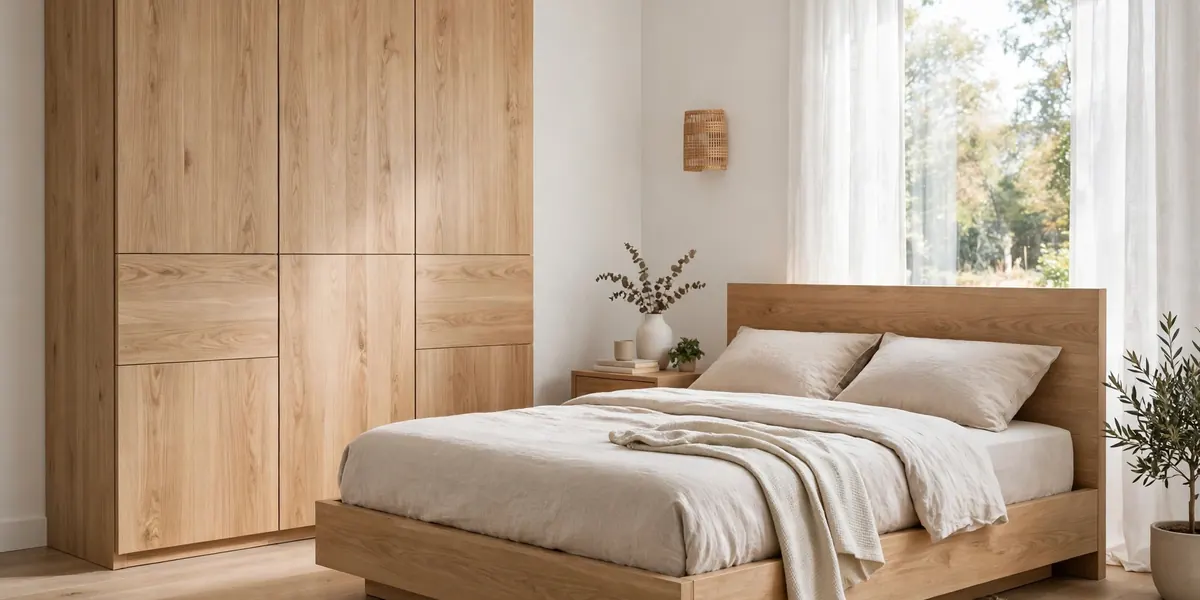
Bedroom furniture — Dressers, nightstands, wardrobes, and storage cabinets often use engineered wood panels with painted or veneered surfaces.
Living room furniture — TV stands, media consoles, and bookshelves are common engineered wood applications. Construction and load capacity matter here.
Kitchen and dining furniture — Some benches, bar stools, and kitchen furniture use engineered wood components. Surface protection matters around spills.
One useful point: do not assume every engineered wood product suits every room. Check the material specifications and the manufacturer’s intended use.
How to Care for Engineered Wood Furniture
Proper care helps protect the furniture’s surface and internal panels. The main concern is moisture, especially around exposed edges.
Follow these practical precautions:
- Avoid standing water: Do not leave spills sitting on furniture surfaces. Moisture is also what leads to problems like mold on wood furniture, so wipe spills up promptly.
- Use coasters: Protect tabletops from drink marks and moisture.
- Protect exposed edges: Pay attention to areas where the internal panel could absorb water.
- Clean carefully: Follow the manufacturer’s cleaning instructions for the particular finish.
- Avoid aggressive sanding: Thin veneer and laminate surfaces are not suitable for the same refinishing methods as solid wood.
Also remember that veneer and laminate need different care. A natural wood veneer may allow limited refinishing, while laminate cannot be refinished like solid timber. When in doubt, check the furniture manufacturer’s care instructions before using cleaning products.
Conclusion
Engineered wood furniture is often judged too quickly. The real difference comes down to the material used and how the furniture is constructed.
Plywood, MDF, and particleboard each have different strengths. Treating them as one material can lead to poor buying decisions.
The smart approach is to check the core material, surface finish, and edge construction before purchasing. Do not let an attractive photograph or a vague product description make the decision for you. Buy furniture based on its actual construction, not just the label attached to it. That is a much better way to choose pieces that suit your home, budget, and expectations.
Frequently Asked Questions
Is engineered wood real wood?
Yes. Engineered wood is made using real wood fibers, particles, strands, or veneers bonded with adhesives. However, it is not the same as a solid timber board.
Is engineered wood furniture durable?
It can be durable, but performance depends on the material, panel quality, construction, and surface protection. Plywood, MDF, and particleboard have different characteristics.
Is MDF better than particleboard?
MDF generally offers greater density and a smoother surface than particleboard, and it is generally stronger and more durable. One caveat: MDF does not hold screws as well as solid wood, especially into its edges, where screws can strip or split the panel. The right option still depends on the furniture’s intended use.
Can engineered wood furniture get wet?
Engineered wood furniture should not be treated as waterproof. Unsealed edges and basic particleboard can swell or weaken when exposed to water.
Can you refinish engineered wood furniture?
It depends on the surface. Genuine wood veneer may allow very light sanding, but its thin layer limits refinishing. Laminate cannot be sanded and refinished like solid wood.

jarvis
jarvis shares practical cleaning, home care, improvement and everyday living guides for Urban Home Guide readers.
Keep Exploring
Related Home Guides