- Your cart is empty Browse Shop
Furniture
What Is HDPE Furniture? Materials, Benefits, and Buying Tips
Buying outdoor furniture sounds simple until you start comparing materials. Some products use wood, others use metal, and many now feature something called HDPE. So, what is HDPE furniture, and…
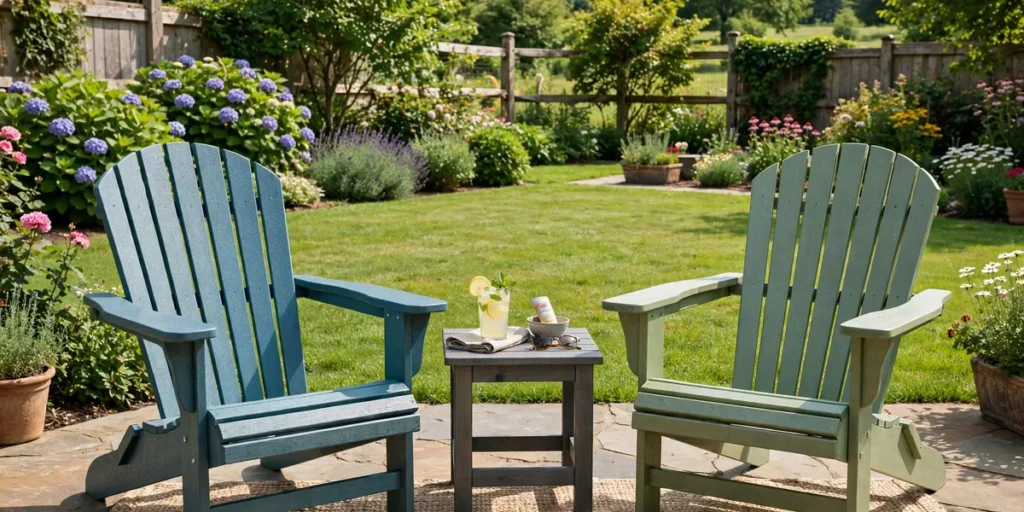
Buying outdoor furniture sounds simple until you start comparing materials. Some products use wood, others use metal, and many now feature something called HDPE. So, what is HDPE furniture, and is it really different from ordinary plastic furniture?
HDPE furniture is made from high-density polyethylene, a tough type of plastic that manufacturers form into solid boards and molded parts for outdoor chairs, tables, benches, and swings. It does not absorb water, it never needs staining or sealing, and the better brands back it with warranties of up to 20 years. It also costs more than basic plastic or wood furniture, and it is heavy. Whether it is the right choice depends on how it is built, not just on the material name.
What Is HDPE Furniture?
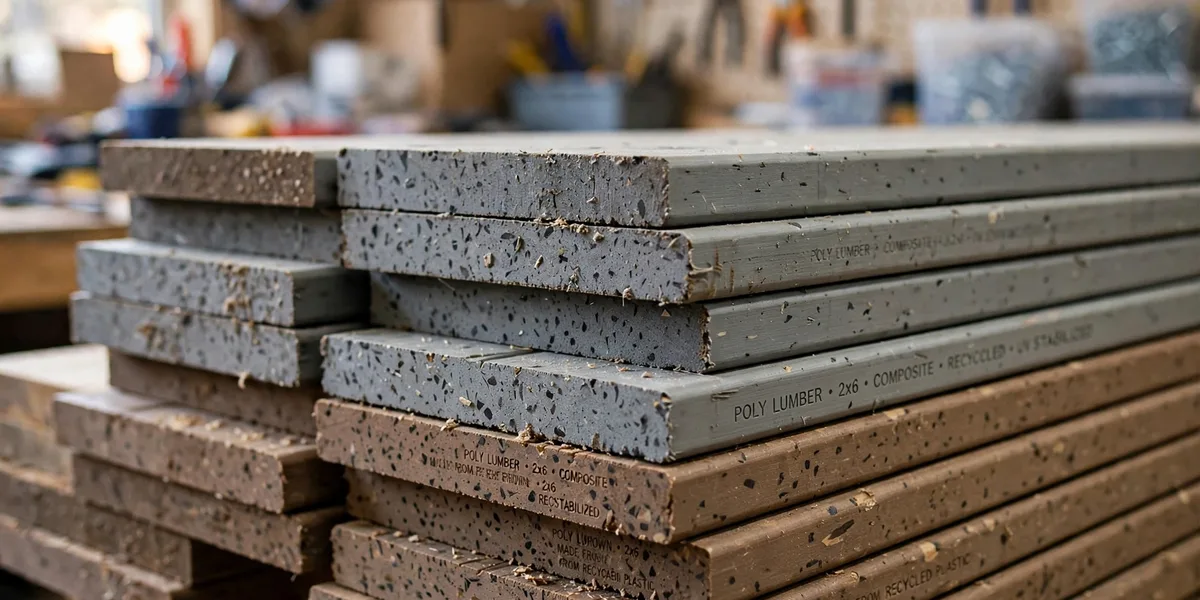
HDPE furniture is any furniture made using high-density polyethylene plastic. Manufacturers process the material into thick boards, often called poly lumber, or mold it into shaped components, then cut and assemble those pieces much like real timber.
You will commonly find it in outdoor furniture because HDPE handles weather well. Unlike untreated wood, it does not soak up water, so it does not swell, rot, or feed insects. Research by the United States Forest Service on recycled plastic lumber confirms the point: HDPE-based plastic lumber is nonabsorbent and resistant to decay, which is exactly why it keeps showing up in boardwalks, park benches, and now backyard furniture.
The material name alone does not guarantee a good product, though. Construction, hardware, UV protection, and the actual plastic blend all decide how a piece performs outdoors.
What Does HDPE Stand For?
HDPE stands for high-density polyethylene.
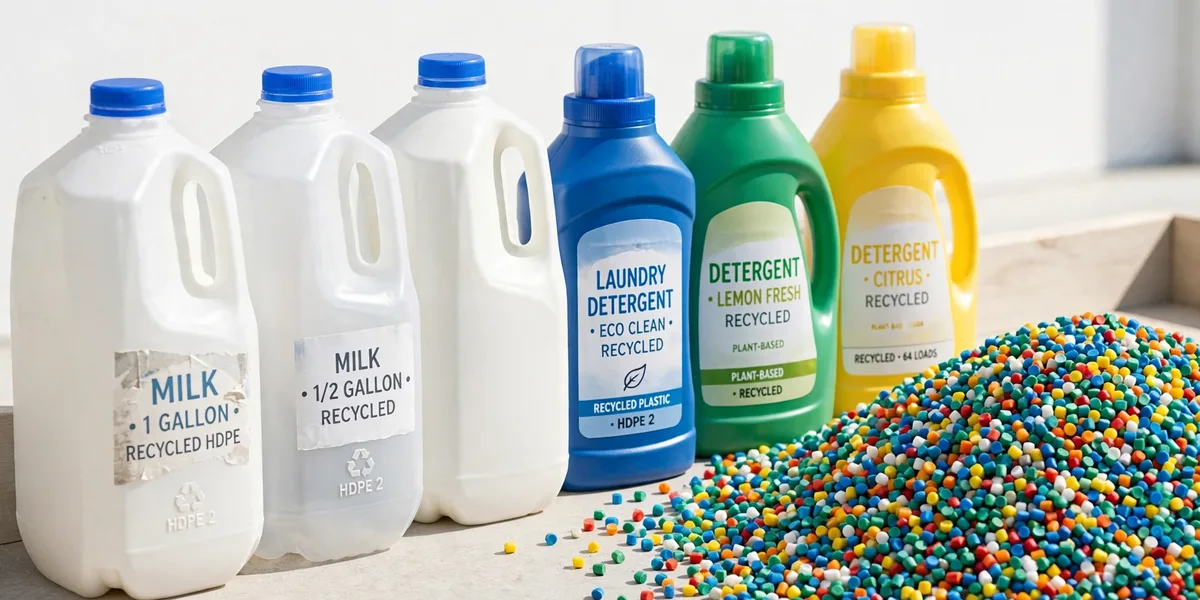
It is a thermoplastic, which means manufacturers can soften it with heat and shape it during production, then let it harden into a rigid board or part. The same material is used in everyday products such as milk jugs, detergent bottles, and bottle caps.
“High density” describes the tightly packed molecular structure of this type of polyethylene. That dense structure is what gives the material its strength and stiffness compared with softer, low-density plastics. In furniture, HDPE becomes boards that can look surprisingly like painted wood, without using any natural timber.
Is HDPE Furniture Made From Recycled Plastic?
It can be, but not every HDPE furniture product contains recycled material. Manufacturers work with three broad options:
- Recycled HDPE: plastic recovered from used products such as milk jugs and detergent containers.
- Virgin HDPE: newly manufactured polyethylene resin.
- Blended materials: a mix of recycled and virgin plastic, sometimes with other polymers or fillers.
The best-known HDPE furniture brand, POLYWOOD, builds its lumber from recycled milk jugs and detergent bottles, and it has worked this way since 1990. Many smaller brands do the same. Others quietly use mostly virgin resin.
So do not assume the word HDPE guarantees recycled content. Before buying, check the manufacturer’s material declaration: look for the recycled percentage, and whether it is post-consumer plastic (recovered after household use) or post-industrial scrap. That one detail separates a genuinely recycled product from a marketing label.
How HDPE Furniture Is Made
HDPE furniture starts as plastic resin or recovered plastic. From there, a typical recycled poly lumber process runs through six stages:
- Collection: the manufacturer obtains suitable recycled plastic, often bales of used containers.
- Cleaning and preparation: the plastic is washed and processed for manufacturing.
- Shredding and pelletizing: the recovered material is reduced to flakes or pellets.
- Blending: the pellets are mixed with color pigments and UV-stabilizing additives.
- Forming: the blend is extruded into boards or molded into shaped components.
- Cutting and assembly: boards are cut to size and fastened together into finished furniture.
Not every manufacturer follows the identical route. Extrusion is the most common method for boards, while some parts are molded directly into shape. Either way, the finished material can support everything from a simple side table to a full dining set.
Common Types of HDPE Outdoor Furniture
HDPE works in several furniture styles because the boards can be cut like lumber and the material can also be molded into curves. Common options include:
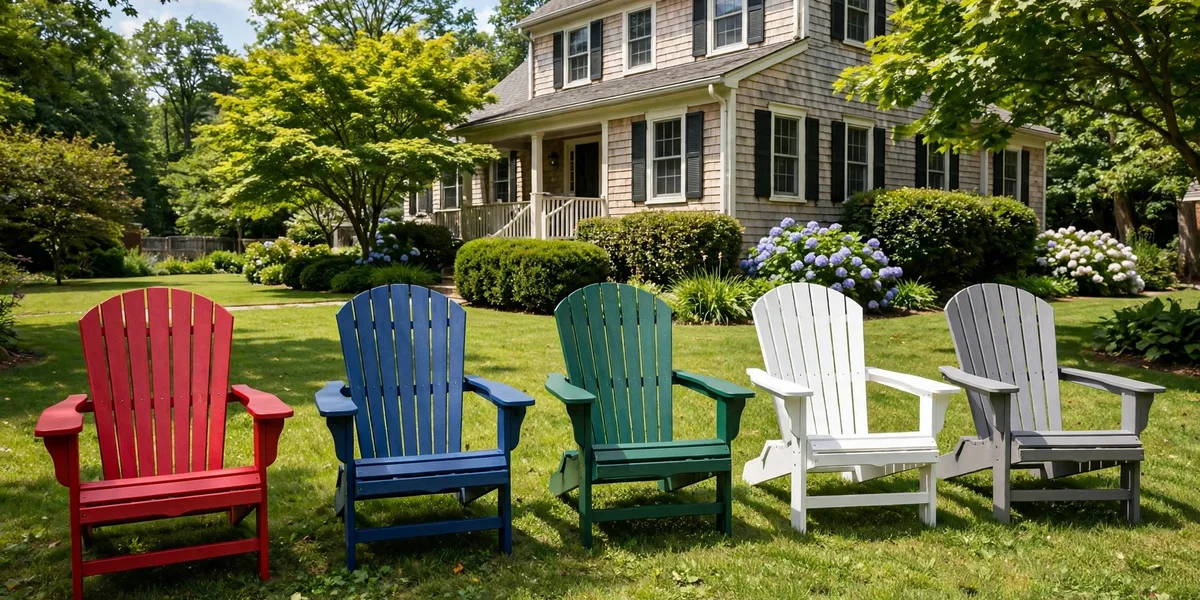
- Adirondack chairs: the classic slanted-back outdoor seat, and the most popular HDPE product of all.
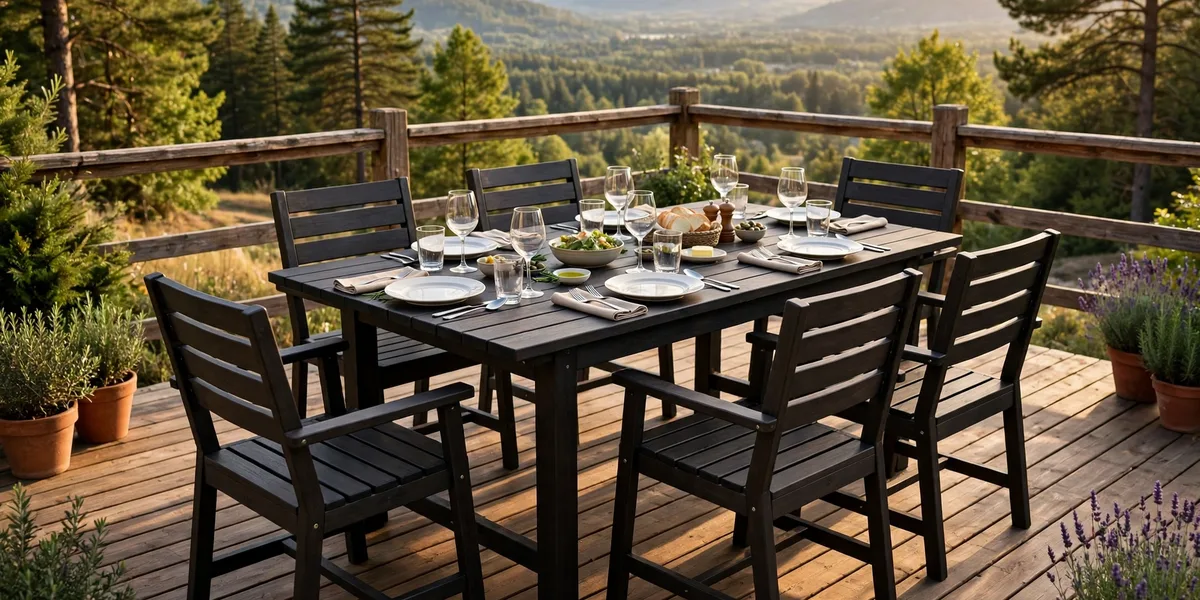
- Dining sets: tables with matching chairs for outdoor meals.
- Garden benches: seating for patios, gardens, and walkways.
- Rocking chairs: outdoor rockers with curved runners.
- Porch swings: suspended seating for porches and verandas.
- Side tables: small surfaces that complete a seating group.
- Deep seating and loungers: cushioned sofas and chaise lounges for poolside use.
The best design depends on your space and how you use it. A dining set serves a different purpose than a compact garden bench, so start from the spot the furniture has to fill.
Benefits of HDPE Furniture
HDPE offers several real advantages for outdoor use. The actual results still depend on the formulation and how well the piece is built, but these are the benefits that hold up across good products.
It Does Not Absorb Water or Rot
This is HDPE’s main advantage. Wood absorbs moisture, and that moisture drives swelling, cracking, and eventually rot. HDPE does not absorb water at all, so rain, humidity, sprinklers, and pool splashes do not damage the material itself. That makes it a strong option for uncovered patios, coastal homes, and poolside areas where wood furniture ages quickly.
The hardware and joints still deserve a look, because a furniture piece is only as weatherproof as its weakest part. But the boards themselves will not rot.
Almost No Maintenance
HDPE furniture needs far less surface maintenance than wooden outdoor furniture. There is no staining, sealing, sanding, or repainting in its future, because the color and protection are part of the material, not a coating on top of it.
Routine care is basic: soap, water, and a soft brush a few times a season. For a homeowner who wants furniture that simply stays outside and stays usable, this is the strongest practical argument for HDPE.
Color Goes All the Way Through
Quality HDPE lumber is made with the color pigment and UV stabilizers blended through the whole board, not painted on the surface. Two things follow from that. First, scratches and scuffs are far less noticeable than on a painted finish, because the material underneath is the same color. Second, UV stabilizers slow down fading and sun damage, so the piece holds its color for years.
When you shop, ask directly whether UV stabilizers are included and whether the warranty covers fading. A cheap board without stabilizers can chalk and fade surprisingly fast.
No Splinters and No Insect Damage
HDPE has no natural grain, so it cannot splinter the way weathered wood does. Bare feet and small hands are safe on it. It also gives wood-boring insects nothing to eat, so termites and carpenter bees are a non-issue.
That said, check the finished edges before you buy. A well-made piece has smooth, rounded edges; a poorly finished one can have sharp corners even though the material itself never splinters.
Disadvantages of HDPE Furniture
HDPE is not the right choice for every buyer. Its limitations are just as consistent as its benefits, and knowing them upfront prevents disappointment later.
Dark Colors Get Hot in Direct Sun
Like most materials left in strong sunlight, HDPE furniture heats up, and darker colors absorb noticeably more heat than lighter shades. A black or dark brown chair on an uncovered patio can become uncomfortable to sit on at midday in summer.
If your furniture will live in full sun, choose a lighter color, plan for shade, or budget for cushions. It is a small decision that makes a daily difference.
It Is Heavy to Move
HDPE furniture is dense. A single Adirondack chair typically weighs 30 to 60 lbs, roughly double a comparable cheap resin chair. That weight is a plus in windy locations, because pieces stay where you put them. It is a minus if you like rearranging your patio or storing furniture for winter, because every piece is a two-hand lift.
Higher Upfront Cost
Expect to pay more at the start. A single HDPE Adirondack chair from an established brand generally runs $150 to $600, and full dining sets climb well past that. Basic wood or molded resin furniture costs less on day one.
The honest comparison is cost over time: a well-built HDPE set is typically rated to last 15 to 20+ years outdoors with almost no upkeep spending, while a cheap set may need replacing two or three times in the same period. HDPE wins the long math for many buyers, but the upfront bill is real. For the bigger picture, see our guide on how much furniture costs across the home.
It Is Not Real Wood
HDPE can imitate the shape and even the color of painted wood, but it does not reproduce natural grain and texture. If the look and feel of real timber is the whole point for you, HDPE will always feel like a substitute. Buyers who prefer natural material should stay with wood and accept its maintenance.
HDPE vs. Wood, Metal, and Wicker
HDPE is one of several outdoor materials, and each alternative has its own strengths. This table sums up the general differences:
| Feature | HDPE | Wood | Metal | Wicker |
|---|---|---|---|---|
| Water resistance | High — absorbs nothing | Depends on wood and finish | Depends on metal and coating | Natural wicker poor; resin wicker high |
| Rot resistance | Fully resistant to decay | Can rot with moisture | Does not rot, but can rust | Natural wicker can rot; resin wicker does not |
| Maintenance | Very low — soap and water | Sealing or staining needed | Finish care may be needed | Low for resin wicker; natural wicker is indoor-only |
| Appearance | Wood-like colors available | Natural wood grain | Sleek metal look | Woven texture |
| Typical lifespan | 15–20+ years for quality brands | 5–15 years, care-dependent | 10–20 years, coating-dependent | 5–10 years outdoors |
HDPE vs. Wood
Wood offers the natural appearance many homeowners prefer, and solid options such as teak or cedar can last for years. But outdoor wood demands regular care, because moisture swells, cracks, and rots it over time. HDPE skips nearly all of that upkeep. Choose wood when natural material matters most; choose HDPE when low maintenance matters more.
HDPE vs. Metal
Metal furniture, usually aluminum or steel, has a slimmer profile and a different style. Its outdoor life depends on the metal and its protective finish: powder-coated aluminum resists rust well, while chipped steel can corrode. HDPE’s plastic components cannot rust at all. The catch is that HDPE furniture still uses metal fasteners, so near the coast you should confirm the hardware is stainless steel, ideally marine-grade 316, before buying.
HDPE vs. Wicker
Wicker has a woven look that suits traditional patio styles. Natural wicker is really an indoor material, though, and outdoor versions are usually resin wicker woven over a metal frame, so durability depends on both the weave and the frame. HDPE offers a solid, board-based style instead. Neither wins for every space; it comes down to the look you want and how much weather the spot gets.
Why Hardware and Construction Matter
Here is what buyers most often overlook: the plastic is only part of the product. Hardware connects every board, and it decides whether a chair feels rock-solid or wobbles within a year. When I compare two HDPE chairs side by side, I turn them over first: thick, even boards and stainless fasteners on the underside tell me more in ten seconds than any product description does.
Before purchasing, examine:
- Fastener type: stainless steel screws and bolts are the standard to look for; plain steel rusts and stains the boards.
- Joint design: overlapping, well-supported joints outlast simple butt joints.
- Board thickness: thicker boards flex less and feel more substantial when you sit down.
- Stability: sit in it if you can; a good piece has no sway.
- Weight capacity: 300 lbs per seat is the common standard for quality chairs; oversized models go higher.
- Warranty: the leading brands offer up to a 20-year residential warranty against cracking, splintering, chipping, peeling, and rot. A seller offering one year, or none, is telling you something.
A product can use genuine HDPE and still be badly built. The material label starts the conversation; construction finishes it.
How to Clean and Maintain HDPE Furniture
Cleaning HDPE furniture is about as simple as outdoor furniture care gets. Manufacturers consistently recommend mild soap and water, and that is genuinely all most pieces need. For a fuller routine that works across materials, see our guide on how to clean outdoor furniture without damaging it.
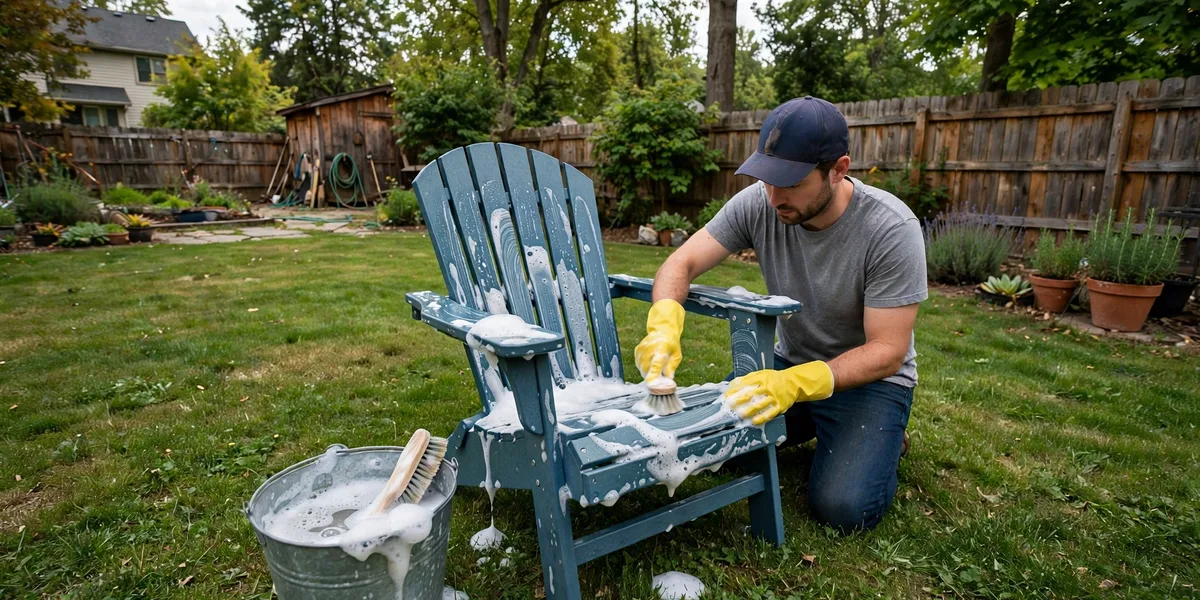
A straightforward routine:
- Brush or rinse off loose dirt and leaves.
- Wash the surface with warm water and mild dish soap, using a soft-bristle brush.
- Work the brush into corners and between boards, where grime collects.
- Rinse away all the soap.
- Let the furniture air-dry, or wipe it down with a soft cloth.
A few precautions keep the finish safe:
- Follow the manufacturer’s own cleaning instructions first.
- Avoid harsh chemical cleaners and abrasive pads unless the maker approves them; they can dull the surface.
- For stubborn stains, a diluted bleach solution is commonly approved by major brands, but confirm it in your product’s care guide before trying.
- Check fasteners and joints once or twice a year and tighten anything that has worked loose.
- Read the warranty before attempting repairs or surface changes, so you do not void it by accident.
That is the whole maintenance burden: a wash a few times a season and an occasional hardware check.
Is HDPE Furniture Environmentally Friendly?
It can be, with honest qualifications. Furniture made from recycled HDPE takes plastic that was headed for landfill, such as milk jugs and detergent bottles, and locks it into a product that can serve for two decades. The United States Forest Service notes that recycled plastic lumber can contain substantial amounts of HDPE, and that polyethylene is one of the most commonly recycled plastics because the waste stream is so widely available.
But “made from plastic” is not automatically green. Check four things:
- Recycled content: is the furniture recycled or virgin HDPE, and what percentage is recycled?
- Plastic composition: is it HDPE alone, or a blend that is harder to recycle later?
- Recyclability: can the finished product go back into a recycling stream at the end of its life? Pure HDPE lumber generally can.
- Product lifespan: a chair that lasts 20 years is a better environmental story than three cheap chairs landfilled in the same period, whatever each is made of.
The fair summary: recycled HDPE furniture with a long warranty is one of the more responsible outdoor furniture choices. Virgin-plastic furniture with a one-year warranty is a much weaker one, even if both carry the HDPE name.
What to Check Before Buying HDPE Furniture
Two products can share the same material label and be built to completely different standards. Use this checklist to compare them on specifications instead of marketing:
- Confirm whether the furniture uses recycled or virgin HDPE.
- Check the manufacturer’s recycled-content percentage.
- Ask whether UV stabilizers are blended through the material.
- Inspect board thickness and overall construction quality.
- Check that fasteners are stainless steel (marine-grade 316 for coastal homes).
- Review the weight-capacity specification — 300 lbs per seat is the quality benchmark.
- Read the warranty length and exclusions; up to 20 years is the top standard.
- Check the recommended cleaning instructions.
- Consider the piece’s weight and whether you will need to move it often.
- Confirm replacement parts are available if a board or fastener fails.
Five questions worth asking the seller directly:
- What percentage of the material is recycled?
- Is the color and UV protection blended through the board, or surface-applied?
- What hardware holds the furniture together?
- What does the warranty actually cover, and for how long?
- Can I buy replacement components later?
A manufacturer that answers these clearly is usually a manufacturer worth buying from.
Conclusion
HDPE furniture deserves serious consideration for patios, decks, gardens, and poolside spaces, especially if low maintenance is your priority. It does not absorb water, does not rot or splinter, needs nothing more than soap and water, and in its better forms carries warranties of up to 20 years.
My recommendation is simple: do not buy on the HDPE label alone. Check the recycled content, the UV protection, the board thickness, the stainless hardware, and the warranty. Those five details separate a chair that serves your family for twenty years from one that fades and wobbles in three. Match the specifications to your space and climate, and HDPE can be the last outdoor furniture you buy for a very long time.
Frequently Asked Questions
Is HDPE furniture good for outdoor use?
Yes. HDPE suits outdoor furniture because it absorbs no moisture and resists decay, insects, and splintering. UV protection and construction quality still decide how well a specific product performs, so check both before buying.
Is HDPE furniture the same as POLYWOOD?
No. HDPE is the material; POLYWOOD is one brand that makes furniture from it. Many other manufacturers also produce HDPE furniture, each with its own material blend, construction, and warranty, so specifications vary between brands.
Does HDPE furniture fade in sunlight?
It can change color slowly over time, depending on its formulation and sun exposure. Furniture with UV stabilizers and color blended through the board resists fading far better. Note that most warranties, even 20-year ones, cover the lumber against cracking and rot rather than color change, so built-in UV protection matters from day one.
Does HDPE furniture require special cleaning products?
Usually not. Mild soap, water, and a soft brush handle routine cleaning. Always follow the manufacturer’s care instructions, and check before using bleach solutions or abrasive cleaners on the finish.
Is HDPE furniture better than wood?
It depends on your priorities. HDPE needs far less maintenance and will not rot, while wood offers a natural grain and feel that HDPE cannot fully copy. Choose HDPE for easy care and long outdoor life; choose wood for natural appearance.

jarvis
jarvis shares practical cleaning, home care, improvement and everyday living guides for Urban Home Guide readers.
Keep Exploring
Related Home Guides