
Cleaning Dogs Ears at Home: A Safe Step-by-Step Guide for Every Dog Owner
Cleaning dogs ears at home can feel stressful, especially if you’re doing it for the first time. Many dog owners worry about hurting their pet, cleaning too deeply, or making…
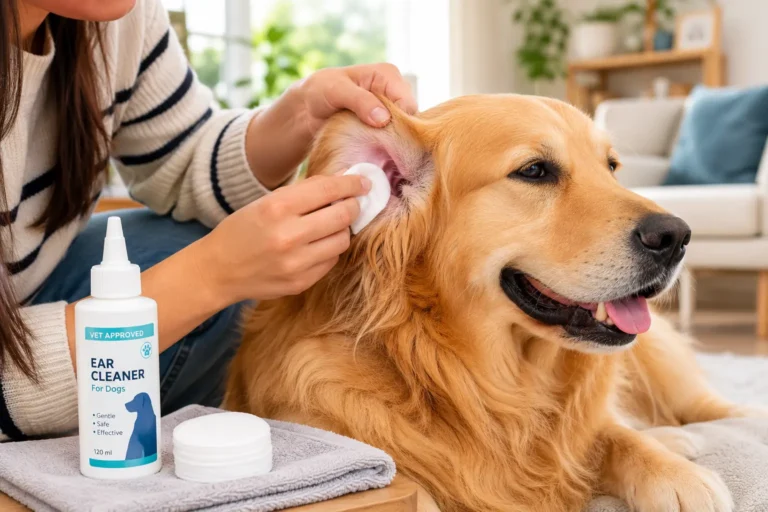
Cleaning dogs ears at home can feel stressful, especially if you’re doing it for the first time. Many dog owners worry about hurting their pet, cleaning too deeply, or making an ear problem worse. Others notice wax buildup, a mild odor, or frequent head shaking and aren’t sure whether it’s normal or a sign of an ear infection. If you’ve searched online, you’ve probably come across conflicting advice that makes the process even more confusing. The truth is that cleaning a healthy dog’s ears is usually simple and safe when you use the right products and follow the correct technique.
After reviewing trusted veterinary guidance and understanding the most common concerns dog owners have, one thing stands out—people don’t need complicated medical terms; they need clear, practical advice they can trust. That’s exactly what this guide provides. You’ll learn when your dog’s ears need cleaning, how to clean them safely at home, what mistakes to avoid, and the warning signs that mean it’s time to visit your veterinarian. By the end of this guide, you’ll feel confident caring for your dog’s ears while knowing when professional veterinary care is the safer choice.
Quick Answer
Can you clean your dog’s ears at home?
Yes. Most healthy dogs can have their ears cleaned safely at home using a veterinarian-approved ear cleaner, cotton balls or soft gauze, and a gentle cleaning method.
Do not clean your dog’s ears if they are swollen, bleeding, painful, or have thick discharge or a strong odor. These signs may indicate an ear infection or another medical condition that should be examined by a veterinarian.
Is It Safe to Clean Your Dog’s Ears at Home?
Yes—but only if your dog’s ears are healthy.
Routine ear cleaning removes excess wax, dirt, and debris that naturally collect in the outer ear. It can also help reduce trapped moisture in dogs that swim often or have floppy ears.
However, home ear cleaning is meant for routine maintenance, not for treating ear infections.
If your dog has severe redness, swelling, bleeding, or pain, cleaning the ears may cause discomfort and delay proper treatment. In these situations, schedule a veterinary examination instead of attempting to clean the ears yourself.
A simple rule to remember is:
- Healthy ears = Home cleaning may be appropriate.
- Painful or infected ears = Veterinary care first.
Why Do Dogs Get Dirty Ears?
Many owners wonder why their dog’s ears become dirty even when they groom them regularly.
The answer lies in how a dog’s ears protect themselves.
The ear canal naturally produces wax that traps dust, pollen, dirt, and other tiny particles before they reach deeper parts of the ear. Normally, small amounts of wax leave the ear on their own.
Some dogs, however, produce more wax or trap more moisture than others.
Common reasons dogs develop dirty ears include:
- Natural wax buildup
- Swimming
- Bathing
- Dust and pollen
- Hair inside the ear canal
- Floppy ears that reduce airflow
- Seasonal or food allergies
These factors do not always lead to ear infections, but they can increase the need for regular ear checks.
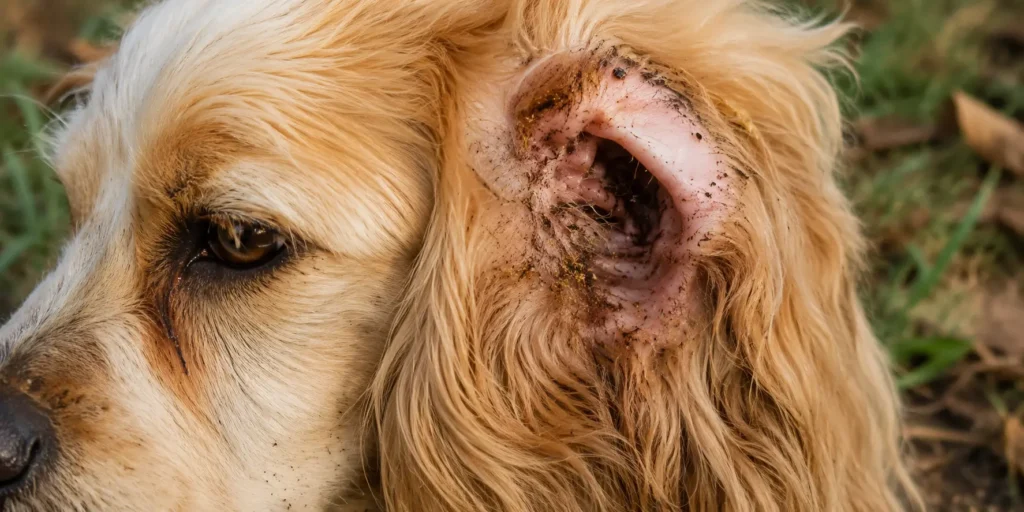
A Quick Look at Your Dog’s Ear
Understanding your dog’s ear makes cleaning much easier.
The visible part is called the ear flap. Just below it is the outer ear canal.
Unlike people, dogs have an L-shaped ear canal. This shape helps protect the inner ear but also means wax and debris can collect more easily.
Because of this unique shape, you should never insert cotton swabs or sharp objects deep into your dog’s ear. They can push wax farther inside or damage delicate tissue.
During routine ear cleaning, only clean the areas you can clearly see.
Why Is Cleaning Your Dog’s Ears Important?
Cleaning your dog’s ears is about more than keeping them looking clean. It is part of maintaining your dog’s overall health.
Removes Excess Wax
Ear wax protects the ear canal by trapping dirt and debris. However, too much wax can reduce airflow and make the ear feel uncomfortable.
Gentle cleaning removes extra wax while leaving enough to protect the ear naturally.
Removes Dirt and Debris
Dogs pick up dust, grass, sand, and pollen during walks and playtime.
Cleaning helps remove these materials before they build up.
Helps Reduce Moisture
Moisture left behind after swimming or bathing can remain inside the ear canal, especially in dogs with floppy ears.
Removing excess moisture may help reduce the conditions that allow bacteria or yeast to multiply.
Helps You Spot Problems Early
Routine ear cleaning allows you to examine your dog’s ears closely.
You may notice:
- Redness
- Swelling
- Unusual discharge
- Bad odor
- Foreign objects
- Small injuries
Finding these signs early allows your veterinarian to diagnose problems before they become more serious.
Keeps Your Dog Comfortable
Dogs with dirty ears often shake their heads or scratch their ears because they feel itchy.
Keeping the ears clean helps many dogs stay comfortable between grooming sessions.
Signs Your Dog’s Ears Need Cleaning
Not every dog needs weekly ear cleaning.
Instead of following a strict schedule, learn to recognize when your dog’s ears actually need attention.
Healthy ears that may benefit from routine cleaning usually have:
- Light brown wax
- Small amounts of visible dirt
- A mild waxy smell
- No pain
- No swelling
- No thick discharge
Your dog may also:
- Shake its head occasionally
- Scratch the ears lightly
- Have damp ears after swimming
These signs often indicate that routine cleaning is appropriate.
Dirty Ears vs. Ear Infection
One of the biggest questions dog owners ask is:
“How do I know if my dog just has dirty ears or an ear infection?”
The table below can help you decide.
| Routine Cleaning May Be Appropriate | Contact Your Veterinarian |
|---|---|
| Light brown wax | Yellow, green, black, or bloody discharge |
| Mild dirt | Strong foul odor |
| No pain | Pain when touching the ear |
| No swelling | Severe redness or swelling |
| Normal behavior | Constant head shaking |
| Healthy pink skin | Loss of balance or head tilt |
This table is only a general guide. Ear infections, ear mites, allergies, and other medical conditions can look similar. A veterinarian can determine the underlying cause and recommend the correct treatment.
Dogs That Need Extra Ear Care
Some dogs naturally need more ear care than others.
You should check your dog’s ears more often if they:
- Have floppy ears
- Swim regularly
- Have seasonal or food allergies
- Grow thick hair inside the ear canal
- Have had ear infections in the past
Regular ear checks allow you to remove excess wax before it becomes a bigger problem.
What You Need Before Getting Started
Preparing everything in advance makes ear cleaning much easier.
Gather these supplies:
- Veterinarian-approved dog ear cleaner
- Cotton balls or soft gauze
- Clean towel
- Dog treats
- Disposable gloves (optional)
Avoid using products made for people unless your veterinarian specifically recommends them.
Before Cleaning Checklist
Before you begin, take a few minutes to prepare.
✔ Choose a quiet room with good lighting.
✔ Read the instructions on the ear cleaner.
✔ Wash your hands.
✔ Let your dog sniff the bottle.
✔ Keep clean cotton balls nearby.
✔ Have treats ready.
✔ Wear clothes you don’t mind getting dirty.
✔ Stay calm and speak gently.
✔ Never rush the process.
A relaxed dog is much easier to handle than a frightened one.
If your dog becomes anxious, stop for a few minutes and try again later.
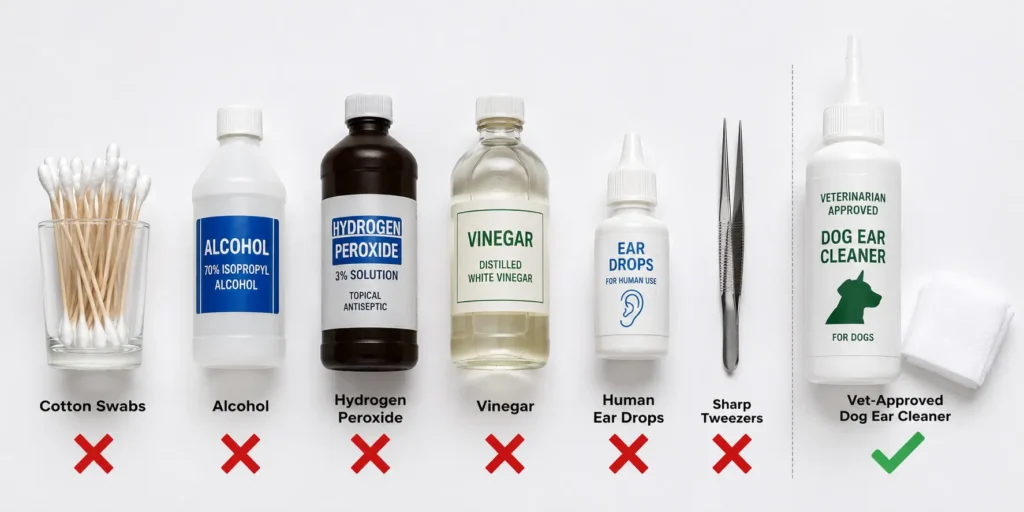
What Should NOT Be Used to Clean a Dog’s Ears
Using the wrong products can irritate the ears or make cleaning less effective.
Cotton Swabs
Cotton swabs often push wax deeper into the ear canal instead of removing it.
Alcohol
Alcohol can dry the delicate skin inside the ear and may cause irritation.
Hydrogen Peroxide
Hydrogen peroxide is not recommended for routine ear cleaning because it can irritate healthy tissue.
Human Ear Drops
Products made for people are not formulated for dogs and should only be used if prescribed by your veterinarian.
Sharp Objects
Never place tweezers, hairpins, or other pointed objects inside your dog’s ears.
Homemade Ear Cleaners Without Veterinary Advice
Many online recipes suggest vinegar, essential oils, or other household ingredients.
These products may irritate sensitive ears or make existing problems worse.
When in doubt, use a veterinarian-approved ear cleaner designed specifically for dogs.
Key Takeaways So Far
Before you begin cleaning your dog’s ears, remember these important points:
- Healthy ears are light pink with little or no odor.
- A small amount of light brown wax is normal.
- Only clean healthy ears.
- Never use cotton swabs inside the ear canal.
- Use a veterinarian-approved ear cleaner.
- Stop and contact your veterinarian if your dog has pain, swelling, bleeding, or thick discharge.
With the right preparation and a gentle approach, most dog owners can safely clean healthy ears at home.
How to Clean Your Dog’s Ears: Step-by-Step
Once you have your supplies ready, you can begin cleaning your dog’s ears. Work slowly and gently. Most dogs accept ear cleaning better when they feel relaxed and know they will receive praise and treats afterward.
If your dog seems nervous, let them sniff the ear cleaner first. Speak in a calm voice and reward calm behavior throughout the process. Never force your dog to stay still. A positive experience today makes future ear cleaning much easier.
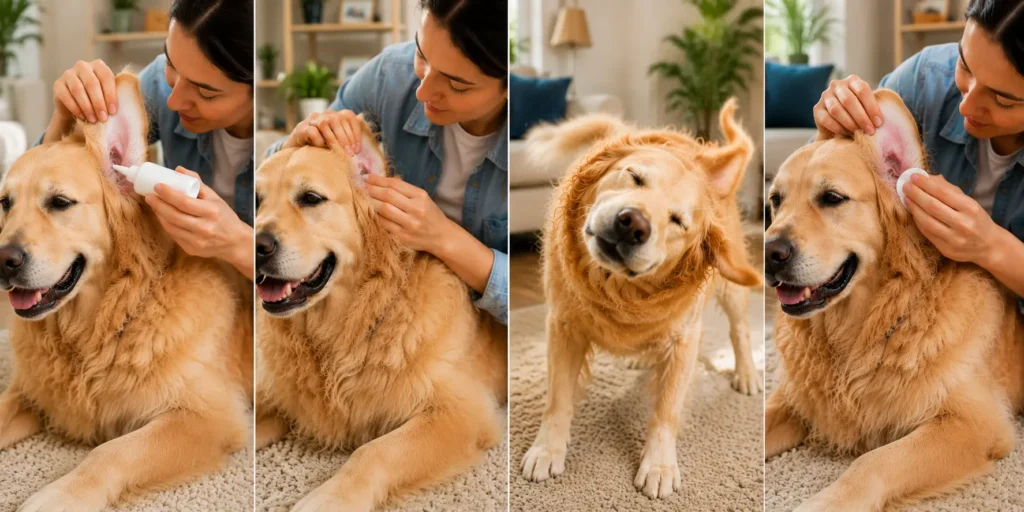
Step 1: Apply the Ear Cleaner
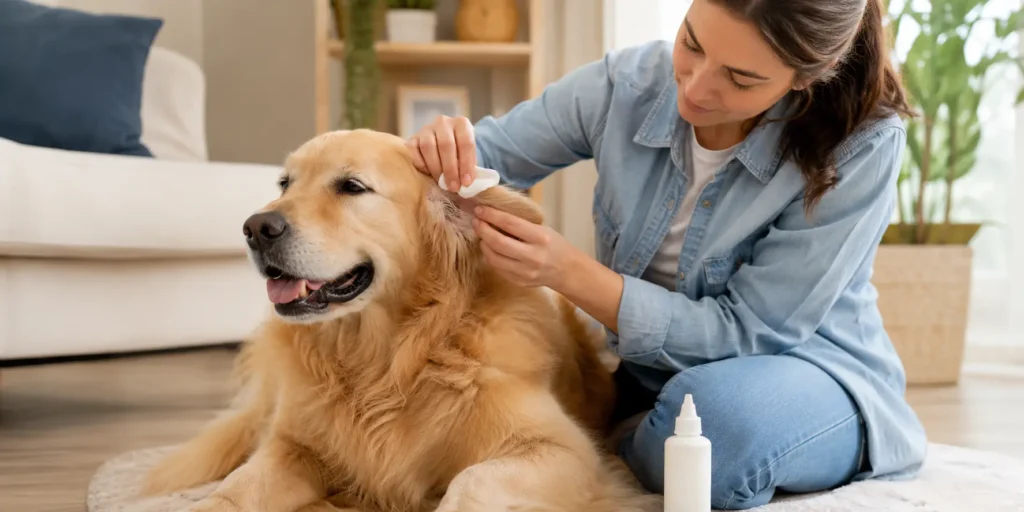
Gently lift your dog’s ear flap to expose the ear opening.
Hold the ear cleaner just above the ear canal. Avoid placing the bottle tip deep inside the ear. This helps keep the bottle clean and reduces the chance of irritation.
Squeeze the amount of ear cleaner recommended on the product label into the ear.
Next, gently lower the ear flap and massage the base of the ear for 20 to 30 seconds.
You should hear a soft squishing sound. This means the cleaning solution is mixing with wax and debris inside the outer ear canal.
The gentle massage loosens buildup and helps the cleaner work more effectively.
Step 2: Let Your Dog Shake Its Head
After massaging the ear, step back and allow your dog to shake its head.
Many owners worry that this means something is wrong. In fact, head shaking is a normal part of the cleaning process.
Shaking helps move loosened wax, dirt, and extra cleaning solution toward the outside of the ear, where it is easier to remove.
Keep a towel nearby because some cleaner may splash.
Step 3: Wipe Away Dirt and Wax
Use a clean cotton ball or soft gauze pad to wipe the inside of the ear flap and the visible part of the ear canal.
Only clean the areas you can clearly see.
Never push your finger, cotton swab, or any object deep into the ear canal. This may push debris farther inside and increase the risk of injury.
If the cotton ball becomes dirty, replace it with a clean one.
Continue wiping until you remove the loose wax and debris.
Remember that healthy ears naturally contain a small amount of protective wax. Your goal is to remove excess buildup, not every trace of wax.
Step 4: Reward Your Dog
When both ears are clean, praise your dog and offer a favorite treat.
Positive reinforcement helps build trust and makes future ear cleaning sessions much easier.
Many dogs become more cooperative once they realize ear cleaning ends with praise and rewards.
What If Your Dog Won’t Sit Still?
Many first-time owners face this problem.
If your dog keeps moving, avoid forcing them into position.
Instead:
- Stay calm and speak softly.
- Offer treats between each step.
- Ask another person to gently comfort your dog if needed.
- Keep sessions short.
- Stop if your dog becomes frightened or overly stressed.
- Try again later if necessary.
If your dog becomes aggressive or shows signs of pain, stop cleaning and contact your veterinarian.
What Is Normal After Cleaning?
It is normal for your dog to react to the cleaning solution for a few minutes.
You may notice:
- A few head shakes
- Small amounts of cleaner coming out of the ear
- Mild scratching for a short time
- Your dog rubbing one ear briefly on the carpet
These reactions usually stop quickly.
What Is NOT Normal After Cleaning?
Some reactions should never be ignored.
Contact your veterinarian if your dog has:
- Bleeding
- Severe pain
- Continued crying
- Thick discharge
- A strong odor that remains
- Swelling
- Loss of balance
- A head tilt
- Head shaking that continues for several hours
These signs may indicate an ear infection, ear mites, or another medical condition that requires treatment.
How Often Should You Clean Your Dog’s Ears?
There is no universal cleaning schedule for every dog.
Some healthy dogs rarely need ear cleaning. Others need regular ear checks because of their breed, lifestyle, or medical history.
As a general guide:
| Dog Type | Ear Care Recommendation |
|---|---|
| Healthy dogs | Check regularly and clean only when needed |
| Floppy-eared breeds | Check weekly for wax and moisture |
| Dogs that swim often | Check after swimming and clean if needed |
| Dogs with allergies | Follow your veterinarian’s advice |
| Dogs with recurring ear problems | Use the schedule recommended by your veterinarian |
Cleaning too often can remove the ear’s natural protective wax and irritate the skin inside the ear canal.
When in doubt, ask your veterinarian how often your dog should have its ears cleaned.
Common Mistakes to Avoid
Avoiding these common mistakes helps protect your dog’s ears.
Cleaning Too Often
Healthy ears do not need constant cleaning.
Too much cleaning may irritate the ear canal.
Using Cotton Swabs
Cotton swabs usually push wax deeper into the ear instead of removing it.
Using Human Ear Products
Products made for people may not be safe for dogs.
Always use products designed for dogs or recommended by your veterinarian.
Ignoring a Bad Smell
A strong odor is not normal.
It often suggests an underlying problem rather than dirty ears.
Cleaning Painful Ears
If your dog cries, pulls away, or seems uncomfortable, stop immediately.
Pain should always be examined by a veterinarian.
Trying Homemade Remedies Without Advice
Household ingredients such as vinegar or essential oils may irritate sensitive ears.
Choose veterinarian-approved ear cleaners instead.
When Should You Visit a Veterinarian?
Routine ear cleaning supports healthy ears, but it cannot diagnose or treat ear disease.
Arrange a veterinary examination if your dog has:
- Thick yellow, green, black, or bloody discharge
- A strong foul odor
- Swelling
- Severe redness
- Constant scratching
- Frequent head shaking
- Pain when the ears are touched
- Loss of balance
- A head tilt
- Repeated ear infections
These symptoms may be caused by bacteria, yeast, ear mites, allergies, or another medical condition.
Only a veterinarian can determine the underlying cause and recommend the correct treatment.
Conclusion
Keeping your dog’s ears healthy isn’t about cleaning them as often as possible—it’s about cleaning them correctly and knowing when to stop. Safe ear care starts with regular ear checks, gentle cleaning, and using products made specifically for dogs. Throughout this guide, you’ve learned not only how to clean your dog’s ears at home but also how to recognize the signs that require veterinary attention. In my experience reviewing veterinary best practices and pet care guidance, the owners who have the most success are those who stay consistent with routine ear checks rather than waiting until a problem becomes serious. When you’re ever unsure, trust your observations and seek veterinary advice instead of guessing. A few minutes of proper ear care today can help keep your dog comfortable, healthy, and free from preventable ear problems in the future.
Frequently Asked Questions
Can I clean my dog’s ears at home?
Yes. Most healthy dogs can have their ears cleaned safely at home using a veterinarian-approved ear cleaner and a gentle cleaning technique.
Can I clean my dog’s ears after swimming?
Yes. Swimming can leave moisture inside the ears.
Should I clean my dog’s ears before or after a bath?
Many owners prefer checking and cleaning the ears after bathing if moisture has entered the ears.
Be sure to dry the outer ear gently afterward.
Can I use baby wipes?
No.
Baby wipes are not made for cleaning a dog’s ears and may contain ingredients that irritate sensitive skin.
Can I use water?
Plain water is generally not recommended because moisture left inside the ear canal may encourage bacteria and yeast to grow.
Can I use cotton swabs?
No.
Cotton swabs can push wax deeper into the ear canal and increase the risk of injury.
Is light brown ear wax normal?
Yes.
A small amount of light brown wax is a normal finding in healthy dogs.
Why does my dog shake its head after ear cleaning?
A few head shakes are normal because they help remove extra cleaning solution.
If shaking continues for several hours or your dog appears painful, contact your veterinarian.
What if my dog hates ear cleaning?
Work slowly and use positive reinforcement.
Offer treats, keep sessions short, and stop if your dog becomes overly stressed.
If your dog continues to resist, ask your veterinarian or a professional groomer to demonstrate safe handling techniques.
Can regular ear cleaning prevent ear infections?
Routine ear cleaning can reduce wax buildup and trapped moisture in dogs that need ear care.
However, it cannot prevent every ear infection because allergies, parasites, and other medical conditions may also affect the ears.

Muhammad Muaz
Muhammad Muaz shares practical cleaning, home care, improvement and everyday living guides for Urban Home Guide readers.
Related Home Guides