
How to Clean Patio Furniture Without Damaging It
Patio furniture can look rough after months outside. Dirt settles into wicker, pollen coats frames, cushions pick up stains, and metal may start showing rust. If you’re wondering how to…
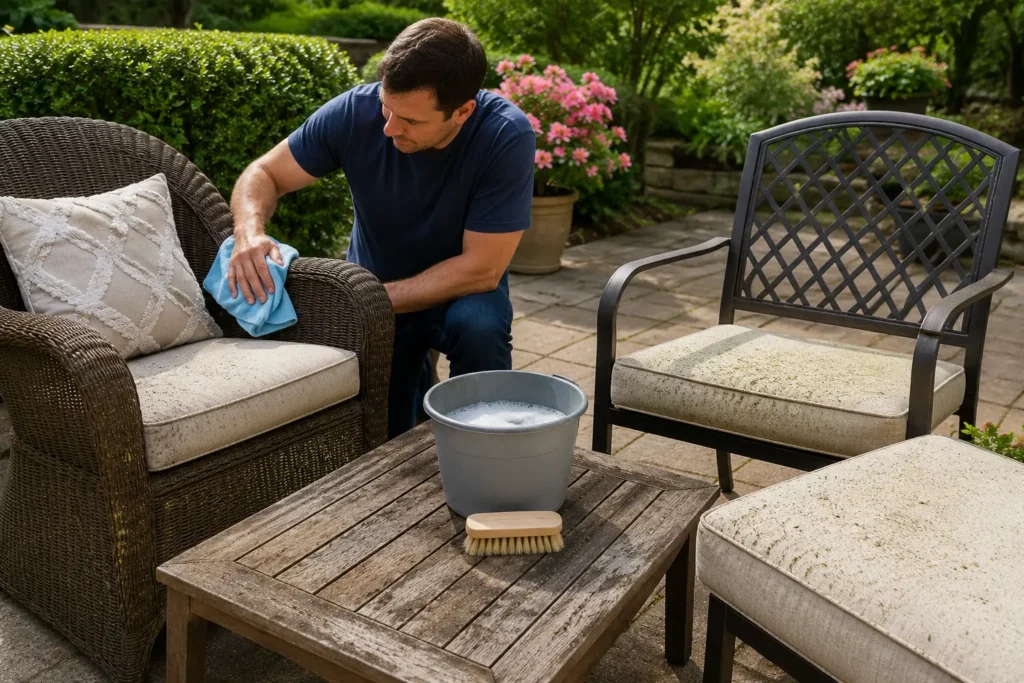
Patio furniture can look rough after months outside. Dirt settles into wicker, pollen coats frames, cushions pick up stains, and metal may start showing rust. If you’re wondering how to clean patio furniture without making things worse, start with the material. Mild soap and water suit many surfaces, but stronger cleaners do not. My view is simple: start gentler than you think you need to. Move to material-specific treatment only when the stain or finish calls for it.
How to Clean Patio Furniture Safely: Start Here
Before reaching for bleach, vinegar, or a pressure washer, identify what you are cleaning. Wood, wrought iron, cast aluminum, HDPE, resin, wicker, and outdoor fabric do not react the same way.
First, remove loose dirt and debris. Then check the manufacturer’s care instructions or fabric label. Spot-test any cleaner in a hidden area before treating the full surface. For routine cleaning, basic supplies cover most jobs. Keep mild dish soap, warm water, a soft brush, microfiber cloth, sponge, vacuum, and garden hose nearby.
Here is the safest starting point:
| Material | Start with | Main concern |
|---|---|---|
| HDPE, resin, MGP | Mild soap and water | Embedded grime or surface residue |
| Cast aluminum | Mild soap and soft cloth | Scratches or finish damage |
| Wrought iron | Mild cleaning first | Rust and chipped coating |
| Natural wicker | Gentle, controlled moisture | Over-saturation |
| Synthetic wicker | Mild soap and water | Dirt in the weave |
| Teak and other wood | Gentle cleaning | Weathering, mildew, finish condition |
| Outdoor fabric | Care-label-approved cleaning | Stains, mildew, fading, shrinkage |
Never Mix Cleaning Products
Some DIY cleaning ideas should not be combined. Never mix household bleach with other cleaners or disinfectants. In particular, bleach should not be mixed with vinegar or ammonia.
This is one place where caution matters more than convenience. If a stronger product is needed, follow the furniture or fabric maker’s instructions instead of building a homemade chemical mix.
Clean Each Patio Furniture Material the Right Way
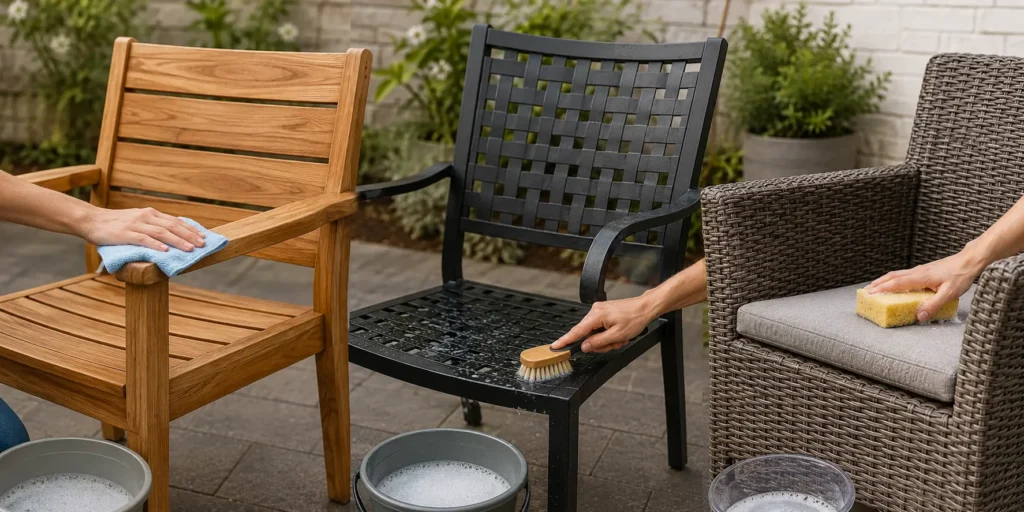
HDPE and Poly Furniture
HDPE, or high-density polyethylene, is designed for outdoor use and usually needs straightforward care. Start with mild soap, water, and a soft brush or cloth. Focus on pollen, food residue, sunscreen, and ordinary outdoor grime.
If dirt sits in textured areas, work it loose gently rather than attacking the surface with a harsh abrasive. The practical goal is to clean the surface without creating unnecessary wear.
Cast Aluminum Furniture
Cast aluminum furniture can collect grime around joints, decorative details, and textured finishes. Use mild soap, water, and a soft cloth or brush first.
Pay attention to the finish. Aggressive scrubbing can be more damaging than the dirt itself. If you see oxidation or damaged coating, treat that as a finish issue rather than simply increasing cleaning force.
Wrought Iron Furniture
With wrought iron, rust is the issue to watch. Clean ordinary dirt first so you can see the actual condition of the metal.
If rust or chipped paint appears, cleaning alone may not solve it. Rust treatment, sanding, rust-resistant primer, or touch-up paint may be needed. Therefore, do not keep scrubbing one rusty area as if it were only a stain.
Natural and Synthetic Wicker Furniture
Wicker is a weaving method, not one single material. That distinction matters.
Natural wicker, including rattan and similar plant-based materials, needs gentle cleaning and controlled moisture. Synthetic resin wicker tolerates routine outdoor cleaning more easily. For either type, vacuum or brush loose debris from the weave first. Then clean carefully and let the furniture dry thoroughly.
Resin Patio Furniture
Resin furniture often looks worse than it really is because pale surfaces can show grime quickly. Start with mild soap and water.
For stubborn marks, move slowly rather than jumping to stronger chemicals. White and colored plastics may not react the same way to aggressive cleaners. So the safer approach is to check the maker’s instructions before using bleach or an abrasive product.
Marine Grade Polymer Furniture
Marine grade polymer, or MGP, also benefits from simple maintenance. Mild soap and water are the practical starting point for dirt, salt residue, sunscreen, and everyday grime.
Because the material is built for outdoor exposure, overcomplicated cleaning is rarely the best first move. Clean the surface, rinse appropriately, and dry it before deciding whether a remaining mark needs special treatment.
Teak Furniture
Gray teak can look alarming at first, but that color alone does not mean the wood is dirty. Teak can weather to a silver-gray patina.
Clean gently and separate dirt or mildew from normal weathering. If you want to preserve a warmer wood appearance, maintenance may involve a suitable protective treatment. If you prefer the gray patina, do not scrub aggressively just to restore a newer-looking color.
Care for Teak After Cleaning
Decide first which appearance you want. Teak may be left with its weathered silver-gray patina, or maintained for a warmer look. If you choose the warmer appearance, follow suitable teak care with protective treatment as needed.
Lloyd Loom Furniture
Lloyd Loom should be handled with controlled moisture and gentle cleaning. Start by removing loose dust and debris from the woven surface.
Then use a mild method rather than soaking the material. As with natural wicker, the key is to clean the weave without leaving it saturated.
Other Outdoor Wood Furniture
Wood needs a little more judgment than plastic or metal. Painted, sealed, stained, and unfinished surfaces can require different care.
Start gently and clean with the grain where practical. Then look at what remains. Mold, mildew, gray weathering, and a failing finish are different problems. If the finish itself is breaking down, stronger scrubbing will not repair it.
Cypress and Other Outdoor Wood
Cypress and other outdoor woods also benefit from this approach. Clean first, assess second, and reserve sanding, sealing, or protective oil for true finish or maintenance needs.
Clean Outdoor Cushions and Fabric Without Guessing
Outdoor fabric is often where people get nervous, and for good reason. A cleaner that works on a metal frame may be wrong for a cushion.
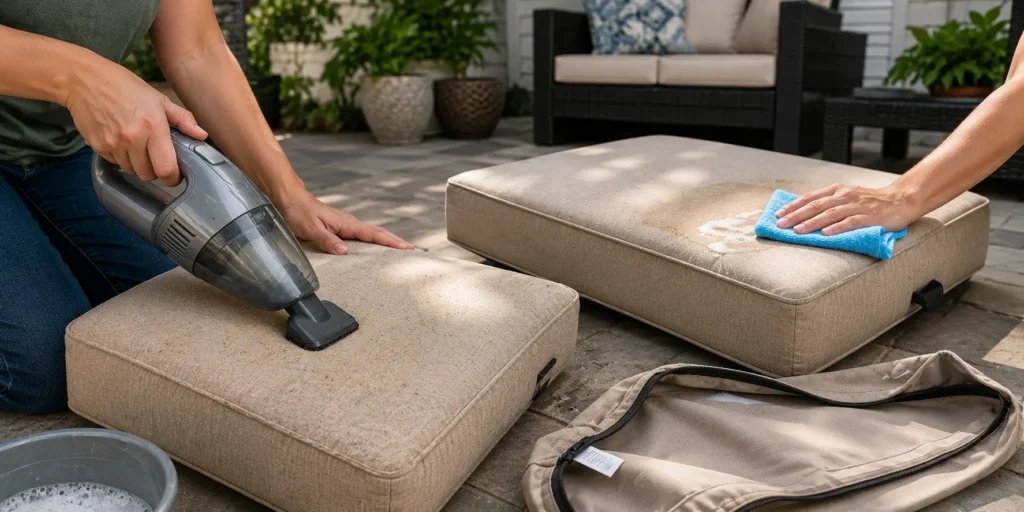
Start with the care label. Next, check whether the covers are removable. Some removable covers can be machine washed when the manufacturer allows it. Fixed upholstery usually needs hand or spot cleaning.
Performance fabrics, solution-dyed fabrics, Sunbrella-type materials, olefin, polypropylene, polyester, sling, and mesh should not be treated as one generic category. Manufacturer instructions take priority.
Vacuum loose dirt first. Then use the approved cleaning method and allow the fabric to air-dry thoroughly. If the fabric has a water- or stain-repellent finish, maintenance may eventually include restoring that protection with a suitable fabric product.
Hypoallergenic and Milder Cleaning Options
If you prefer a milder approach, start with the least aggressive method that can solve the problem. Mild soap and water often cover routine cleaning.
However, “natural” does not automatically mean safe for every material. Vinegar, baking soda, peroxide, oxygen bleach, and other common options should still be matched to the surface and care instructions.
Treat Common Patio Furniture Stains by Problem
Stains are easier to handle when you identify the problem first. Do not use one strong cleaner for everything.
Common issues include:
- Mold and mildew
- Pollen
- Bird droppings
- Tree sap
- Sunscreen and body oils
- Grease or oil
- Food and drink
- Grass stains
- Rust marks
- Algae, moss, and general grime
For cushions, the earlier research supports stain-specific treatment for grass, oil, sap, sunscreen, mold, and mildew. On hard surfaces, the material still controls what cleaner is appropriate.
Mold and Mildew on Outdoor Fabric
Mold and mildew need more care than ordinary dirt. Begin with the fabric label and manufacturer guidance.
Some performance fabrics, including specified Sunbrella upholstery, allow diluted bleach solutions for severe mold or mildew. That does not make bleach universal. Other materials may discolor or weaken.
So use bleach only when the manufacturer explicitly permits it. Otherwise, stay with the approved fabric-cleaning method.
Can You Pressure Wash Patio Furniture?
Sometimes, but it should not be the default.
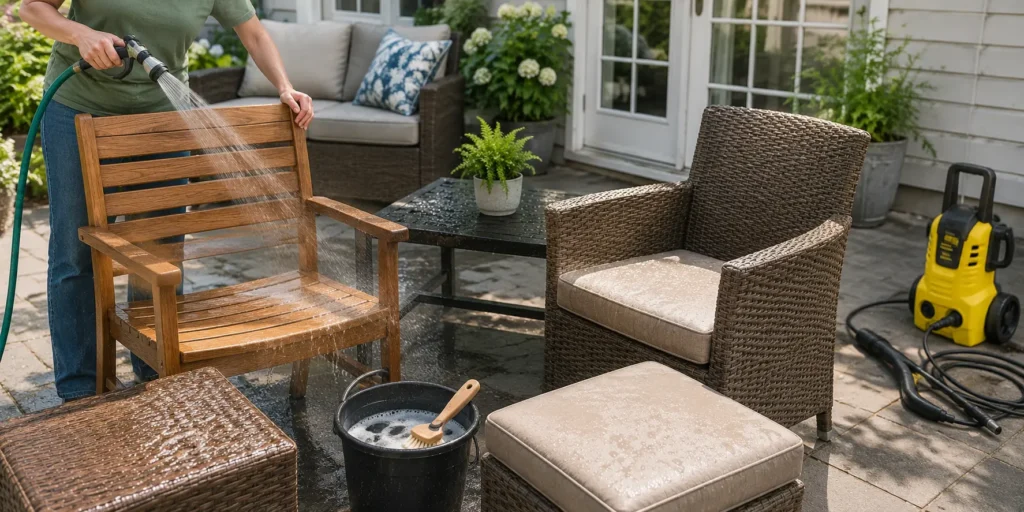
Competitor advice varies, especially for wood. Some guidance allows lower pressure in certain cases, while other guidance recommends avoiding power washing unless the manufacturer directs it.
The more practical option is to begin with hand cleaning and a garden hose. Pressure washing can affect finishes, older materials, wood fibers, or woven surfaces. Therefore, use it only when the furniture maker and material clearly support it.
Can You Use Bleach on Patio Furniture?
Bleach is not a universal patio cleaner.
Some manufacturers allow it on specific fabrics or surfaces. Others warn against it. Because of that, the care label or manufacturer instructions should decide the issue.
If bleach is approved, follow those directions closely. If it is not approved, choose a material-safe alternative instead. And never combine bleach with vinegar, ammonia, or another cleaner.
How Often Should You Clean Patio Furniture?
There is no single schedule that fits every patio. Exposure changes the maintenance need.
Humidity can increase mildew problems. Coastal air can contribute to metal corrosion. Heavy pollen may call for more frequent surface cleaning, while strong sun can increase weathering and fading.
A practical routine is to clean when dirt, pollen, spills, or mildew appear, then add deeper seasonal care when needed. Before storage, make sure furniture and cushions are clean and dry.
Keep Patio Furniture Clean for Longer
Once the furniture is clean, prevention saves work.
Use furniture covers where appropriate. Store cushions when they do not need to stay outside, and keep them dry before storage. Clean spills promptly, inspect metal for early rust, and deal with mildew before it spreads.
Wood may need sealer or protective oil depending on the finish and desired appearance. Fabric may need a suitable protectant. Meanwhile, chipped metal finishes may need rust-resistant primer or paint rather than more cleaning.
Protect Outdoor Fabric for Longer
Fabric maintenance also protects your budget. Keep cushions clean, dry, and protected instead of waiting for deep staining or mildew. Proper maintenance can delay the point when replacement becomes the only practical option.
Conclusion
The biggest mistake is treating every patio set as if it were made from the same material. It isn’t, and the cleaner should follow the surface, not the stain alone.
Start mild. Identify the material. Read the care label. Then escalate only when the furniture maker or fabric instructions support the next step.
That approach may feel less dramatic than reaching for bleach or a pressure washer. Still, it is the more practical choice. Clean what is actually dirty and protect any finish that remains sound. Treat rust, mildew, or weathering separately when those problems need separate care.
Frequently Asked Questions
What Is the Safest Cleaner for Most Patio Furniture?
Mild dish soap and water are the safest general starting point for many patio materials. However, always check the material and manufacturer instructions before using anything stronger.
Can I Use Vinegar on Patio Furniture?
Vinegar appears in outdoor-furniture cleaning guidance, but it is not suitable for every surface. Use it only when the material or care instructions support it, and never mix it with bleach.
Can Patio Cushions Go in the Washing Machine?
Some removable cushion covers can be machine washed when the care label allows it. Fixed or non-removable upholstery should be cleaned according to the fabric maker’s directions.
Is Gray Teak Dirty?
Not necessarily. Teak can weather naturally to a silver-gray patina, so color change alone does not mean the furniture needs aggressive cleaning.
Should I Pressure Wash Outdoor Furniture?
Only when the furniture material and manufacturer guidance support it. Hand cleaning and a garden hose are the safer starting point for most routine jobs.

Muhammad Muaz
Muhammad Muaz shares practical cleaning, home care, improvement and everyday living guides for Urban Home Guide readers.
Related Home Guides