- Your cart is empty Browse Shop
Furniture
How to Clean Rattan Furniture Without Damaging It
Dust gets trapped between woven strands, stains settle into tight corners, and the wrong cleaning spray can damage a finish you cannot easily repair. If you are trying to work…

Dust gets trapped between woven strands, stains settle into tight corners, and the wrong cleaning spray can damage a finish you cannot easily repair. If you are trying to work out how to clean rattan furniture safely, the first thing to check is what your furniture is made of.
For most routine cleaning, you need a soft brush, a vacuum, and a cloth lightly dampened with mild soapy water. Natural rattan needs gentler treatment than synthetic outdoor furniture. Too much moisture or aggressive scrubbing can damage delicate fibers and finishes.
The good news is that you probably already have the basic cleaning supplies at home. Once you know which type of rattan you own, the cleaning process becomes much simpler.
Quick Answer: To clean rattan furniture safely, first work out what it is made of. Vacuum the weave with a soft brush attachment, then wipe it with a cloth lightly dampened in mild soapy water. Natural rattan should never be soaked, and varnished pieces need a finish-safe cleaner. Let the piece dry fully in a shaded, well-ventilated spot before you use it again.
At a Glance
- Best method: vacuum first, then wipe with a lightly damp cloth and mild soapy water
- Natural rattan: dry dusting first, damp cloth only — never soak it
- Synthetic rattan: mild soapy water and a soft brush; a gentle garden hose rinse only if the maker allows it
- Varnished rattan: soft cloth and a finish-safe cleaner; test in a hidden spot first
- Never use: bleach on natural rattan, a pressure washer on any rattan, or abrasive pads on any rattan
- Drying: shade with good airflow, never in strong direct sunlight while wet
Know What Your Rattan Is Made Of
Not all woven furniture handles cleaning products or moisture the same way. Before you reach for a wet sponge, take a closer look at the material.
Natural rattan comes from plant fibers and is commonly used in indoor chairs, cabinets, and decorative furniture. It has a warm, organic appearance, but it absorbs water quickly. Excess moisture can swell the fibers, change the shape of the piece, and encourage mold.
Synthetic rattan, sometimes called resin wicker or PE rattan, uses manufactured materials designed for outdoor furniture. It generally tolerates routine cleaning with water better than natural rattan.
Varnished rattan has a protective finish that also needs care. Even when the underlying material is natural, the condition of its coating affects how you should clean it. A damaged coating lets moisture reach the fibers underneath.

Here is a quick comparison.
| Furniture type | Suitable cleaning approach | Main precaution |
|---|---|---|
| Natural rattan | Soft brushing and lightly damp wiping | Avoid soaking the fibers |
| Synthetic rattan | Mild soapy water and gentle brushing | Avoid abrasive cleaning and high pressure |
| Varnished rattan | Soft cloth and gentle, finish-safe cleaning | Protect the existing coating |
| Outdoor rattan furniture | Synthetic: mild soap + soft brush, gentle hose if the maker allows it; natural: damp cloth only, keep it dry | Match the method to the material, not the location |
What Is the Difference Between Wicker and Rattan?
Rattan is a material, while wicker describes a weaving technique.
That means a wicker chair is not necessarily made from natural rattan. It could contain synthetic fibers, cane, or other woven materials.
This distinction matters because a cleaning method suitable for plastic wicker may be too harsh for natural fibers.
Check the furniture label or manufacturer’s care instructions when available. If you are unsure about the material, start with dry cleaning rather than applying a cleaning solution.
Gather Your Cleaning Supplies and Check for Damage
You do not need a cupboard full of specialty products to clean rattan furniture.
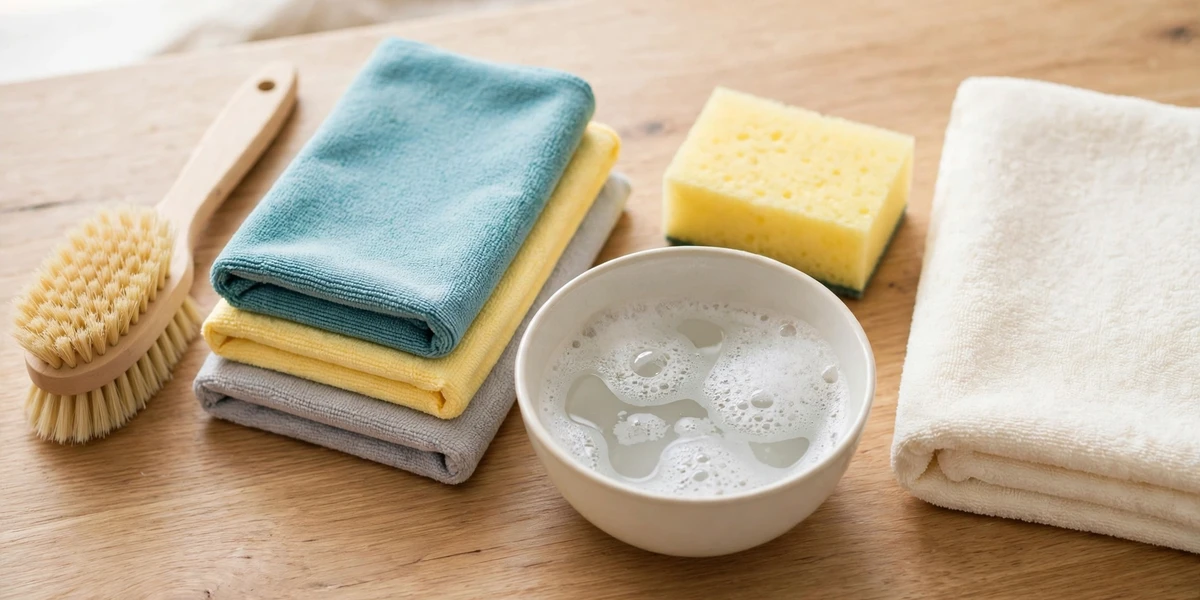
For regular maintenance, gather these basic supplies:
- A vacuum cleaner with a soft brush attachment
- A soft-bristle brush or clean toothbrush
- Microfiber cloths
- A soft sponge
- Mild dish soap
- Warm water
- A clean, dry towel
A soft toothbrush is especially helpful around tightly woven sections where a larger brush cannot reach.
Before cleaning, inspect the furniture for loose strands, cracks, peeling varnish, or damaged joints. These areas may need attention before you apply moisture.
Also, test any cleaning solution on a small, hidden area first. Check the manufacturer’s instructions, particularly for painted, varnished, or antique pieces.
Gentle cleaning should always come before stronger products. It is easier to remove another layer of dirt than to repair a damaged finish.
How to Clean Rattan Furniture, Step by Step
For everyday dirt, begin with the least aggressive cleaning method. The following steps work as a starting point, provided you adjust the moisture level for your furniture’s material.
Step 1: Remove Cushions and Loose Items
Take off removable cushions and anything resting on the furniture.
This gives you better access to the woven surfaces and prevents cleaning moisture from reaching the fabric unnecessarily.
Keep cushions separate so you can clean them according to their care labels.
Step 2: Vacuum Away Loose Dust
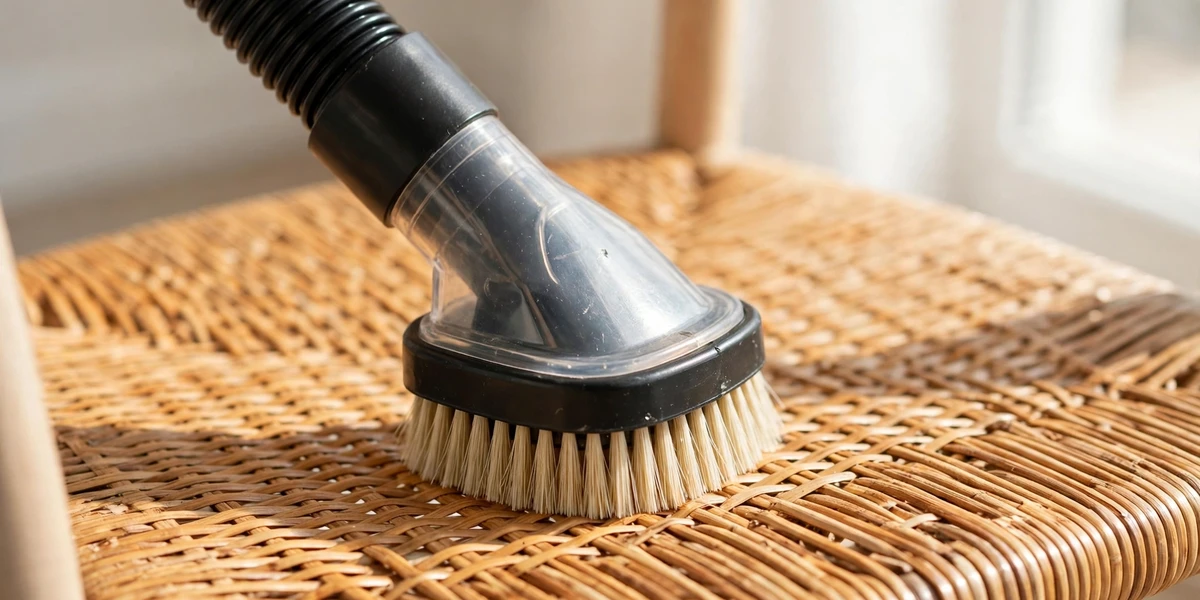
Use a vacuum cleaner with a soft brush attachment to remove dust from the seat, backrest, and sides.
Move gently along the woven pattern. Pay attention to the gaps where dirt collects.
If the vacuum cannot reach a tight corner, loosen the debris with a soft toothbrush.
Do not push the brush forcefully between strands. The aim is to lift dirt without disturbing the weave.
Step 3: Prepare a Mild Cleaning Solution
Mix about 2 oz (roughly 60 ml) of mild dish soap into a gallon (about 4 litres) of lukewarm water. More soap does not clean better — it leaves residue that attracts dirt faster.
For natural rattan, lightly dampen a soft cloth with the solution. Avoid saturating the cloth or allowing water to collect between fibers.
Synthetic rattan can usually handle a soft sponge or brush with mild soapy water. Still, follow the furniture maker’s cleaning directions.
Step 4: Clean the Woven Surface Gently
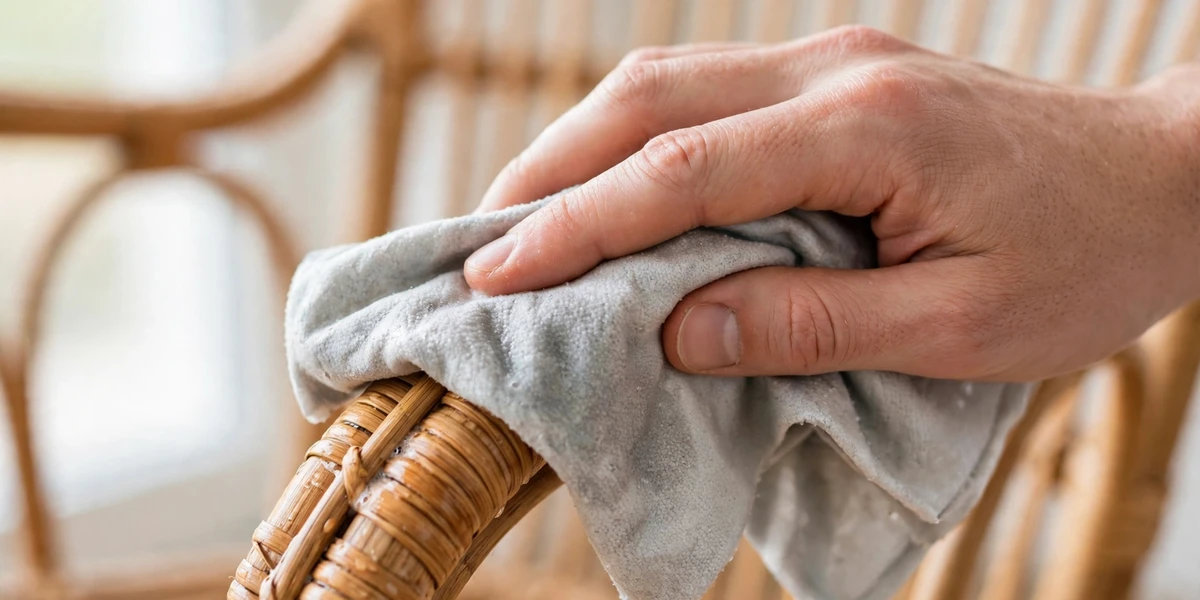
Wipe along the weave rather than scrubbing across it aggressively.
Use a soft brush to work on dirt caught in small openings. However, stop if the fibers begin to loosen or the finish shows signs of damage.
For stubborn spots, repeat the gentle cleaning process instead of immediately switching to a stronger chemical — a little patience is better than a damaged chair.
Step 5: Remove Soap Residue
Use a separate clean cloth to remove the remaining soap.
On natural rattan, keep this cloth only lightly damp. Do not pour water over the furniture or soak the woven sections.
With synthetic outdoor rattan, follow the manufacturer’s rinsing instructions. Avoid directing forceful streams of water into the weave or furniture joints.
Step 6: Allow the Furniture to Dry
Wipe away visible moisture with a dry towel.
Then place the furniture somewhere with good airflow until it is completely dry. For natural and finished pieces, avoid prolonged exposure to strong, direct sunlight. Sunlight while the piece is wet can warp natural rattan and fade the finish, so shade with moving air is the safer choice.
Do not replace cushions or put the furniture into storage while moisture remains trapped in the weave.
Keep Dust From Building Up With Regular Cleaning
A quick dusting is usually easier than removing layers of dirt later.
Use a soft brush or vacuum attachment to clear loose particles before they settle into the woven gaps. On indoor furniture, pay attention to the seat edges, arms, and areas around the frame.
Outdoor pieces may collect more debris from the surrounding environment. Therefore, inspect them after periods of heavy dust, pollen, or wet weather.
Regular cleaning also gives you a chance to spot loose strands or damaged finishes before they become harder to manage.
You do not need a deep clean every time you notice dust. Often, removing the loose dirt is enough.
Cleaning Natural Rattan Furniture
Natural rattan deserves extra care because its plant-based fibers can react to excessive moisture.
The safest approach is to remove dry dirt first and use as little cleaning solution as necessary.
Start by brushing or vacuuming the woven surface. Next, use a soft cloth lightly dampened with mild soapy water to clean dirty areas.
Avoid soaking the strands, particularly around joints and tightly woven sections. Afterward, remove any remaining soap with another lightly damp cloth.
Dry the furniture with good ventilation and keep it away from excessive heat or harsh sunlight.
What about using oil to condition natural rattan?
Boiled linseed oil is sometimes used to condition natural rattan and keep the fibers supple, but it is a maintenance step, not part of routine cleaning. Only use it on natural rattan, only when the manufacturer’s guidance permits it, and only on furniture that is completely dry. Applying oil over trapped moisture seals the water inside and can lead to rot. Use a thin coat, wipe it on with a soft cloth, and buff off the excess. Do not use raw linseed oil or kitchen oils such as olive oil — they stay sticky and attract dirt. Never apply oil or wax to synthetic rattan. It cannot absorb them, so they leave a sticky residue that attracts dust.
Natural rattan that is brittle, cracked, or already deteriorating may need repair rather than repeated cleaning.
Cleaning Varnished Rattan Furniture Safely
Varnished rattan may look easier to clean because of its coated surface. However, the finish itself can become damaged through harsh treatment.
Begin by removing loose dust with a soft cloth or vacuum attachment.
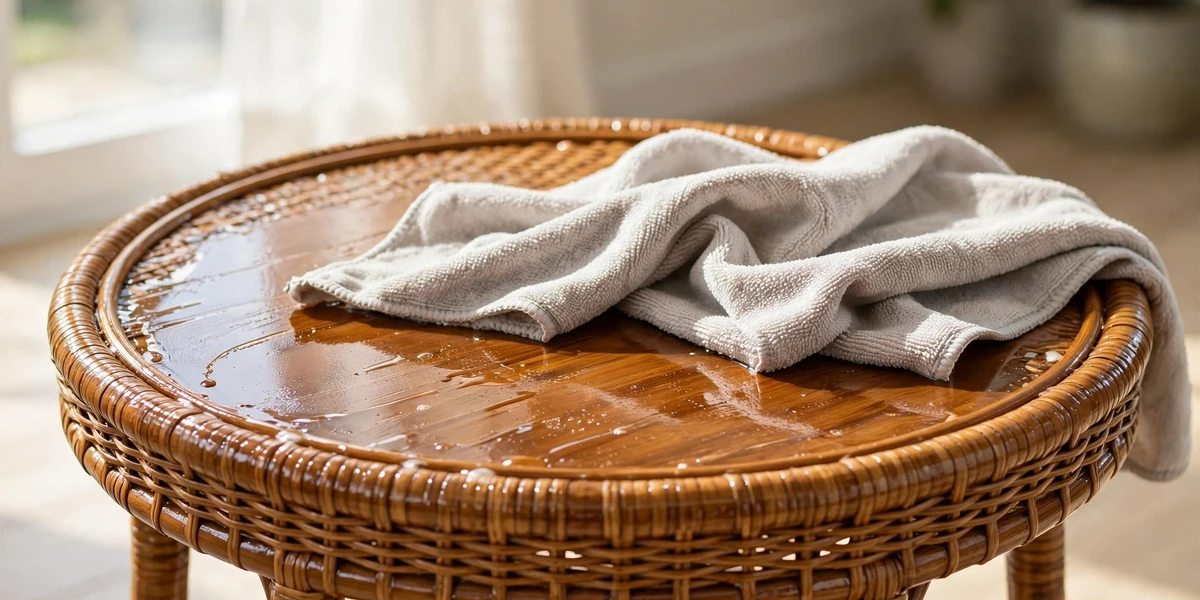
For marks that remain, use a slightly damp microfiber cloth with a mild, finish-compatible cleaning solution. Test it in an inconspicuous area first.
Avoid rough brushes, abrasive pads, and aggressive chemicals that could affect the coating.
Also, look closely at any peeling or cracked varnish. Moisture can reach the underlying material where the protective finish is damaged.
If the coating is already lifting, do not keep scrubbing the affected area. It may need appropriate refinishing or professional attention.
The aim is to remove surface dirt while preserving the existing finish.
Cleaning Outdoor Rattan Furniture
Outdoor furniture collects a different mix of dirt from indoor pieces. Pollen, dust, muddy marks, and weather-related grime can settle across the seat and frame.
Most modern synthetic rattan patio furniture can be cleaned with mild soapy water and a soft brush.
First, remove the cushions and vacuum away loose debris. Then clean the woven surfaces, paying attention to the spaces around the frame.
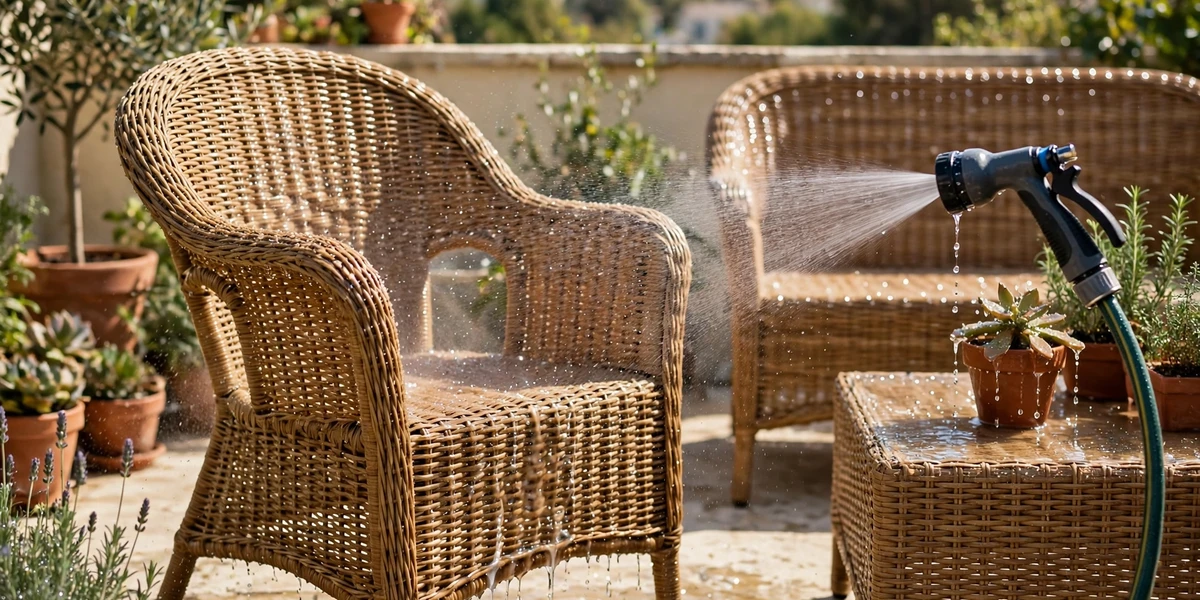
For synthetic pieces, remove soap residue according to the manufacturer’s instructions and allow the furniture to dry thoroughly. A garden hose on a gentle spray setting is enough for most synthetic rattan, but only use it if the maker allows it. Do not use a pressure washer. Outer’s wicker care guide gives the same advice — a broad, gentle hose spray is enough, and a pressure washer is not needed for outdoor synthetic wicker.
Do not assume every outdoor woven chair is synthetic, though. Natural rattan still needs moisture-sensitive cleaning, even when it has been used outside.
Check the frame material, too. Metal, wood, and coated surfaces may have separate cleaning requirements.
Protecting Outdoor Furniture With Covers
A suitable furniture cover can help reduce exposure to dirt, pollen, and rain.
However, covers should not trap moisture against the furniture. Allow the woven surfaces and cushions to dry before covering them.
Choose covers and storage arrangements that permit suitable airflow.
During periods when you will not use your furniture, follow the manufacturer’s storage recommendations. This is especially helpful when preparing outdoor furniture for colder or wetter weather.
Removing Stains, Mildew, and Pet Hair
Routine cleaning works well for ordinary dust, but certain problems require a more targeted approach.
The key is to identify what you are removing before choosing a cleaning product.
Removing Everyday Stains
Food spills, drink marks, grease, and sticky dirt may leave visible residue on woven furniture.
For a fresh spill, gently blot the affected surface rather than rubbing the stain deeper into the weave.
Then use a soft cloth and a mild cleaning solution appropriate for the material.
Work carefully around the affected area and remove any remaining soap afterward.
For older or stubborn stains, avoid automatically applying stronger household cleaners. Check the furniture’s material and finish before using a specialized product.
Some marks may be difficult to remove completely without damaging the surface.
Dealing With Mold and Mildew
Mold and mildew deserve more attention than ordinary dirt because moisture may be contributing to the problem.
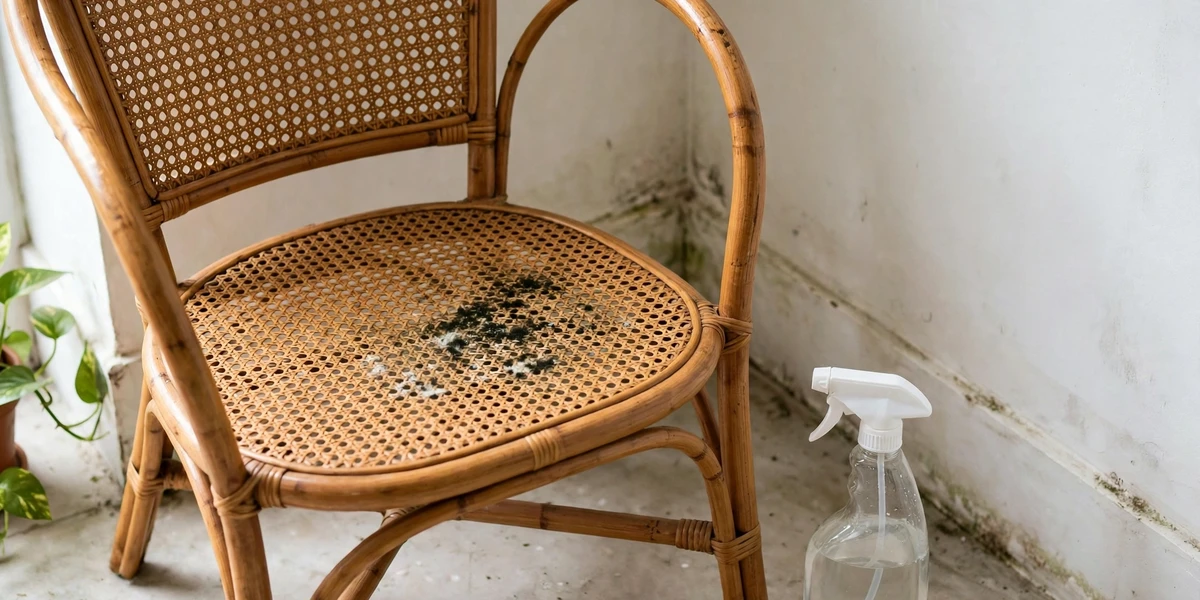
On synthetic furniture, mild cleaning may remove surface buildup. However, the material must dry thoroughly afterward. A 1:1 mixture of white vinegar and water is the usual mild option for surface mildew on synthetic rattan: mist it on, leave it for a few minutes, scrub gently with a soft brush, then rinse and dry fully.
Natural rattan is more complicated. Its porous fibers can make persistent contamination difficult to remove. Never use bleach on natural rattan — it strips the natural protective glaze, dries out the fibers, and can leave them weak, splintered, and discolored. Never mix bleach with vinegar or ammonia: together they release toxic fumes.
If mold keeps returning, or appears to extend into the fibers, the problem is usually the environment, not the furniture. Fix the moisture source first, and consider professional advice. For more on mold on furniture, see our guide to mold on wood furniture.
Removing Pet Hair From the Weave
Pet hair can become caught between woven strands, especially around chair seats and armrests.
Start with a vacuum cleaner fitted with a soft brush attachment.
For hair that remains in narrow gaps, gently loosen it with a soft brush before vacuuming again.
Avoid pulling or scraping the fibers to remove trapped hair. You want to clear the weave, not loosen it.
Cleaning Mistakes That Can Damage Rattan Chairs
Some cleaning methods remove dirt quickly but may cause problems with the furniture itself.
Here are the main practices to avoid.
Soaking natural rattan: Excess water can affect the condition and shape of natural fibers. Use controlled moisture instead.
Using a pressure washer: High-pressure water can damage woven strands, finishes, or joints. Never use a pressure washer on any rattan — natural or synthetic. Lazada’s rattan care guide is clear on this: high-pressure washers are highly discouraged for both natural and synthetic rattan, because the force can splinter natural fibers and strip protective coatings. Gentle hand cleaning is the safer default.
Scrubbing with abrasive tools: Stiff brushes and rough pads can scratch finished surfaces or disturb delicate weaving.
Applying harsh cleaning chemicals: Strong cleaners and solvents may affect coatings or materials. Use products approved for the furniture’s construction.
Applying vinegar without checking compatibility: A 1:1 vinegar and water mix is commonly used for surface mildew on synthetic rattan, but on natural or varnished rattan it can dull the finish — test it in a hidden spot first, and use mild soap as the safer default.
Drying finished furniture in intense sunlight: Prolonged exposure can affect some materials and finishes. Choose good ventilation rather than relying on strong heat.
Covering furniture while damp: Trapped moisture can contribute to unwanted buildup, especially in enclosed storage conditions.
What matters most is matching the method to the material. A cleaner that works on synthetic patio furniture is not automatically safe for a natural woven chair.
How Often Should You Clean Rattan Chairs?
There is not one cleaning schedule that suits every piece of rattan furniture.
Frequency depends on where the furniture sits, how often you use it, and how much dirt it collects.
For indoor rattan, regular light dusting helps keep woven surfaces tidy. A more thorough clean is useful when visible grime or stains remain after dusting.
Outdoor furniture may need attention more often during dusty, rainy, or pollen-heavy conditions.
Inspect the material as you clean. Loose fibers, damaged coatings, or recurring mildew may require action beyond routine maintenance.
Rather than following a rigid calendar, use the furniture’s condition and the manufacturer’s care instructions to decide when deeper cleaning is necessary.
Conclusion
Cleaning rattan furniture comes down to two decisions: knowing what the piece is made of, and using the gentlest method that works. Get those right and the rest is just patience. Vacuum the weave first, wipe with a lightly damp cloth and mild soapy water, and let the piece dry fully in shade with good airflow. Natural rattan should never be soaked or pressure washed, and bleach should never touch it. Synthetic patio furniture is more forgiving, but it still does better with gentle hand cleaning than with high pressure or harsh chemicals. A piece that looked tired can come back into daily use — and if the cleaning was done gently, the finish should hold up well.
Can you use vinegar to clean rattan furniture?
Vinegar is not a universally safe cleaner for rattan furniture. A 1:1 mix of white vinegar and water is commonly used for surface mildew on synthetic rattan, but on natural or varnished rattan it can dull the finish, so test it in a hidden spot first. Mild soap is the safer default unless the care instructions specifically permit vinegar.
Can natural rattan furniture get wet?
Natural rattan can tolerate careful cleaning with a lightly damp cloth, but it should not be soaked. Its fibers absorb water quickly, and excess moisture can swell them, change the shape of the piece, and encourage mold. Controlled wiping and thorough drying are essential.
Is it safe to pressure wash rattan furniture?
No. Never pressure wash rattan furniture — natural or synthetic. A garden hose on a gentle spray is the safer option for synthetic rattan.
Can you leave rattan furniture in the sun to dry?
A well-ventilated area away from intense, direct sunlight is a safer choice for natural and finished rattan. Strong sunlight while the piece is wet can warp natural rattan and fade the finish. Brief sun can help kill surface mildew, but do not dry the furniture in harsh sun.
What should you do if mold keeps returning?
Recurring mold suggests that moisture may still be present. Address the moisture problem first — improve airflow, keep the piece dry, and do not cover it while damp. If contamination persists or has affected porous natural fibers, seek professional advice.

Muhammad Muaz
Muhammad Muaz shares practical cleaning, home care, improvement and everyday living guides for Urban Home Guide readers.
Keep Exploring
Related Home Guides