- Your cart is empty Browse Shop
Furniture
Is Mold on Wood Furniture Dangerous?
Finding mold on wooden furniture is unsettling. It might be white spots inside a wardrobe, dark patches behind a dresser, or a musty smell that will not go away in…
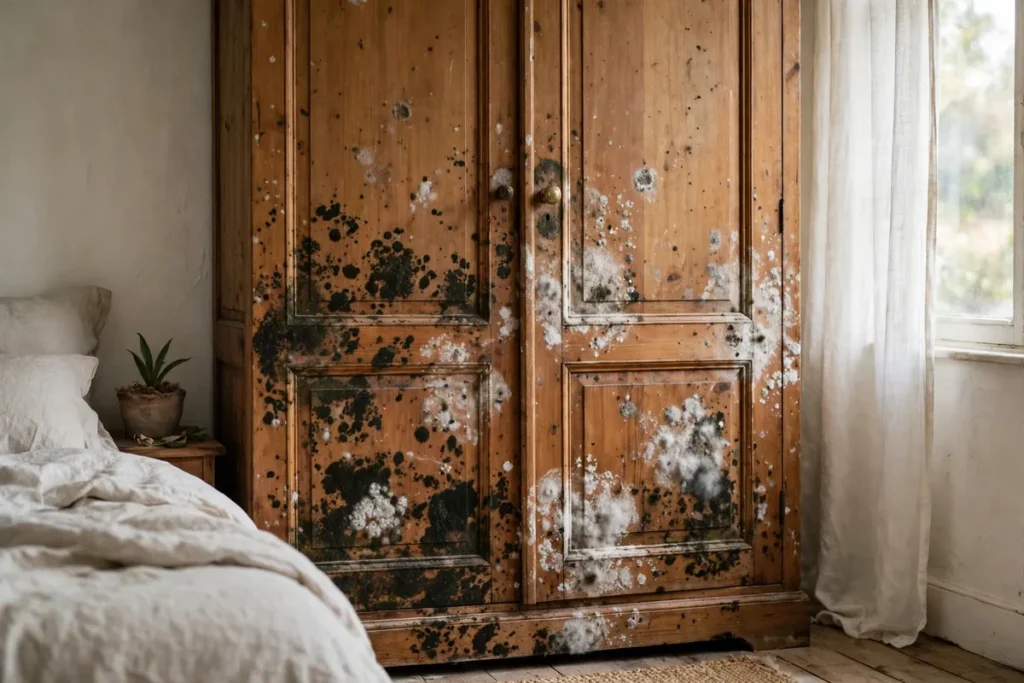
Finding mold on wooden furniture is unsettling. It might be white spots inside a wardrobe, dark patches behind a dresser, or a musty smell that will not go away in the bedroom. Your first question is usually the right one: could this affect your health?
Short answer: Yes, mold on wood furniture can be dangerous — but it is not automatically a reason to throw the furniture away.
Mold releases tiny spores into indoor air. For most healthy adults, a small, freshly cleaned patch may cause little more than irritation. For people with allergies, asthma, or a weakened immune system, the same exposure can trigger sneezing, coughing, eye irritation, or a worsening of breathing problems. The risk rises with the size of the growth, how long it has been there, and whether the room stays damp.
The good news is that sound solid wood with limited surface mold can often be cleaned and kept. Heavily contaminated, soft, or swollen wood — especially particleboard and MDF — is a different story, and replacement is often the safer choice.
This guide will help you judge what you are dealing with, clean it safely without damaging the wood, and fix the moisture problem so it does not return.
Key Takeaways
- Mold on wood furniture can trigger allergies, asthma symptoms, and respiratory irritation, especially in sensitive people.
- Colour alone cannot tell you how dangerous mold is. Black mold is not automatically toxic, and white mold is not automatically safe.
- Small surface mold on structurally sound solid wood is often cleanable. Extensive mold, soft or crumbling wood, and soaked particleboard usually are not worth saving.
- As a practical guide, the US EPA says a moldy area under about 10 square feet (roughly 3 ft by 3 ft) can in most cases be handled by the homeowner. Larger areas, heavy water damage, or contaminated water call for a professional.
- Never dry-brush mold, soak wood in water, or paint over it. Those shortcuts spread spores or hide the problem.
Sources used for the health and cleanup guidance in this article: US EPA, A Brief Guide to Mold, Moisture and Your Home and Mold Cleanup in Your Home; Centers for Disease Control and Prevention (CDC), Mold.
Is Mold on Wood Furniture Dangerous to Your Health?
Mold needs moisture to grow. When it grows on wood, it can release spores that become airborne, particularly when the furniture is moved, brushed, or cleaned carelessly. Because people spend hours in bedrooms and living rooms, furniture in those rooms deserves prompt attention.
Common effects linked to indoor mold exposure include:
- Allergic reactions: sneezing, a runny or blocked nose, itchy eyes, and skin irritation.
- Respiratory irritation: coughing, throat irritation, and a feeling of tightness in the chest.
- Asthma flare-ups: mold can trigger or worsen asthma in sensitive people.
- General discomfort: a persistent musty smell, headaches, and difficulty sleeping in the affected room.
Not everyone reacts the same way. Some people notice symptoms straight away, while others feel nothing at all. That does not mean the mold is harmless — it means sensitivity varies, and the growth still needs to be dealt with.
This guide is for general household information only. If you have ongoing breathing or allergy symptoms around mold, seek medical advice rather than trying to diagnose the problem yourself.
Who Should Take Extra Care?
Take mold more seriously if anyone in the household is in one of these groups:
- People with asthma or chronic breathing problems
- People with a known mold allergy
- People with a weakened immune system
- Children and older adults
- Anyone who sleeps in the room with the affected furniture
For these households, visibly moldy furniture should not be left untreated while you wait to see if symptoms improve.
What Happens When You Are Exposed to Mold on Furniture?
Exposure usually happens through the air. Spores settle on surfaces, get disturbed, and are breathed in. A bedroom wardrobe is a particular concern because you spend a third of your day in that room, often with the door closed and the air still.
A musty smell is a useful warning sign, but it is not the problem itself. Removing the smell with air freshener, without cleaning the mold and fixing the damp, leaves the source untouched.
The two questions that matter most are simple: how much mold is there, and why is the wood staying damp? Answer those first, and the cleaning decision becomes much clearer.
Is Black Mold on Wood Furniture More Dangerous?
Black mold worries people for good reason, but colour is a poor guide to danger.
Many different molds can look black, dark green, grey, white, or yellow. Not every black patch is Stachybotrys chartarum, the species most often called “toxic black mold.” You cannot identify a species by eye, and you cannot judge its toxicity from its colour.
Keep these points in mind:
- Black mold is not automatically more dangerous than all other mold.
- White or light-coloured mold is not automatically safe.
- Different species can cause allergic and irritant reactions.
- Only laboratory testing can identify a species — and for most household decisions, you do not need that test. You need to judge the extent, the wood condition, and the moisture source.
Do not decide based on colour alone. Decide based on how much mold there is, whether the wood is damaged, and whether you can dry it properly.
What Causes Mold to Grow on Wooden Furniture?
Mold does not appear out of nowhere. It grows where moisture, still air, and a suitable surface meet. Often, the room is the problem, not just the furniture.
High Indoor Humidity
When indoor humidity stays high, wood absorbs moisture from the air. Rooms with poor moisture control, especially in winter, are the most vulnerable. The EPA recommends keeping indoor humidity below 60%, ideally between 30% and 50%; the CDC advises no higher than 50%. A cheap hygrometer (humidity meter) lets you check this in seconds, instead of guessing — check the bedroom and the room with the wardrobe, not just the hallway.
Wet materials also need speed: the EPA advises drying water-damaged areas and items within 24 to 48 hours to prevent mold growth. That is a drying target for a fresh leak or spill, not a promise that thick wood will be fully dry in that time — thick or enclosed wood may take longer, which is why ventilation and checking hidden areas matter.
Poor Ventilation
Furniture pushed tight against a wall traps damp air behind it. The back of a wardrobe against an external or damp wall is a classic hidden spot — mold can grow there for months before you notice it.
Water Leaks
Leaking pipes, a dripping radiator, a roof leak, or water seeping through a wall can all soak wood. If the wood stays wet, mold follows.
Condensation
Cold walls and warm, humid air create condensation. Furniture standing against a cold wall, or in a room with regular condensation on windows, is at higher risk.
Damp Clothing and Spills
Putting damp clothes into a wooden wardrobe, leaving a wet towel on a dresser, or ignoring a spill can all create a perfect pocket of moisture inside enclosed furniture.
How to Identify Mold on Wood Furniture
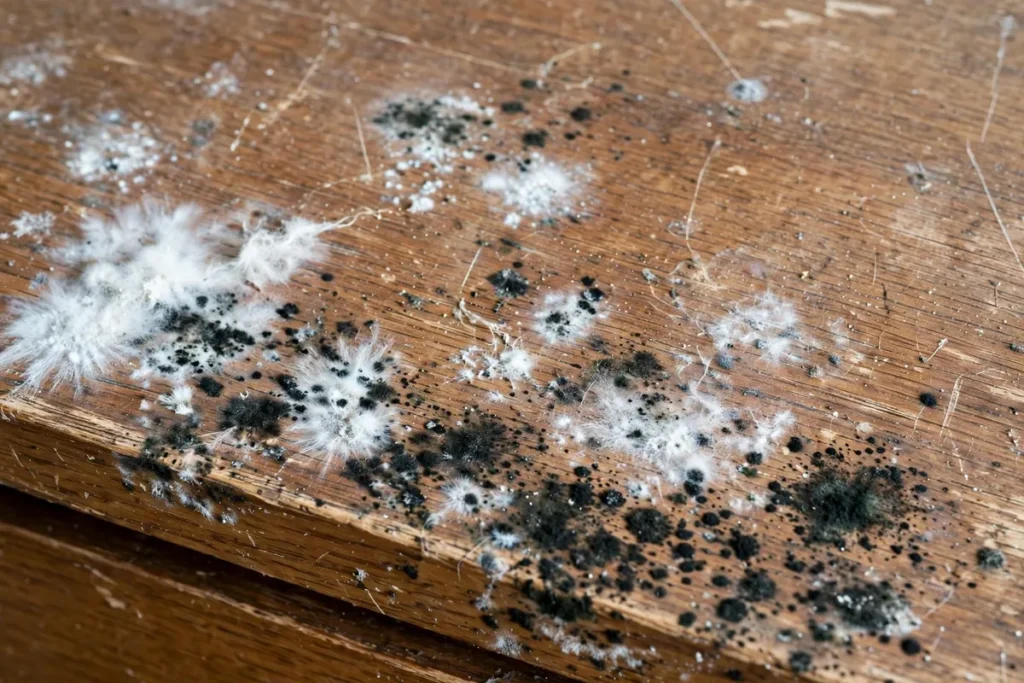
Mold does not always look the same. Use the table below as a first check, not as a diagnosis.
| What you see or smell | What it may indicate |
|---|---|
| White patches | Possible white mold growth |
| Black or dark spots | Possible dark-coloured mold growth |
| Green or grey patches | Possible mold growth |
| Musty smell | Possible hidden mold or a moisture problem |
| Discoloration | Surface contamination or finish damage |
| Peeling paint or finish | Moisture-related damage |
| Swelling or warping | Prolonged moisture exposure |
These signs can confirm that you have a problem worth investigating. They cannot confirm the exact species.
Mold vs. Mildew on Furniture
People often use “mold” and “mildew” interchangeably. In everyday language, mildew usually means a lighter, powdery surface growth, while mold can be thicker and deeper. In practice, the distinction does not change your first steps: find the moisture, assess the wood, and clean or replace based on the extent — do not assume a light patch is harmless just because it looks powdery.
Can Mold Grow Inside Wooden Furniture?
Yes. Mold is not always limited to the surface you can see. How deep it goes depends on the material, the finish, and how long the wood has stayed wet.
| Furniture material | What to watch for | Restoration outlook |
|---|---|---|
| Solid hardwood | Surface growth, possible deeper contamination if left untreated | Often cleanable if the wood is still sound |
| Softwood | Surface or deeper moisture damage | Assess carefully before cleaning |
| Unfinished wood | Absorbs moisture easily, mold can penetrate deeper | Needs careful assessment and thorough drying |
| Finished wood | Growth on the finish or in damaged areas | Inspect the coating first; a damaged finish lets moisture in |
| Painted wood | Growth on or under damaged paint | Assess both paint and wood before deciding |
| Wood veneer | Thin surface layer, easily damaged by water and scrubbing | Avoid soaking and aggressive cleaning |
| Plywood | Moisture can affect layers and glue bonds | Check for swelling, separation, and softness |
| Particleboard and MDF | Very absorbent, hard to dry fully once soaked | Extensive contamination usually means replacement |
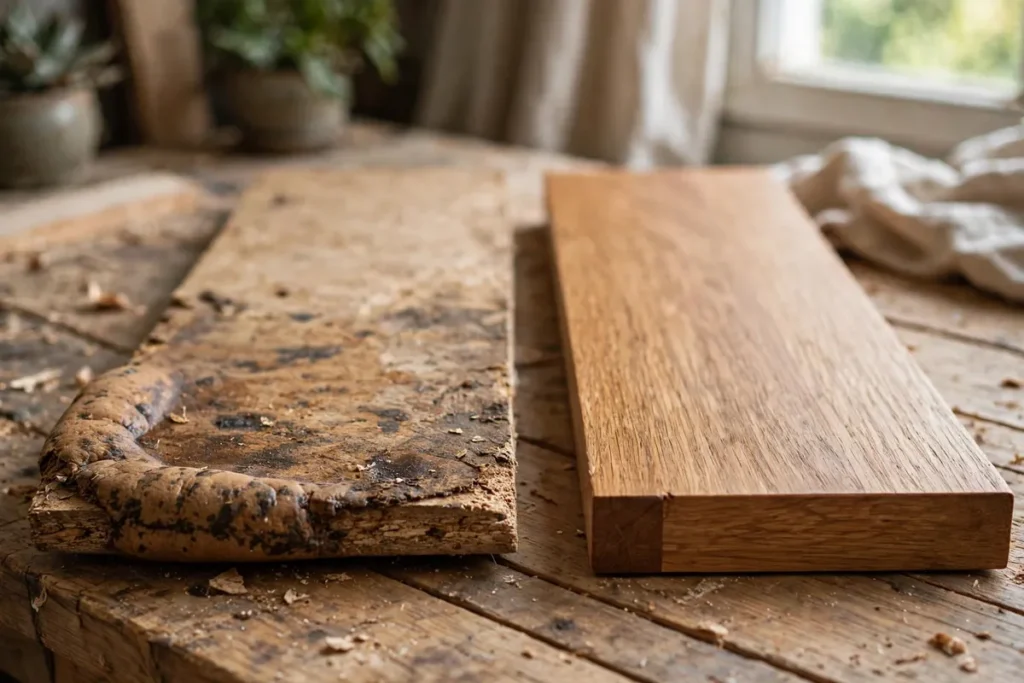
This matters because one cleaning method does not fit all wood. A small surface patch on sound hardwood is very different from mold inside swollen particleboard.
How to Clean Mold Off Wood Furniture Safely
The goal is not just to make the spots disappear. It is to remove mold without spreading spores, without damaging the wood, and without leaving the wood wet enough for mold to return.
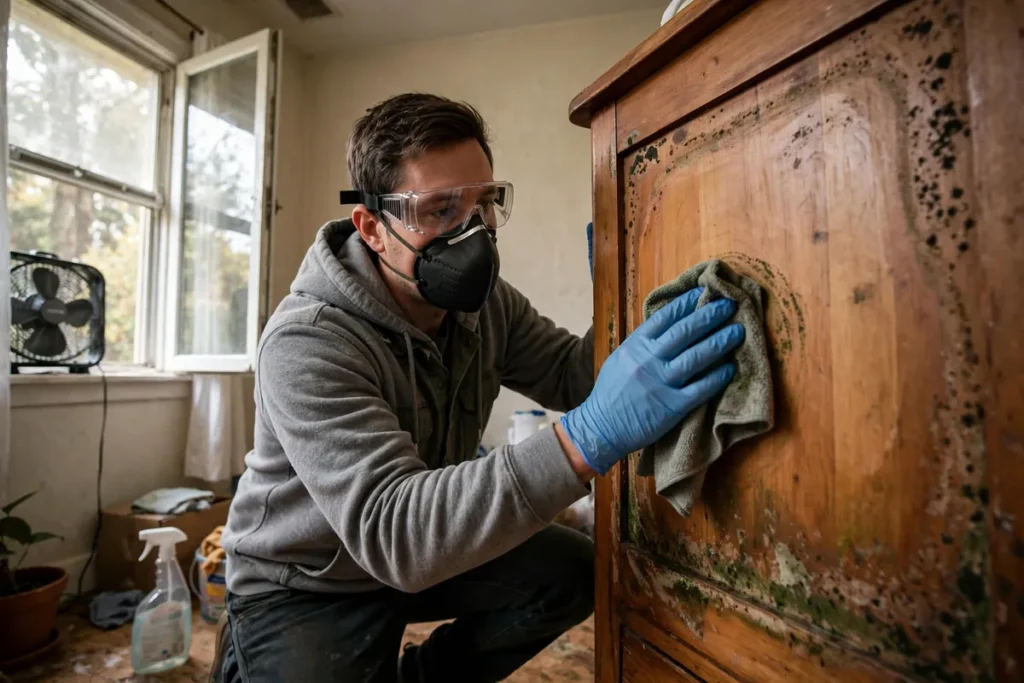
Step 1: Assess the Furniture First
Before you clean anything, check the whole piece, not just the visible patch:
- Visible surfaces, back panels, and undersides
- Inside drawers, cabinets, and wardrobes
- Joints, corners, and areas where the finish is peeling
- Signs of swelling, softening, crumbling, or warping
If the growth is extensive, the wood is soft or crumbling, or mold is in areas you cannot reach and dry, stop and consider professional remediation. Household cleaning is for limited, accessible surface mold on sound wood.
Step 2: Protect Yourself and the Room
Do not disturb the mold more than you need to. Wear gloves, goggles without ventilation holes, and a properly fitting N95 respirator (FFP2 in the UK/EU) — not just a loose cloth or surgical mask — open a window for ventilation, and keep other people — especially children — out of the room while you work. If you have asthma, a mold allergy, or a weakened immune system, do not do the cleanup yourself; get someone else to do it or call a professional.
Do not dry-brush mold. Dry brushing sends spores into the air and spreads them to other surfaces.
Step 3: Clean Suitable Wood Surfaces Gently
For small areas on structurally sound wood, a gentle detergent-based clean is usually the safest household approach:
- Wipe, do not scrub aggressively, using a cloth dampened with mild detergent and water.
- Work in small sections and rinse the cloth often, so you are not spreading mold across clean wood.
- Avoid soaking the wood. Use as little water as the job allows, especially on veneer, painted wood, and engineered boards.
- Check the finish as you go. What is safe for unfinished wood may damage varnish or paint.
Avoid bleach as a first resort on wood. It can damage finishes, does not reliably reach mold inside porous wood, and can leave the wood wet. If a product is labelled for wood and mold, follow its instructions exactly and test it in a hidden spot first.
Vinegar and Hydrogen Peroxide: Pros, Cons, and Limits
Many readers search for these two options, so here is an honest comparison. Neither replaces detergent cleaning, thorough drying, and fixing the damp source, and neither should be mixed with bleach or with each other.
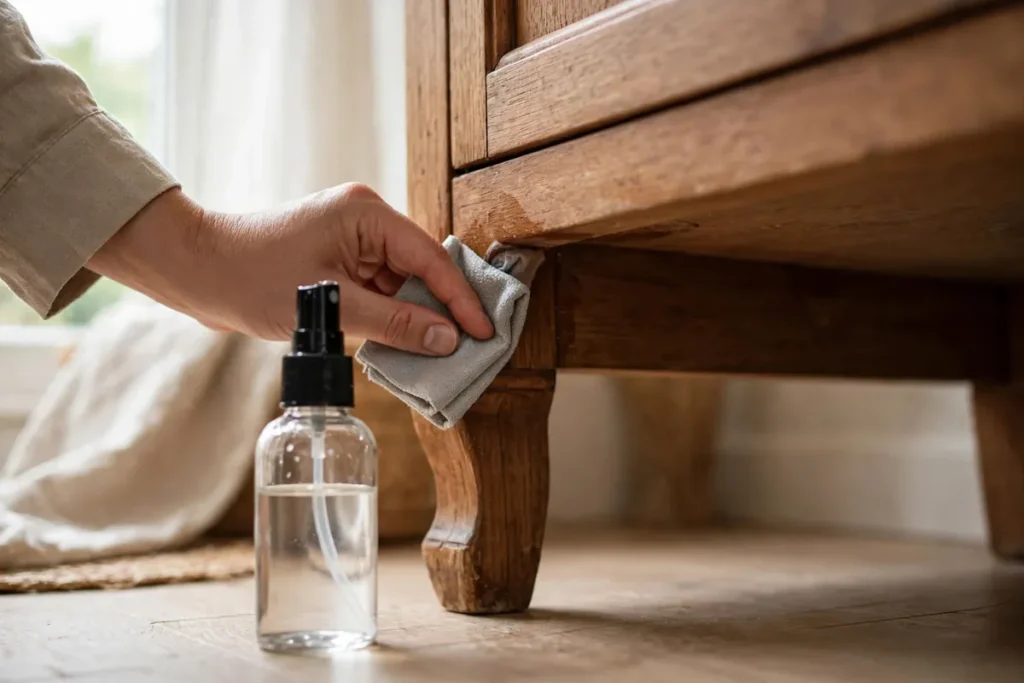
White vinegar (undiluted)
- Pros: cheap, widely available, and can help with light surface mold on sealed or hard surfaces.
- Cons: it does not reliably kill mold inside porous or unfinished wood, it can damage some finishes, and its smell lingers. It is not a disinfectant guarantee.
- Use it only for a small, accessible surface patch, after a hidden-spot test, and wipe it off — do not soak the wood.
Hydrogen peroxide (3%, household strength)
- Pros: can help with light surface mold and staining on some hard surfaces.
- Cons: it can lighten wood, bleach fabric, and damage finishes, so a hidden-spot test is essential. It is not suitable for large areas, veneer, or valuable pieces without professional advice.
- Use it only in a ventilated room, with gloves and eye protection, and never mix it with vinegar or bleach in the same clean.
If you are unsure about the finish, the wood type, or the size of the patch, stick to the gentle detergent clean above and get professional advice. A damaged finish from the wrong product is harder to fix than a small mold patch.
Step 4: Dry the Furniture Completely
Drying is not optional. Mold returns to damp wood.
After cleaning, let the piece dry fully in a ventilated room. Pay special attention to joints, drawer interiors, and the back panel — the places moisture hides longest. Do not push the furniture back against a damp wall until both the furniture and the wall are dry.
Step 5: Inspect Again Before You Put It Back
Once dry, inspect the piece again for remaining growth, discoloration, damaged finish, soft spots, or a lingering musty smell.
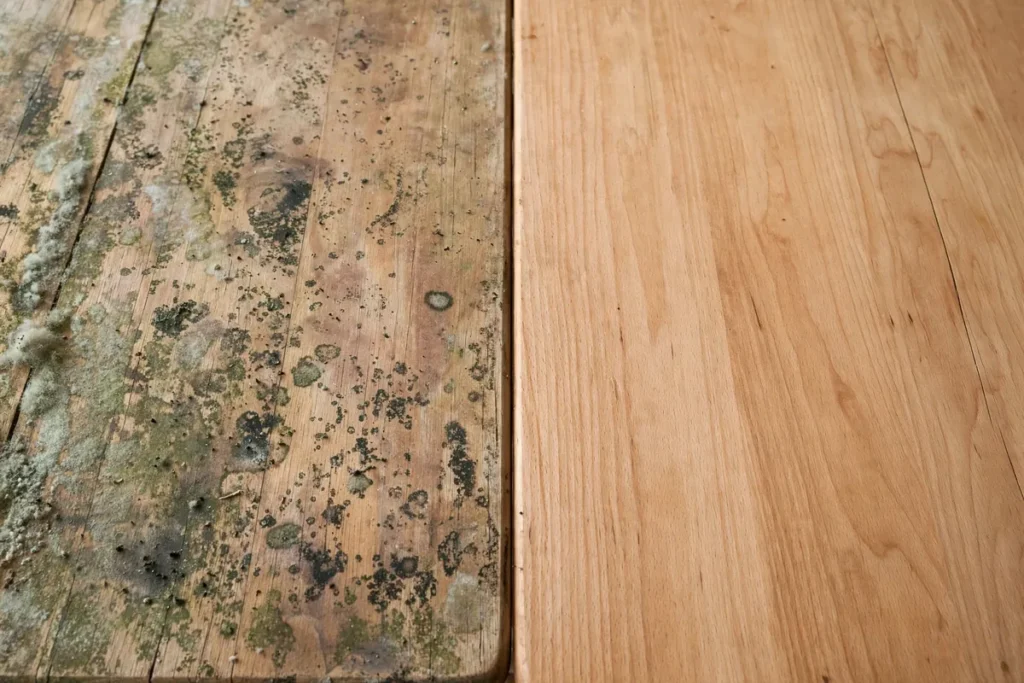
If mold keeps coming back in the same place, the problem is not your cleaning technique. It is the moisture source. Find and fix that before you clean the same surface again.
Cleaning Mistakes That Can Damage Wooden Furniture
These shortcuts are common, and they usually make things worse:
- Using excessive bleach: it can damage finishes and does not solve mold inside porous wood.
- Painting over mold: new paint hides the problem, it does not remove mold or fix damp.
- Using too much water: soaking wood increases moisture damage, especially in particleboard and veneer.
- Dry-brushing mold: it spreads spores through the room.
- Using harsh abrasives: aggressive scrubbing damages paint, varnish, and veneer.
- Masking the smell: air fresheners do not remove mold or moisture.
Protecting the wood matters as much as removing the visible growth. An aggressive clean can turn a manageable surface problem into permanent furniture damage.
When Should You Throw Away Moldy Wooden Furniture?
Not every moldy piece needs to go. Use the condition of the wood, not just the sight of mold, to decide.
Furniture That May Be Salvageable
Cleaning and restoration are worth considering when:
- Mold is limited to a small surface area.
- Solid wood is still structurally sound.
- The finish has not deteriorated extensively.
- You can clean and fully dry the piece.
- The moisture problem can be corrected.
Even then, inspect the piece after cleaning and drying before you bring it back into regular use.
Furniture That May Need Replacement
Replacement is usually the more practical choice when:
- Mold growth is extensive or in inaccessible areas.
- Wood is soft, crumbling, swollen, or warping.
- Particleboard or MDF has absorbed substantial moisture.
- Upholstered sections attached to the frame are heavily contaminated.
- Mold returns repeatedly despite proper cleaning and moisture control.
Upholstered parts need particular care. Fabric and padding are absorbent and much harder to clean thoroughly than exposed wood.
If you are unsure, professional assessment is a sensible next step — especially for valuable, antique, or structurally important pieces.
Can Moldy Wooden Furniture Be Restored?
Yes, some of it can. Solid wood with limited surface growth is the best candidate. Restoration usually means careful cleaning, full drying, and, only after the mold and moisture are dealt with, repairing or refinishing the surface if needed.
Refinishing alone does not remove mold. Do it after, not instead of, cleaning and moisture control.
Before you invest time or money in restoration, answer these questions honestly:
- How extensive is the mold?
- Has the wood become soft or damaged?
- Is the contamination limited to surfaces you can reach and dry?
- Can the piece be dried completely?
- Has the original moisture source been corrected?
If several answers worry you, get a professional opinion before you spend more on restoration.
How to Prevent Mold from Growing on Wood Furniture
Prevention is moisture control. Cleaning without changing the conditions around the furniture usually gives you only a short break.
Keep Indoor Humidity Under Control
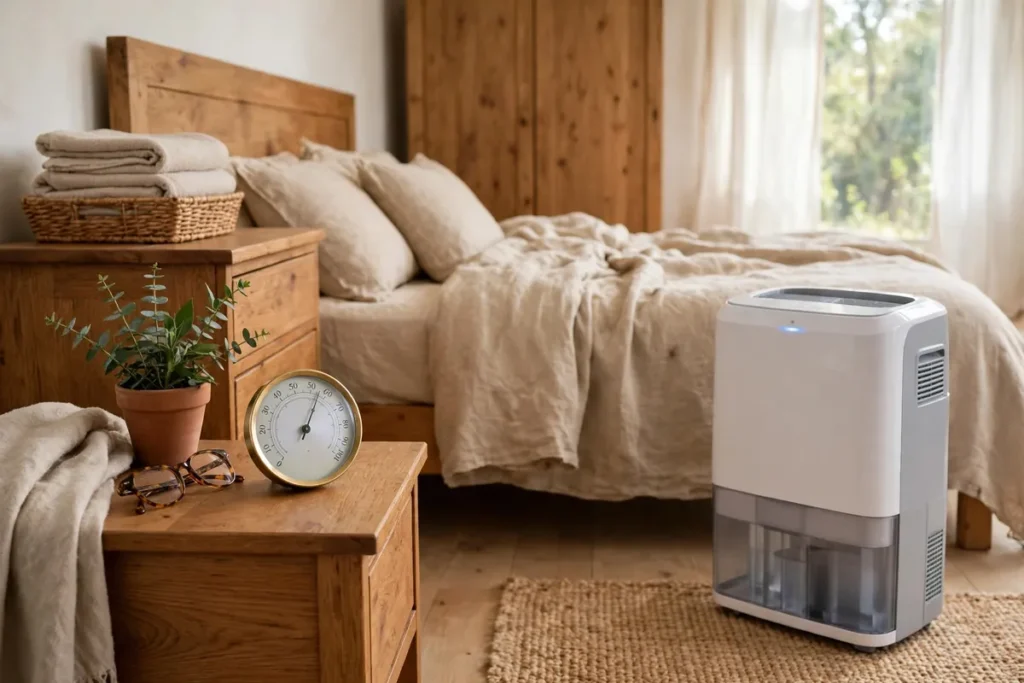
Aim for 30% to 50% indoor humidity, and no higher than 50% (see the humidity section above). A dehumidifier helps in damp rooms, basements, and during humid seasons, and a hygrometer lets you check whether it is actually working.
Improve Air Circulation
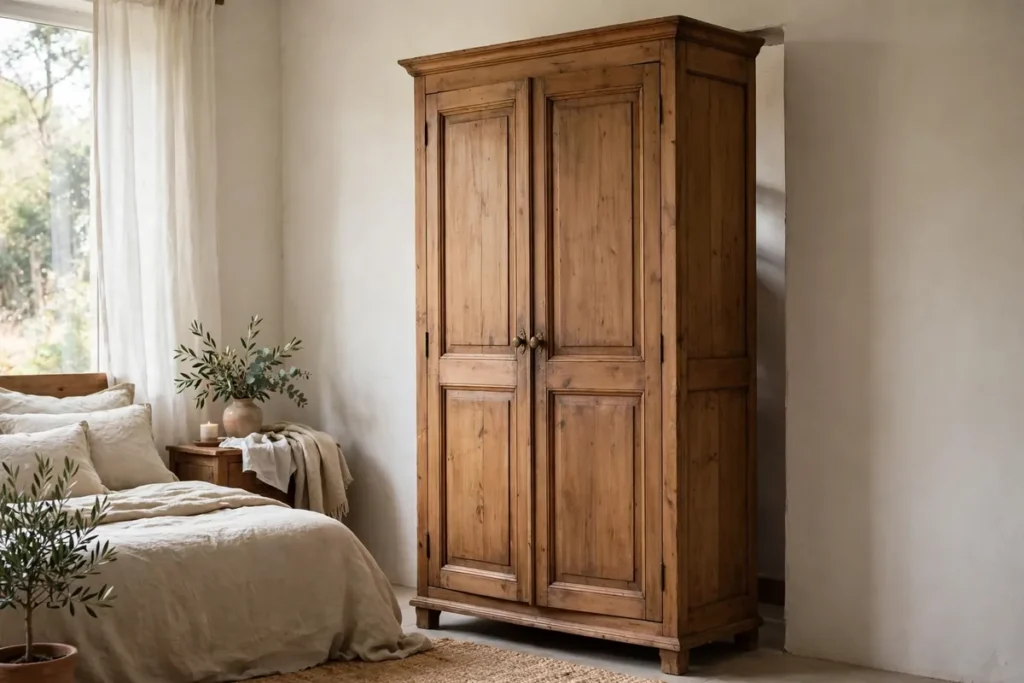
Do not push large furniture tight against damp or external walls. Leave a small gap for airflow around wardrobes, dressers, and cabinets, and open wardrobe doors occasionally in damp weather.
Fix Moisture Sources, Not Just Furniture
Check for plumbing leaks, roof or wall leaks, and recurring condensation.
Store Only Dry Items
Never put damp clothing, towels, or other wet items into a wooden wardrobe. Moisture trapped inside enclosed furniture is a common, overlooked cause.
Clean Spills Promptly
Wipe up water straight away, especially near bathrooms, kitchens, and exterior walls. Do not let moisture sit on wood overnight.
Inspect Hidden Areas Regularly
Check the back, underside, and interior of furniture during routine cleaning. Early action turns a small damp patch into a quick clean, instead of a major restoration or replacement.
Conclusion
Mold on wooden furniture is not something to ignore, but it does not mean every affected piece belongs in the trash.
The smarter approach is to assess the furniture honestly, understand who in your household is most at risk, and deal with the moisture that caused the growth in the first place.
Sound solid wood with limited surface mold is often worth saving. Heavily contaminated, soft, or swollen material deserves a more cautious approach — and sometimes, replacement is the right call.
Most importantly, do not confuse removing visible mold with solving the problem. Until the moisture source is under control, the furniture remains at risk of developing mold again.
Frequently Asked Questions
Can mold on wood furniture make you sick?
Yes, mold can contribute to health problems through airborne spores. Some people experience allergic reactions, respiratory irritation, or worsening asthma symptoms. Risk is higher for children, older adults, and people with allergies, asthma, or weakened immunity.
Is it safe to sleep in a room with moldy wooden furniture?
It is better to address visible mold than to leave contaminated furniture in a bedroom you use every night. People with asthma, allergies, or weakened immune systems should take particular care, and the room should be ventilated while the problem is being dealt with.
Can black mold grow on wooden furniture?
Yes, dark-coloured mold can grow on wooden furniture. However, black appearance alone cannot identify the species or prove toxicity. Judge the growth by its extent, the wood condition, and the moisture source, not by colour.
Should I throw away furniture with mold on it?
Not necessarily. Structurally sound solid wood with limited surface growth may be cleanable, while extensively contaminated, soft, or deteriorating furniture may need replacement. Particleboard and MDF that have soaked up moisture are the least likely to be worth saving.
How can I prevent mold from returning to wooden furniture?
Control indoor humidity, improve ventilation, fix leaks and condensation, keep furniture dry, and inspect hidden surfaces regularly — especially behind wardrobes and inside cabinets. Prevention works only when the moisture source is fixed.
When should I call a professional instead of cleaning it myself?
Call a professional when mold is extensive, the wood is soft or crumbling, mold is in inaccessible areas, upholstery is heavily
Is bleach the best way to clean mold off wood?
No, bleach is not the best first choice for wood. It can damage finishes, does not reliably reach mold inside porous wood, and can leave the wood wet. A gentle detergent-based clean, followed by thorough drying, is safer for most sound wood surfaces.
Does vinegar kill mold on wood furniture?
Vinegar can help with light surface mold on sealed surfaces, but it does not reliably kill mold inside porous or unfinished wood, and it can damage finishes. Test it in a hidden spot first, do not soak the wood, and do not mix it with bleach or hydrogen peroxide. For larger or deeper growth, use the detergent method above or call a professional.
How big a mold patch can I clean myself?
As a guide, the US EPA says a moldy area under about 10 square feet (roughly 3 ft by 3 ft) can in most cases be handled by the homeowner, if the wood is sound and you can clean and dry it fully. Larger areas, heavy water damage, contaminated water, or mold in inaccessible areas should be assessed by a professional.

Muhammad Muaz
Muhammad Muaz shares practical cleaning, home care, improvement and everyday living guides for Urban Home Guide readers.
Keep Exploring
Related Home Guides