- Your cart is empty Browse Shop
Furniture
How to Keep Dogs Off Furniture Without Harsh Sprays
Dog hair on the cushions is one thing. Muddy paw prints, scratches, and a dog that has claimed the entire sofa as its own bed are another. If you have…
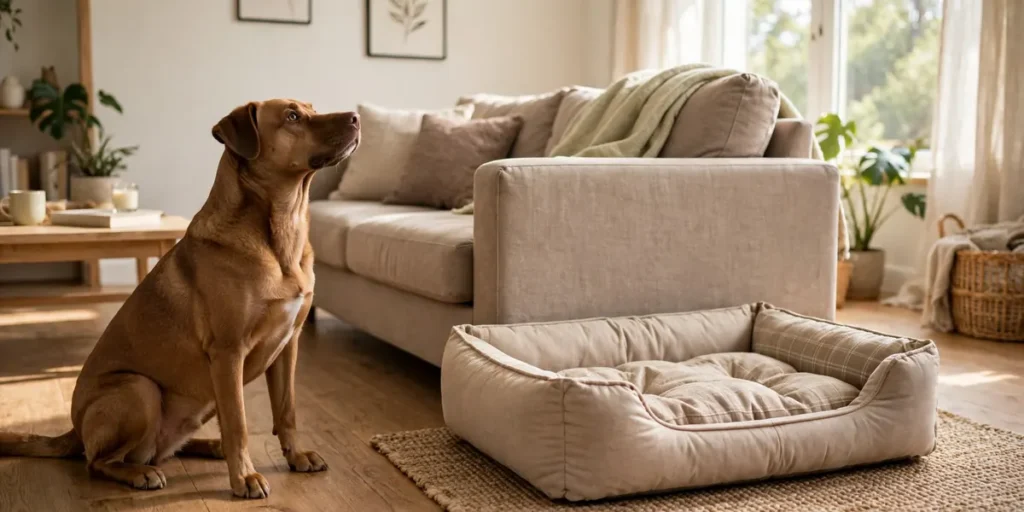
Dog hair on the cushions is one thing. Muddy paw prints, scratches, and a dog that has claimed the entire sofa as its own bed are another. If you have typed “how to keep dogs off furniture home remedy” into a search box lately, you are probably hoping for a simple spray you can mix in the kitchen and be done with it.
Here is the honest answer: no spray does this job. What actually works is a short home routine: one clear rule, a resting spot your dog genuinely likes, two simple training cues, and a barrier for the hours when nobody is home. It asks a little more of you than a spray bottle does, but it protects your furniture without putting anything unsafe on it. And if the sofa already carries the evidence of a dog that has been camping on it, our guide to getting dog gland smell out of furniture covers the cleanup side.
What Actually Works at Home
A homemade repellent sounds convenient, and the internet is full of recipes. Most home remedies for keeping dogs off furniture are built on the same idea: make the sofa smell or feel unpleasant. The problem is that the most common ingredients in those recipes are either unsafe for dogs or simply unpleasant enough to stress them, and no reliable source recommends a kitchen-made spray as the way to protect furniture.
The approach that trainers and veterinary sources do recommend is behavior-based, and it has five parts:
- Decide which furniture is off-limits, and make it a rule for the whole household.
- Set up a comfortable resting space your dog can choose instead.
- Teach your dog to leave furniture when asked, and to go to its bed on cue.
- Reward your dog every time it chooses the right spot on its own.
- Restrict access to the furniture when nobody is there to supervise.
Notice what this routine does: it changes what your dog wants to do, instead of making the sofa a place your dog fears. A dog that understands where to rest stays off the couch because its own spot is worth choosing. A dog that is only scared off the couch will test it again the moment you leave the room.
Should You Let Your Dog on the Couch at All?
That is a household choice, and there is no single right answer. Some families love sharing the sofa with their dog and accept the hair and wear that come with it. Others want the furniture kept clean and dog-free. Both are fine.
Consistency Is the Whole Rule
What is not fine is a rule that changes. Allowing the dog up on quiet evenings and scolding it for the same thing on Saturday morning teaches it nothing except that the rule is unpredictable. Changing from “allowed” to “not allowed” after months of access is also much harder than starting with a clear rule, because you are now removing a habit instead of building one. Furniture habits in general are far easier to prevent than to undo — licking the furniture is another common one, covered in our guide to why dogs lick furniture.
If Your Dog Growls on the Furniture
One situation deserves a clear warning. If your dog growls, stiffens, or snaps when someone approaches it on the furniture, that is resource guarding — a behavior problem that happens to show up on furniture. Do not ignore it, and never try to drag or push a guarding dog off the sofa. Keep the dog off furniture for safety, and get help from a qualified behavior professional.
1. Set One Rule and Keep It for Everyone
Start by deciding, in plain terms, which furniture is off-limits. The sofa only? Every bed in the house? Chairs too? Write the rule down if you need to, because the rule only works when every person in the home follows it the same way.
This is where most households quietly fail. One person enforces the rule, another sneaks the dog up for a cuddle, and the dog learns that the couch is sometimes allowed — which, to a dog, means it is worth trying every time. Everyone living with the dog has to be on the same page, including guests who think the rule is mean.
When your dog approaches the sofa or puts a paw up, do not scold. Calmly redirect it to its own resting spot, and reward it when it goes there. The goal is a replacement behavior your dog can succeed at.
2. Give Your Dog a Bed It Actually Wants
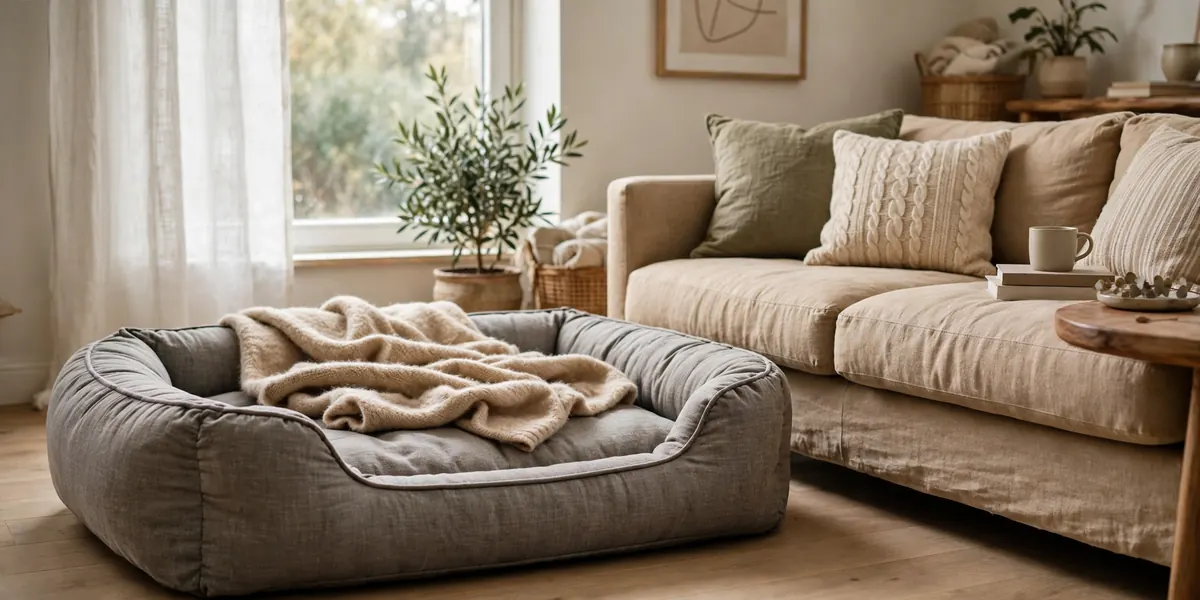
A dog that keeps choosing your sofa is telling you something: the sofa is more comfortable than the alternative you have offered. A thin mat in a cold corner of another room will never compete with a cushioned couch in the middle of family life.
Match the bed to the dog:
- Flat bed — for dogs that sprawl out fully when they sleep.
- Bolster bed — raised edges for dogs that like to rest their head on something or lean against support.
- Orthopedic or thick padded bed — for older dogs and large breeds whose joints need real cushioning off the floor.
- A familiar blanket on top — a dog is far more likely to settle on a surface that smells like its home and its people.
Placement matters as much as the bed itself. Start with the bed right beside the sofa, in the room where the family actually spends time. Your dog wants to be near you; asking it to choose between the couch with you and a bed alone in the kitchen is asking too much at the start. Once the habit is solid, you can move the bed gradually if you need to.
3. Teach Two Cues: “Off” and “Go to Bed”
Two cues cover almost every furniture situation. Neither needs force, and both are taught with food rewards in short sessions.
Teaching “Off”
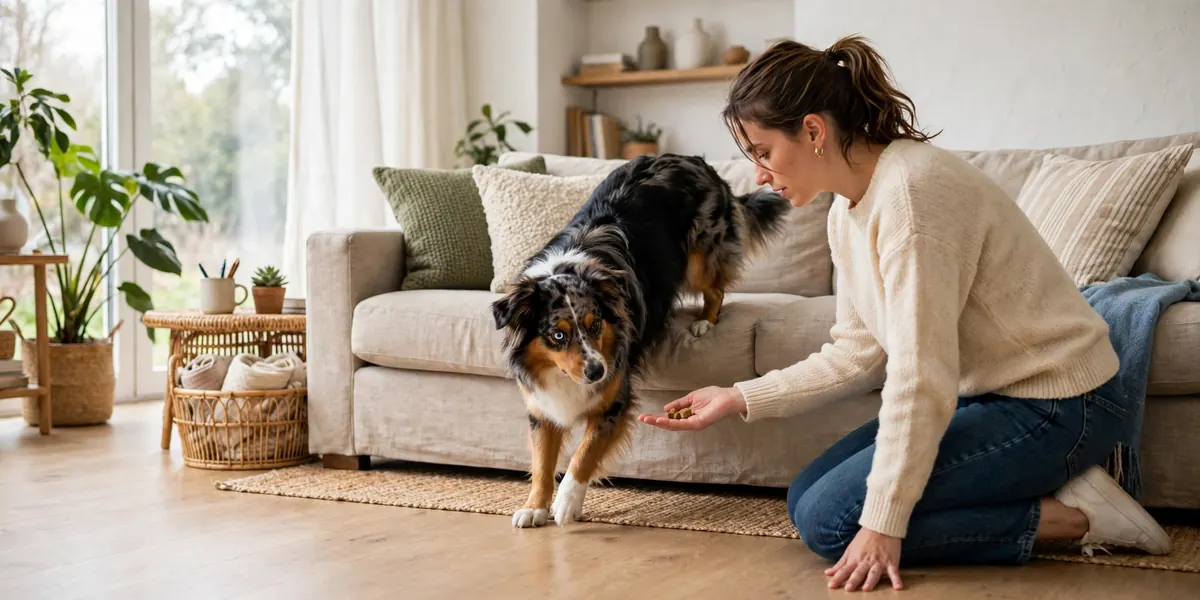
“Off” means: all four paws leave this surface. Introduce it when your dog is on the furniture:
- Hold a favorite treat in your closed hand and let your dog smell it.
- Move your hand toward the floor so your dog follows it down and off the furniture.
- The moment all four paws are on the floor, say “off”, praise, and give the treat.
- Repeat a few times per session, and keep sessions short.
Never pull your dog off by the collar or push it off the edge. Being grabbed or shoved can frighten a dog and, with a guarding dog, can get you bitten. The treat lure does the same job with none of the conflict.
Teaching “Go to Bed”
This cue sends your dog to its own spot, which is the behavior you actually want to build:
- Place the bed near the couch and walk your dog over to it.
- When your dog steps onto the bed, praise and give a treat.
- Encourage a lie-down, praise again, and give a second treat. Feed a treat every few seconds while your dog stays, then release it with a cheerful “okay”.
- Repeat until your dog starts walking to the bed and lying down on its own.
- Only then add the words “go to bed” as your dog is already doing it.
PetMD’s guide to keeping dogs off the couch teaches the same sequence, and it works because the bed becomes the place where good things reliably happen.
Expect the timeline to depend on the dog. A puppy that has never been allowed on the furniture can learn the pattern within days. An adult dog with a long couch habit usually needs a few weeks of the whole household following the rule before the bed becomes its default choice, and every sneaked exception restarts the clock.
4. Reward the Choice You Want

Training sessions build the skill, but everyday rewards build the habit. Most of your dog’s learning will happen outside formal practice, in the moments you notice — or miss.
So notice. When your dog walks past the sofa and settles on its bed without being asked, that is the exact behavior you want more of: praise it, and occasionally drop a treat between its paws. When your dog responds to “off” the first time, reward that too.
The mistake to avoid is only paying attention when the dog is on the furniture. If the couch is the one reliable way to get your attention, even scolding attention, the couch stays interesting. Make the floor and the bed the places where attention happens, and the furniture quietly loses its appeal.
When You’re Not Home: Manage Access
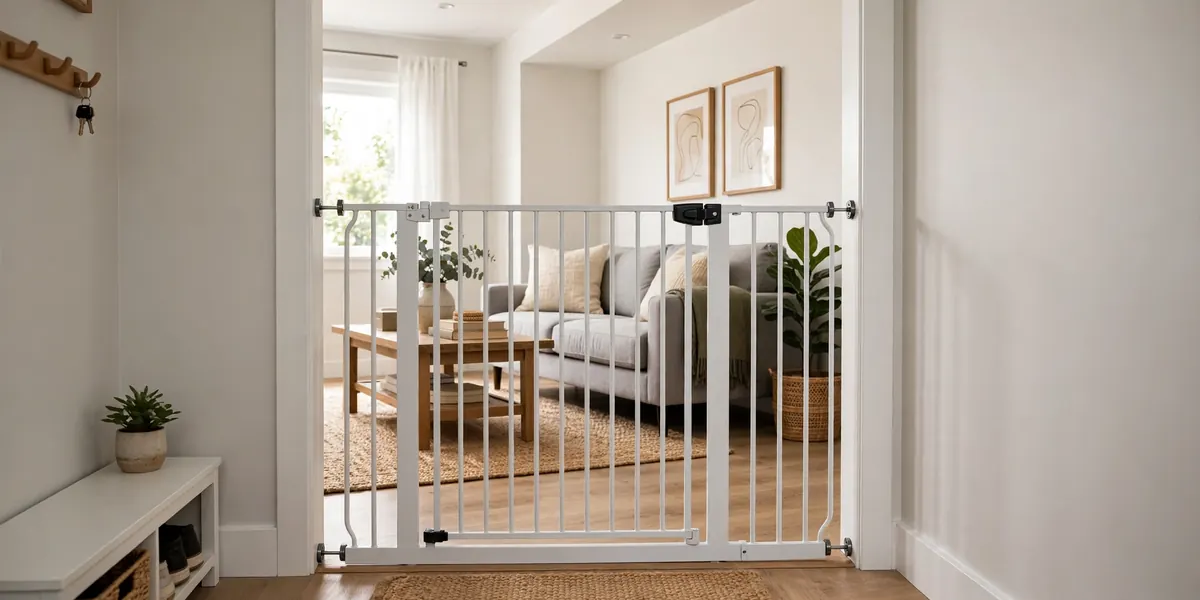
A dog cannot follow a cue from an empty house, and even a well-trained dog may test the couch when nobody is watching. For unsupervised hours, stop relying on training and manage the environment instead:
- Close the living room door. The simplest option when the furniture sits in its own room. No access, no problem.
- Use a dog gate or baby gate. A gate in the doorway keeps the boundary in place while the room stays part of the house.
- Use an exercise pen. A pen can fence off the sofa area or give the dog its own comfortable zone, and it suits dogs that do not do well confined to a crate.
- Stand the cushions up. PetMD suggests this quick trick for couch-specific temptation: remove the seat cushions and stand them upright against the back of the sofa. A bare, springy seat is far less inviting than a soft cushion.
- Keep the dog’s own area ready. Wherever your dog spends the day, its bed, water, and a safe chew should be there, so the legal resting spot is comfortable too.
Management is not a failure of training. It is how you protect the training from being undone while you are at work.
Homemade Sprays and Ingredients to Avoid

This is the part of the “home remedy” search that needs the most care, because the most shared DIY recipes are built on ingredients that are genuinely risky for dogs.
Citrus Sprays
Lemon and orange both sit on the ASPCA’s list of plants toxic to dogs. The toxic principles are the essential oils and psoralens concentrated in the peel and plant material; the flesh of the fruit is edible, but skins and peels can cause vomiting, diarrhea, depression, and skin irritation. A homemade spray made by soaking citrus peels is, in effect, a way of spreading exactly those compounds across the surface your dog lies on and licks. A smell that seems fresh to you is not a safety certificate for your pet.
Essential Oils
Concentrated essential oils carry the same concern in stronger form. The ASPCA advises against using essential oils where pets can reach them unless the pets are supervised or a veterinarian has approved the oil. A dog that walks across a sprayed cushion picks the oil up on its paws and coat, and dogs groom themselves, which turns a furniture spray into something ingested. However a recipe is described online, the word “natural” on it guarantees nothing about pet safety.
Vinegar and Strong Smells in General
Recipes built on vinegar, chili, or bitter mixtures all work on the same principle: make the furniture unpleasant. Even where an ingredient is not toxic, a deterrent that works by irritating your dog’s nose is working against the calmer goal of this guide — a dog that chooses its bed happily. There is also no reliable evidence that any particular scent keeps dogs off furniture safely, so the honest advice is to skip the spray experiments entirely.
Fear-Based Deterrents: Why Trainers Say No
The other family of deterrents does not use ingredients at all. It uses surprise: scat mats that deliver a static shock, balanced pots and pans that crash down when the dog jumps up, and similar booby traps.
PetMD specifically warns against these fear-inducing tactics, because they can create fear and anxiety in the pet. The damage is not limited to the moment of the scare. A dog startled on the sofa may become anxious in the room, wary of the people who set the trap, or, with a dog already prone to guarding, more defensive about the space. You have protected the couch by making your dog less secure in its own home, which is a poor trade.
The same no-fear logic is why we recommend boundaries over punishment for cats too, in our guide to how to keep cats from scratching furniture. With any pet, the setup that teaches a better choice outlasts the setup that teaches fear.
At-Home Approaches Compared
| Approach | What it does | Verdict |
|---|---|---|
| A comfortable dog bed beside the sofa | Gives the dog a better legal resting spot | Recommended |
| “Off” and “go to bed” cues | Teaches the dog what to do instead | Recommended |
| Rewarding the dog for choosing its bed | Makes the right choice worth repeating | Recommended |
| Gates, doors, and exercise pens | Blocks access when nobody is home | Recommended |
| Standing cushions upright | Makes the sofa itself less inviting | Worth trying (suggested by PetMD) |
| Citrus peel sprays | Spreads compounds the ASPCA lists as toxic to dogs | Avoid |
| Essential oil sprays | Concentrated oils a dog can pick up and ingest | Avoid |
| Scat mats and noise traps | Frightens the dog away from the furniture | Avoid |
Conclusion
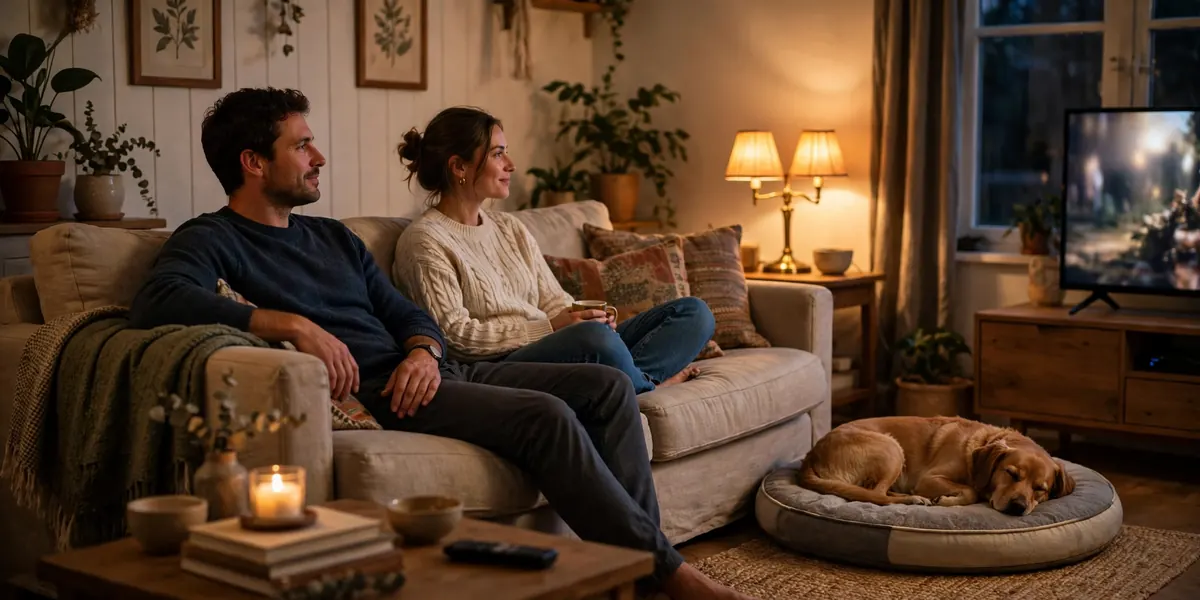
Skip the homemade sprays. The home remedy that keeps dogs off furniture is a setup: one rule the whole household follows, a bed your dog would choose anyway placed where the family gathers, two cues taught with rewards, and a gate or closed door for the hours you are out. None of it frightens your dog, none of it puts anything questionable on your cushions, and it keeps working on the days you are too busy to think about it. Give the routine two consistent weeks and the sofa stops being contested territory. It becomes simply where the people sit. Your dog’s own spot sits right beside it, the one that pays in praise and the odd treat.
Frequently Asked Questions
What can I spray on my couch to keep my dog off?
Nothing homemade is recommended here. The most common DIY recipes use citrus peels or essential oils, and the ASPCA lists the oils and psoralens in citrus peel as toxic to dogs, while advising against essential oils anywhere pets can reach them. A dog bed your dog loves, two trained cues, and a gate for empty hours will protect the couch without the risk.
What smells do dogs hate that keep them off furniture?
Dogs do dislike strong citrus smells, which is why people reach for citrus sprays. But hating a smell does not make it safe to use: the ASPCA lists the oils and psoralens in citrus peel as toxic to dogs. No scent has reliable evidence behind it as a safe furniture repellent, so train the alternative behavior instead of experimenting with smells.
Can older dogs learn to stay off furniture?
Yes. Older dogs learn new household rules through the same reward-based training, though a long-standing couch habit changes more slowly than a puppy’s. Keep sessions short, and make the new bed genuinely comfortable, since joint support matters far more for a senior dog. Use barriers while the habit is changing, and if progress stalls completely, a qualified trainer can help.
How do I keep my dog off the couch when I’m at work?
Do not rely on training while the house is empty. Restrict access instead: close the living room door, gate the doorway, or use an exercise pen, and leave your dog with its bed, water, and a safe chew in the area it can use. Standing the seat cushions upright also makes the sofa itself less inviting.
Is it cruel to keep dogs off furniture?
No. A furniture boundary is a normal household rule, and it is kind when it comes with a comfortable alternative. Dogs settle happily on their own beds when those beds are well placed and the choice is rewarded. The unfair version of this rule is the one enforced with punishment or frightening deterrents.

jarvis
jarvis shares practical cleaning, home care, improvement and everyday living guides for Urban Home Guide readers.
Keep Exploring
Related Home Guides