- Your cart is empty Browse Shop
Furniture
How to Get Furniture Marks Out of Carpet: 5 Ways
Furniture leaves marks on carpet when heavy pieces press the fibers down for a long time. Sofas, beds, wardrobes, and dining tables can leave visible dents, especially on soft, deep-pile…
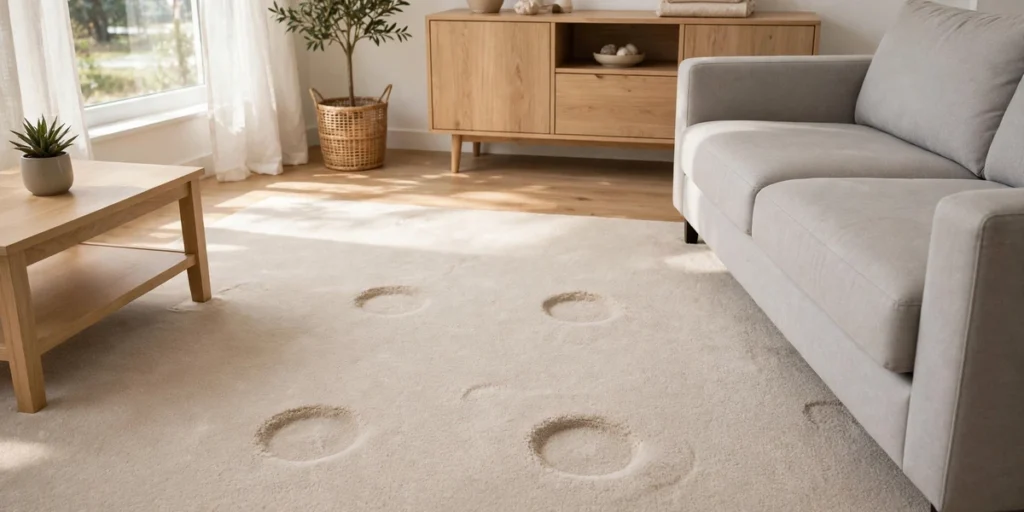
Furniture leaves marks on carpet when heavy pieces press the fibers down for a long time. Sofas, beds, wardrobes, and dining tables can leave visible dents, especially on soft, deep-pile carpets. These marks often appear after moving furniture or rearranging a room. The good news is that most furniture marks are temporary, and you can lift the fibers again with the right approach. This guide explains how to get furniture marks out of carpet using five practical methods, plus guidance on carpet types, prevention, and when professional help may be the better choice.
Quick Answer: To remove furniture marks from carpet, first let the carpet recover for 24 hours. Then try ice cubes, a carpet steamer, or a blow dryer, depending on the carpet type and the depth of the dent. After treatment, gently lift the fibers with a carpet rake or brush. Use heat carefully and avoid methods that are unsafe for your carpet material.
Furniture marks can range from shallow impressions to deep dents. Shallow marks often fade on their own as the fibers recover, while deeper marks may need treatment. Carpet fiber, pile height, underlay, and how long the furniture stayed in place all affect how quickly a mark lifts. Steam and moisture help many fibers relax and expand, but some carpet types respond better to gentle methods.
Assess the Dent and Choose the Right Method
Before trying any method, inspect the dent and the carpet around it. The right choice depends on how deep the mark is, how old it is, and what the carpet is made from. A quick check can prevent damage and help you choose the gentlest method that is likely to work.
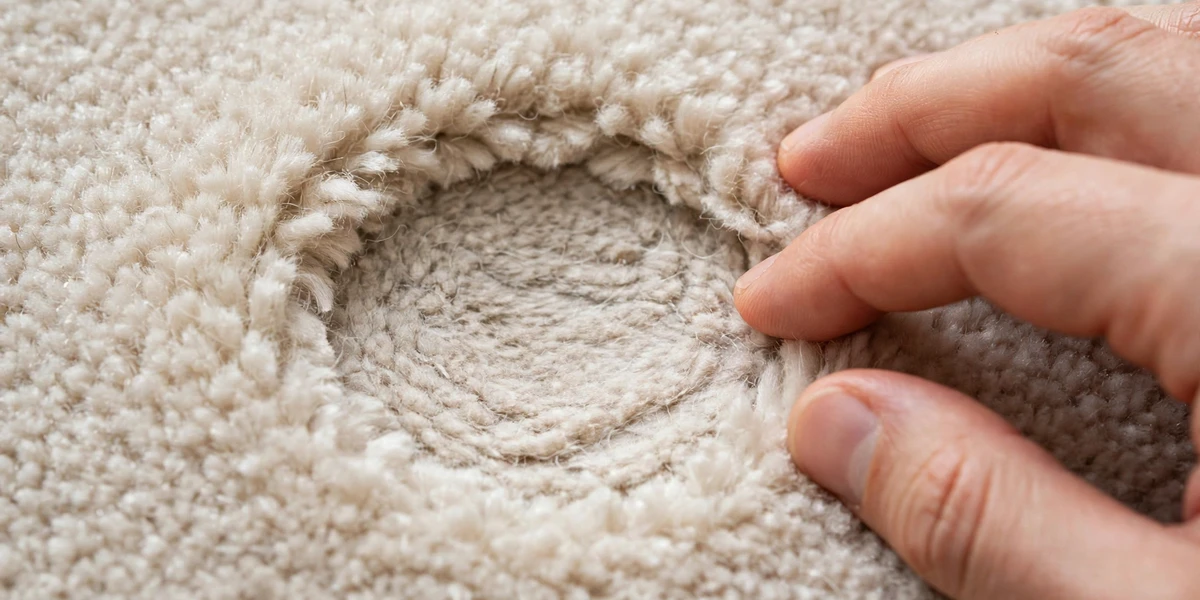
First, look at the dent in good light. A shallow mark may look like a slight flattening of the pile, while a deeper dent can show a clear outline of the furniture leg or base. Press the fibers gently with your fingers: if they spring back slightly, the carpet may recover with time and light treatment. If they stay flat, you will need a more active method.
- Deep dents: ice cubes or a carpet steamer may help lift the fibers gradually.
- Shallow marks: a blow dryer or gentle brushing may be enough.
- Synthetic carpets (nylon and polyester): most gentle steam and moisture methods are usually suitable.
- Wool carpets: use steam with care and avoid excessive heat or water.
- Berber carpets: use gentle methods and avoid pulling at the loops.
Carpet material matters. Natural fibers such as wool can be sensitive to heat and moisture, while synthetic fibers often tolerate steam better. If you are unsure about the material, check the carpet label, any paperwork from the installation, or the manufacturer’s guidance. When in doubt, test a small, hidden area first and choose the mildest method.
Which Method Suits Your Carpet?
| Carpet type | Best starting method | Avoid |
|---|---|---|
| Nylon | Ice cubes or a blow dryer | Excessive heat on the fibers |
| Polyester | Ice cubes or a blow dryer | Heavy water saturation |
| Wool | Damp cloth or light steam | High heat and soaking |
| Berber | Ice cubes and gentle grooming | Aggressive brushing or pulling loops |
| Olefin | Ice cubes or a blow dryer | High heat, which may affect the fibers |
The goal is not to use the strongest treatment available, but to choose a method that suits the carpet and the dent. Start with a gentle approach and move to a stronger one only if the first attempt does not lift the fibers enough.
Before You Start: Give the Carpet Time
If the furniture has only just been moved, the carpet may recover without treatment. Fibers that were compressed under a heavy piece often relax slowly after the weight is removed. Leave the area uncovered and avoid walking over it while it recovers.
Wait at least 24 hours before deciding whether treatment is needed. During that time, the fibers may rise on their own, especially in carpets with a resilient pile. This also reduces the risk of over-treating an area that would have recovered naturally.
Two rules apply to every method below: do not apply a hot iron directly to the carpet, and do not soak the carpet with water. Too much moisture can reach the underlay and create problems that are harder to deal with than the original dent. Test every method on a small, inconspicuous area first.
How to Get Furniture Marks Out of Carpet Safely
The five methods below use different approaches to relax and lift carpet fibers. They are suitable for many common carpet types, but always check the guidance for your carpet material first. Start with the gentlest method for your situation and only try a stronger one if the first attempt is not effective.
1. Use the Ice Cube Method
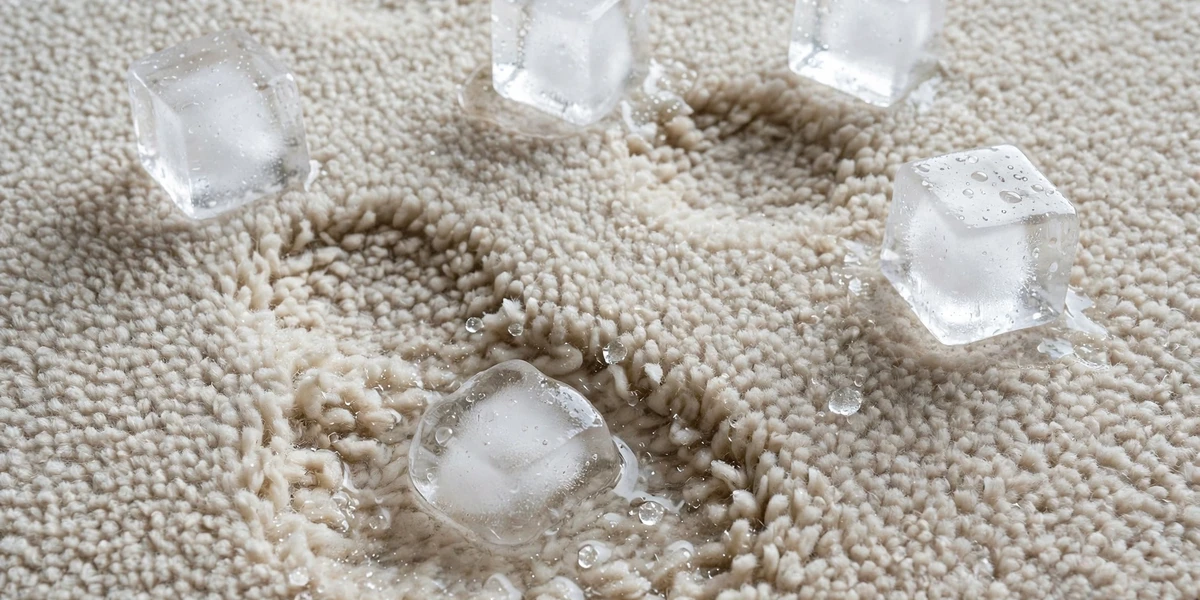
The ice cube method is simple and works well for many carpets. It is often the first method to try because it uses slow moisture and does not involve heat. As the ice melts, the water gradually soaks into the fibers and helps them expand and rise.
Cameron Welch, CEO of the specialist carpet care business, told Homes & Gardens: ‘The best way to remove furniture indentations from carpet is to place ice cubes on the indentations and let them melt overnight. This will add moisture to the fibers and allow them to expand. You can then use a spoon to gently lift the carpet back into shape.’ (Homes & Gardens)
To try it:
- Place one or two ice cubes on each dent.
- Leave them to melt completely, which may take a few hours.
- Blot away any excess water with a clean towel.
- Use your fingers, a spoon, or a soft brush to gently lift the fibers.
- Allow the area to dry fully before walking on it.
The ice cube method is suitable for many carpet types, but use it with care on wool and other natural fibers. Avoid saturating the carpet, and do not place too many cubes at once. If the dent is still visible after the carpet has dried, repeat the process or try another method.
A few precautions: do not rub the carpet aggressively while the fibers are damp, and do not use hot water to speed up the process. The aim is to add moisture gradually so the fibers can expand without being damaged.
2. Use a Carpet Steamer
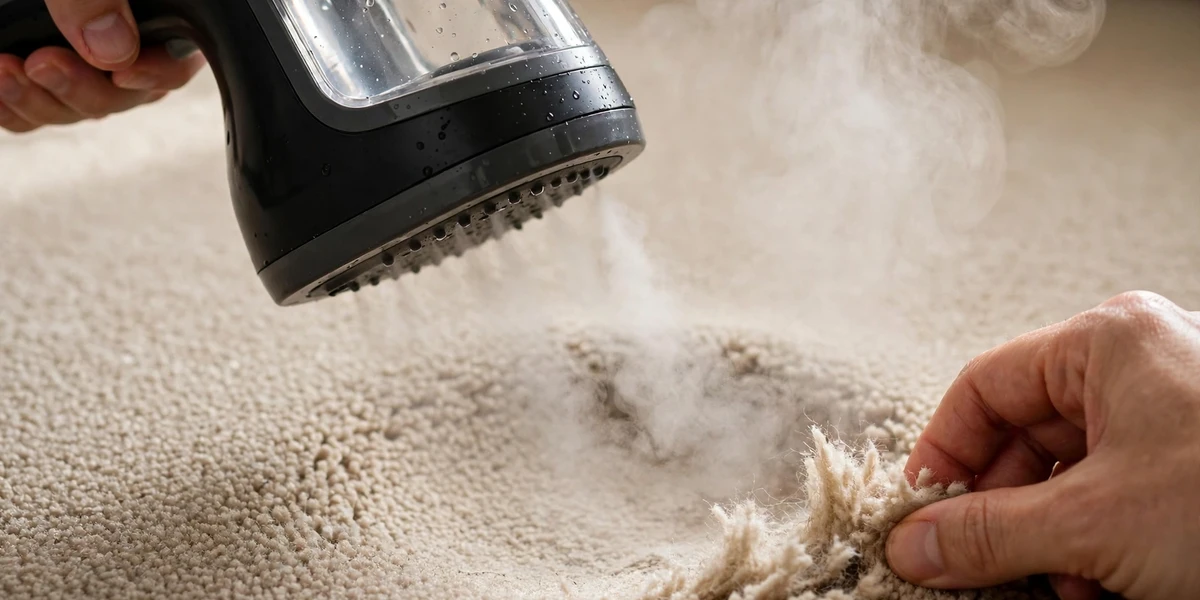
A carpet steamer can help loosen compacted fibers with gentle steam. The heat and moisture encourage the fibers to relax and regain their shape. This method is useful for deeper marks that have not responded to ice cubes or time alone.
To use a carpet steamer, hold it a few inches above the dent and let the steam reach the fibers. Do not press the steamer directly onto the carpet. Move it slowly across the affected area, allowing the steam to soften the fibers.
- Hold the steamer 5–10 cm above the dent.
- Allow the steam to reach the fibers for 20–30 seconds.
- Use a spoon, fork, or soft brush to gently lift the fibers.
- Repeat if needed, but allow the area to cool between passes.
- Let the carpet dry fully before walking on it.
A carpet steamer is often effective on synthetic carpets such as nylon and polyester. Use it with care on wool and other natural fibers. Avoid holding the steamer too close or using steam for too long in one spot.
If you do not own a carpet steamer, a garment steamer can be a useful alternative. The same principles apply: keep it above the carpet, use short passes, and lift the fibers gently afterwards.
3. Try the Cloth and Iron Method
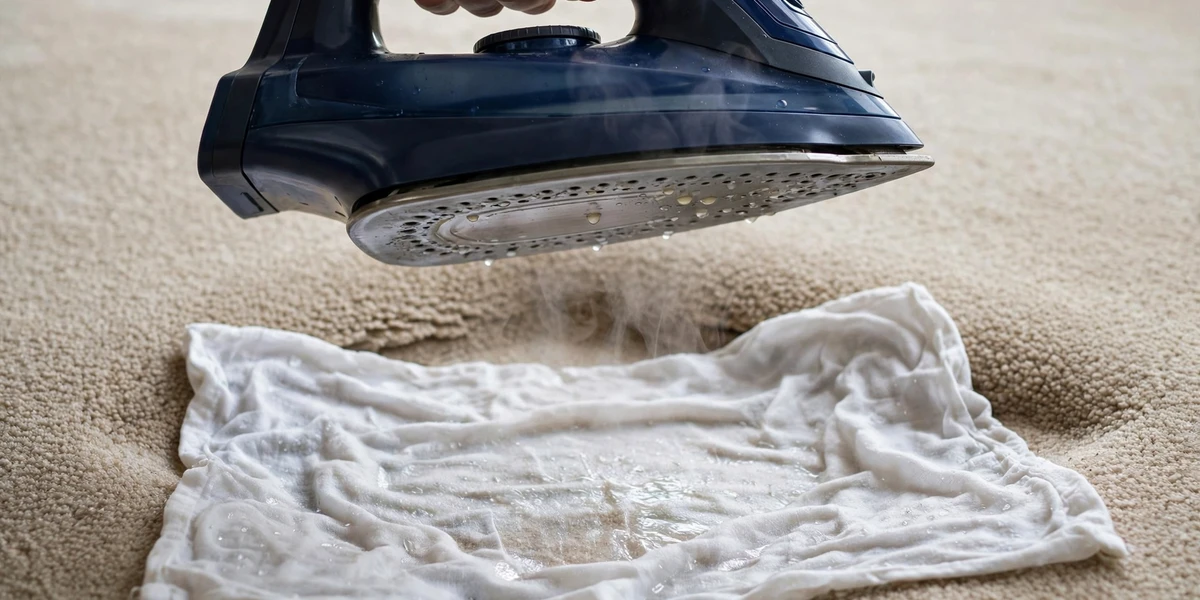
The cloth and iron method uses steam from a damp cloth to relax carpet fibers. A damp towel placed over the dent protects the carpet from direct heat while allowing steam to reach the fibers. This method can work well on stubborn dents, but it needs care.
Place a damp cloth or towel over the dent, then hold a hot iron a few centimetres above the cloth. The heat creates steam, which helps the fibers expand. Do not press the iron onto the cloth or carpet, and do not leave it in one place for too long.
- Dampen a clean white cloth or towel and place it over the dent.
- Set the iron to a medium steam setting.
- Hold the iron a few centimetres above the cloth for 20–30 seconds.
- Lift the cloth and gently raise the fibers with a spoon or soft brush.
- Repeat if needed, allowing the area to cool between attempts.
This method is not suitable for all carpet types. Avoid it on wool and other heat-sensitive fibers unless the manufacturer’s guidance allows it. If you are unsure, choose a gentler method instead.
4. Use a Blow Dryer to Lift Flattened Fibers
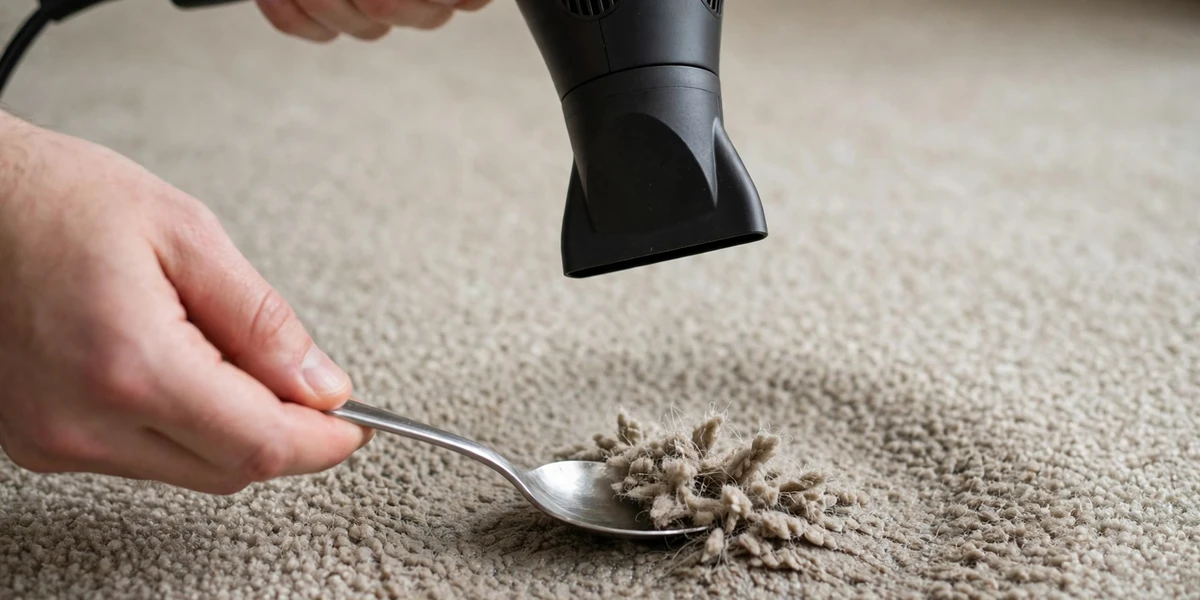
A blow dryer can help lift shallow dents and flattened fibers. Warm air encourages the fibers to relax, and you can lift them gently while they are warm. This method works well for lighter marks and for carpets that do not respond well to moisture.
The steps are:
- Lightly dampen the dent with a small amount of water.
- Hold the blow dryer a few inches above the area on a low or medium heat setting.
- Move the dryer slowly so the heat spreads evenly.
- Use a spoon, fork, or your fingers to lift the fibers as they warm.
- Allow the area to cool and dry before walking on it.
Use this method with care on wool and other natural fibers, and do not use high heat. If the fibers do not lift after a few attempts, try a different method.
5. Try the Damp Cloth Method
The damp cloth method is a gentle option that uses moisture alone. It is useful for shallow marks and for carpets where heat should be avoided. A damp cloth placed over the dent allows water to soak into the fibers gradually.
To use this method:
- Dampen a clean cloth with water and wring out the excess.
- Place the cloth over the dent and leave it for a few hours.
- Remove the cloth and blot any excess water.
- Use a soft brush or your fingers to lift the fibers.
- Allow the area to dry completely before use.
This method is simple and low-risk, but it may not be enough for deep dents. If the mark remains, try the ice cube method or a carpet steamer.
Finish by Grooming the Pile
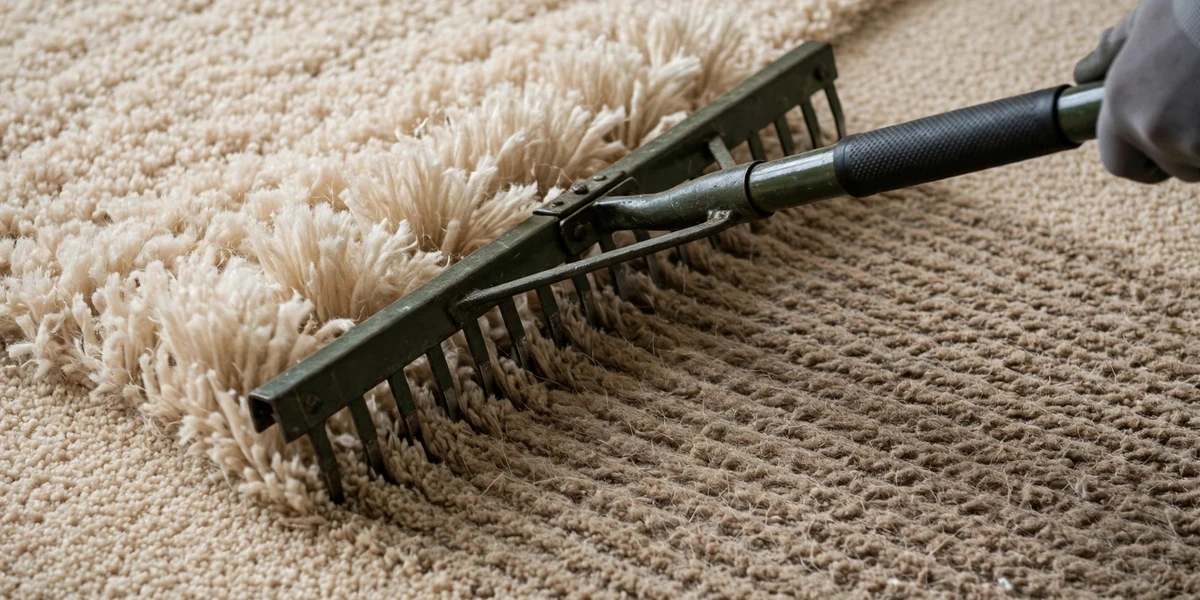
Once you have treated the dent, the final step is to groom the carpet pile. Grooming helps the fibers stand upright and blend with the surrounding carpet. Use a carpet rake, a soft brush, or a clean fork to lift the fibers gently.
Work in the direction of the pile, then against it, to encourage the fibers to rise evenly. Avoid pulling or tugging at the fibers, especially on loop-pile carpets such as Berber. A light touch is usually enough to restore the appearance of the carpet.
How to Remove Furniture Dents from Berber Carpet
Berber carpet has a looped pile, which makes it more vulnerable to damage from aggressive treatment. The loops can snag or pull if you use the wrong tool or technique. For this reason, gentle methods are the best choice for Berber carpet.
Start with the ice cube method, which uses slow moisture and does not involve heat or friction. Allow the ice to melt completely, then blot the area and lift the fibers gently with your fingers or a soft brush. Avoid using a fork or a stiff brush, which can catch the loops.
If the ice cube method does not fully lift the dent, a blow dryer on a low heat setting may help. Hold it above the carpet and use your fingers to lift the fibers as they warm. Avoid direct heat and do not pull at the loops.
Method 1: Combine Ice Cubes and a Blow Dryer
- Place ice cubes on the dent and let them melt.
- Blot the area and use a blow dryer on a low setting to warm the fibers.
- Lift the fibers gently with your fingers.
This combination uses moisture first, then gentle warmth, to relax the fibers. It is suitable for Berber carpet because it avoids harsh tools and excessive heat.
Method 2: Use a Steam Iron Carefully
A steam iron can be used on Berber carpet, but only with great care. Hold the iron above a damp cloth and use short bursts of steam. Do not press the iron onto the carpet, and do not use high heat. If you are unsure, use the ice cube method instead.
How to Remove Furniture Dents from Wool Carpet
Wool carpet is a natural fiber that needs careful treatment. It can be sensitive to heat, moisture, and friction, so gentle methods are the best choice. Always check the manufacturer’s guidance before trying any treatment on wool carpet.
Start by vacuuming the affected area to remove dust and loose fibers. Then try a gentle method, such as a damp cloth or a small amount of moisture, and allow the fibers to recover naturally. Avoid using hot water or high heat on wool.
Option 1: Vacuum the Affected Area
Vacuum the dent and the surrounding carpet to lift loose fibers and remove dirt. Use a suction-only setting if your vacuum has one, and avoid a rotating beater bar on wool carpet. Vacuuming can help the fibers stand up and may reduce the appearance of shallow marks.
Option 2: Use a Steam Iron Only When Permitted
A steam iron can be used on wool carpet only if the manufacturer’s guidance allows it. Hold the iron above a damp cloth and use short bursts of steam. Do not press the iron onto the carpet, and avoid high heat.
If steam is not recommended for your wool carpet, choose a gentler method, such as a damp cloth or ice cubes. The goal is to add a small amount of moisture without soaking the fibers.
Option 3: Brush and Fluff the Carpet Fibers
Use a soft brush to gently lift the fibers in the dent. Brush in the direction of the pile, then against it, to encourage the fibers to rise. Avoid using a stiff brush or applying too much pressure, which can damage wool fibers.
Brushing is a low-risk method that can be used on its own or after another treatment. It is often enough for shallow marks on wool carpet.
Option 4: Try an Ice Pack
An ice pack can be used in place of ice cubes on wool carpet. Place the ice pack on the dent and leave it for 30–60 minutes, then remove it and blot the area. Use your fingers or a soft brush to lift the fibers.
This method uses cold moisture to relax the fibers without heat. It is a gentle option for wool carpet, but avoid saturating the carpet with water.
How to Prevent Furniture from Leaving Carpet Imprints
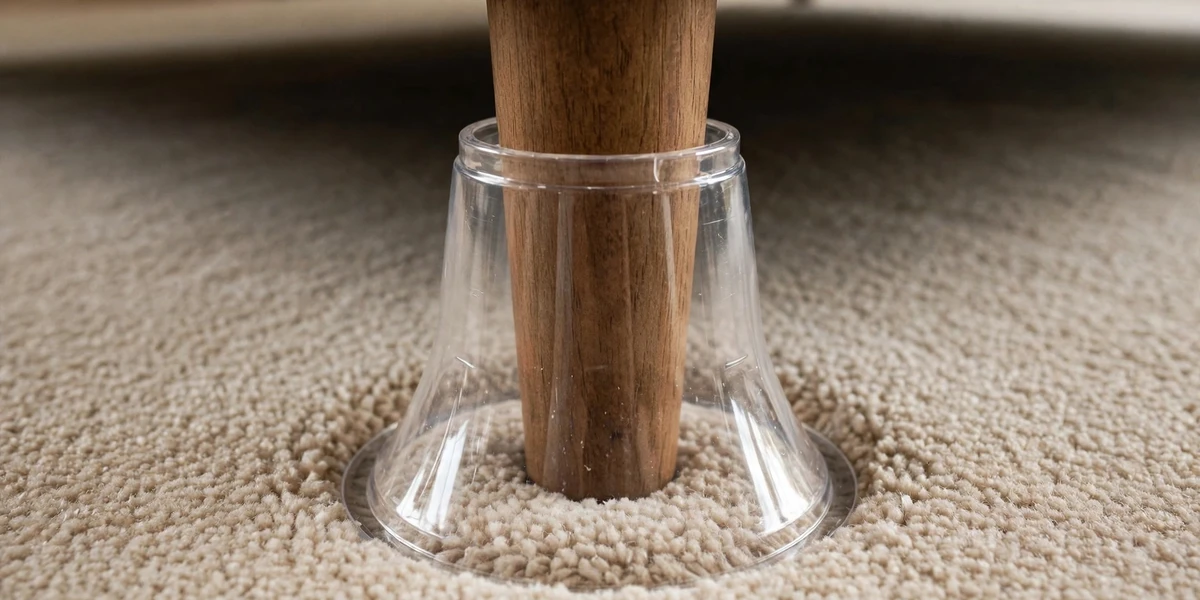
Preventing furniture marks is easier than removing them. A few simple steps can reduce the pressure on carpet fibers and help the carpet keep its shape. These steps are especially useful in rooms where heavy furniture stays in one place for a long time.
Use furniture leg protectors
Furniture leg protectors separate furniture legs from direct contact with the carpet and help distribute pressure.
Install furniture glides
Furniture glides provide a protective surface beneath furniture legs. Choose options suitable for your furniture and flooring.
Consider furniture cups
Furniture cups spread the weight of furniture over a wider area. Clear plastic cups are discreet and can help prevent deep dents.
Rearrange furniture occasionally
Moving furniture slightly every few months gives the carpet a chance to recover. Even a small change in position can reduce the depth of dents.
Maintain the carpet regularly
Vacuum regularly to keep the fibers upright and remove dirt that can weigh them down. Regular cleaning also helps the carpet recover from light impressions.
Use suitable rug pads
A rug pad beneath a rug can provide cushioning and distribute weight more evenly. Choose a pad that is suitable for your carpet and rug.
Check the underlay
A good underlay supports the carpet and helps it resist compression. If the underlay is worn or damaged, it may need replacing.
These steps will not guarantee that furniture marks never appear, but they can reduce their depth and make them easier to remove. Regular maintenance and small changes in furniture placement can make a noticeable difference over time.
When Should You Call Professional Carpet Cleaners?
Most furniture marks can be treated at home, but some situations call for professional help. If the dent is very deep or has been there for a long time, the fibers may not respond to home methods. A professional cleaner has equipment that can lift stubborn dents without damaging the carpet.
Professional cleaning may also be the better choice if the carpet is valuable, delicate, or made from a material that needs specialist care. Wool and other natural fibers can be damaged by the wrong treatment, so it is worth seeking advice before trying a stronger method.
- Deep dents that have not responded to home methods.
- Carpets made from delicate or specialist fibers.
- Marks that cover a large area.
- Carpets with existing damage or wear.
- Situations where the underlay may be affected.
- When you are unsure about the safest method for your carpet.
A professional cleaner can assess the carpet and recommend the best treatment. They can also advise on whether the dent can be fully removed or whether it is likely to remain visible. In some cases, the fibers may have been permanently compressed, and professional treatment can still improve the appearance.
If you decide to call a professional, describe the carpet type, the size and depth of the dent, and the methods you have already tried. This information will help them choose the right approach.
Conclusion
Furniture marks on carpet are common, but most can be treated at home with the right approach. Start by giving the carpet time to recover, then choose a method that suits the carpet type and the depth of the dent. Ice cubes, a carpet steamer, a damp cloth, and a blow dryer are all useful options, and gentle grooming can help restore the appearance of the carpet.
The key is to use the gentlest method that is likely to work and to avoid heat or moisture that could damage the carpet. Test every method on a small area first, and do not soak the carpet or apply a hot iron directly to the fibers.
Prevention is just as important as treatment. Furniture cups, glides, and regular rearrangement can reduce the pressure on carpet fibers and help the carpet keep its shape. Regular vacuuming also helps maintain the pile and prevent marks from becoming permanent.
If the dent does not respond to home methods, or if the carpet is delicate or valuable, consider calling a professional carpet cleaner. With the right care, most furniture marks can be lifted, and your carpet can look its best again.
Frequently Asked Questions
How do you get furniture dents out of carpet fast?
Ice cubes are often the quickest simple option. Place one or two cubes on each dent and let them melt, then blot the area and lift the fibers with a spoon or soft brush. For a faster result on synthetic carpet, a carpet steamer or blow dryer may help, but use heat with care.
Can furniture dents in carpet be removed permanently?
It depends on the carpet and how long the furniture stayed in place. Many dents lift well with moisture, steam, and gentle grooming. Very deep or long-standing dents may improve but not disappear completely, especially if the fibers have been permanently compressed.
Does the ice cube method work on all carpet types?
Ice cubes are suitable for many carpets, including nylon, polyester, and Berber. Use them with care on wool and other natural fibers, and avoid saturating the carpet. If you are unsure, test a small, hidden area first.
Can I use an iron directly on the carpet?
No. Never place a hot iron directly on carpet. Always use a damp cloth between the iron and the carpet, and hold the iron a few centimetres above the cloth. Direct heat can damage or melt carpet fibers.
How long should I leave ice cubes on a carpet dent?
Leave the ice cubes until they have melted completely, which may take a few hours. Then blot away excess water and lift the fibers gently. Avoid using too many cubes at once, and allow the carpet to dry fully before walking on it.
Will a carpet steamer damage my carpet?
A carpet steamer is safe for many synthetic carpets when used correctly. Hold it a few inches above the dent and use short passes. Avoid using it on wool or heat-sensitive carpets unless the manufacturer’s guidance allows it.
How can I prevent furniture from leaving marks on carpet?
Use furniture cups, glides, or leg protectors to spread the weight. Rearrange furniture occasionally, vacuum regularly, and use a suitable underlay. These steps reduce pressure on the fibers and help prevent deep dents.
When should I call a professional carpet cleaner?
Call a professional if the dent is very deep, covers a large area, or has not responded to home methods. Professional help is also a good choice for delicate, valuable, or specialist carpets, or when you are unsure about the safest treatment.

Muhammad Muaz
Muhammad Muaz shares practical cleaning, home care, improvement and everyday living guides for Urban Home Guide readers.
Keep Exploring
Related Home Guides