- Your cart is empty Browse Shop
Furniture
What Does MCM Mean in Furniture? Understanding the Style
The answer to “what does mcm mean in furniture” is simple: MCM stands for mid-century modern. It describes a furniture and interior design style associated with the middle of the…
The answer to “what does mcm mean in furniture” is simple: MCM stands for mid-century modern. It describes a furniture and interior design style associated with the middle of the 20th century.
You have probably seen the abbreviation in furniture listings, marketplace ads or decorating discussions, usually attached to a wooden sideboard, a sculptural chair or a coffee table with an unusual shape. Understanding the name, though, is only the beginning. MCM furniture has a recognizable look — clean lines, tapered legs, warm wood finishes — and it combines practical design with distinctive shapes and colors.
Here is what defines the style, and how to recognize it when you are shopping.
What Does MCM Mean in Furniture?
MCM is short for mid-century modern.
According to Herman Miller’s in-depth look at the mid-century modern home, MCM became the abbreviation for a design movement that was popularized in the United States after World War II. The style influenced furniture, architecture and interior design, and its central ideas were simplicity and functionality.
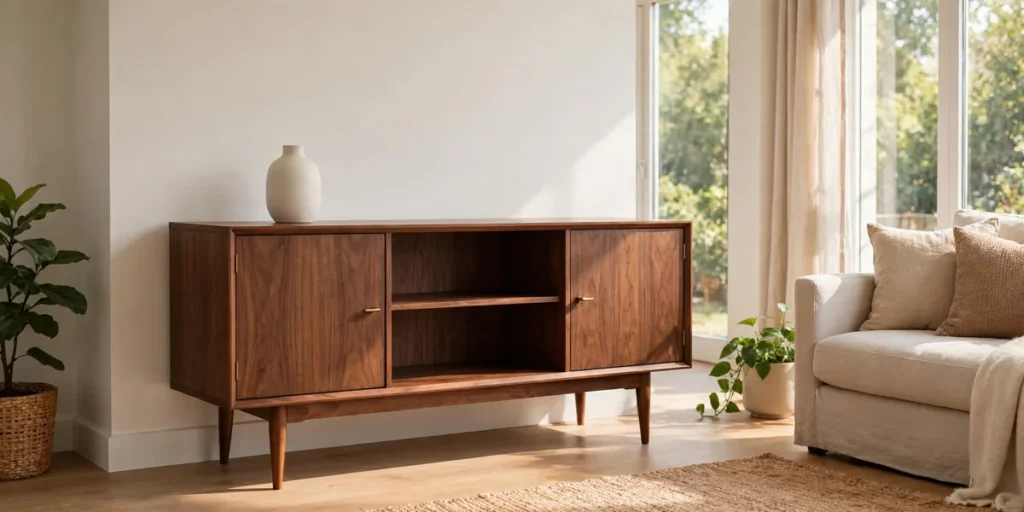
In furniture, MCM describes pieces with straightforward forms, practical features and very little decoration for its own sake. Think of a walnut sideboard on tapered legs, a molded chair with a curved shell, or a low coffee table with an organic, almost sculptural outline. Those pieces demonstrate the design language of mid-century modern furniture.
One important point: MCM does not necessarily mean a piece was manufactured decades ago. A modern manufacturer can produce furniture using exactly the same design principles, and that furniture is still described as MCM. The term describes the style first — the age of the piece is a separate question, covered below.
What Defines Mid-Century Modern Furniture?
MCM furniture has several recognizable characteristics. Herman Miller and Relic Modern both point to simplicity and functionality as the center of the style. Furniture generally avoids unnecessary decoration; instead, its shapes, materials and proportions create the visual interest.
Clean Lines, Tapered Legs and Organic Shapes
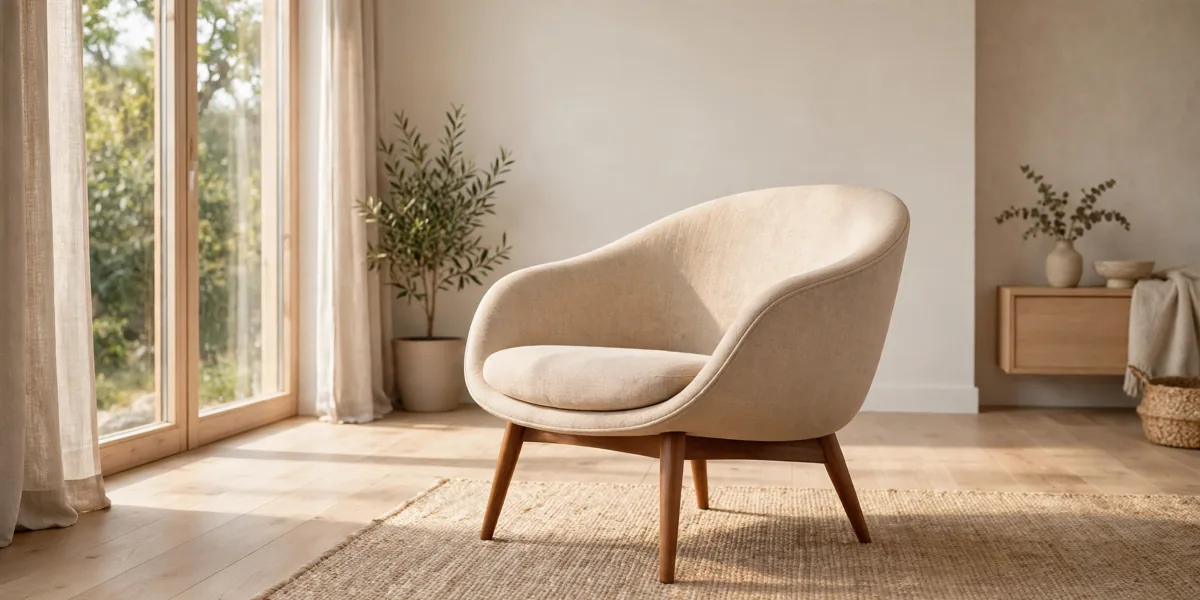
The easiest way to recognize MCM furniture is by its silhouette. Common characteristics include:
- Tapered legs: legs that become narrower toward the bottom.
- Splayed legs: legs that angle outward rather than standing straight.
- Clean lines: forms without excessive decorative detail.
- Organic shapes: curved forms that give a softer appearance.
- Geometric shapes: simple, defined shapes that give furniture its structure.
- Light-looking proportions: furniture that sits up on legs and looks visually open, rather than heavy and grounded.
Relic Modern describes geometric and organic shapes as defining features of the style, and Hernest also highlights tapered legs, rounded chair backs and curved edges.
These features work together rather than existing as isolated choices. Tapered legs alone do not make a piece mid-century modern — a traditional dresser can stand on tapered legs and still not be MCM. It is the overall design — the silhouette, the materials and the proportions together — that decides it.
Common Materials and Wood Types
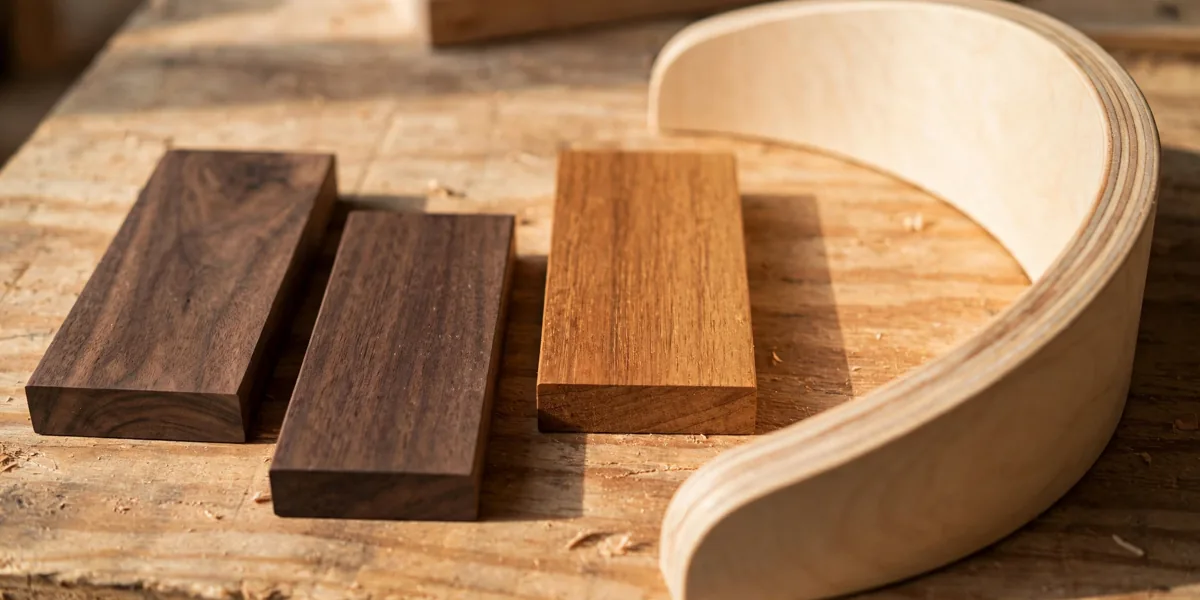
Natural wood plays a major role in traditional MCM furniture. Relic Modern identifies several wood types closely associated with the style:
| Material | Use in MCM design |
|---|---|
| Walnut | Warm-toned furniture and wooden surfaces |
| Teak | Traditional mid-century furniture finishes |
| Oak | Furniture construction and natural finishes |
| Rosewood | Distinctive, richly grained furniture designs |
| Plywood | Formed and molded furniture components |
| Fiberglass | Molded furniture forms |
| Metal | Structural and decorative components |
| Molded plastic | Shaped furniture designs |
MCM design is not limited to traditional wooden furniture. Herman Miller also discusses molded fiberglass and plastic, and Relic Modern identifies metal, wool and natural fibers among the materials associated with the style. Molded plywood deserves a special mention: designers of the period bent and shaped it into chair shells and seats, and it remains common today in engineered wood furniture built in the same spirit.
This combination of natural and manufactured materials — warm walnut next to molded plastic, teak next to chrome — is a large part of what gives the style its character.
Mid-Century Modern Colors and Patterns
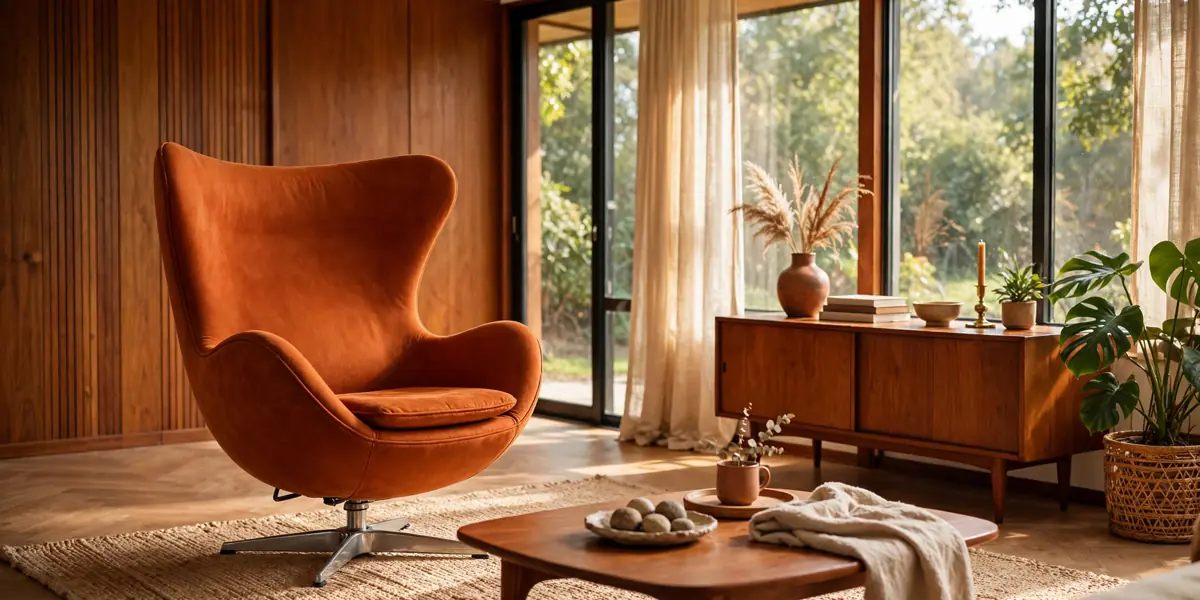
MCM furniture and interiors often combine natural wood tones with stronger accent colors. Herman Miller describes the palette as warm, neutral and earthy tones set alongside saturated colors. Relic Modern identifies several characteristic accent colors:
- Mustard yellow
- Avocado green
- Burnt orange
- Dark teal
Patterns can also contribute to the overall appearance. Herman Miller specifically highlights the abstract prints and bold patterns associated with designer Alexander Girard, whose textiles brought strong geometry and color into mid-century interiors.
The key is balance. The accent colors and patterns support the room, but the furniture’s shape and materials remain central to the design.
What Period Does Mid-Century Modern Represent?
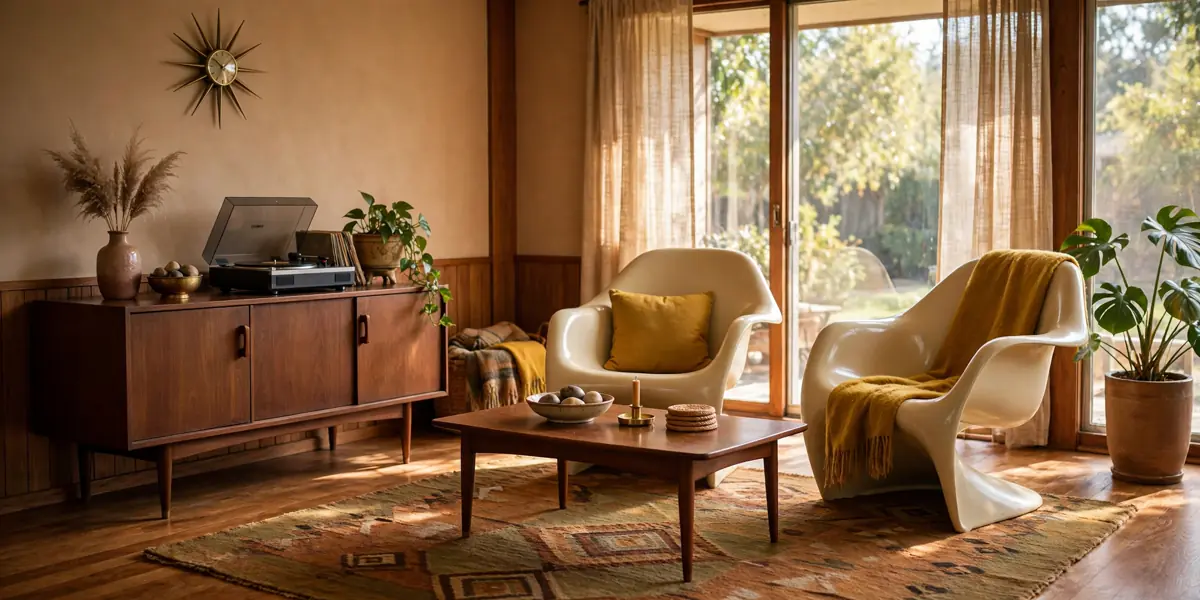
Mid-century modern design is associated with the middle decades of the 20th century. Herman Miller places its popularization in the United States after World War II, from the mid-1940s through the late 1960s. Relic Modern also discusses the period using dates extending into the late 1960s and around 1970.
The terminology is not tied to one exact starting or ending year, and sources vary by a few years at either end. What matters is the historical movement and its design principles.
During this period, furniture design emphasized functional forms and newer materials. Designers explored alternatives to heavily decorated furniture, creating pieces that reflected changing approaches to home interiors — smaller homes, open-plan living and a growing middle class furnishing them. Out of that came the distinctive combination of practical furniture and modern visual design that MCM is still known for.
Is MCM Furniture the Same as Vintage Furniture?
No. MCM and vintage describe different things, and the distinction is especially useful when shopping.
Vintage describes the age of a piece. MCM describes its design style. Relic Modern explains that mid-century modern furniture can include historical pieces as well as newer furniture made with similar design features. The Eames Lounge Chair is the clearest example: it was designed in 1956, yet versions of it are still produced today, so the design is historical even when the individual chair is new.
| Furniture description | What it means |
|---|---|
| Vintage MCM furniture | An older piece in the mid-century modern style |
| Reproduction MCM furniture | A later-produced version of an established design |
| Contemporary MCM furniture | Newly made furniture inspired by MCM characteristics |
| Mid-century (period only) | Furniture made in the middle decades, but not designed in the MCM style |
A piece can come from the mid-century period without having the characteristic MCM appearance — plenty of traditional furniture was made in the 1950s. Likewise, a piece made last year can reproduce the MCM appearance faithfully without being a historical piece at all. Do not treat the words MCM and vintage as interchangeable, especially in listings where “vintage” is used to justify a higher price.
MCM vs. Modern vs. Scandinavian Furniture
These styles can look similar, particularly when the furniture uses natural materials and simple shapes. They have different design backgrounds, though. Hernest distinguishes the broader modern design tradition from the more specific postwar MCM movement, and Relic Modern explains that Scandinavian and mid-century modern design are separate, although complementary, styles.
| Feature | Mid-Century Modern | Modern | Scandinavian |
|---|---|---|---|
| Design background | Postwar design movement | Broad modernist tradition | Scandinavian design tradition |
| Appearance | Warm, sculptural and streamlined | Clean and restrained | Simple and natural |
| Common materials | Walnut, teak, plywood and fiberglass | Wood, metal, glass and other materials | Natural materials and wood |
| Furniture shapes | Organic curves and tapered legs | Often simplified geometric forms | Simple, understated forms |
| Colors | Earthy tones with stronger accents | Frequently restrained palettes | More natural and restrained colors |
Mid-Century Modern vs. Modern
Modern design is the broader category. It focuses on function, simplified forms and limited decoration, and it stretches across a much longer period. MCM developed from modernist ideas but became recognizable through its particular combination of warm woods, tapered legs, organic shapes and lighter proportions. So all MCM furniture shares modernist influences, but not all modern furniture is MCM.
Mid-Century Modern vs. Scandinavian
Scandinavian design and MCM sometimes overlap. Both can feature natural materials, clean lines and functional forms, which is why they are so often mixed in the same room. However, Relic Modern distinguishes Scandinavian design through its stronger emphasis on natural materials and colors. MCM interiors can include more pronounced accent colors and more varied, sculptural shapes. The styles complement each other without being identical.
What About Retro Furniture?
Retro is another term that appears alongside MCM. Relic Modern describes retro design as a broader and less clearly defined category — more of a general nod to the past than a specific style. Mid-century modern has a more recognizable historical background and a clearer set of furniture characteristics, so it is the more useful term when you are buying or selling.
Famous MCM Furniture Designs and Designers
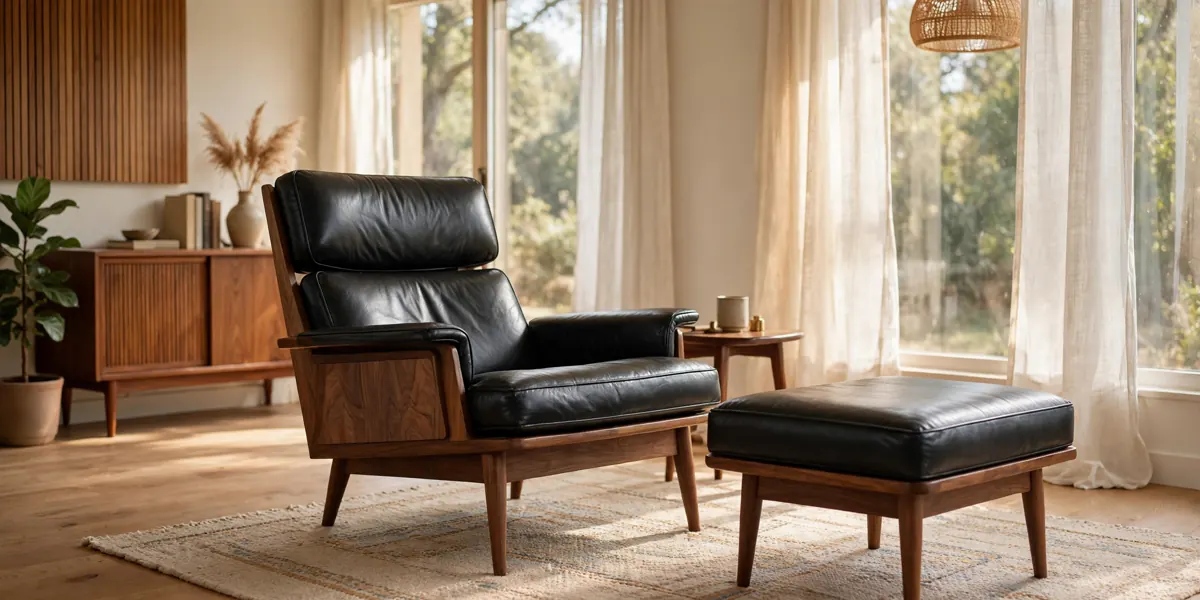
Several designers helped establish the furniture style associated with MCM. Herman Miller highlights the contributions of Charles Eames, Eero Saarinen and George Nelson, and the period produced a set of designs that are still in production today.
| Designer | Associated furniture |
|---|---|
| Charles and Ray Eames | Eames Lounge Chair |
| Eero Saarinen | Tulip Chair and Womb Chair |
| George Nelson | Platform Bench and Marshmallow Sofa |
| Isamu Noguchi | Noguchi Table |
| Harry Bertoia | Diamond Chair |
| Arne Jacobsen | Egg Chair |
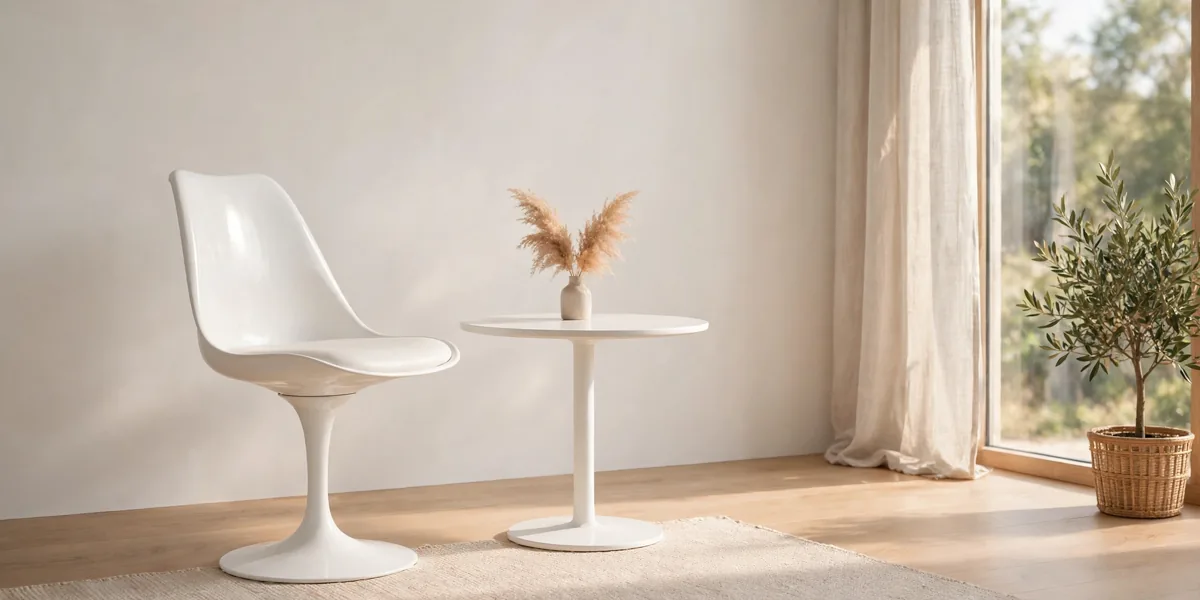
These designs demonstrate how MCM combines functionality with distinctive visual forms — a lounge chair engineered around comfort, a table that is also a sculpture, a chair woven from welded steel rods in Bertoia’s Diamond Chair. They also provide useful reference points: if a listing claims a famous name, comparing the piece against the documented design is the quickest way to judge the claim.
How to Choose and Mix MCM Furniture
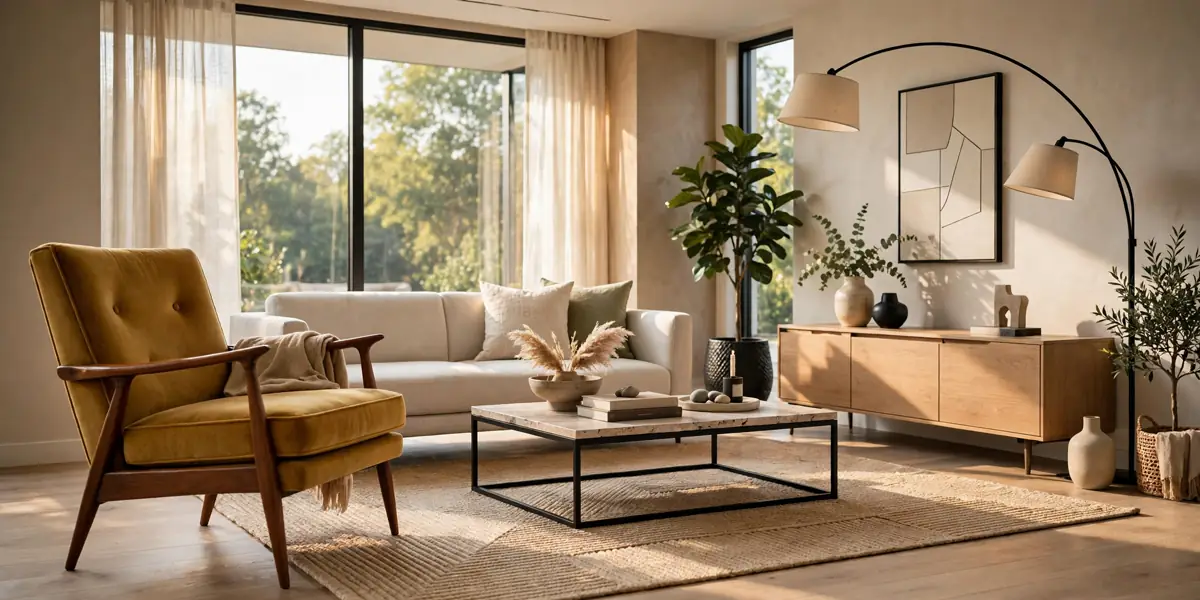
You do not need an entire home filled with MCM furniture to enjoy the style. Herman Miller recommends building a room around statement pieces and combining different furniture styles, and its design advice supports combining new and vintage pieces. Hernest’s furniture shopping guidance makes many of the same practical points.
Here are the considerations that matter most when choosing MCM furniture:
1. Start with the furniture’s proportions. Look at the overall silhouette rather than one isolated feature. Proportion is one of the main things that separates a well-designed piece from a copy that merely borrows the legs.
2. Examine the materials. Consider the wood, metal, upholstery and other visible materials. Solid walnut or teak, quality veneer and well-finished molded shells help establish whether a piece genuinely follows the design language you are looking for.
3. Pay attention to small design details. Look at the legs, edges, curves and decorative features. MCM generally favors functional, uncomplicated forms — if a piece is covered in applied decoration, it is probably not MCM, whatever the listing says.
4. Consider how you will use the furniture. A piece should serve its intended purpose. Hernest recommends weighing practical factors alongside appearance, including storage capacity, dimensions and everyday use. A beautiful sideboard that cannot hold your things is the wrong sideboard.
5. Do not limit yourself to one design style. MCM works comfortably alongside other styles. Herman Miller recommends incorporating different design influences, and Hernest likewise discusses combining modern and mid-century modern furniture. A single MCM statement piece in an otherwise simple room is often more effective than a room dressed entirely in one period.
The most useful approach is to choose pieces that work together visually, without forcing every item into one historical category.
Conclusion
MCM is most useful as a design description, not an age guarantee — a listing might describe a newly made piece as mid-century modern, while another features an original historical design.
So judge the piece itself, not the label. Before you pay a “vintage MCM” price, check three things: the silhouette should show the clean lines and tapered or splayed legs of the style, the materials should match the period’s woods or molded forms, and the seller should be able to say whether it is an original period piece, a licensed later production or a modern reproduction.
Frequently Asked Questions
What does MCM stand for in furniture?
MCM stands for mid-century modern, a furniture and interior design style associated with the middle of the 20th century. It is recognized through clean lines, functional forms, tapered legs and distinctive materials, as Herman Miller’s history of the style describes.
Does MCM furniture have to be from the 1950s?
No. MCM furniture can be newly manufactured using the same design characteristics as historical pieces. Relic Modern explains this distinction in its discussion of modern reproductions — the style is MCM regardless of when the individual piece was made.
What wood is commonly used in MCM furniture?
Common woods include walnut, teak, oak and rosewood, all identified in Relic Modern’s explanation of mid-century modern furniture. Molded plywood is also a signature material of the period.
Is MCM furniture the same as vintage furniture?
No. Vintage describes an older piece, while MCM describes a design style. Newly manufactured furniture can follow MCM design principles without being vintage, as Relic Modern notes — and genuinely old furniture is not automatically MCM.
Is MCM the same as Scandinavian furniture?
No. Scandinavian design and MCM are distinct but complementary styles. They share natural materials and simple forms, but their design traditions and typical color approaches differ, with Scandinavian design leaning more natural and restrained.

jarvis
jarvis shares practical cleaning, home care, improvement and everyday living guides for Urban Home Guide readers.
Keep Exploring
Related Home Guides