
How to Clean Outdoor Furniture Without Damaging It
Outdoor furniture can look tired fast after pollen, rain, food spills, sunscreen, dirt, or a damp season. If you’re wondering how to clean outdoor furniture, the safest answer is simple:…
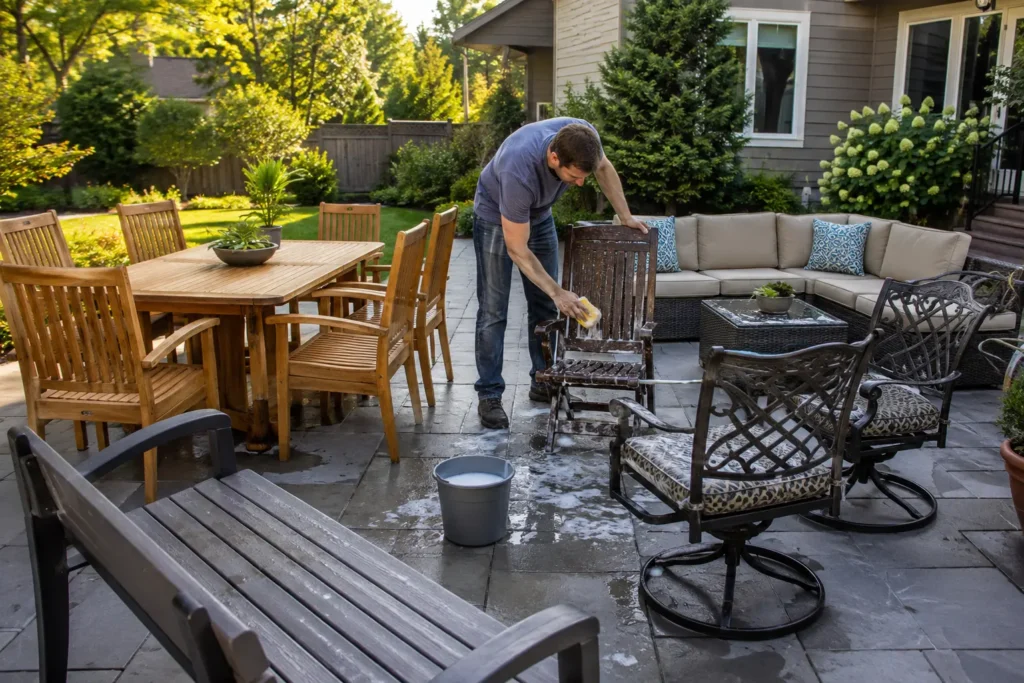
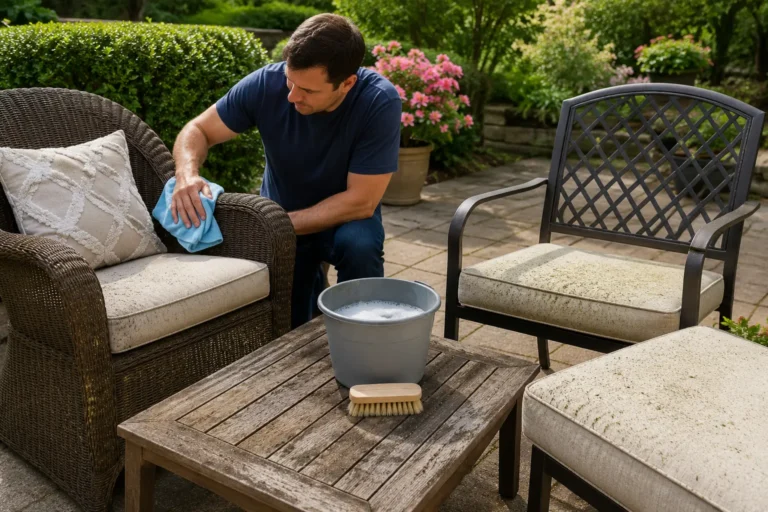
Outdoor furniture can look tired fast after pollen, rain, food spills, sunscreen, dirt, or a damp season. If you’re wondering how to clean outdoor furniture, the safest answer is simple: start with the material, not the stain. Mild soap and warm water work for many surfaces, but bleach, pressure washing, harsh brushes, and strong cleaners can damage some finishes. The goal is to clean well without damaging fabric, metal, wicker, or wood.
How to Clean Outdoor Furniture: Start With the Basics
Before you wet anything, remove loose dust, leaves, and surface debris with a brush or dry cloth. HGTV also allows a garden hose with a spray attachment on suitable surfaces.
Next, identify the material and check any manufacturer care instructions you still have. Then use the mildest suitable method first. For many frames, that means warm water, mild dish soap, a sponge, or a soft cloth. Rinse well and let the piece dry fully before covering or storing it.
My view is that aggressive cleaning should be the exception. If soap and water work, there is little reason to jump straight to bleach or high pressure.
Everyday Cleaning at a Glance
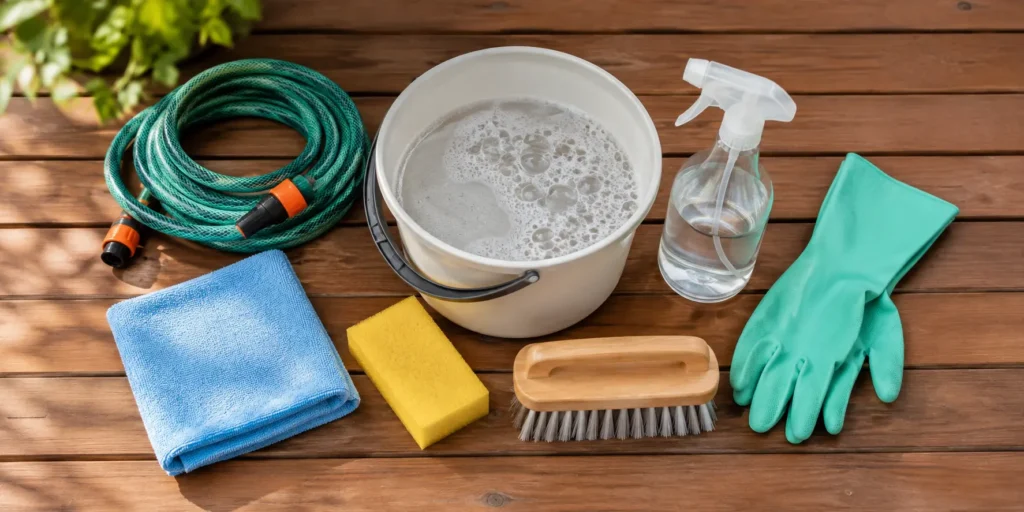
A practical routine for most outdoor furniture is:
- Brush or wipe away loose debris.
- Clean frames and cushions separately.
- Apply a suitable mild cleaning solution.
- Use a soft cloth, sponge, or soft-bristled brush.
- Rinse completely.
- Let everything dry before storage or covering.
The Outdoor Living Store uses this same broad routine for most patio furniture.
| Material | Good starting point | Main thing to avoid |
|---|---|---|
| HDPE/poly | Mild cleaner and soft brush | Bleach on colored poly unless approved |
| Cast aluminum | Mild soap and warm water | Abrasive cleaners and scratching tools |
| Wrought iron | Mild soap and water | Power washing and harsh chemicals |
| Wicker | Mild soap and warm water | Pressure washing and rough scrubbing |
| Teak | Mild soap and soft plastic brush | Metal brushes and harsh chemicals |
| Outdoor fabric | Gentle cleaning solution and soft brush | Over-scrubbing and leaving residue |
Cleaning HDPE and Poly Furniture
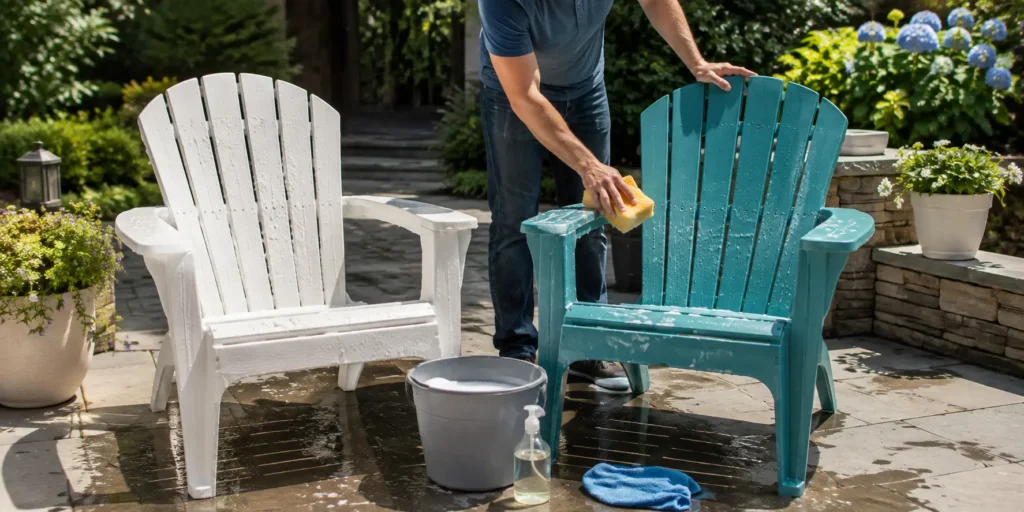
HDPE poly is durable, but color still matters. The Outdoor Living Store separates white poly from other colors because stronger bleach-based cleaning can affect colored surfaces.
For routine cleaning, apply a suitable cleaner, scrub with a soft-bristle brush or sponge, then rinse with warm water. For resistant stains, that source allows a 1500 PSI pressure washer on poly. It also says to keep the tip 8–12 inches away to reduce surface marring.
That doesn’t make pressure washing a universal choice. It is a material-specific escalation step, not a default method for every patio set.
White Poly Furniture
White poly may tolerate bleach-based stain treatment where the manufacturer permits it. However, colored poly needs more caution. The safer approach is to treat white and colored pieces differently rather than assuming one cleaner fits both.
Cleaning Cast Aluminum Furniture
Cast aluminum often has a powder-coated finish, so the main risk is scratching that coating. The Outdoor Living Store recommends mild soap and warm water, applied with a washcloth or sponge. It specifically warns against abrasive materials, cleansers, and bleach products.
Rinse with clean water and dry thoroughly. Also check for water trapped inside hollow frames. The source advises removing adjuster glides or foot caps so accumulated water can drain.
For difficult spots, it gives a 50/50 vinegar-and-water mixture as an option. Still, test a less visible area first if you are unsure about the finish.
Cleaning Wrought Iron and Other Metal Furniture
With wrought iron, cleaning and rust prevention belong together. Mild soap and warm water are the starting point. Wash with a soft cloth or sponge, then rinse thoroughly. The Outdoor Living Store advises against power washing wrought iron frames and harsh chemicals.
HGTV makes the bigger problem clear: rust can spread if damaged finishes expose metal underneath.
So, after cleaning, inspect the finish. Chips and blemishes deserve attention before corrosion becomes harder to control. The Outdoor Living Store also recommends protective waxing as part of ongoing wrought iron care.
Cleaning Wicker, Natural and Synthetic
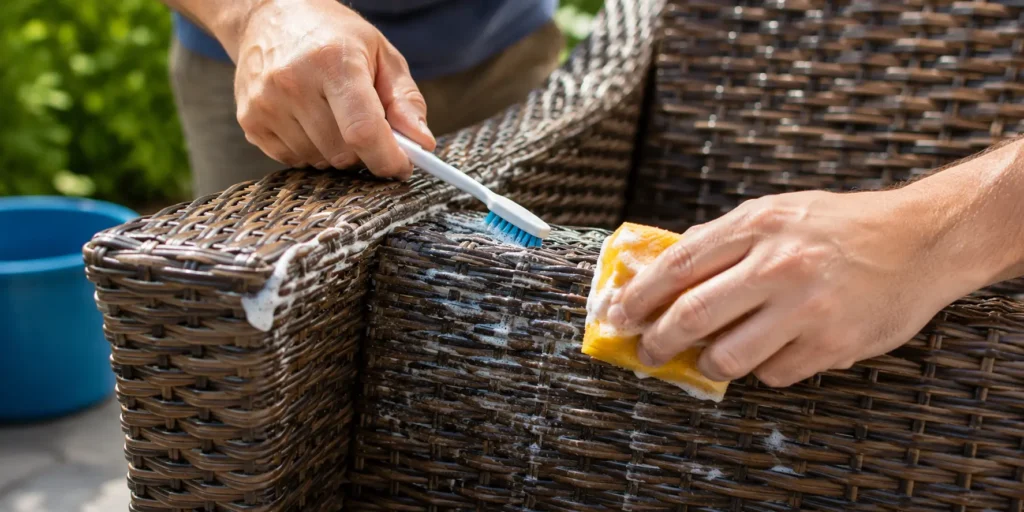
Wicker needs patience because dirt settles into the weave. Start by brushing away dust before adding water. Then clean with a soft sponge and a mild soap-and-warm-water solution. For tighter marks, a soft or medium toothbrush can reach into the weave.
Avoid a pressure washer on wicker frames. The same source also warns against harsh chemicals. After cleaning, dab the surface with a soft cloth and let it dry well.
HGTV also recommends regular dust removal with a microfiber cloth or vacuum crevice tool.
The key here is simple: clean the weave without beating it up.
Cleaning Resin and Marine Grade Polymer
Resin furniture is usually straightforward to clean. Mild soap and warm water are a practical starting point. The Outdoor Living Store warns against bleach on non-white resin pieces and allows stronger cleaning only when needed.
Marine Grade Polymer, or MGP, also responds to mild soap and common detergents. However, rough nylon pads and brushes can mar the finish if used too aggressively.
For grease or oil on MGP, the source lists citrus cleaner, alcohol, or mineral spirits as resistant-stain options. Because these are stronger products, use them only where the furniture maker allows them.
Cleaning Teak Outdoor Furniture
Teak is where people often confuse cleaning with restoration. If the surface has turned gray, that change may be weathering rather than ordinary dirt. HGTV notes that teak can be left to develop a silvery appearance or treated to maintain a warmer tone.
For cleaning, use mild soap and warm water with a soft plastic brush. Rinse, then let the furniture dry. The Outdoor Living Store warns against metal brushes and harsh chemicals because they can scratch or strip the surface.
I wouldn’t recommend treating a pressure washer as a shortcut here. HGTV strongly discourages power washing soft wood because it can scar the surface.
Caring for Teak After Cleaning
If you want to preserve teak’s warmer color, the supplied research supports protective treatment after cleaning. The Outdoor Living Store describes a clean, protect, and shield approach for natural teak.
That said, follow the product and furniture maker’s instructions. Different teak finishes may need different care.
Cleaning Cypress and Other Outdoor Wood
For cypress, treated pine, and similar outdoor wood, begin with a soft-bristle brush to remove loose debris. Then wash the frame with mild soap and water using a cloth or sponge. Rinse fully so soap does not dry on the finish. Finally, let the furniture air dry.
After drying, the Outdoor Living Store recommends applying a wood sealant to protect cypress from the elements. It suggests doing this at least once a year.
Separate cleaning from protection. One removes grime; the other preserves the wood afterward.
Cleaning Outdoor Furniture Fabric Safely
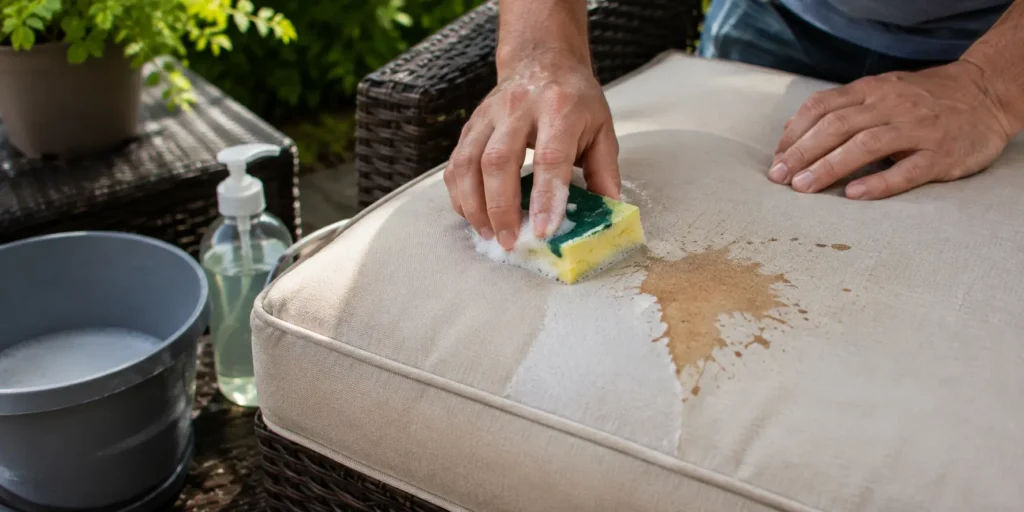
Outdoor cushions and sling fabrics need a gentler approach than most frames. Start with stains as soon as you notice them. Also brush away dried dirt before wetting the fabric, so you do not work grit deeper into the fibers.
Apply the cleaning solution through a cloth, sponge, or soft brush instead of pouring it directly onto the fabric. Let the solution work, then scrub gently in small circular motions. Afterward, rinse with plain water so soap, bleach, or cleaner residue does not remain.
Drying matters just as much. Stand cushions on their side and give them good airflow. Turn them as needed so they dry evenly and completely.
Natural Cleaning Options
The Phifer research supports warm water with organic dishwashing soap for many stains. It also uses vinegar in specific cleaning mixtures.
However, “natural” does not mean suitable for every surface. Use the fabric maker’s instructions first, especially before using stronger solutions.
Treating Common Outdoor Furniture Stains
Phifer’s stain instructions show why one cleaner does not suit every mess. Dishwashing liquid and water can handle many food and drink stains, including ketchup, mustard, coffee, tea, milk, cola, grape juice, raw egg, and bird droppings.
For beer, food coloring, urine, or vomit, Phifer combines dishwashing liquid with white vinegar and water. Grease, oil, salad dressing, suntan lotion, paint, shoe polish, tomato juice, and tree sap get a different approach. Cornstarch is used first to absorb oily residue before mild dish soap and water.
For charcoal or pencil marks, loose material should be vacuumed first. Then the surface can be cleaned with dishwashing liquid and water.
The lesson is not to scrub harder. Match the treatment to the stain.
Removing Mold and Mildew
Mold needs fast attention, especially on outdoor fabric. Phifer recommends first brushing away dry mold or mildew residue. Its fabric-specific method then uses dishwashing liquid and bleach diluted in water, followed by gentle scrubbing, rinsing, and air drying.
Bleach needs caution. HGTV also notes that bleach can discolor some materials.
So, do not treat bleach as a universal mold remover. Check material compatibility and colorfastness first. For wicker, HGTV instead describes a 50/50 white-vinegar-and-warm-water solution for mildew.
Keeping Outdoor Furniture Clean Longer
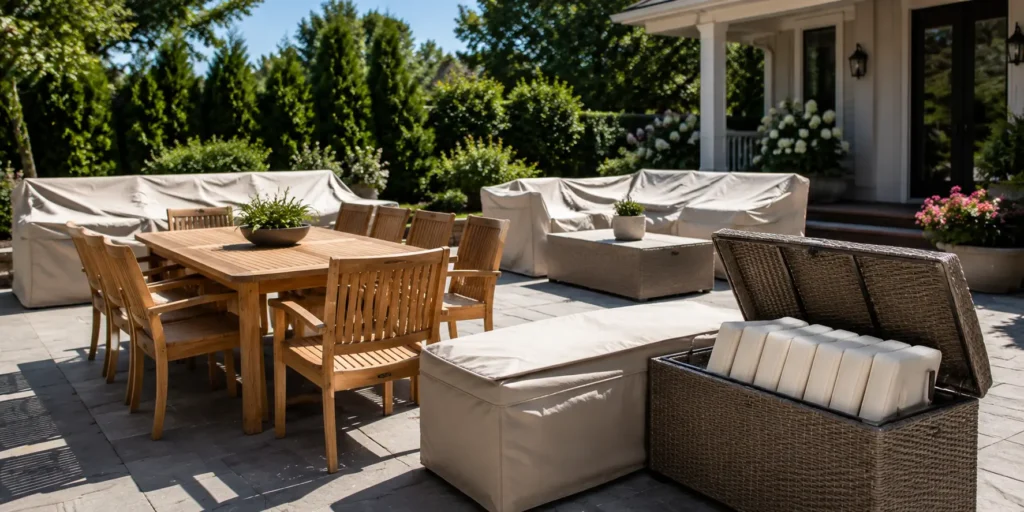
Cleaning gets easier when dirt never builds up heavily. The Outdoor Living Store recommends covers when furniture is not in use, waterproof storage for cushions, monthly wipe-downs during use, and sealants for wood.
For fabric, Phifer also supports regular spot cleaning, wiping, and covering or storing furniture when it is not being used.
That preventive approach is better than waiting for stubborn buildup.
When Cleaning Is Not Enough
Sometimes the problem is no longer surface dirt. HGTV notes that weathered hardwood may need sanding, while other wood or metal furniture may need stripping, sanding, painting, or staining. Plastic restoration can also be more difficult.
If normal cleaning does not change the appearance, stop before using harsher chemicals. You may be looking at finish failure, oxidation, deep staining, rust damage, or weathering rather than ordinary dirt.
Conclusion
The best cleaning method is the one that respects the material first. Start mild, use soft tools, rinse well, and let everything dry completely. Save bleach, solvents, and pressure washing for the limited surfaces that can handle them.
My view is simple: don’t chase a spotless finish with a method that risks damaging the furniture. Clean according to the frame, fabric, finish, and stain you actually have. That approach is more controlled, more practical, and much less likely to create a second problem while fixing the first.
Frequently Asked Questions
Can I pressure wash outdoor furniture?
Only some materials should be pressure washed. The supplied research allows controlled pressure washing for resistant stains on some poly and resin furniture, but warns against it on wrought iron, wicker, and teak.
What is the safest cleaner for most outdoor furniture?
Mild soap and warm water are the safest common starting point across many materials in the supplied research. Still, check the furniture material and manufacturer instructions before using stronger products.
Can I use bleach on outdoor furniture?
Sometimes, but not on every material or color. The research supports bleach for specific white poly, resin, fabric, and mold situations, while also warning that it can discolor or damage other surfaces.
How should I dry outdoor cushions?
Give cushions plenty of airflow and stand them on their side while drying. Turn them as needed so they dry evenly and completely.
How often should I clean outdoor furniture?
The supplied research supports regular spot cleaning and monthly wipe-downs during use, with deeper cleaning when dirt, stains, or seasonal buildup require it.

Muhammad Muaz
Muhammad Muaz shares practical cleaning, home care, improvement and everyday living guides for Urban Home Guide readers.
Related Home Guides