- Your cart is empty Browse Shop
Furniture
Why Is Furniture So Expensive? Understanding the Real Costs
You sit down on a sofa in a showroom. It feels right — the cushions, the fabric, the way it fits the room in your head. Then you flip the…
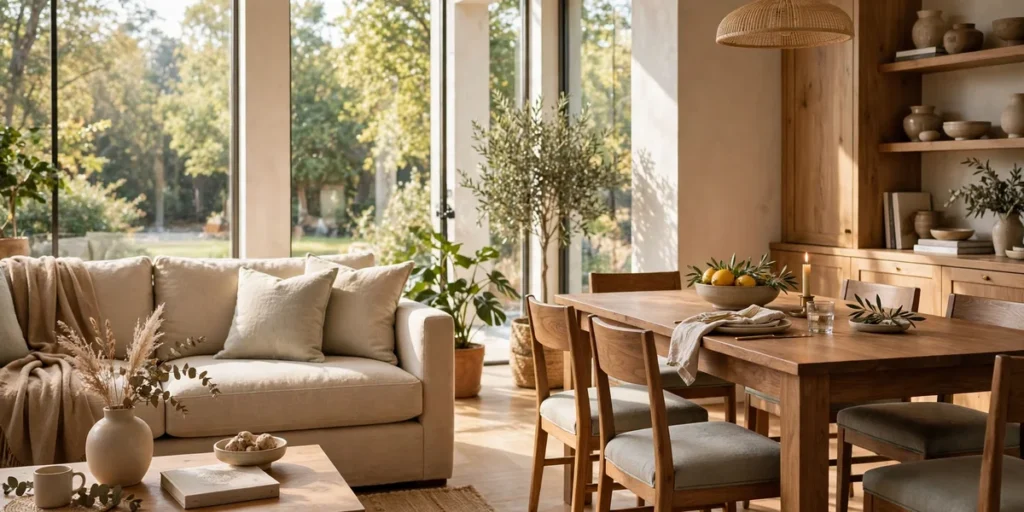
You sit down on a sofa in a showroom. It feels right — the cushions, the fabric, the way it fits the room in your head. Then you flip the tag, and the price stops you cold. Why is furniture so expensive? A dining table or a bed can cost far more than the wood and fabric you can see would suggest.
The truth is, the price covers far more than materials. Every piece carries the cost of labor, storage, transport, delivery, and the store itself. Import tariffs can add more on top. For a sense of scale, the Congressional Research Service reported in April 2026 that the dollar value of in-store markups at furniture retailers rose 8% between December 2024 and December 2025 — the dollar value of markups, not an across-the-board price rise. A high price doesn't always mean better quality, though. Some expensive pieces earn their price with solid construction. Others just carry a bigger markup or a brand premium. So the real question is simple: what are you actually paying for, and is it worth it?
Why Is Furniture So Expensive Right Now?
Furniture prices don't rise for one reason. They rise because nearly every cost along the way has gone up, and each one lands in the final price.
NPR business correspondent Alina Selyukh reported in November 2025 that furniture businesses were paying more for utilities, insurance, and wages. The same report pointed to pandemic-era demand for home office furniture and rising shipping costs. Those pressures didn't vanish when the pandemic ended. They settled into the price of nearly everything in the showroom.
Materials Cost More
Furniture needs a long list of materials, and each one has its own price: wood and engineered wood for frames and panels, metal for structural parts and hardware, foam and other padding for seating, fabric and leather for upholstery, and finishing materials for appearance and surface protection.
The quality and type of these materials change the final manufacturing cost. A dining table made with solid wood carries a different price from one made with engineered wood, and upholstery choices do the same to the cost of a sofa. Short Furniture identifies materials and construction as major parts of furniture pricing.
Running a Furniture Store Isn't Cheap
The price tag also reflects the business selling the furniture. A physical showroom needs space, staff, and furniture displays. Retailers also need to manage stock and arrange customer orders.
According to the Congressional Research Service's April 2026 report, inventory can involve financing, insurance, maintenance, depreciation, and other expenses. So a furniture store's selling price has to cover more than the original product cost.
Demand and Supply Still Play a Part
Furniture demand can change when household needs change. NPR reported increased demand for home office desks and outdoor furniture during the pandemic. At the same time, shipping costs increased.
When demand rises while available stock becomes limited, prices come under pressure. Still, prices don't always move in the same direction. Competition, stock levels, and customer demand can influence individual retailers differently.
History shows the same pattern. Home Furnishings Business reported in May 2022 that between 2012 and 2020, prices for all consumer items rose 13.5% while furniture prices fell 3.3%. Then in 2021, furniture prices rose 17%, compared with 7% for consumer goods overall. Furniture prices do not simply follow general inflation.
Where Your Money Goes
Before looking at each cost in detail, here is the simple map. Every furniture price is made of the same five parts. The balance between them changes from one piece to the next, but nothing on the price tag falls outside them.
| Cost | What it covers |
|---|---|
| Materials | Wood, engineered wood, metal, foam, fabric, leather, and finishing materials |
| Labor and craftsmanship | Frame building, joinery, suspension, upholstery, and finishing work |
| Transport and shipping | Freight, customs processing, and moving stock to warehouses |
| Store and operations | Showroom space, staff, displays, and inventory costs such as financing and insurance |
| Delivery service | Handling, scheduling, room-of-choice delivery, and assembly where offered |
That five-part map describes the retail price. The factory cost inside it has its own split: a furniture cost-estimation guide (MFG Calcs, July 2026) puts the cost per unit of casegoods and upholstery at roughly 45 to 60 percent materials, 20 to 30 percent direct labor, 8 to 15 percent overhead, and 3 to 8 percent packaging and freight preparation. That is the manufacturing cost, not the retail price — the store's own costs and margin sit on top of it, and the balance shifts with every piece.
The sections below unpack each part, so you can see which costs are real and which ones are just markup.

The True Cost of Materials and Craftsmanship
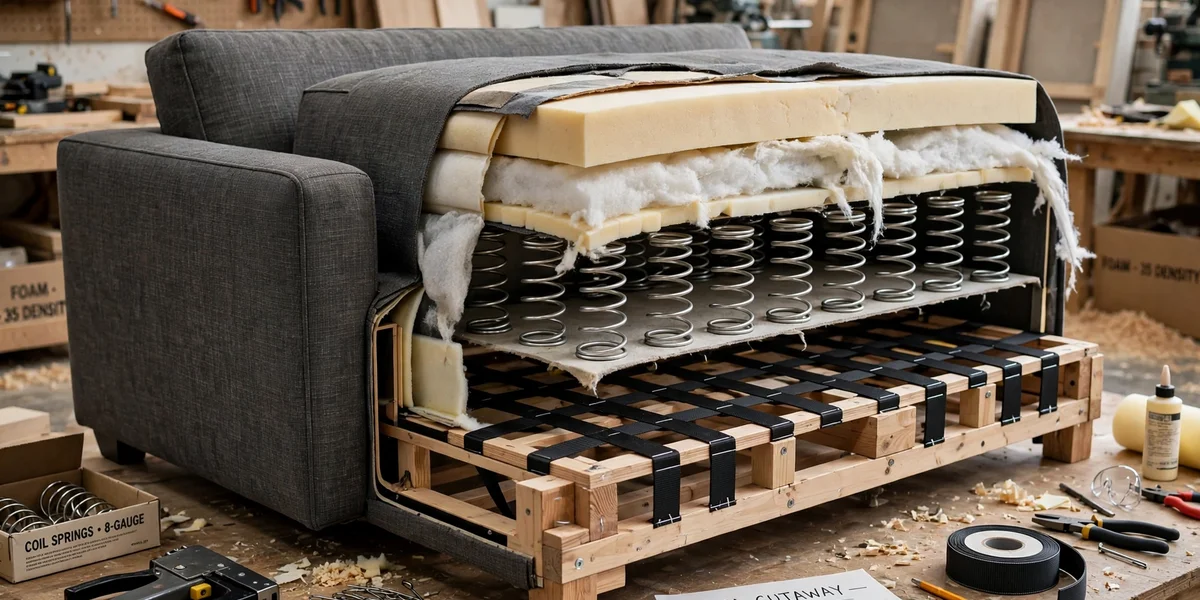
Two sofas can look almost identical in a showroom. Under the surface, their construction can be completely different. That gap in construction is where much of the price difference lives.
Quality You Can See and Feel
Several construction details can influence the price of furniture.
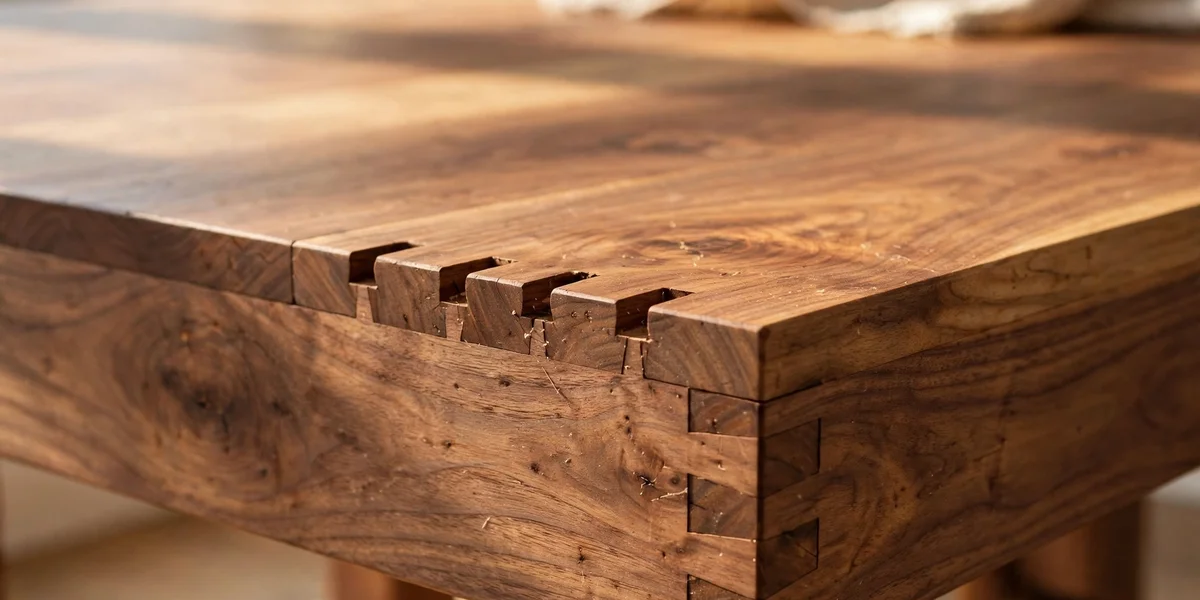
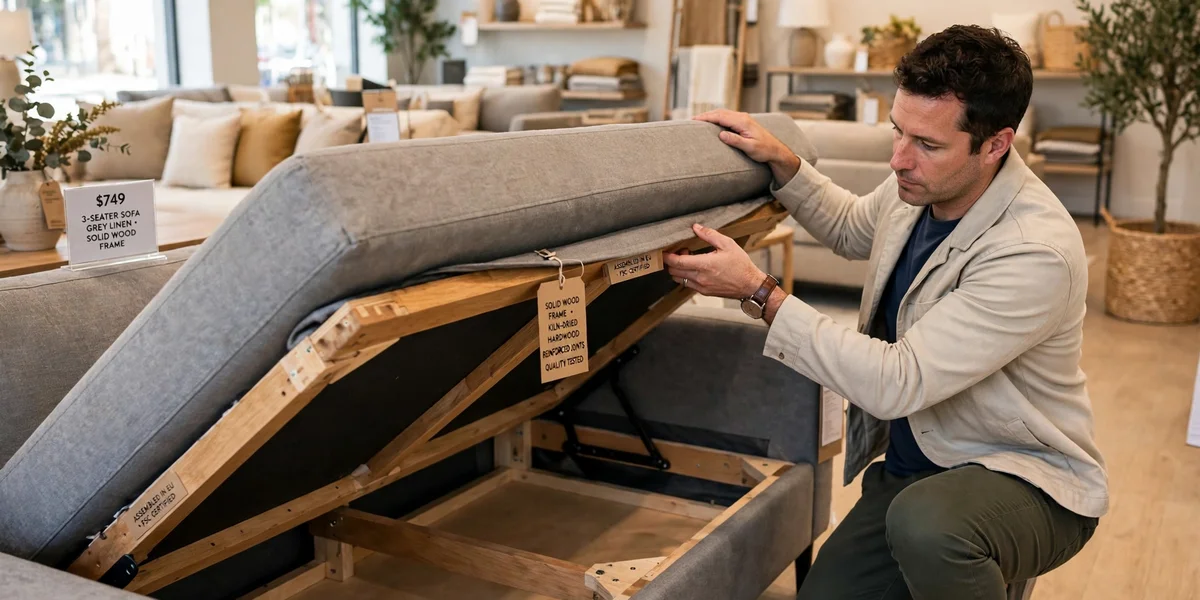
- Frame construction. The frame provides the main structure of a furniture piece. Its material and construction affect stability. Short Furniture identifies solid wood and construction techniques such as dovetail and mortise-and-tenon joints as examples of craftsmanship that can add cost.
- Suspension systems. Sofas and chairs need internal support beneath their cushions. Different products use springs or webbing systems. These designs decide how a seat feels and supports the person using it.
- Cushion materials. The padding affects softness, firmness, and the seating experience. Different foam and filling materials produce different results. So the visible fabric doesn't tell the whole story.
- Fabric and finishing. Upholstery also affects the final price. Leather, linen, polyester, and performance fabrics have different properties. Stitching, seams, and finishing details also contribute to the finished appearance.
When a Higher Price Makes Sense
A higher price makes sense when the construction supports how you'll use the piece. Look past the appearance. Check the frame, the internal support, the cushions, and the finishing before you decide. That's where the real difference between a fair price and an inflated one usually shows up.
The Global Journey to Your Living Room
A piece of furniture may travel a long way before it reaches your home. Where it's made and how it gets to you both shape the final price. Short Furniture's pricing guide describes several stages involved in international furniture transportation.
From Container Ship to Your Doorstep
For imported furniture, the journey involves:
- Manufacturing and packaging.
- Transportation to the export port.
- International freight.
- Customs processing and applicable import duties.
- Transportation to a warehouse or distribution center.
- Final delivery to the customer's home.
Each stage requires planning and transportation. Furniture is often bulky and difficult to move, which adds to the effort at every step. WCC Furniture also identifies transportation and shipping as important contributors to furniture prices.

The Final, Most Important Mile
The last part of delivery deserves attention. A large sofa or dining table must reach the correct room without damage. Depending on the retailer's service, delivery may also involve professional handling and assembly.
Short Furniture identifies delivery teams, careful handling, and scheduling as parts of this service. So always check what the advertised delivery price actually includes. A cheaper furniture listing may not include the same delivery service as another retailer.

How Overseas Competition and Tariffs Affect Furniture Prices
International manufacturing has a major place in the furniture industry. At the same time, importing furniture can expose manufacturers and retailers to changing trade costs.
Overseas Manufacturing Has Kept Some Prices Lower
NPR's November 2025 report discussed how overseas manufacturing helped keep mass-market furniture affordable. The report explained that labor costs influence manufacturing decisions. It also noted that American furniture manufacturers can still depend on imported components.
These components include fabrics, handles, and electronic parts used in recliners. That means American-made furniture still carries international supply costs.
How Tariffs Push Prices Up
A tariff is a tax applied to imported goods. When a tariff affects a furniture product or one of its imported components, the importer faces additional expenses. Those expenses land in the final selling price.
But tariffs don't affect every furniture product equally. The International Home Furnishing Representatives Association explained in July 2026 that the impact depends on the product's country of origin, customs classification, and existing duties. The Congressional Research Service also discussed how 2025 tariff changes disrupted retail supply chains and affected import costs and inventories.
For this reason, tariffs can explain some price increases. They shouldn't be treated as the explanation for every expensive furniture item.
Why Furniture Store Prices Can Vary
Have you ever found the same type of sofa at two different stores with very different prices? There are several possible reasons.
Retailers purchase furniture from suppliers and add their own selling prices. The difference between the purchase price and selling price is called the retail markup. According to the Congressional Research Service, this markup helps cover the retailer's services and operating expenses. It isn't automatically the retailer's final profit.
Understanding Furniture Markups
A useful recent finding comes from the Congressional Research Service's April 23, 2026 report. It reported that the dollar value of in-store markups at furniture retailers increased by 8% between December 2024 and December 2025. This followed a decrease during the previous year.
Read that figure carefully. It describes dollar markups, not an 8% increase in every furniture price. It also doesn't mean every retailer experienced the same change.
An independent check comes from the trade press. Home Furnishings Business reported that the traditional furniture retailers in its 2021 Retail Metrics survey averaged a gross profit of 50.3% on sales — but net income of only 12.6%, because operating expenses absorb most of the difference. A large markup is not the same as a large profit.
Are Furniture Discounts Always Genuine?
WCC Furniture argues that some retailers use high markups, commission-based selling, and promotional discounts to influence buying decisions. That is the perspective of an individual furniture retailer, not proof that every store follows the same approach.
A discount alone doesn't establish value. Compare the actual selling price, the product specifications, and the included services before making a decision.
The Hidden Costs of Buying Furniture Online
Buying furniture online can feel easier than visiting several showrooms. But online furniture retailers also have operating expenses. Short Furniture's pricing guide identifies product photography, digital operations, logistics, and final delivery as costs associated with online furniture retail.
The Rise of Digital and Delivery Costs
Online furniture businesses need more than product listings. They need photographs, product descriptions, website operations, and systems for managing orders.
Delivery is the same job as in a store: a large piece still needs careful handling because of its size and weight.
Check the Total Cost Before Ordering
Don't compare products using their advertised prices alone. Before purchasing, check:
- Whether delivery is included.
- Whether assembly is included.
- Whether the retailer offers room-of-choice delivery.
- What additional delivery services are available.
- Whether the listed price covers the complete product.
These details help you compare the actual purchase cost rather than relying on the first price you see.
How to Invest Wisely in Your Home Furnishings
You don't need to purchase the most expensive furniture in a showroom. Instead, focus on the features that matter for your home and daily use. Short Furniture recommends paying particular attention to frequently used furniture, including sofas and mattresses.
A Simple Checklist for Spotting Quality
Before purchasing furniture, take time to inspect it. Here are some useful checks.
- Frame: Check whether the furniture feels stable.
- Joinery: Ask how the main parts are connected.
- Drawers: Open and close them to assess their movement.
- Suspension: Ask what supports the seat beneath the cushions.
- Cushions: Check their firmness and how they recover after use.
- Fabric: Examine the material, seams, and stitching.
- Warranty: Read the available frame and cushion warranty details.

Is It Better to Buy Cheap Furniture and Replace It?
A lower-priced item suits temporary use or a room that doesn't see much daily activity.
On the other hand, furniture used regularly deserves closer attention to construction and comfort. Don't reject an affordable piece simply because it costs less. Likewise, don't purchase an expensive product without checking what makes it different.
What Is the Most Important Furniture to Invest In?
Start with the furniture you use most often. For example, a sofa used every evening deserves attention to comfort, support, and construction. A dining table used regularly should suit your space and everyday needs.
A sensible buying decision starts with your actual requirements, not the brand's highest-priced collection.
How to Compare Furniture Prices Before Buying
This is where a little research can save you from an expensive mistake. When comparing furniture, make sure you're comparing similar products.
A sofa with a different frame, suspension system, or upholstery material isn't comparable to another sofa simply because they look similar. Use this comparison table when shopping.
| What to compare | Questions to ask |
|---|---|
| Frame | What material is used? |
| Construction | How are the joints connected? |
| Suspension | What supports the seating? |
| Cushioning | What filling is used? |
| Upholstery | What fabric or covering is included? |
| Dimensions | Will it fit your available space? |
| Warranty | What parts are covered? |
| Delivery | What services are included? |
Next, compare the complete purchase cost, including delivery and any included services, rather than the product price alone.
Also, check the dimensions before ordering, and measure your room and delivery access first. Finally, ask questions when product information is unclear. A reliable comparison should be based on actual specifications, not just attractive product photographs.
Conclusion
Once you can see every cost in the chain, one thing is clear. My view is that buying expensive furniture without understanding its construction is a mistake. A higher price should have a clear reason behind it: better materials, careful craftsmanship, more demanding transportation, or useful customer services.
Look at what the furniture offers, compare similar products, and consider the complete purchase cost. The best furniture purchase isn't necessarily the cheapest or most expensive one. It's the one that delivers the value your home actually needs. You can browse more furniture guides in our Furniture category.
Frequently Asked Questions
Is expensive furniture actually worth the money?
Expensive furniture can be worth the money when its materials and construction justify the price. A high price alone doesn't guarantee better quality, so check the frame, suspension, and finishing before you decide.
Why are sofas so expensive?
Sofas contain several components, including frames, suspension systems, padding, and upholstery. Their size, construction, and delivery requirements can all influence the final price.
Does solid wood furniture cost more?
Solid wood furniture can cost more than furniture made with engineered wood. The final price also depends on construction, design, materials, and finishing.
Is furniture cheaper online or in stores?
Not necessarily. Online retailers also have photography, digital operations, inventory, and delivery expenses. Compare the complete delivered price before choosing.
How can I tell if furniture is good quality?
Check the frame, joints, suspension, cushioning, stitching, and fabric. Also, ask about warranty coverage and available construction details before purchasing.

Muhammad Muaz
Muhammad Muaz shares practical cleaning, home care, improvement and everyday living guides for Urban Home Guide readers.
Keep Exploring
Related Home Guides