
How Much to Tip Furniture Delivery
A furniture crew has just carried a sectional through your doorway, and now you’re standing there with one awkward question: how much to tip furniture delivery workers? Some people overthink…

A furniture crew has just carried a sectional through your doorway, and now you’re standing there with one awkward question: how much to tip furniture delivery workers? Some people overthink this because the bill already includes delivery. Others panic because they only have one twenty-dollar bill.
Here’s the practical answer. For a normal in-home delivery, tip about $10 per worker. For a very simple curbside drop-off, $0 to $5 per worker is fair. If the crew handles stairs, assembly, tight turns, bad weather, or several heavy pieces, $15 to $20 per worker is more fitting.
Tipping isn’t mandatory. Still, it’s a thoughtful way to recognize good work. The best amount depends on effort and service quality, not the sofa’s price tag.
Tipping Guide by Delivery Situation
Use this range as your starting point:
| Delivery situation | Suggested tip per worker | Two-person crew total |
|---|---|---|
| Curbside or very easy threshold drop-off | $0 to $5 | $0 to $10 |
| Standard in-home delivery | About $10 | About $20 |
| Heavy, complex, or time-consuming delivery | $15 to $20 | $30 to $40 |
| Exceptional service with several challenges | $20 or more | $40 or more |
These are guidelines, not fixed rules. A tip should feel fair without becoming another surprise charge.
A $10 tip per worker is a strong default for standard service — the crew brings one or two pieces inside, places them where requested, and finishes without unusual obstacles.
$5 or less can make sense for a quick curbside or threshold delivery, though it may feel light after a long carry.
$15 to $20 per worker suits harder jobs: a sectional going up two flights, a bed assembled in a small room, or a dining table carried through a narrow hallway.
Tip Table by Crew Size
| Tip per worker | One worker | Two workers | Three workers |
|---|---|---|---|
| $5 | $5 | $10 | $15 |
| $10 | $10 | $20 | $30 |
| $15 | $15 | $30 | $45 |
| $20 | $20 | $40 | $60 |
A common mistake is handing the crew lead $20 without saying whether it’s for everyone. Avoid the confusion — say, “This is for the whole team,” or give each worker an equal amount directly.
Flat Amount vs. Percentage
Don’t tip based on the furniture’s retail price. Ten percent of a costly sofa could exceed what most people would consider reasonable for a short delivery. Instead, look at the labor: how many workers came, how long the job took, and what physical challenges they handled. Those details give a fairer number than a percentage ever could.
A percentage may make more sense only when you paid a separate labor charge for complex assembly — and even then, a flat tip is usually simpler.
Is Tipping Furniture Delivery Workers Expected?
Furniture delivery tips are generally optional in the US. They’re appreciated, but not a required fee — that distinction matters because people often feel pressured at the door.
Consider tipping when the crew provides careful, professional service: protecting your floors, working around tight corners, assembling parts, or removing packaging. These small actions often decide whether a delivery feels smooth or stressful.
You don’t owe a tip for poor conduct, and you shouldn’t feel bad if money is tight — a sincere thank-you and positive feedback still show respect.
Opinions on this vary widely, and that’s normal: furniture delivery sits in a gray area compared to something like restaurant tipping, where the norm is more fixed. Some people tip every time; others only tip for difficult jobs. There’s no universal obligation, but a modest tip is a safe choice after good service — and the amount should reflect effort, not guilt or internet pressure.
Does a Delivery Fee Include the Tip?
Don’t assume a delivery fee includes gratuity. It may cover fuel, scheduling, warehouse handling, insurance, or the service package itself — the workers may not receive any of it directly.
Before delivery day, check your receipt for terms like “gratuity,” “service charge,” or “tip,” or ask customer service. Don’t rely on the word “delivery” alone — a fee may pay for the truck and scheduling while the crew still works for regular wages. If gratuity is already included, you don’t need to add more, though you can still tip extra for exceptional service.
Should You Tip for Free or White-Glove Delivery?
“Free delivery” only means you weren’t charged a separate delivery fee — it doesn’t mean the crew performed no labor, so you may still want to tip for good service.
White-glove delivery is trickier because you likely paid a premium that already covers unpacking, placement, assembly, and cleanup. A tip then rewards how well the crew performed those tasks, not the tasks themselves. There’s no need to automatically double the tip just because the service is labeled white-glove — judge the time, care, and difficulty instead.
Factors That Change the Tip Amount
The best tipping decisions come from watching the actual work. A large crew moving several pieces through a simple loading dock may have an easier job than two workers handling one bulky cabinet upstairs.
Furniture type, size, and number of items — A lightweight chair is different from a sleeper sofa, and one dresser is different from a full bedroom set. Tip toward the higher end when the crew handles several pieces, oversized furniture, or fragile items that require extra planning and control.
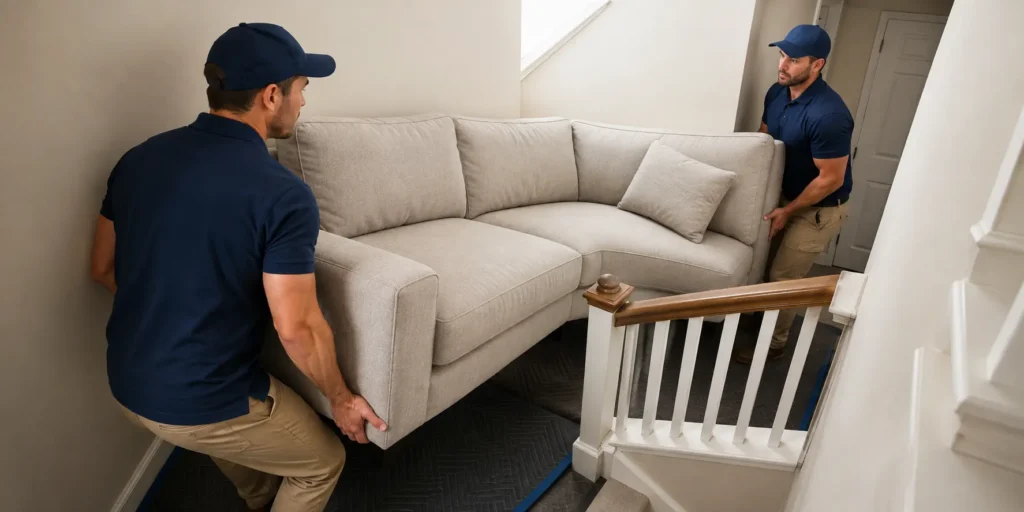
Stairs, tight spaces, and difficult access — Stairs, narrow doors, sharp hallway turns, long walks from the truck, and small elevators all add real difficulty. Picture two workers angling a sectional around a landing without scraping the wall — that’s careful, physical work. Move toward $15 to $20 per worker when several access problems stack up.
Assembly, unpacking, and haul-away — Assembly adds time and skill, especially with heavy parts or poor instructions. First check what your paid service already includes; if assembly and haul-away were part of the package, the fee covers those tasks, but a tip can still reward excellent execution.
Service quality and care taken — Watch how the crew communicates, protects floors, handles corners, and confirms the final placement before leaving. Professional behavior supports a normal or higher tip. Careless dragging, rude comments, or ignored instructions justify less.
Weather and extra effort — Rain, extreme heat, and snow all add strain and risk. A larger tip can recognize a crew that still works carefully under tough conditions. If you ask for an extra task not on the work order — like moving an old couch out of the way — add $10 to $20 for the favor.
How to Give a Tip
Once you’ve settled on an amount, prepare it before the delivery so the handoff isn’t awkward. Inspect the furniture, confirm the service is complete, and give the tip before the workers leave.
Cash vs. digital — Cash is usually simplest: it’s immediate, private, and easy to split, and small bills help when several workers are present. Some retailers let customers tip through an app, while others prohibit workers from accepting tips at all — check the policy when you can, and don’t pressure a crew that politely declines.

Tip each worker or the crew lead? — Giving each worker an equal amount directly is the cleanest approach. If you hand the total to one person, say clearly that it’s for the full crew (e.g., “Here’s $30 for the three of you”). Vary amounts only when one worker clearly did noticeably more.
Before or after delivery? — Tip after the job is complete, once you can see the final result. Check for visible damage, confirm placement, and make sure any promised assembly is finished before thanking the crew and handing over the tip.
Preparing Before the Delivery
Good preparation helps the crew and protects your home — it can also prevent a simple job from turning into a difficult one.
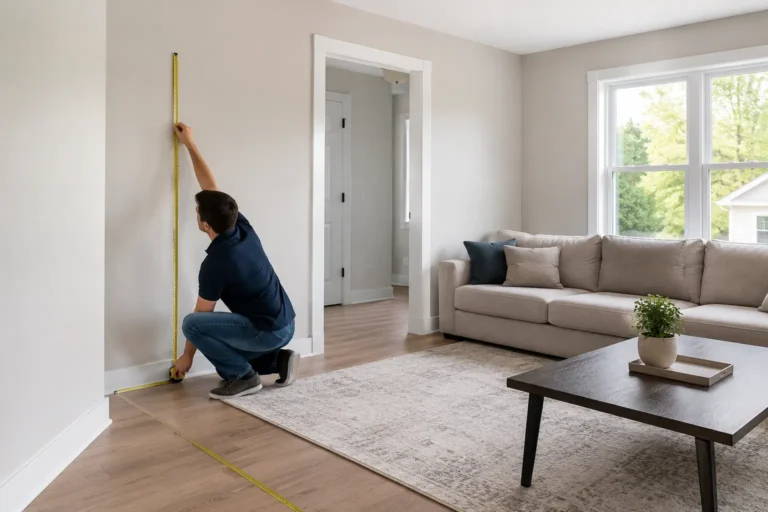
- Measure the tightest doorway on the route, not just the front entrance — a sofa may clear the entry and still fail at a bedroom turn.
- Clear the delivery path: move shoes, rugs, plants, and small tables out of the way, and remove anything hanging low.
- If you live in a building, reserve the elevator and loading area in advance.
- Decide in advance where the furniture should go, so it isn’t moved around the room repeatedly.
- Keep pets and young children in another room during the delivery, since workers may carry large items with limited visibility.
- Use stable, non-slip floor protection rather than slippery plastic sheeting on walking paths.
None of this replaces a tip, but it does show respect for the workers’ time — and it reduces the odds of a difficult delivery in the first place.
When You May Choose Not to Tip
You may reduce or skip a tip when the crew behaves carelessly or disrespectfully — dragging furniture across a floor, ignoring clear placement instructions, or causing avoidable damage.
That said, separate worker mistakes from problems outside their control. A missing part may be a warehouse issue, a manufacturing defect may have existed before loading, and traffic can delay a route without anyone’s fault. Report damage through the retailer’s claim process and photograph it before the crew leaves when possible — a tip decision shouldn’t substitute for a proper complaint.
Conclusion
Start with $10 per worker, then adjust for the actual job. Go lower for a quick curbside drop-off. Go higher for stairs, assembly, tight spaces, several pieces, or outstanding care.
Don’t use the furniture’s price as your main guide, and don’t assume a delivery fee reaches the crew — look at the work in front of you. When a team protects your home, communicates well, and handles a hard delivery without drama, $15 to $20 per person feels fair. When the job is easy, a smaller amount is reasonable. That approach lets you decide confidently before the truck pulls away.
Frequently Asked Questions
Is $5, $10, or $20 per person enough?
Five dollars or less fits a very easy drop-off. Ten dollars per person is a solid choice for standard in-home service. Use $15 to $20 when the delivery involves stairs, assembly, heavy items, or exceptional care.
Should you tip furniture assembly workers?
Yes, when they provide careful, skilled service. A larger amount makes sense for complex assembly or extra work beyond what was agreed.
Should every crew member get the same amount?
Equal tips are usually best since the crew works as a team. Vary amounts only when one worker clearly handled more of the load.
What if the furniture arrives damaged?
First figure out whether the crew caused the damage or the item arrived that way. Document it and contact the retailer. You can reduce or skip the tip for careless handling, but don’t penalize workers for a factory defect.
What can you offer if you can’t afford a tip?
A cold drink, a sincere thank-you, or a positive review mentioning the crew’s care can go a long way. Don’t feel pressured to spend beyond your budget.

Muhammad Muaz
Muhammad Muaz shares practical cleaning, home care, improvement and everyday living guides for Urban Home Guide readers.
Related Home Guides