
Why Dogs Lick Furniture and When to Be Concerned
When you catch your dog licking the couch again and again, it’s hard not to wonder what’s going on. If you’re asking why do dogs lick furniture, the answer can…
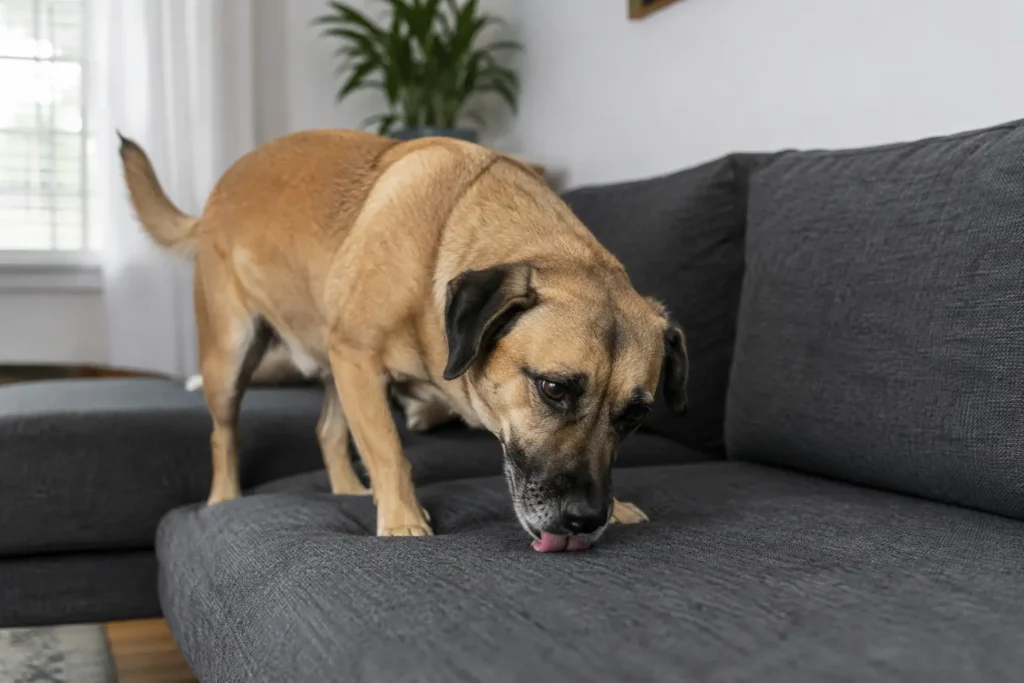
When you catch your dog licking the couch again and again, it’s hard not to wonder what’s going on. If you’re asking why do dogs lick furniture, the answer can be simple. However, it can also point to stress, boredom, compulsive behavior, or a medical problem. What matters most is the pattern. Occasional licking that stops easily is different from sudden, persistent licking that your dog can’t seem to leave alone.
The useful question isn’t just, “Why is my dog licking?” It’s also, “What was happening before the licking started?” Food residue, interesting smells, texture, anxiety, lack of stimulation, nausea, pain, and cognitive changes can all fit the picture. By watching the context, you can narrow the likely cause and decide what to do next.
Why Do Dogs Lick Furniture?
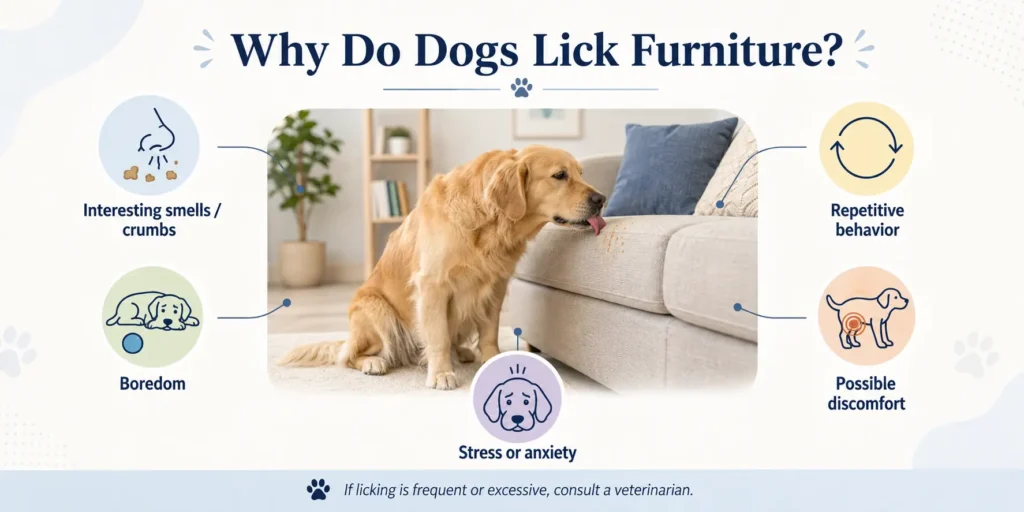
Dogs may lick furniture because it smells or tastes interesting. A couch can hold crumbs, grease, skin oils, and other scents. For some dogs, licking is simply part of exploring a surface.
However, repeated licking can have a different meaning. A dog may lick because they are bored, stressed, anxious, or looking for attention. In other cases, persistent surface licking can happen alongside medical problems. These include nausea, gastrointestinal discomfort, pain, dental discomfort, cognitive dysfunction, or neurological issues.
That range can sound worrying, but don’t jump straight to the worst explanation. Instead, start with the behavior itself. Is it occasional or constant? Can you redirect your dog? Did the behavior begin suddenly? Those clues matter more than the fact that licking happened at all.
When Furniture Licking Is Normal
Occasional furniture licking can be normal, especially when your dog finds an interesting smell, taste, or texture. A puppy may also explore household surfaces through licking.
The key sign is flexibility. Normal exploratory licking is usually easy to interrupt. Your dog may lick briefly, move on, and return to other normal activities.
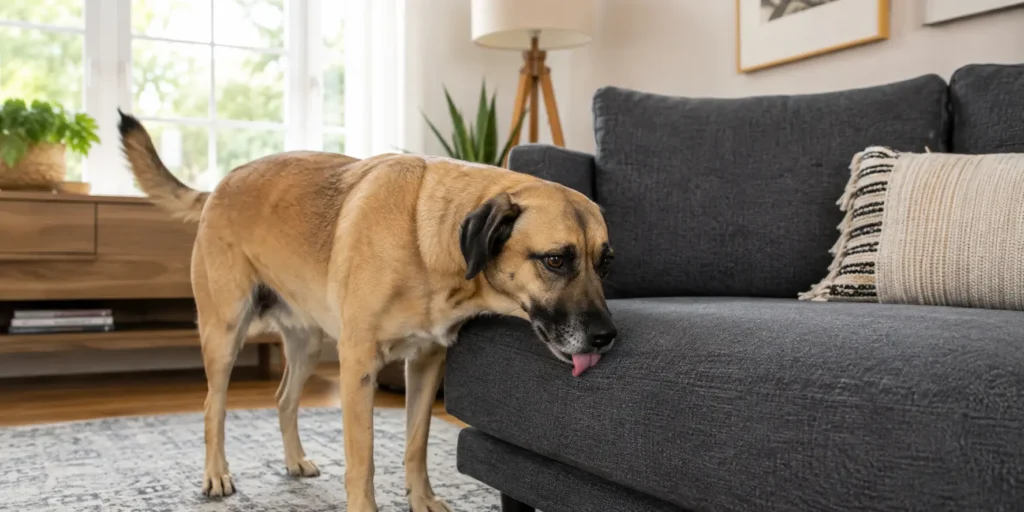
Food residue can be an obvious reason. If licking happens where people eat, crumbs or grease may attract your dog. Skin oils and other household scents can also make an upholstered surface interesting.
Still, “normal” doesn’t mean you should ignore a new pattern. A dog that suddenly starts returning to the same surface deserves closer observation. The change in behavior may tell you more than the surface itself.
Common Reasons Dogs Lick Furniture
The strongest way to understand the cause is to compare the licking with what happens around it. This table can help you sort the main possibilities.
| What you notice | More likely explanation |
|---|---|
| Licking where food was present | Smell, taste, crumbs, or grease |
| Licking during quiet, inactive periods | Boredom or low stimulation |
| Licking during separation, storms, or household changes | Stress, anxiety, or self-soothing |
| Repeated licking that is hard to interrupt | Habitual or compulsive behavior |
| Licking with drooling, vomiting, appetite change, or lethargy | Possible medical discomfort |
| New repetitive licking in an older dog | Cognitive or other medical cause |
Boredom and Lack of Stimulation
Some dogs turn to repetitive licking when they have too little to do. Long inactive periods, limited exercise, and a lack of mental stimulation can make repetitive behavior more likely.
Context helps here. If the licking appears mainly when the household is quiet, boredom becomes more plausible. The same applies when your dog has little else to occupy their attention.
The practical response is not punishment. Instead, give your dog an appropriate alternative. Exercise, play, training, chew toys, puzzle toys, snuffle mats, and lick mats can provide a better outlet.
My view is that this is more useful than simply telling the dog to stop. If the dog is under-stimulated, removing the behavior without changing the situation does not address why it started.
Anxiety, Stress, and Self-Soothing
Furniture licking can also happen when a dog feels stressed. Triggers may include being left alone, storms, visitors, household changes, noise, or changes in routine.
For some dogs, repetitive licking can act as a self-soothing behavior. Therefore, timing matters. Licking during or after a stressful event points in a different direction from licking caused by crumbs.
Watch for other signs of distress, including pacing, panting, whining, or difficulty settling. Licking alone does not prove anxiety. However, the wider pattern can make anxiety more likely.
A consistent routine, appropriate enrichment, redirection, and reducing known stressors can help. If the behavior stays intense or difficult to interrupt, professional support may be appropriate after medical causes are considered.
Canine Obsessive-Compulsive Behaviors
Repeated licking does not automatically mean your dog has a compulsive disorder. That label should not be the first conclusion.
Still, licking becomes more concerning when it is persistent or difficult to interrupt. Another clue is when your dog quickly returns to the furniture after redirection. The behavior may also interfere with normal activities such as resting, eating, or playing.
This is where observation becomes especially useful. Note how often episodes happen, how long they last, and whether your dog can disengage. Those details can help a veterinarian or qualified behavior professional understand the pattern.
I wouldn’t recommend treating every repetitive lick as “OCD.” The more practical approach is to rule out environmental and medical causes before assuming a compulsive problem.
Medical Conditions That Can Cause Licking
Persistent surface licking can sometimes be linked with physical discomfort. Possible causes include nausea, gastrointestinal problems, pain, dental discomfort, cognitive dysfunction, neurological issues, pica, and nutritional deficiencies.
The useful clue is what appears with the licking. Vomiting, diarrhea, drooling, appetite changes, weight loss, lethargy, or signs of pain make a medical cause more concerning.
Pica also needs to be separated from licking. Licking a couch is not the same as eating non-food material. However, if licking turns into chewing and swallowing furniture pieces, the risk changes. At that point, veterinary advice becomes more important.
For older dogs, new repetitive behavior deserves extra attention. Cognitive changes are one possible explanation, especially when the behavior is new rather than long-standing.
How to Figure Out Why Your Dog Is Licking Furniture
Instead of guessing, build a simple picture of the behavior. A short observation log can be more useful than a long list of possible causes.
Record:
- What surface your dog licks
- When the licking happens
- Whether food was recently present
- What happened just before the episode
- Whether your dog was alone, stressed, or inactive
- Whether you can redirect the behavior
- Whether the licking returns right away
- Whether physical symptoms appear at the same time
Patterns often become clearer when you look at the context. Licking one food-scented cushion is different from licking several household surfaces during periods of stress.
Also, notice whether the behavior is new or long-standing. Sudden onset can matter, especially when the licking is intense or paired with other changes.
The goal is not to diagnose your dog at home. Instead, gather enough useful detail to decide whether simple management makes sense. You can also use those observations if a veterinarian needs to evaluate the behavior.
When to Be Concerned About Furniture Licking
Concern should rise when licking changes from occasional behavior into something persistent or difficult to interrupt.
Pay closer attention when:
- The behavior starts suddenly
- Episodes become more frequent or intense
- Your dog seems unable to stop
- Licking interferes with normal rest, eating, or play
- Your dog appears distressed
- Licking turns into chewing or swallowing furniture material
- Vomiting, diarrhea, drooling, appetite changes, weight loss, lethargy, or pain appear
- An older dog develops a new repetitive licking habit
These signs do not tell you exactly what the cause is. However, they do tell you that simple redirection may not be enough.
When to Contact Your Veterinarian

Contact your veterinarian when the behavior is persistent, compulsive, sudden, or accompanied by physical symptoms. The same applies if your dog begins swallowing pieces of furniture.
Bring your observations with you. Details about timing, triggers, surfaces, duration, and accompanying symptoms can help the veterinarian assess the pattern more clearly.
This matters because repetitive licking can have behavioral or medical causes. Therefore, addressing only the visible behavior may miss the reason behind it.
How to Stop Your Dog From Licking the Couch
Start with the simplest possible cause. Clean crumbs, grease, and food residue from the furniture with a pet-safe cleaner. If smell or taste drives the behavior, removing the attractant may help.
Next, give your dog a better outlet. Exercise, play, training, chew toys, puzzle toys, snuffle mats, and lick mats can provide more appropriate stimulation.
Redirection works best when it gives the dog something else to do. By contrast, repeatedly scolding the dog can become part of an attention-seeking cycle if the response itself becomes rewarding.
For anxiety-related licking, focus on the trigger rather than the couch. A consistent routine and suitable enrichment may help. When stress is persistent or severe, qualified behavioral support may be needed.
Furniture covers, limiting access, or a dog-safe deterrent can help manage the environment. However, these tools should not replace finding the cause. If nausea, pain, anxiety, or compulsive behavior drives the licking, blocking one couch may simply move the behavior elsewhere.
Conclusion
The most useful clue is not the couch. It is the pattern around the licking.
If the behavior is occasional, easy to interrupt, and tied to an interesting smell or food residue, simple cleaning and redirection may be enough. When licking is repetitive, sudden, hard to stop, or paired with physical symptoms, I would treat that as a reason to look deeper.
That approach avoids two common mistakes: panicking over harmless exploration and dismissing behavior that deserves attention. Watch the context and remove obvious triggers. Then give your dog a more suitable outlet. When the pattern suggests more than simple curiosity, involve your veterinarian.
FAQs
Is couch licking harmful to dogs?
Occasional couch licking is often harmless. It becomes more concerning when it is excessive, difficult to interrupt, linked with other symptoms, or progresses to chewing and swallowing material.
How can I tell if my dog is licking from anxiety?
Look at the timing and surrounding behavior. Licking during separation, storms, or household changes can make anxiety more likely, especially alongside pacing, panting, whining, or trouble settling.
When should I see a vet about furniture licking?
See a veterinarian when licking is sudden, persistent, compulsive, or paired with physical symptoms. These include vomiting, diarrhea, drooling, appetite changes, weight loss, lethargy, pain, or furniture ingestion.
Should I let my dog lick the couch?
Occasional licking may not need intervention. However, repeated licking should not simply be ignored because it can point to an environmental, behavioral, or medical need.
What can I give my dog for constant licking?
Offer appropriate alternatives such as lick mats, chew toys, puzzle toys, or other enrichment. If the licking remains constant or unexplained, focus on finding the cause rather than only masking the behavior.

Muhammad Muaz
Muhammad Muaz shares practical cleaning, home care, improvement and everyday living guides for Urban Home Guide readers.
Related Home Guides