
How to Prevent Cats From Scratching Furniture Without Punishment
A shredded couch arm can make patience disappear fast. Still, how to prevent cats from scratching furniture is not really about stopping scratching altogether. Cats scratch because the behavior serves…
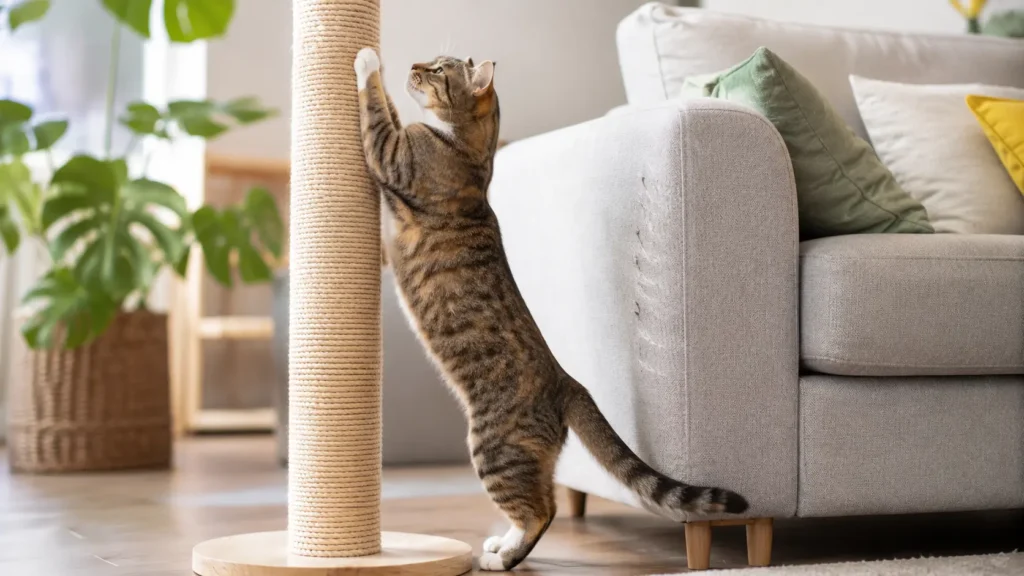
A shredded couch arm can make patience disappear fast. Still, how to prevent cats from scratching furniture is not really about stopping scratching altogether. Cats scratch because the behavior serves real purposes, including claw maintenance, stretching, marking, and stimulation. The more practical goal is to protect the furniture while giving your cat a better place to do the same thing.
The key is to make the acceptable surface easier and more appealing than the furniture. That means matching your cat’s preferred texture and orientation, placing the scratcher where the behavior already happens, and rewarding the right choice. At the same time, temporary furniture protection can prevent more damage while that new habit develops.
How to Prevent Cats From Scratching Furniture Humanely
Start by looking at what your cat is already telling you. A cat that scratches the side of a couch is showing a preference for a vertical surface. A cat that works on carpet may prefer a horizontal one. The damaged area also tells you something about location, stability, and texture.
That matters because one scratching post does not solve every scratching problem. A post can fail simply because it wobbles, sits in the wrong place, uses the wrong material, or does not let the cat stretch comfortably. In that situation, buying another random scratcher may not help.
My view is simple: do not begin with punishment. Begin with a better match.
A useful sequence is:
- Protect the damaged furniture temporarily.
- Put an appropriate scratcher beside the target area.
- Match the scratcher’s orientation and texture to your cat’s preference.
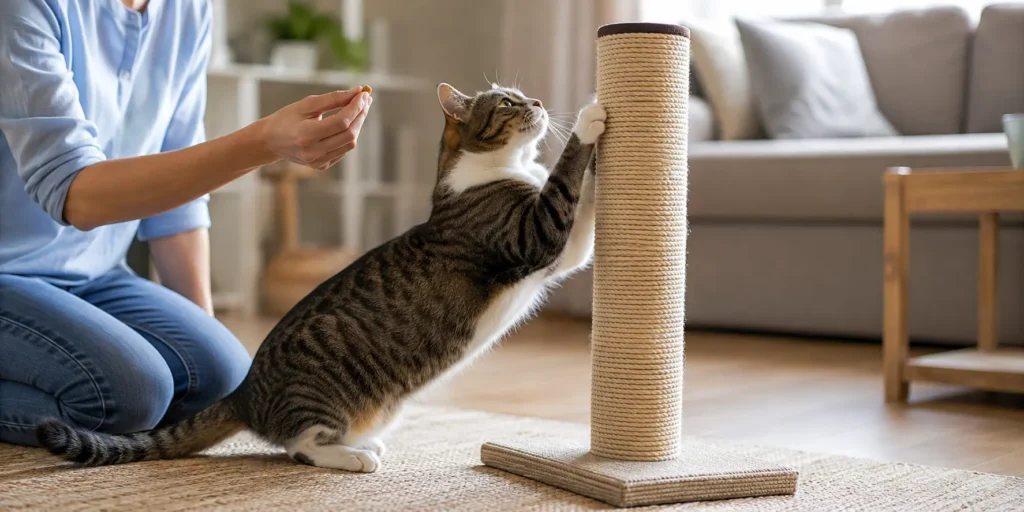
- Encourage voluntary use with rewards, toys, or catnip when appropriate.
- Keep the better option available as the cat shifts its scratching.
The goal is redirection, not suppression.
Why Cats Scratch in the First Place
Scratching is a normal feline behavior. Cats use it to maintain their claws, stretch their bodies, leave visible marks, and deposit scent from glands in their paws. It can also provide stimulation.
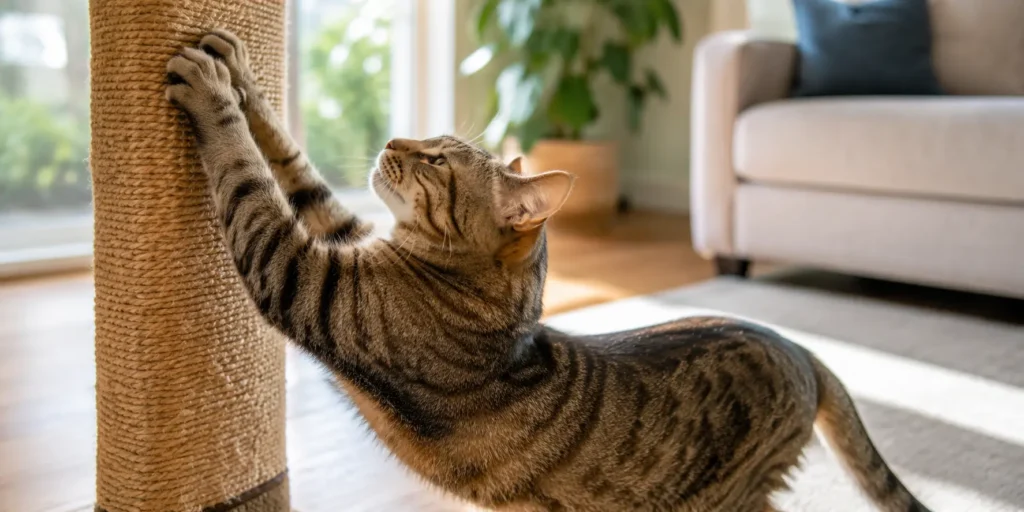
Stress and boredom can influence scratching too. Changes in the home, a new pet, or an environment with too little stimulation may contribute to a sudden increase. That is why a scratching problem is not always a furniture problem alone.
Why the Furniture Can Be More Attractive Than the Scratching Post
Furniture often gives a cat several useful things at once. It may be tall enough for a full stretch, stable enough to resist movement, and covered in a satisfying texture. It may also sit in a socially important part of the home.
Meanwhile, the scratching post may be tucked away where the cat rarely spends time. It may be short, unstable, or covered in material the cat does not like.
So, if your cat ignores the post, do not assume the cat is stubborn. First, compare the post with the surface being damaged.
Why Cats Return to the Same Spot
Cats can keep returning to the same furniture because the location itself has become useful. The area may already carry visual scratch marks and scent. It may also be near a doorway, window, resting area, or another prominent part of the home.
This is why moving the cat away without changing the environment often fails. The target still offers what the cat wants.
A better response is to place an acceptable scratching surface directly beside that location. Once your cat uses it consistently, you can consider moving it gradually.
Protect the Furniture While You Redirect Scratching
Furniture protection matters because retraining does not instantly erase an established preference. Temporary protection gives you room to redirect the behavior without accepting more damage.
Options supported by the research include furniture guards, clear plastic or vinyl protectors, covers, blankets, and scratch tape. However, not every option suits every surface.
Choose Protection That Will Not Damage the Furniture
Adhesive products can leave residue or affect some finishes and fabrics. Therefore, patch-test them before covering a visible area. Delicate upholstery, wood, vinyl, and other surfaces may respond differently.
The safer principle is to use the least damaging barrier that makes the target less appealing. Then pair that barrier with an appropriate scratcher nearby.
That second part matters. A deterrent without an alternative only blocks the behavior. It does not show the cat where scratching should happen instead.
Choose a Scratching Surface Your Cat Actually Likes
The best scratcher is not necessarily the most attractive one in the room. It is the one that matches how your cat already scratches.
Watch three things: orientation, material, and stability.
A cat using a couch arm may prefer a vertical scratching post. A cat scratching carpet may respond better to a horizontal pad. Other cats may prefer an angled surface.
Common materials covered in the research include:
- Sisal
- Corrugated cardboard
- Wood
- Carpet or rough fabric
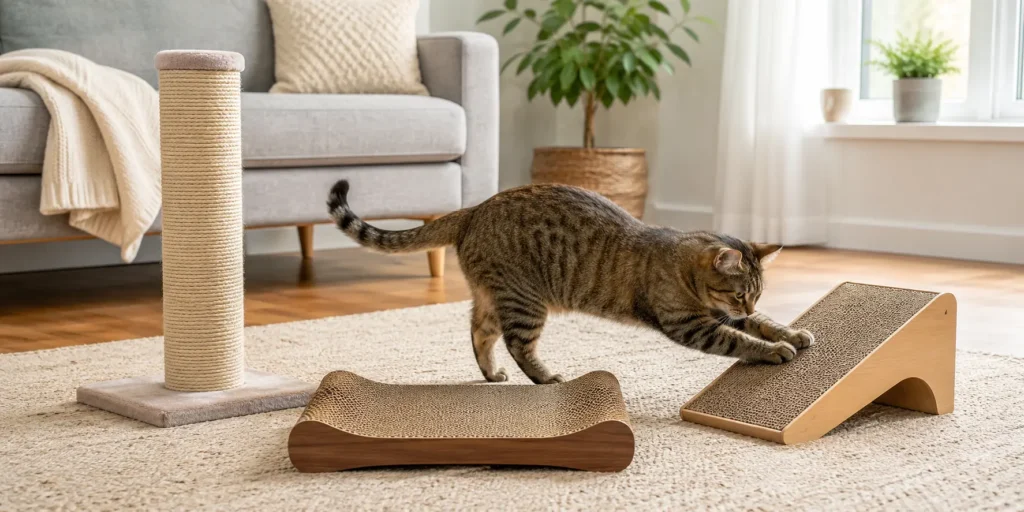
The scratcher should also be sturdy enough to stay in place. A surface that shifts during use can be less appealing than a solid piece of furniture.
Give Your Cat Enough Room to Stretch
Height matters for cats that like vertical scratching. A useful post should allow a full-body stretch rather than forcing the cat into a cramped position.
Senior cats may need a different setup. The supplied feline guidance notes that older cats can shift toward horizontal scratching, especially when mobility becomes more difficult. So, a setup that worked for years may stop being the best fit later.
Put the Scratcher Where the Scratching Happens
One of the most practical mistakes to avoid is placing the scratching post where it looks best to you.
At first, convenience for the cat matters more.
Put the new scratching surface directly beside the furniture being targeted. If scratching happens near a sleeping area, doorway, or window, those locations can also matter.
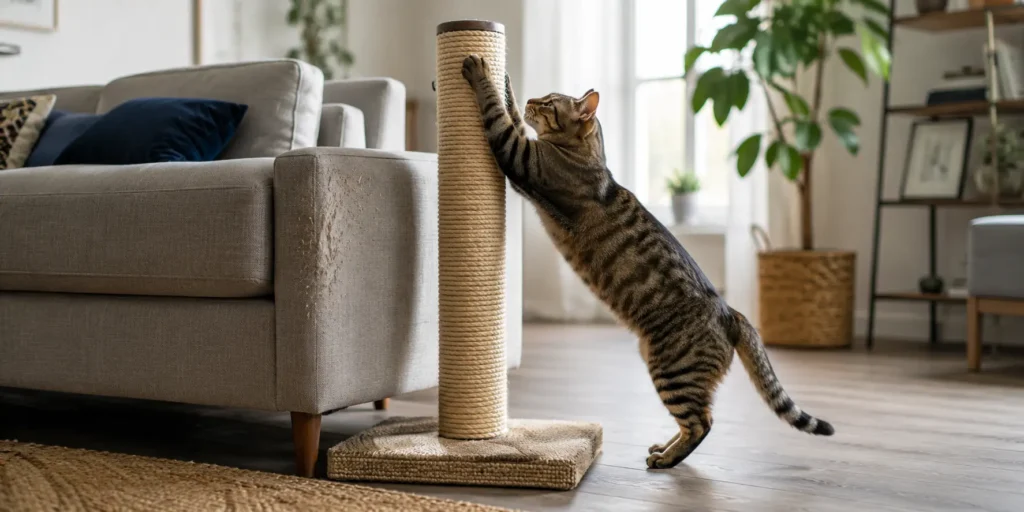
Once your cat starts using the new surface reliably, you can move it gradually if needed. Moving it too soon can remove the very advantage that made it successful.
Multi-cat homes need extra thought. Scratching can have a territorial function, so separated resources in different areas may work better than expecting several cats to share one location.
Six Ways to Redirect Scratching
The strongest approach combines an appealing alternative with positive reinforcement and environmental changes.
1. Offer More Than One Appropriate Scratching Surface
If one post is ignored, change a meaningful feature instead of simply buying another version of the same thing.
Try a different orientation or material. A vertical sisal post, horizontal cardboard pad, or another stable surface gives the cat a genuine choice.
2. Match Texture and Orientation
Look at the damaged furniture before choosing the replacement. The furniture is already revealing what the cat finds satisfying.
That small diagnostic step can save a lot of trial and error.
3. Use Humane Deterrents Carefully
Temporary covers, furniture guards, and suitable surface protectors can make the furniture less rewarding.
Sticky products need more caution because professional guidance in the supplied research is not fully consistent. Also, adhesives can damage some furniture surfaces.
Scent deterrents need care too. Do not jump from “cats dislike some scents” to homemade concentrated essential-oil sprays. The supplied research warns that concentrated essential oils can pose health risks to pets, and cats are particularly sensitive.
4. Trim Claws Regularly
Nail trimming can reduce the damage caused by scratching. However, it does not remove the need to scratch.
Think of trimming as damage control, not behavior training. The cat still needs an acceptable surface.
5. Add Play and Environmental Enrichment
Interactive play, toys, puzzle feeders, climbing structures, cat trees, and perches can provide other forms of stimulation.
This matters most when boredom or environmental stress may be contributing to the scratching. Enrichment does not replace a scratcher, but it supports a better overall setup.
6. Consider Nail Caps as a Management Tool
Nail caps can help protect surfaces while they are worn. Still, they do not teach the cat where to scratch.
If you use them, keep an appropriate scratching surface available. The scratching behavior itself remains normal.
What Not to Do
Frustration makes punishment tempting, especially when the same chair gets hit again. I would not recommend turning the scratching problem into a fear problem.
Avoid Punishment and Water Spraying
The supplied research shows conflicting older advice on punishment. However, newer feline-behavior guidance recommends avoiding punishment and water spraying.
Punishment may stop the behavior in front of you without teaching the cat what to do instead. Positive reinforcement and environmental changes offer a clearer path.
Do Not Force the Cat to Use the Scratching Post
Avoid carrying your cat to the post and manually moving its paws against the surface. The better approach is to make the scratcher attractive and reward voluntary use.
That protects the positive association with the new surface.
Do Not Treat Declawing Like Nail Trimming
Declawing, or onychectomy, is not the same as clipping nails. The supplied research also points to welfare concerns and humane alternatives.
Scratching motivation does not disappear just because the claws are altered. For that reason, redirection, environmental changes, nail care, and professional help are more appropriate areas to explore.
Troubleshooting Persistent Scratching
If the furniture is still winning, go back to the setup.
Check whether the scratcher is stable. Compare its material with the furniture. Look at its orientation. Then reconsider its location.
Also ask whether the behavior changed suddenly. Increased scratching can be connected with stress, environmental changes, boredom, or other concerns identified in the supplied research.
A veterinarian or qualified behavior professional becomes especially relevant when scratching suddenly increases, appears alongside signs of stress or pain, or continues despite reasonable environmental changes.
Quick Comparison of Common Options
| Option | Main purpose | Best use | Key caution |
|---|---|---|---|
| Scratching post or pad | Redirect scratching | Match the cat’s preferred texture and orientation | Poor placement or instability can reduce use |
| Furniture guard or cover | Protect the target surface | Temporary protection during redirection | Choose a surface-safe option |
| Scratch tape | Make furniture less appealing | Temporary deterrence on suitable materials | May leave residue or affect finishes |
| Nail trimming | Reduce damage | Ongoing claw care | Does not stop scratching behavior |
| Nail caps | Protect surfaces | Optional damage-management tool | Does not teach alternative scratching |
| Play and enrichment | Reduce boredom and add stimulation | Support the overall behavior plan | Does not replace a suitable scratcher |
Conclusion
The furniture usually wins because, from the cat’s point of view, it is the better scratching surface. That is the part I would focus on first.
Protect the target, then study what makes it appealing. Match that preference with a stable scratching surface and put it where the behavior already happens. Reward the choice you want instead of punishing the one you do not.
That approach respects the reason cats scratch while still protecting your home. More importantly, it gives you something punishment never does: a clear replacement behavior your cat can actually use.
Frequently Asked Questions
What Should I Do if My Cat Ignores the Scratching Post?
Check the post’s location, stability, texture, height, and orientation. A cat may ignore a post that does not match the qualities it already prefers in the furniture.
Does Double-Sided Tape Stop Cats From Scratching Furniture?
It can discourage some cats, but it is only a temporary deterrent. Test it first because adhesive products can leave residue or affect some surfaces.
Do Nail Caps Stop Furniture Damage?
Nail caps can reduce surface damage while they are worn. However, they do not stop the cat’s natural scratching behavior, so a suitable scratcher is still needed.
Why Does My Cat Keep Scratching the Same Chair?
The chair may offer the right texture, stability, orientation, or location. Existing scratch marks and scent can also make the area worth revisiting.
When Should I Ask a Veterinarian or Behaviorist for Help?
Seek professional guidance when scratching increases suddenly, appears with signs of stress or pain, or continues despite appropriate environmental changes. A qualified professional can help assess what is driving the behavior.

Muhammad Muaz
Muhammad Muaz shares practical cleaning, home care, improvement and everyday living guides for Urban Home Guide readers.
Related Home Guides