

Where to Dump Furniture Without Wasting Time or Money
Getting rid of a couch, mattress, dresser, or table sounds simple until you try to do it. If you’re wondering where to dump furniture, the answer depends on your city,…

Getting rid of a couch, mattress, dresser, or table sounds simple until you try to do it. If you’re wondering where to dump furniture, the answer depends on your city, the item, its condition, and how quickly you need it gone. Your main options are municipal bulky-item pickup, a transfer station or landfill, a recycling facility, donation, or paid junk removal. The right choice is the one your local rules allow and your furniture actually qualifies for.
The first mistake to avoid is assuming every dump, recycling center, or curbside program accepts the same items. They don’t. Furniture rules can change by city, county, facility, and furniture type. So, before you load a sofa into a truck or drag a mattress to the curb, check the local requirements first.
Where to Dump Furniture Near You
Start with your city or county sanitation, solid-waste, or public-works department. These local agencies usually control bulky-item pickup, drop-off locations, accepted materials, and any special disposal rules.
From there, compare the main options available in your area.
| Disposal option | Best fit | What to check first |
|---|---|---|
| Municipal bulky-item pickup | Large household furniture | Pickup rules, item limits, scheduling, and fees |
| Transfer station | Self-haul furniture disposal | Accepted items, residency rules, hours, and charges |
| Landfill | Broken or unusable furniture | Furniture acceptance, load rules, and disposal fees |
| Recycling facility | Furniture with recyclable materials | Which materials and item types the facility accepts |
| Donation or reuse | Furniture in usable condition | Condition standards and local branch acceptance |
| Junk removal | Fast removal or no hauling vehicle | Service scope and pricing |
| Dumpster rental | Multiple bulky items | Local restrictions and what the dumpster provider allows |
My view is simple: check the municipal option before paying for private removal. That doesn’t mean city pickup is always free or available. However, it tells you what your local system already provides before you spend money elsewhere.
Local rules can differ sharply. For example, New York City allows residents to place up to six large items out per collection day without a bulk-pickup appointment. Seattle uses a paid special-item pickup system for large furniture. Those two systems solve the same problem in very different ways.
Trash and Recycling Drop-Off Locations
A drop-off location can be useful when you can transport the furniture yourself. WM, for example, provides a locator for landfills, transfer stations, recycling facilities, and residential waste drop-off sites.
Still, finding a nearby facility is only half the job. Confirm that it accepts your exact item before you leave. A general recycling center may not take an upholstered couch. Likewise, a transfer station may treat a mattress differently from a wooden table.

Also check whether the site has residency requirements. Some public facilities serve only local residents. Others may charge by item, weight, load, or another local fee structure.
Bulky and Do-It-Yourself Waste Facilities
Some county sites use labels such as “bulky waste” or “DIY demolition waste.” Those labels can be confusing because they don’t automatically mean household furniture is accepted.
Furniture and construction debris are not always handled the same way. Therefore, look for an accepted-items list or a separate furniture category before hauling anything over.
This is one place where a quick check can save a wasted trip. A site may accept large loads but still exclude certain furniture, mattresses, or mixed-material items.
Local Recycling and Solid-Waste Departments
Your local solid-waste authority should be the final word on disposal rules. National pages can explain your choices, but they cannot reliably tell you what your city accepts this week.
Check the local department for:
- Bulky-item collection
- Transfer stations
- Landfills
- Recycling and reuse programs
- Item limits
- Fees
- Residency requirements
- Mattress rules
- Prohibited items
That approach keeps the process practical. Instead of guessing which national advice applies, you verify the rule that controls your address.
What Types of Furniture Can You Dump?
The answer depends on the facility. “Furniture” covers many different materials and sizes, so disposal sites often treat pieces differently.
A broken dresser may be simple to self-haul. A large upholstered sofa can be harder because it combines fabric, foam, wood, metal, and other materials. Mattresses can have separate recycling or collection rules.
The condition also matters. Furniture that is still usable may qualify for donation, resale, or giveaway. Badly damaged, contaminated, or structurally unsafe furniture may need a disposal route instead.
Couches, Sofas, and Upholstered Furniture
Couches and sofas are among the more difficult items to handle because they are bulky and made from mixed materials. Earth911 notes that upholstered furniture can contain fabric, foam, wood, metal, leather, adhesives, and coatings.
That mix makes recycling more complicated than simply dropping the whole sofa into a recycling bin. In practice, you may need a bulky-waste program, transfer station, landfill, or junk-removal service instead.
If the couch is still in usable condition, donation or giveaway may be a better first option. However, don’t assume a charity will take it. Acceptance standards vary by organization and location.
Mattresses and Box Springs
Mattresses deserve their own check because they can fall under special local or state programs. The Mattress Recycling Council identifies programs or resources for California, Connecticut, Oregon, and Rhode Island.
Local preparation rules can also differ. New York City, for example, requires mattresses and box springs to be bagged before curbside collection to help reduce bedbug spread.
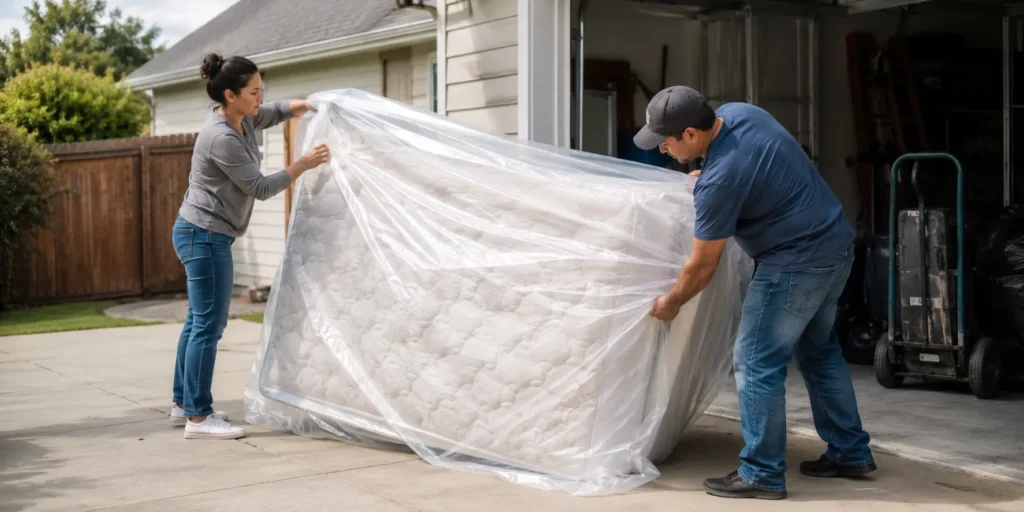
So, don’t treat a mattress like an ordinary chair or table. Check your municipal program, retailer haul-away option, or mattress recycling resource first.
Tables, Chairs, Dressers, and Other Household Furniture
Hard furniture such as tables, chairs, dressers, desks, bed frames, filing cabinets, and bookcases may offer more disposal choices.
Usable pieces can be donated, sold, or given away. Metal furniture may have scrap-metal recycling potential. Wood furniture may also be handled differently from upholstered furniture at local facilities.
The more practical option depends on the item’s condition and what your nearby programs accept. There is no benefit in forcing a donation or recycling route when the furniture no longer meets acceptance standards.
What Furniture or Materials May Not Be Accepted?
Not every disposal or donation site accepts every furniture item. Contaminated, infested, heavily stained, moldy, water-damaged, or structurally unsafe furniture can face tighter restrictions.
Donation centers can be especially selective. Goodwill states that donation rules vary by local organization, and many locations do not accept mattresses.
Recycling can be selective too. Mixed-material furniture is difficult because one item may contain wood, metal, foam, fabric, glass, plastic, or leather. A facility that takes scrap metal may not accept the complete chair or couch.
Before you leave home, confirm three things: the exact item, its condition, and the facility’s acceptance rule. That’s more reliable than assuming a general “furniture accepted” label covers everything.
Furniture Disposal Limits, Fees, and Residency Rules
Costs and limits vary locally, so national price ranges should only be treated as rough benchmarks. A city may offer free bulky pickup. Another may charge for special collection. A transfer station may use a minimum charge, per-item fee, weight-based fee, or load-based fee.
Residency can matter as well. Some public drop-off sites may require proof that you live in the city or county they serve.
The useful questions are straightforward:
- Is this furniture accepted?
- Is there a fee?
- Is there an item or load limit?
- Do I need proof of residency?
- Do I need an appointment?
- What are the drop-off hours?
Get those answers before you arrange transportation. A cheap disposal option stops being cheap if you make the trip twice.
How to Prepare Furniture for Drop-Off
Preparation should make the move safer and reduce problems at the facility. You don’t need to turn disposal into a major project.
Remove loose parts when practical. Disassemble bulky furniture if that makes it easier to transport and the facility allows it. Secure the load during transportation so pieces do not shift.
For mattresses, check whether local rules require a bag or covering. Also verify whether staff unload furniture or whether you must unload it yourself.
If a facility separates recyclable materials, follow its instructions rather than breaking apart the furniture based on guesswork. Local requirements matter more than a general recycling tip.
Alternatives to Dumping Furniture
Dumping is not always the easiest or cheapest route. If the furniture is still usable, donation, resale, or giveaway can keep you from paying disposal costs.

Common reuse options in the supplied research include Goodwill, Habitat for Humanity ReStore, The Salvation Army, furniture banks, local thrift stores, Facebook Marketplace, Craigslist, Nextdoor, OfferUp, Freecycle, and Buy Nothing groups.
However, check acceptance before arranging a donation. A national charity name does not guarantee that every branch accepts every furniture type.
If you do not have a vehicle, private junk removal may be the more practical route. Services such as 1-800-GOT-JUNK, Junk King, LoadUp, and local haulers can remove bulky items for a fee. Dumpster rental may also make sense when you have several bulky items.
For recyclable furniture, material matters. Metal, wood, glass, plastic, foam, and upholstery can follow different paths. Earth911 and local recycling directories can help identify facilities, but the receiving site still decides what it accepts.
Local Recycling and Reuse Programs
Before sending usable or recyclable furniture to a landfill, check whether your local authority offers reuse events, special recycling, scrap-metal options, mattress programs, or scheduled bulky collection.
The EPA’s most recent national furniture and furnishings waste figure in the supplied research is from 2018, when generation reached 12.1 million tons. Because that figure is dated, it should not be treated as a current 2026 estimate.
What matters for your decision is local availability. A recycling option only helps if the facility near you actually accepts the item you have.
Check Local Rules Before You Dump Furniture
This is the step I wouldn’t skip. Before placing furniture at the curb or driving to a facility, confirm the address, accepted item, fee, hours, residency rule, and any preparation requirement.
Also avoid leaving furniture beside a dumpster or at the curb without permission. Local rules can restrict unauthorized placement and illegal dumping.
Once those details are confirmed, the choice becomes much easier. You can use municipal pickup, self-haul, recycling, donation, or private removal with a clear idea of what will happen next.
Conclusion
My view is that the best furniture disposal plan starts locally, not with a national list of dumps. Check your city or county program first, then compare transfer stations, landfills, recycling, donation, and private removal.
That order saves guesswork. More importantly, it helps you avoid hauling a bulky item somewhere that will not accept it. Once you know the local rule and the item’s condition, the right disposal path is usually clear.
Frequently Asked Questions
Can I take old furniture to a landfill?
Yes, if the landfill accepts household furniture from your location. Check the facility’s accepted-items list, fees, hours, and residency rules before going.
Can I leave a couch on the curb?
Only if your local bulky-item rules allow it. Some cities use scheduled or special pickup, while others have different collection systems.
Can I put furniture in a regular dumpster?
Do not assume you can. Apartment, commercial, and municipal dumpsters may have restrictions, so check with the property manager or waste provider first.
Where can I get rid of a mattress?
Start with your local solid-waste program, retailer haul-away options, or a mattress recycling resource. Some states and cities have special mattress rules.
Should I donate furniture instead of dumping it?
Donate it when it is still usable and the receiving organization accepts that item. If it is badly damaged, contaminated, or rejected, use an approved disposal route instead.

Muhammad Muaz
Muhammad Muaz shares practical cleaning, home care, improvement and everyday living guides for Urban Home Guide readers.
Related Home Guides