
Where Can I Throw Away Furniture for Free?
Where can I throw away furniture for free? Getting rid of an old couch, table, dresser, or bed frame can be difficult when it is too large for your regular…
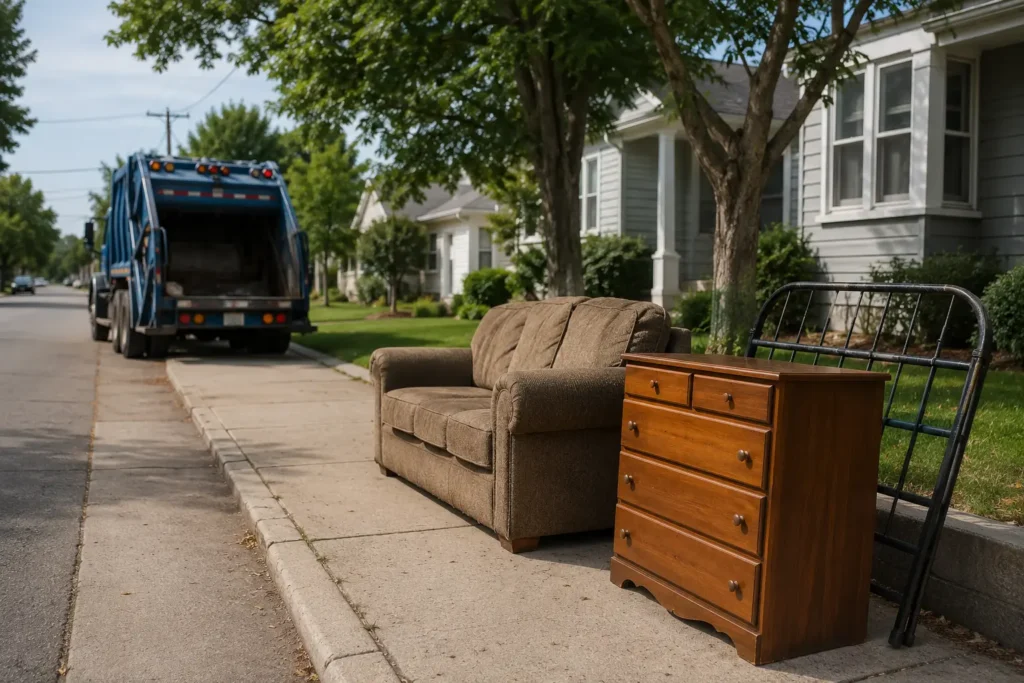
Where can I throw away furniture for free? Getting rid of an old couch, table, dresser, or bed frame can be difficult when it is too large for your regular trash bin.
A private junk removal company may solve the problem quickly, but it will usually charge for labor, transportation, and disposal. You may also be moving soon without access to a truck or anyone who can help lift the furniture.
Fortunately, several free or low-cost options may be available:
- Municipal bulk pickup
- Resident waste drop-off sites
- Charity donation
- Furniture banks and reuse organizations
- Free local listings
- Community cleanup events
- Recycling or scrap-metal facilities
However, no furniture removal option is free everywhere. A service may be included in your sanitation bill, restricted to certain collection dates, or available only to eligible residents.
The best choice depends on the furniture’s condition, your local disposal rules, your transportation options, and how quickly the item must be removed.
Quick Answer: Where Can You Dispose of Furniture for Free?
Start with the official website of your city or county sanitation department. Search for terms such as bulk pickup, bulky waste, large-item collection, special collection, or resident drop-off.
If the furniture is clean and usable, try donating it or listing it for free. If it is broken, municipal pickup or a resident waste facility may be the best option.
Do not donate or give away furniture affected by bedbugs, mold, bodily fluids, severe water damage, strong odors, or serious structural problems.
Free Furniture Removal Options Compared
| Option | Best for | Pickup available? | Main limitation |
| Municipal bulk pickup | Broken or unwanted furniture | Sometimes | Local schedules and limits apply |
| Resident drop-off site | Furniture you can transport | No | Proof of residency may be required |
| Charity donation | Clean, usable furniture | Sometimes | The item may be rejected |
| Furniture bank | Good-quality household furniture | Sometimes | Pickup may not be free |
| Online giveaway | Usable furniture of many types | Usually by recipient | No-shows may happen |
| Community cleanup event | Broken or unwanted furniture | Usually no | Available only on selected dates |
| Recycling facility | Separated wood, metal, or other materials | Rarely | Mixed materials may be rejected |
| Scrap-metal facility | Metal frames, shelving, and tables | Rarely | Upholstery and wood may need removal |
Before choosing an option, inspect the furniture carefully. A clean, functional sofa has more removal options than one that is wet, moldy, badly damaged, or infested.
Choose an Option Based on the Furniture’s Condition
Clean and Usable
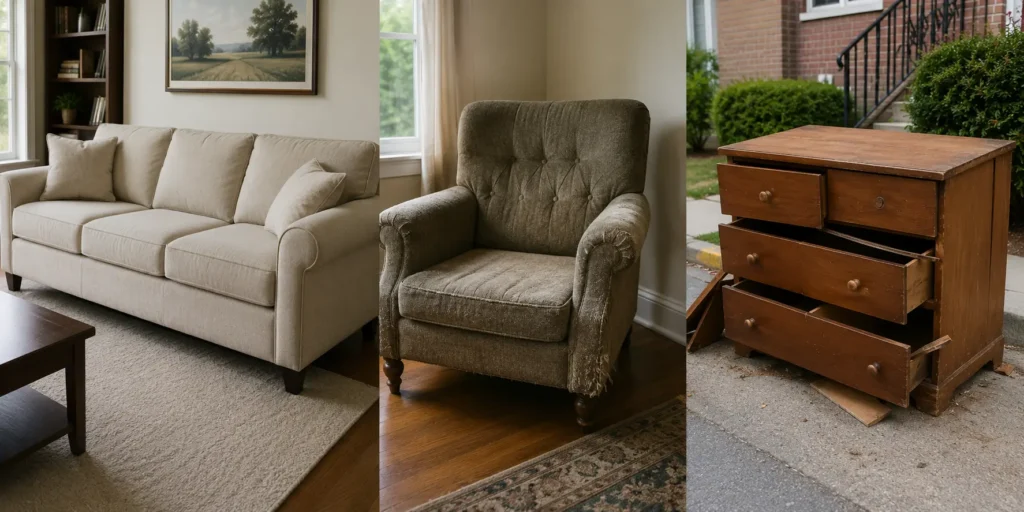
Try donating the item to a charity, furniture bank, local reuse organization, or community group. You can also list it online for free pickup.
Worn but Still Functional
Offer it for free with clear photos and an honest description. Mention stains, scratches, missing pieces, pet exposure, smoke exposure, odors, or other damage.
Someone may still want it for a garage, workshop, student apartment, temporary home, theater project, or repair project.
Broken but Safe to Handle
Check municipal bulk pickup, resident waste sites, transfer stations, recycling facilities, or community cleanup events.
A facility may require you to remove glass, cushions, drawers, or metal parts before accepting the item.
Mostly Metal
Metal bed frames, shelving units, filing cabinets, and table bases may be accepted by a scrap-metal facility.
Call before visiting because facilities may reject items containing attached upholstery, foam, wood, plastic, or glass.
Moldy, Infested, or Contaminated
Do not donate, sell, or give the furniture away.
Contact your local sanitation department for disposal instructions. Depending on local rules, you may need to wrap, label, dismantle, or place the item outside on a specific collection date.
Recalled or Structurally Unsafe
Do not pass furniture to another person if it presents a serious safety risk.
Examples include:
- A collapsing bed frame
- A dresser with severe tipping damage
- A broken recliner mechanism
- Cracked glass furniture
- Exposed nails or sharp metal
- A recalled crib or child-related item
Check the manufacturer’s instructions or applicable recall guidance before disposal.
How to Find Free Furniture Disposal Near You
Use your city or county’s official website rather than relying only on general search results.
Useful searches include:
- “[City name] bulk furniture pickup”
- “[County name] bulky waste collection”
- “[City name] resident drop-off”
- “[ZIP code] furniture donation pickup”
Look for information from the local sanitation department, solid-waste authority, public works department, waste district, or official city service portal.
Check whether the service applies to your exact address. Waste services may differ between neighboring cities, apartment complexes, homeowners associations, and unincorporated areas.
Before scheduling or transporting furniture, confirm whether the item is accepted, whether the service is free, what identification is required, and how the item must be prepared.
Municipal Bulk or Large-Item Pickup
Municipal bulk pickup is often the most practical option for broken furniture.
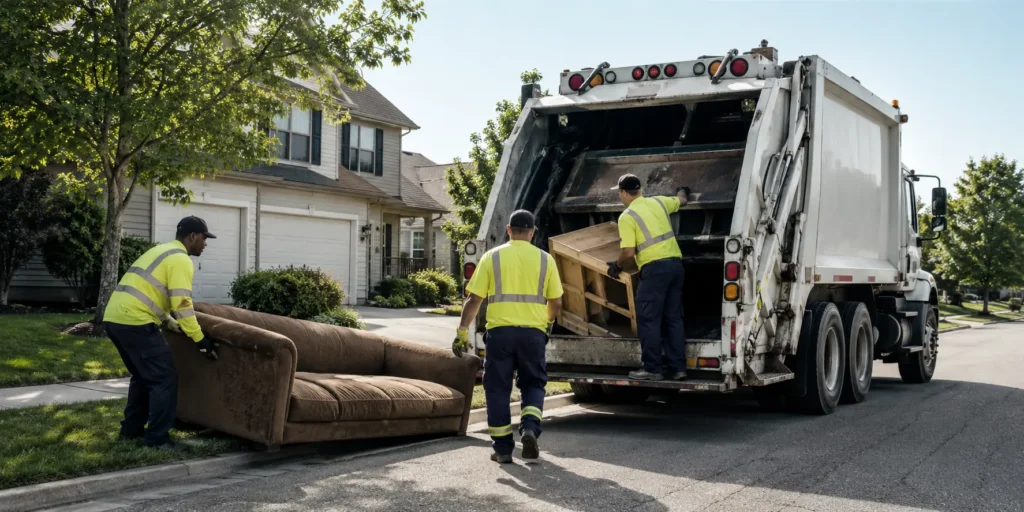
Depending on the area, the service may be:
- Included in regular residential sanitation service
- Available by appointment
- Offered during scheduled collection weeks
- Limited to a certain number of items
- Restricted to single-family homes
- Available for a separate fee
Before moving the furniture outside, confirm:
- Whether the furniture is accepted
- Whether pickup is included in your service
- Whether an appointment is required
- The size, weight, or item limits
- The approved placement location and date
- Whether upholstered items need wrapping
- Whether the service applies to your property type
- Whether proof of residency is required
Do not place furniture at the curb before the approved time. It may block a sidewalk, create a safety hazard, or violate local dumping rules.
Make sure the item is accessible and not blocked by vehicles, fences, snow, or construction materials.
Resident Drop-Off Sites
If curbside pickup is unavailable, your city or county may operate a resident waste facility.
Possible locations include:
- Transfer stations
- Public waste collection sites
- Landfills
- Convenience centers
- Recycling centers
- Household bulk-waste facilities
- Community cleanup sites
A location may be free only for residents who already pay for local waste services. You may need a driver’s license, utility bill, sanitation account, or vehicle registration.
Before loading the furniture, confirm:
- The exact item is accepted
- Disposal is free for residents
- Daily or annual limits
- Fees based on item, weight, or vehicle
- Rules for upholstered furniture and mattresses
- Dismantling requirements
- Accepted vehicle types
- Required documents and operating hours
Do not assume that a public landfill or transfer station is free. Many charge disposal fees.
Furniture Disposal for Apartment Residents
Apartment residents should not assume that municipal pickup applies directly to their building.
Many apartment complexes use private waste companies. Furniture left beside a shared dumpster may result in a lease violation, disposal charge, move-out deduction, or dumping citation.
Contact your landlord, leasing office, or property manager and ask:
- Whether the building has a bulk-waste area
- Whether furniture pickup is scheduled
- Whether a maintenance request is required
- Whether there is a disposal fee
- Whether you must reserve an elevator or loading area
- Where a pickup vehicle may park
- Whether the item must be moved outside
Get written approval when possible, especially when moving out.
Donate Furniture to a Charity
Donation is usually a better option than disposal when the furniture is clean, safe, complete, and functional.
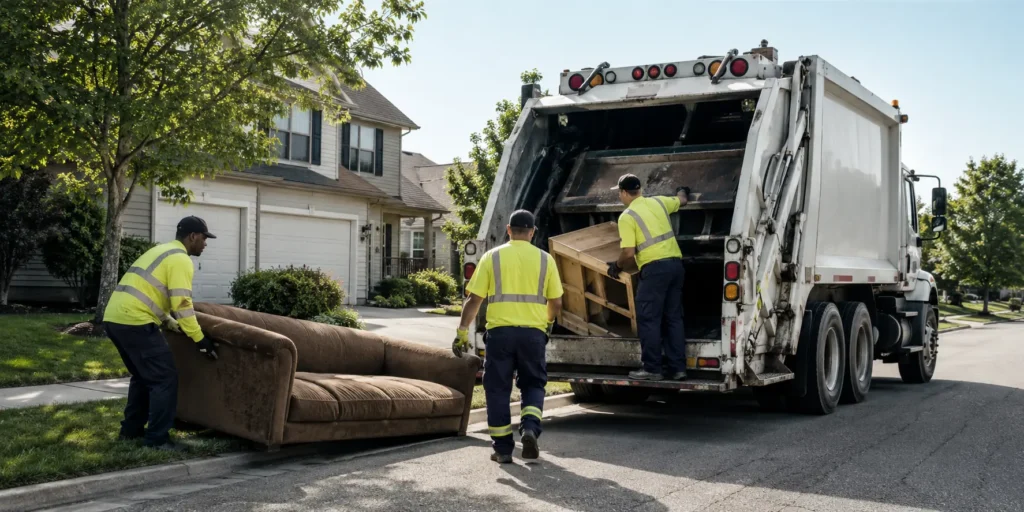
However, donation pickup is not guaranteed to be free in every location. Acceptance and pickup may depend on:
- Your ZIP code
- The local organization
- Available storage space
- Resale demand
- Truck and staff availability
- The item’s size and weight
- Stairs, elevators, and building access
- The furniture’s condition
Take clear photos and measurements before contacting an organization. Disclose stains, tears, odors, pet or smoke exposure, missing hardware, structural damage, and access restrictions.
A pickup team may reject an item if it does not match the description.
Organizations That May Accept Furniture
Goodwill
Furniture acceptance and pickup rules vary by local Goodwill organization. Some locations accept furniture or offer pickup, while others require drop-off or do not accept large furniture.
Contact your local organization before making plans.
The Salvation Army
Donation pickup may be available in participating ZIP codes. Furniture acceptance, scheduling, and service-area rules vary by location.
Confirm availability and item requirements before scheduling.
Habitat for Humanity ReStore
Many Habitat ReStores accept new or gently used furniture, appliances, household goods, and building materials.
Some locations offer pickup for larger donations, but each ReStore sets its own acceptance and scheduling policies.
Furniture Banks
Furniture banks help provide usable household items to individuals and families who need them.
Each organization has its own service area, item requirements, pickup rules, scheduling process, and possible fees. Do not assume pickup will always be free.
Local Community Organizations
Local groups may sometimes be more flexible than national charities.
Consider contacting:
- Refugee support organizations
- Housing assistance programs
- Domestic violence support organizations
- Homelessness recovery programs
- Faith-based groups
- Rescue missions
- Community theaters
- Schools and vocational programs
- Local thrift stores
- Reuse centers
- Mutual-aid groups
Call before bringing furniture because smaller organizations often have limited storage.
Give Furniture Away for Free
A free local listing can be one of the fastest options for usable furniture, especially when you do not own a truck.
List the item as free, pickup only so the recipient handles transportation.
Possible platforms include:
- Facebook Marketplace
- Craigslist
- Nextdoor
- OfferUp
- Freecycle
- Buy Nothing groups
- Local community groups
A useful listing should include:
- Clear photos
- Exact measurements
- Honest condition details
- Your general pickup area
- The floor and elevator availability
- Whether the item comes apart
- Whether tools or lifting help are needed
- A firm pickup deadline
Example:
Free couch for pickup. It is used but still comfortable. One cushion has a small stain, shown in the photos. The couch is 84 inches long and is located on the second floor without an elevator. You must bring another person to carry it. Pickup must be completed before Sunday evening.
Do not describe damaged furniture as being in excellent condition. Accurate information reduces cancellations, disputes, and no-shows.
Reduce No-Shows and Stay Safe
Give priority to someone who provides a specific pickup time and confirms they have a suitable vehicle and lifting help.
Do not share your exact address publicly. Provide it only after confirming the pickup time.
When possible:
- Have another adult present
- Keep valuables and documents out of sight
- Keep strangers out of unrelated areas
- Use a garage, lobby, or loading area
- Do not lift more weight than you can safely manage
- Cancel the pickup if the situation feels unsafe
Can Furniture Be Recycled?
Furniture recycling depends on its materials and the facilities available in your area.
A recycling center may accept:
- Metal bed frames
- Metal shelving
- Filing cabinets
- Separated wood
- Certain plastics
- Clean cardboard components
- Some mattresses through specialized programs
It may reject:
- Upholstery
- Foam
- Mixed-material furniture
- Treated or painted wood
- Particleboard
- Contaminated materials
- Furniture containing glass or mirrors
Dismantling furniture may make individual materials easier to recycle, but it can expose sharp metal, broken wood, springs, staples, and heavy parts.
Wear suitable gloves and eye protection. Do not dismantle furniture unless you can do so safely.
What Should You Do With Bedbug-Infested Furniture?
Do not donate, sell, or give it away.
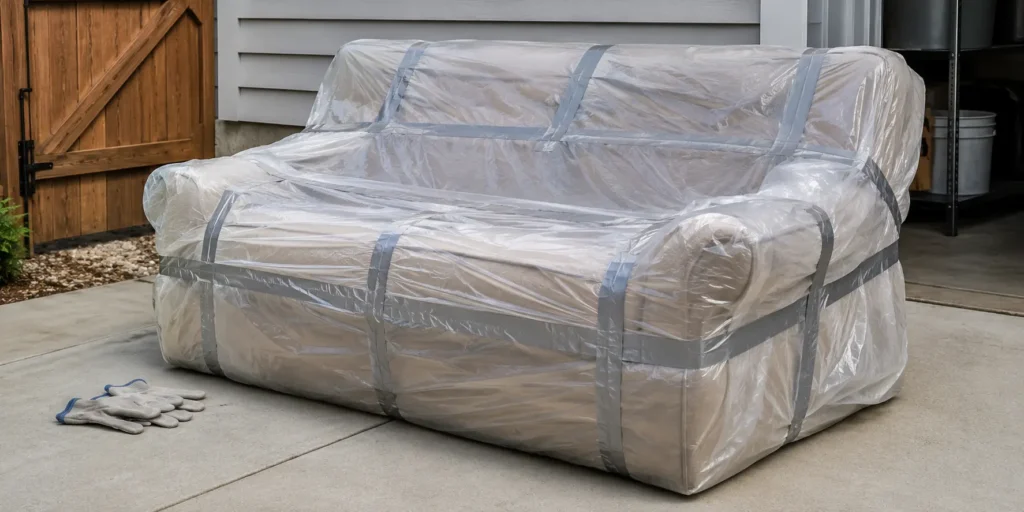
Furniture may sometimes be treatable, so consider professional pest-control guidance before discarding it.
When disposal is necessary:
- Contact your local sanitation department.
- Follow its wrapping and labeling requirements.
- Keep the item away from clean belongings.
- Avoid dragging it through shared areas without containment.
- Mark or damage it so another person will not reuse it.
- Arrange collection as quickly as local rules allow.
Do not leave infested furniture in a hallway, lobby, alley, or beside a dumpster without authorization.
Preparing Furniture for Donation
Before requesting pickup:
- Remove personal items from drawers and cushions
- Vacuum and clean the furniture
- Check for pests, mold, and water damage
- Test drawers, doors, legs, and moving parts
- Gather shelves and removable hardware
- Take clear photos and measurements
- Disclose all damage and odors
- Clear a safe path to the exit
- Reserve an elevator or loading area if required
Do not leave furniture outside a closed donation center. Unapproved items may be treated as illegal dumping, and weather can make usable furniture unacceptable.
Tax Considerations for Donated Furniture
A furniture donation may qualify for a U.S. federal income-tax deduction when it is donated to an eligible organization and applicable tax requirements are met.
The value is generally based on the furniture’s fair market value at the time of donation, not its original purchase price.
Keep records such as:
- The organization’s name
- The donation date
- A description of the furniture
- Photos showing its condition
- The donation receipt
- Your fair-market-value estimate
Tax deductions depend on current law and your personal filing situation. Review current IRS guidance or consult a qualified tax professional.
What If You Need the Furniture Gone Today?
Free services may require several days or weeks of scheduling.
For the best chance of fast removal:
- Post the furniture for free with a same-day pickup deadline.
- Ask your property manager about existing bulk disposal.
- Check for municipal pickup or an open resident drop-off site.
- Contact nearby charities and furniture banks.
- Call a recycling or scrap facility.
- Use a paid junk removal service only after checking free options.
Do not leave furniture illegally because of a moving deadline. Ask your landlord or moving company whether temporary storage or a short extension is possible.
Conclusion
The best free furniture removal option depends on the item’s condition and the services available at your address.
For clean, usable furniture, start with donation, a furniture bank, or a free local listing. These options may keep the item out of a landfill while allowing the recipient or organization to handle transportation.
For broken furniture, check municipal bulk pickup and resident drop-off sites. If the item contains recyclable metal or other separated materials, contact an appropriate recycling facility.
Do not donate furniture affected by bedbugs, mold, serious contamination, strong odors, or unsafe structural damage. Follow local sanitation or pest-control guidance instead.
Most importantly, verify the rules before moving the furniture. A brief call or visit to an official local website can prevent a rejected donation, wasted trip, unexpected fee, lease charge, or illegal dumping penalty
Frequently Asked Questions
Can I Leave Old Furniture on the Curb for Free?
Only when your local waste service allows it. Check the approved collection date, placement rules, item limits, and appointment requirements before leaving furniture outside.
Will Goodwill Pick Up Furniture for Free?
Some local Goodwill organizations may offer pickup, but furniture acceptance and pickup policies vary. Contact your local organization first.
How Can I Get Rid of a Couch Without a Truck?
Try municipal curbside pickup, charity pickup, a furniture bank, or a pickup-only online listing. With a free listing, the recipient provides transportation.
Can I Take Furniture to a Landfill for Free?
Possibly, but not always. Some resident facilities and cleanup events accept furniture without an additional charge, while many landfills and transfer stations charge by item, weight, or vehicle.
What Should I Do With a Broken Couch?
Check municipal bulk pickup first. You can also contact a transfer station, resident waste site, or recycling facility that accepts upholstered furniture.
Can I Donate a Couch With Stains?
Minor wear may be acceptable to some organizations. Large stains, strong odors, mold, pests, pet damage, or structural problems often lead to rejection.
How Do I Dispose of Furniture With Bedbugs?
Do not donate or give it away. Ask your sanitation department about wrapping, labeling, containment, and collection rules.
Can I Leave Furniture Beside an Apartment Dumpster?
Only with permission from the property manager and waste provider. Unauthorized disposal may result in charges or dumping penalties.
What Is the Fastest Way to Give Away Furniture?
Post clear photos, exact measurements, honest condition details, and a firm pickup deadline. State that the recipient must bring transportation and enough people to carry it.
Are Junk Removal Companies Free?
Private junk removal companies generally charge for labor, transportation, and disposal. Ask for the full price before booking.
Can I Burn Old Wooden Furniture?
Do not burn furniture unless local law permits it and the material is safe to burn. Furniture may contain paint, glue, finishes, foam, or treated wood that produces harmful smoke.
Can I Put Furniture in a Commercial Dumpster?
Not without permission from the dumpster owner. Unauthorized use may be treated as illegal dumping.

Muhammad Muaz
Muhammad Muaz shares practical cleaning, home care, improvement and everyday living guides for Urban Home Guide readers.
Related Home Guides