
How to Do Dry Cleaning at Home : Simple Step-by-Step Guide
Dry cleaning can feel like a small problem until you need one specific outfit. Maybe your blazer smells musty before work. Maybe your silk blouse has a small mark. Maybe…
Dry cleaning can feel like a small problem until you need one specific outfit. Maybe your blazer smells musty before work. Maybe your silk blouse has a small mark. Maybe your wool coat has been sitting in the closet all season. Or maybe you checked the dry-cleaning price and thought, “There has to be a cheaper way.”
The real worry is not only cleaning the garment. The real worry is ruining it. One wrong wash can shrink wool, fade silk, warp rayon, or make a blazer lose its shape.
That is why learning how to do dry cleaning at home can be useful, but only when you do it safely. At-home dry cleaning is not the same as professional dry cleaning. Professional cleaners use special solvents and machines. At home, you mostly use gentle care methods such as airing, steaming, spot cleaning, and home dry cleaning kits.
So, think of home dry cleaning as freshening, not deep cleaning. In this guide, you will learn what you can safely refresh, what you should never risk, how to handle light odors and wrinkles, and when a professional cleaner is the better choice.
Quick Answer: How to Do Dry Cleaning at Home
To dry clean clothes at home, check the care label first. Then spot test the fabric in a hidden area. Brush off dust and lint, treat small fresh stains carefully, and refresh the garment with air, light steam, or a home dry cleaning kit.
Let the item dry fully before wearing or storing it.
Do not wash or heat-dry leather, suede, fur, structured suits, rayon, velvet, pleated clothes, or heavily embellished garments at home.
Home dry cleaning works best for light odor, minor wrinkles, and freshening clothes between professional cleanings.
Who This Guide Is For
This guide is for anyone who wants to care for clothes at home without damaging them.
It is helpful if you:
- Want to save money on dry cleaning
- Need clothes ready quickly
- Own dry-clean-only clothes
- Have silk, wool, cashmere, suits, or blazers
- Need to remove light odor or wrinkles
- Have a small fresh stain
- Do not fully understand care labels
- Want to avoid shrinking, fading, or fabric damage
This guide is also useful for busy professionals, students, parents, renters, and anyone who wants a simple clothing-care routine.
Can You Dry Clean Clothes at Home?
Yes, you can dry clean some clothes at home, but it depends on the fabric, care label, stain, and garment structure.
Home dry cleaning works best for clothes that are not heavily dirty. It can help with:
- Light smells
- Small wrinkles
- Closet odor
- Light dust
- Freshening between wears
- Last-minute clothing refreshes
However, home dry cleaning cannot fix everything. It may not remove:
- Deep stains
- Oil stains
- Makeup stains
- Strong sweat smells
- Smoke smells
- Mildew smells
- Old stains
- Dye transfer
If the item is expensive, delicate, stained, or structured, a professional cleaner is usually the safer choice.
What “Dry Clean Only” Really Means
A dry-clean-only label means the garment may get damaged if you wash it with water. The fabric may shrink, fade, stretch, or lose its shape.
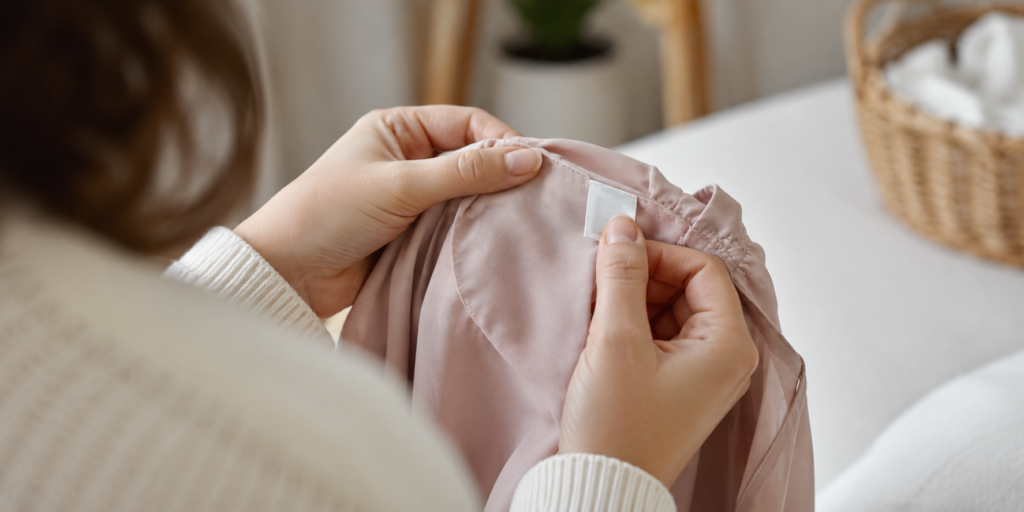
Here is the simple difference:
| Care Label | Meaning |
|---|---|
| Dry clean | Professional cleaning is recommended |
| Dry clean only | Washing may damage the garment |
| Do not wash | Avoid water cleaning |
| Hand wash | Gentle hand washing may be safe |
| Do not tumble dry | Avoid dryer heat |
If your clothing says dry clean only, do not treat it like normal laundry. First, check the fabric and garment shape. If it has lining, shoulder pads, pleats, beads, or delicate fabric, do not risk washing it at home.
Why Some Fabrics Need Dry Cleaning
Some fabrics do not react well to water, heat, or rubbing.
Wool can shrink. Silk can lose its shine. Rayon can warp. Suede and leather can stain or crack. A blazer can lose its shape if its lining, padding, or structure gets wet.
Before cleaning anything at home, ask yourself:
- Is this item expensive?
- Is it dry clean only?
- Does it have lining?
- Does it have shoulder pads?
- Does it have pleats?
- Is it silk, rayon, leather, suede, or velvet?
- Does it have beads, sequins, or embroidery?
- Is there a strong stain?
If you answer yes to any of these questions, be careful. A professional cleaner may be the safer option.
What Home Dry Cleaning Can Do Well
Home dry cleaning is useful for light care. It helps when clothes are not truly dirty but need to feel fresh again.
| Home Dry Cleaning Can Help With | Example |
|---|---|
| Light odor | Closet smell |
| Wrinkles | Travel wrinkles |
| Light dust | Stored clothing |
| Freshening | Clothes worn once |
| Minor spots | Small surface marks |
| Quick refresh | Work or event outfit |
| Saving money | Fewer cleaner visits |
Home dry cleaning is best between professional cleanings. It can help your clothes last longer and reduce dry cleaning costs.
What Home Dry Cleaning Cannot Replace
Home dry cleaning is not a full replacement for professional cleaning.
It usually cannot fix:
- Oil stains
- Makeup stains
- Deep dirt
- Strong sweat smell
- Smoke smell
- Mildew smell
- Dye transfer
- Old stains
- Large stains
- Suit reshaping
- Damaged fabric
If the stain is oily, old, dark, large, or unknown, do not treat it at home. Take it to a professional cleaner.
Check This Before You Dry Clean Clothes at Home
Use this quick check before you start.
| Question | If Yes, What to Do |
|---|---|
| Is it only lightly worn? | You can refresh it at home |
| Does it smell a little? | Try airing or light steam |
| Does it have a small fresh stain? | Spot clean carefully |
| Is it silk, rayon, suede, or leather? | Use caution or go professional |
| Is it a suit or blazer? | Do not wash it |
| Is the stain old or oily? | Use a professional cleaner |
| Is it expensive or sentimental? | Do not risk it |
| Do you need it ready fast? | Use air and steam first |
This simple check can help you avoid costly damage.
Home Dry Cleaning Kit vs Steamer vs Professional Cleaner
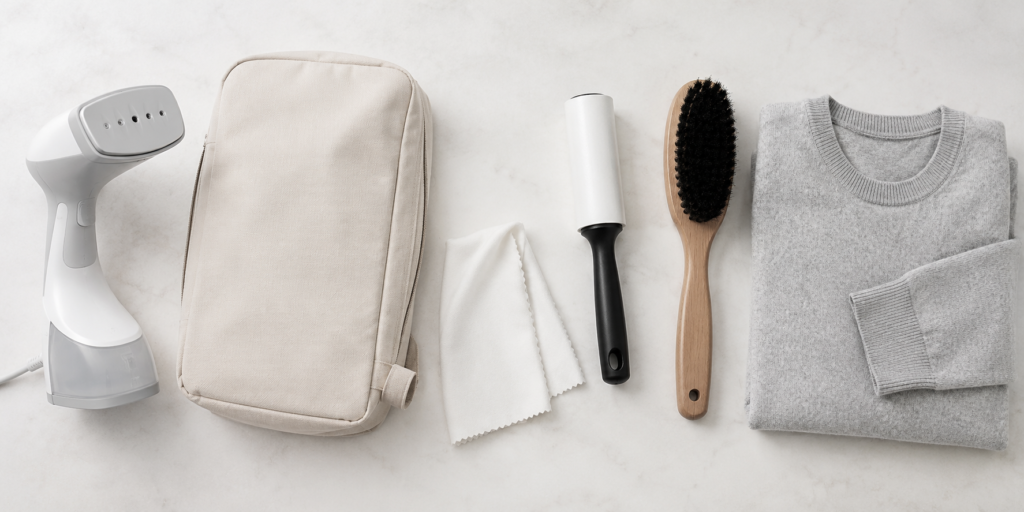
Different methods work for different needs.
| Method | Best For | Avoid Using It For |
|---|---|---|
| Home dry cleaning kit | Light odor and wrinkles | Deep stains or delicate trims |
| Garment steamer | Wrinkles and light smells | Oil stains or very delicate fabric |
| Air drying | Closet smell and light odor | Deep cleaning |
| Spot cleaning | Small fresh stains | Large, old, oily, or unknown stains |
| Hand washing | Label-approved delicate items | True dry-clean-only clothes |
| Professional cleaner | Suits, coats, silk, stains, expensive clothes | Simple freshening only |
Start with the safest method. Airing and light steam are often safer than washing.
Common Fabrics That Require Gentle Care
Some clothes are safer to refresh at home than others. Use this fabric guide before you start.
| Fabric or Garment | Can You Clean at Home? | Best Method | Risk Level |
|---|---|---|---|
| Wool sweater | Sometimes | Air, steam, spot clean | Medium |
| Cashmere | Sometimes | Air, light steam | Medium-high |
| Silk blouse | Risky | Spot test, light steam | High |
| Rayon | Avoid washing | Air only or professional | High |
| Suit | Do not wash | Brush and light steam | High |
| Blazer | Do not wash | Brush and careful steam | High |
| Wool coat | Light refresh only | Brush, air, steam | High |
| Leather | No | Professional only | Very high |
| Suede | No | Professional only | Very high |
| Fur | No | Professional only | Very high |
| Pleated skirt | Avoid | Professional only | High |
| Beaded dress | Avoid | Professional only | High |
| Jeans labeled dry clean | Usually safer | Air, steam, gentle wash if label allows | Low-medium |
This table can help you decide what to refresh at home and what to take to a cleaner.
Clothes You May Refresh at Home With Care
Some clothes are lower risk. These items may be refreshed at home if the label allows it:
- Cotton shirts
- Polyester dresses
- Unstructured pants
- Simple sweaters
- Some wool sweaters
- Some cashmere sweaters
- Jeans
- Unlined skirts
- Light jackets without padding
- Office shirts
- Light workwear
Always spot test first. If the fabric changes color, texture, or shape, stop.
Clothes You Should Not Dry Clean at Home
Some clothes should not be dry cleaned or washed at home.
Avoid DIY cleaning for:
- Leather
- Suede
- Fur
- Wedding dresses
- Expensive silk
- Structured suits
- Blazers with shoulder pads
- Pleated garments
- Velvet
- Taffeta
- Rayon
- Clothes with heavy beads
- Clothes with sequins
- Antique garments
- Sentimental clothing
These items can be difficult or expensive to replace. Use a professional cleaner instead.
What You Need to Dry Clean Clothes at Home
You do not need many tools to refresh clothes at home.
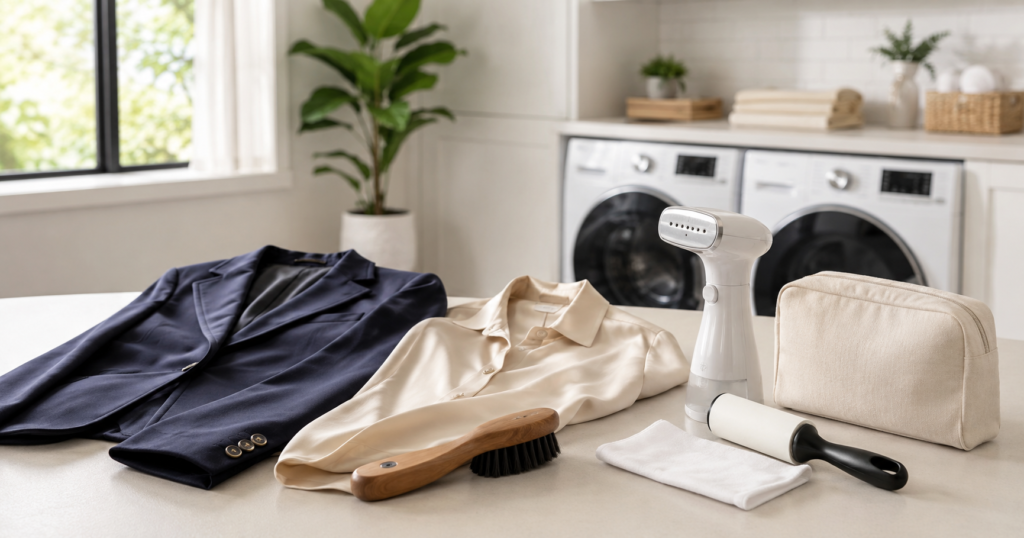
You may need:
- Clothes brush
- Lint roller
- White microfiber cloth
- Mild detergent
- Fabric-safe stain remover
- Baking soda
- Garment steamer
- Home dry cleaning kit
- Mesh laundry bag
- Padded hanger
- Breathable garment bag
- Clean towel
Use white cloths when spot cleaning. Colored cloths can transfer dye to your garment.
How to Do Dry Cleaning at Home Step by Step
There are a few safe ways to dry clean clothes at home. You can use a home dry cleaning kit, steam, air, or careful spot cleaning.
Do not use too much water. Do not use high heat. Do not scrub delicate fabric.
The goal is not to deep wash the garment. The goal is to refresh it safely.
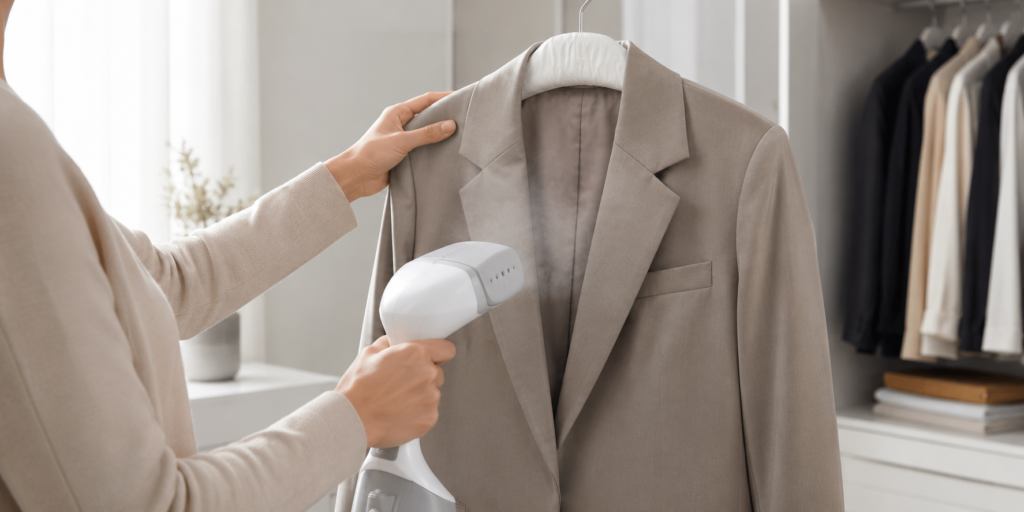
1. Hang the Garment
First, hang the garment in a clean space. Use a strong hanger for jackets and shirts. For sweaters, lay them flat instead.
Check the fabric carefully. Look for stains, smells, wrinkles, weak seams, or damaged areas.
Do not start cleaning until you have checked the whole item.
2. Check the Label
Next, read the care label.
Look for words like:
- Dry clean
- Dry clean only
- Do not wash
- Hand wash
- Low heat
- Do not tumble dry
- Cool iron
If the label says dry clean only, be extra careful. Do not put the garment in the washing machine.
3. Do a Spot Test
A spot test helps you avoid damage.
Choose a hidden area, such as the inside seam or hem. Dab a small amount of water or cleaner on that area. Wait a few minutes.
Check for:
- Color bleeding
- Water marks
- Texture change
- Fabric shrinkage
- Shine loss
If you notice any change, stop and take the item to a professional cleaner.
4. Hand Wash Only If the Label Allows It
Only hand wash if the care label allows it.
Use cool water and a small amount of mild detergent. Gently move the garment in the water. Do not scrub, twist, or use hot water.
Rinse with cool water. Press out extra water with a clean towel. Lay the garment flat to dry.
Skip this step if the label says dry clean only, unless you accept the risk of shrinkage, fading, or shape loss.
Do not hand wash structured clothes, leather, suede, velvet, rayon, or lined blazers.
5. Use Baking Soda Carefully for Light Odor
Baking soda can help with light odor, but use it carefully.
Lay the garment flat. Sprinkle a small amount of baking soda on the smelly area. Let it sit for a short time, then brush it off gently.
Do not rub baking soda into the fabric.
Do not use baking soda on delicate silk, velvet, suede, or dark fabrics without testing first.
6. Air the Garment Overnight
Fresh air can remove light smells.
Hang the garment in a clean, dry, airy place. Keep it away from direct sunlight because sunlight can fade colors.
Let the garment air overnight. This is one of the safest ways to freshen dry-clean-only clothes.
7. Use a Garment Steamer
Steam can reduce wrinkles and light odor.
Hold the steamer a few inches away from the fabric. Keep it moving and do not soak the garment.
Too much moisture can damage wool, silk, cashmere, and rayon.
Use steam carefully on:
- Wool
- Cashmere
- Silk
- Blouses
- Dresses
- Pants
- Coats
Steam can refresh fabric, but it does not replace professional dry cleaning.
8. Store in a Garment Bag
After cleaning, let the garment dry fully.
Never store damp clothes. Damp fabric can smell bad and may grow mildew.
Use a breathable garment bag for storage. Avoid plastic bags for long-term storage because plastic can trap moisture.
Store clothes in a cool, dry closet.
How to Use a Home Dry Cleaning Kit
A home dry cleaning kit can help freshen clothes and reduce light odor or wrinkles.
Always follow the kit directions first because different kits may have different steps.
Basic steps usually include:
- Read the garment label.
- Remove lint and dust.
- Spot treat small stains.
- Place 1–3 garments in the kit bag.
- Add the cleaning cloth from the kit.
- Use the dryer setting listed on the kit.
- Remove clothes right away.
- Hang until fully dry.
Do not overload the bag. Clothes need space to move.
Do not use a home dry cleaning kit on leather, suede, fur, velvet, heavily beaded clothes, pleated items, or structured suits unless the kit label clearly says it is safe.
How to Freshen Clothes at Home Without a Kit
You do not always need a kit. Sometimes clothes only need freshening.
Use this simple method:
- Brush off lint and dust.
- Hang the garment.
- Air it outside in shade or near a window.
- Steam lightly if needed.
- Let it dry fully.
- Store it on a proper hanger.
This works well for clothes worn once or stored for a long time. It is also a good method for renters, students, and people without a laundry room.
Last-Minute Way to Freshen Clothes Before Work or an Event
Sometimes you need clothes ready fast for an interview, meeting, dinner, or wedding.
Use this quick method:
- Hang the garment.
- Brush off dust and lint.
- Air it near a window for 15–30 minutes.
- Use light steam on wrinkles.
- Let it dry fully.
- Wear it only when the fabric is dry.
Do not spray perfume directly on delicate fabric because it can stain. Do not use high heat to rush the process because heat can shrink or damage clothes.
How to Remove Odors From Dry-Clean-Only Clothes
You can remove light odors from dry-clean-only clothes with air, steam, and careful storage.
Do not use strong sprays first. Some sprays can stain fabric or leave a heavy scent behind.
Start with the safest method first.
Air It Out With Real Ventilation
Air is the safest odor remover.
Hang the garment in a clean area with airflow. You can place it near an open window or hang it outside in the shade.
Avoid direct sunlight because it can fade dark colors.
Let the item air for several hours or overnight.
Steam to Lift Odors Without Washing
Steam can help relax fibers and reduce light smells.
Use light steam and keep the steamer moving. Do not wet the garment.
After steaming, let the garment dry fully before wearing or storing it.
Use a Garment Bag for Controlled Refreshing
A home dry cleaning kit may include a garment bag and cleaning cloth.
Follow the kit directions carefully. Do not overload the bag, and use low or medium heat only if the garment label allows it.
Be Careful With DIY Powders and Liquids
Baking soda, vinegar, and alcohol sprays may help in some cases, but they can also damage delicate fabric.
Always test first.
Never use strong cleaners on silk, wool, leather, suede, velvet, or rayon.
How to Reduce Wrinkles Without Damaging Fabric
Wrinkles are common in dry-clean-only clothes. The safest way to reduce them is with steam and proper hanging.
Do not use high heat. Do not press too hard with an iron. Do not steam one spot for too long.
Use Steam as the Default Option
Steam is usually safer than washing. It can relax wrinkles without soaking the fabric.
Hold the steamer a few inches away and move from top to bottom.
Let the fabric cool and dry after steaming.
Use Low Heat Only If the Label Allows It
Some clothes can go in the dryer on low heat, but only if the care label or kit instructions allow it.
Use a home dry cleaning kit if needed. Follow the kit instructions.
Remove the garment as soon as the cycle ends and hang it right away to prevent new wrinkles.
Reduce Wrinkles by Reducing Friction
Friction creates wrinkles and can also damage fabric.
To reduce friction:
- Do not overfill the dryer
- Do not pack clothes tightly in storage
- Use padded hangers
- Use garment bags
- Fold knits instead of hanging them
- Leave space in your closet
Good storage keeps clothes fresh for longer.
How to Avoid Shrinking, Warping, or Color Fading
You can avoid damage by controlling heat, moisture, and pressure.
Most damage happens because of:
- Hot water
- High heat
- Too much steam
- Heavy scrubbing
- Twisting
- Strong chemicals
- Poor drying
Go slowly and use gentle methods first.
Control Heat First
Heat can shrink clothes and set stains.
Use cool water if hand washing is allowed. Use low heat only if the label allows it.
Avoid high dryer heat. For delicate clothes, air drying is best.
Minimize Moisture on Sensitive Fabrics
Too much water can damage silk, wool, rayon, and cashmere.
Use less moisture. Steam lightly. Spot clean only the stained area.
Do not soak delicate garments unless the label says it is safe.
Protect Color With Smart Habits
Color can bleed or fade during cleaning.
To protect color:
- Test a hidden area first
- Use white cloths
- Avoid direct sunlight
- Avoid hot water
- Avoid strong stain removers
- Do not rub dark fabrics hard
If color comes off during the spot test, stop.
Protect Shape With Proper Support
Some clothes lose shape when wet. This is common with suits, blazers, coats, and sweaters.
Use the right support:
- Use padded hangers for jackets
- Lay sweaters flat
- Do not twist clothes
- Do not hang heavy wet garments
- Store coats with room to breathe
Shape is hard to fix once damaged.
How to Get Rid of Stains
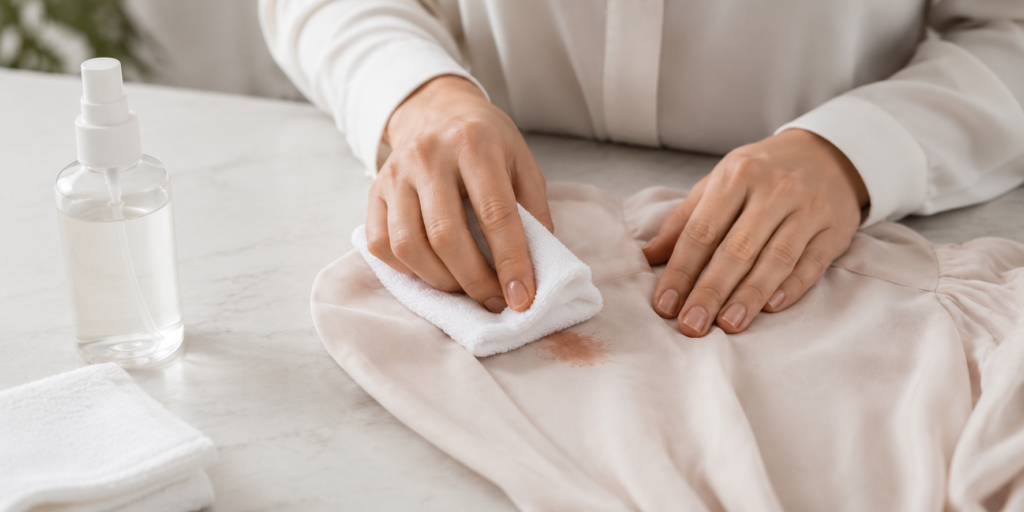
Stains on dry-clean-only clothes need careful handling.
Do not scrub hard. Do not use hot water. Do not mix cleaners.
Start by blotting the stain with a clean white cloth.
| Stain Type | What to Do | What to Avoid |
|---|---|---|
| Food stain | Gently blot with cloth | Scrubbing aggressively |
| Oil stain | Apply absorbent powder first | Avoid soaking in water |
| Makeup stain | Spot test cleaning solution | Do not rub |
| Sweat stain | Use air and light steam | Strong vinegar treatments |
| Wine stain | Blot immediately | Applying heat |
| Coffee stain | Blot with a white cloth | Dryer or hot iron |
| Unknown stain | Stop and seek professional help | Mixing chemicals |
If the stain is large, old, oily, or on silk, use a professional cleaner.
Apply Stain Remover Carefully
Use a fabric-safe stain remover only after testing.
Apply a small amount to a hidden area first. If the fabric reacts well, apply a tiny amount to the stain.
Dab gently. Do not rub.
Use only enough product to treat the stain.
Brush Only Safe Fabrics
Use a soft brush only on sturdy fabric.
Brush lightly.
Do not brush silk, velvet, suede, or delicate wool. Brushing can damage the surface.
For delicate fabric, blot instead.
Use White Vinegar With Caution
White vinegar can help with some odors and stains, but it is not safe for every fabric.
Always dilute it. Always test first.
Do not use vinegar on delicate silk, rayon, acetate, leather, suede, or any fabric that reacts during the test.
Avoid Oxygen Bleach on Dry-Clean-Only Clothes
Oxygen bleach can help some washable fabrics, but it is not safe for many dry-clean-only clothes.
Never use oxygen bleach on dry-clean-only clothes unless the care label says the item is washable.
Do not use oxygen bleach on:
- Silk
- Wool
- Leather
- Suede
- Rayon
- Dark delicate fabrics
- Embellished clothing
If you are unsure, skip this step.
What to Do If You Damage a Dry-Clean-Only Item
Stop right away if something goes wrong.
Do not keep adding water, heat, or cleaners.
Here is what to do:
- If color bleeds, stop cleaning.
- If fabric shrinks, do not stretch it hard.
- If silk gets water marks, let it dry and call a cleaner.
- If wool feels stiff or fuzzy, stop steaming.
- If the garment loses shape, lay it flat.
- If a stain spreads, stop blotting.
- If the fabric changes texture, do not keep cleaning.
Do not try many chemicals to fix the problem. This can make damage worse.
When in doubt, take the item to a professional cleaner.
How At-Home Dry Cleaning Can Save Money
Professional dry cleaning can become expensive over time, especially if you clean many items often.
At-home dry cleaning can help reduce cleaner visits. You can use it for light odor, wrinkles, and freshening.
This works well for:
- Office clothes
- Light sweaters
- Simple dresses
- Stored clothes
- Travel clothes
- Clothes worn once
But do not use home cleaning just to save money on risky garments. If the item is expensive or delicate, professional cleaning is safer.
The goal is to save money without ruining clothes.
How Often Should You Dry Clean Clothes?
You do not need to dry clean every item after each wear. It depends on the fabric, sweat, stains, and smell.
| Item | General Cleaning Frequency |
|---|---|
| Suit | Every 3–6 wears, or when stained |
| Wool coat | 1–2 times per season |
| Formal dress | After each event if sweaty or stained |
| Sweater | When stained, smelly, or stretched |
| Blazer | Every few wears, depending on use |
| Silk blouse | When stained, sweaty, or smelly |
These are general rules. Always follow the care label and use your judgment.
You can refresh clothes at home between professional cleanings.
When Professional Dry Cleaning Is Still Necessary
Home dry cleaning is useful, but some jobs need a professional.
Use a professional cleaner for:
- Oil stains
- Makeup stains
- Old stains
- Strong sweat odor
- Smoke smell
- Mold or mildew smell
- Leather
- Suede
- Fur
- Silk dresses
- Rayon garments
- Structured suits
- Blazers
- Wool coats
- Pleated skirts
- Wedding dresses
- Expensive clothes
- Sentimental clothes
A professional cleaner has the right tools and products. This lowers the risk of damage.
Conclusion
Learning how to do dry cleaning at home can save time and money, but the safest rule is simple: do not treat every dry-clean-only item the same way.
The best home results usually come from gentle methods such as airing clothes, brushing off dust, using light steam, and spot testing first. These steps work well for light odors, wrinkles, and clothes that only need a quick refresh.
However, do not take chances with expensive or delicate items. Suits, blazers, leather, suede, fur, rayon, velvet, pleated garments, old stains, and oil stains are better handled by a professional cleaner.
If you remember one thing, remember this: home dry cleaning is best for freshening clothes, not deep cleaning them. Start with the care label, check the fabric, test a hidden spot, use low heat and light moisture, and avoid risk when the garment is valuable, structured, or badly stained.

FAQs
Can all clothes be dry cleaned at home?
No. Not all clothes are safe to dry clean at home. Avoid home cleaning for leather, suede, fur, structured suits, velvet, rayon, pleated clothes, and expensive silk.
What is the safest home dry cleaning method?
The safest method is airing the garment, brushing off dust, and using light steam. This works best for light odor and wrinkles, not deep stains.
Can I dry clean clothes at home without a kit?
Yes. You can use air, steam, a clothes brush, and careful spot cleaning. This works well for freshening clothes, but it does not replace professional dry cleaning.
Can I wash dry-clean-only clothes at home?
It is risky. Some clothes may shrink, fade, or lose shape. Only hand wash if the care label allows it. Do not wash true dry-clean-only clothes unless you accept the risk.
Can I steam dry-clean-only clothes?
Yes, many dry-clean-only clothes can be steamed carefully. Use light steam, keep the steamer moving, and do not soak the fabric.
How do I remove stains from delicate fabrics at home?
Blot the stain with a clean white cloth. Do not rub. Test any cleaner on a hidden area first. For oil, makeup, silk, wool, or old stains, use a professional cleaner.
Can I dry clean leather or suede at home?
No. Leather and suede should not be dry cleaned at home. Water, steam, and DIY cleaners can damage them. Take them to a professional cleaner.
How can I freshen clothes quickly before an event?
Hang the garment, brush off lint, air it near a window, and use light steam. Let it dry fully before wearing. Do not use high heat or spray perfume directly on delicate fabric.

Muhammad Muaz
Muhammad Muaz shares practical cleaning, home care, improvement and everyday living guides for Urban Home Guide readers.
Related Home Guides