
How to Make Carpet Cleaning Solution at Home
How to make carpet cleaning solution at home is a question many homeowners ask after a coffee spill, muddy footprints, a child’s juice accident, or a pet mess leaves an…
How to make carpet cleaning solution at home is a question many homeowners ask after a coffee spill, muddy footprints, a child’s juice accident, or a pet mess leaves an ugly stain on the carpet. I’ve been in the same situation more than once, searching for a quick solution without spending money on expensive carpet shampoos or using harsh chemicals that might damage the carpet. The challenge isn’t just removing the stain—it’s knowing which homemade recipe is actually safe and which common DIY advice can make the problem worse.
After trying different homemade carpet cleaning methods over the years and comparing what works with recommended carpet care practices, I’ve learned that the safest solution is usually the simplest one. A mild mixture made with the right ingredients can clean most everyday stains without leaving sticky residue or harming carpet fibers. In this guide, you’ll learn how to make carpet cleaning solution at home, which recipes work best for different types of stains, how to use them safely on different carpet types, when they’re suitable for carpet cleaning machines, and when it’s better to call a professional cleaner.
Before You Start: Important Safety Rules
Before using any homemade carpet cleaner, follow a few simple safety steps.
First, always test the cleaner on a hidden area of the carpet. Choose a spot under furniture or in a corner. Wait a few minutes and check if the color changes.
Second, use a white cloth. Colored towels can transfer dye to the carpet.
Third, blot the stain. Do not scrub it. Scrubbing can push the stain deeper and damage carpet fibers.
Also, do not use too much liquid. Carpet should be damp, not soaked. If water reaches the padding, it can cause odor, mildew, or damage.
After using any soap-based cleaner, rinse the area with a small amount of clean water. Then blot it dry with a towel.
These steps are simple, but they make a big difference.
Best Homemade Carpet Cleaning Solution
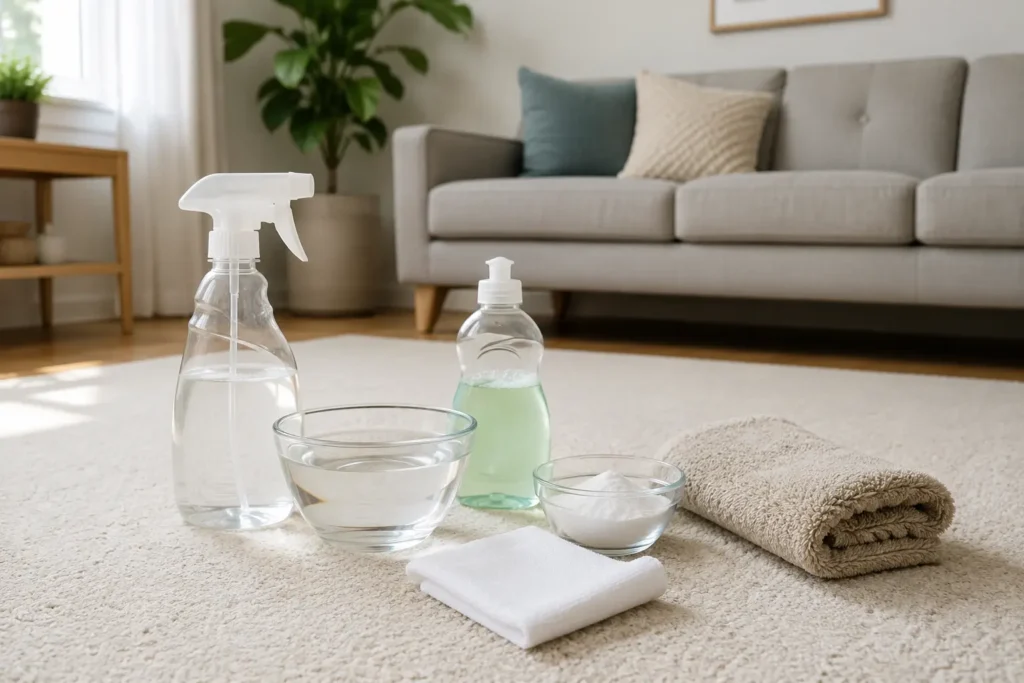
The safest homemade carpet cleaning solution for most small stains is warm water and clear mild dish soap.
Ingredients
You need:
- 1 cup warm water
- 1/4 teaspoon clear mild dish soap
- A clean white cloth
- A spray bottle or small bowl
- A dry towel
- Clean water for rinsing
How to Make It
Add warm water to a bowl or spray bottle. Add the dish soap. Mix gently.
Do not shake it too much. Too much foam can make the carpet harder to rinse.
Also, do not add extra soap. More soap does not mean better cleaning. It can leave sticky residue and attract more dirt later.
How to Use Homemade Carpet Cleaner
Start by removing any solid dirt or food from the carpet. Use a spoon or dull edge if needed.
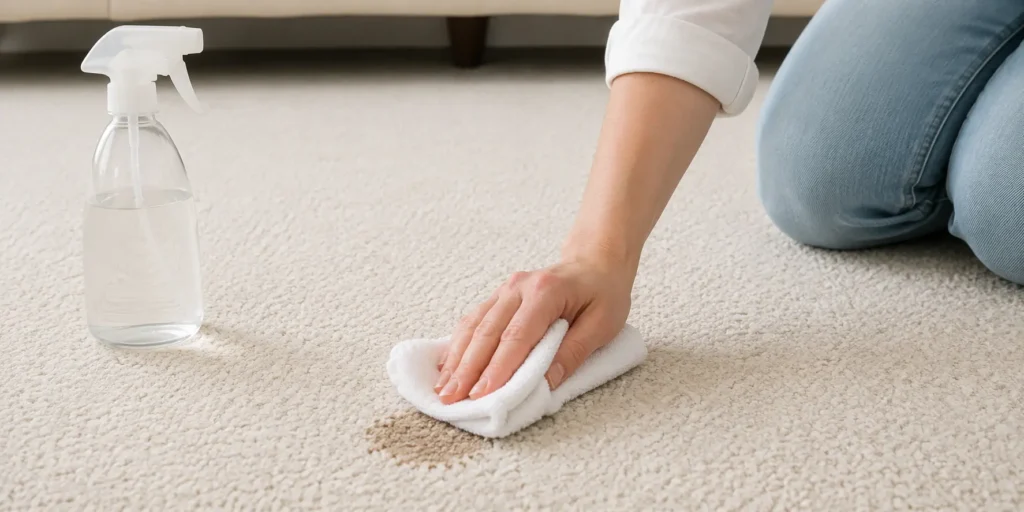
If the stain is wet, blot it first with a dry white cloth. Try to absorb as much liquid as possible.
Then apply a small amount of the cleaning solution. Do not pour it directly onto the carpet. Use a cloth or light spray.
Blot from the outside of the stain toward the center. This helps stop the stain from spreading.
After the stain starts lifting, rinse the area with a small amount of clean water. Blot again with a dry towel.
Let the carpet dry fully before walking on it. You can use a fan or open a window to speed up drying.
Best Homemade Cleaner by Carpet Problem
Different stains need different methods. One recipe does not work for every carpet problem.
Use this simple guide before choosing a cleaner.
| Carpet Problem | Best Homemade Option | Method | Warning |
|---|---|---|---|
| Light dirt | Warm water + tiny dish soap | Blot and rinse | Too much soap leaves residue |
| Food spills | Dish soap solution | Remove solids, then blot | Do not scrub |
| Grease or oil | Dish soap + warm water | Blot gently | May need repeat cleaning |
| Mud | Let dry first | Vacuum, then clean | Do not wet fresh mud |
| Mild odor | Baking soda | Sprinkle and vacuum | Do not overuse powder |
| Coffee or tea | Dish soap solution | Blot and rinse | Use peroxide only after testing |
| Pet urine | Enzyme cleaner after blotting | Blot fast, rinse lightly | DIY may not remove deep odor |
| Wool rugs | Plain water or wool-safe cleaner | Gentle blotting | Avoid vinegar and peroxide |
| Dark carpet | Mild soap solution | Patch test first | Avoid peroxide unless tested |
Homemade Carpet Cleaner Recipes
Here are the best homemade carpet cleaner recipes for common home stains.
1. Basic Carpet Cleaner for Light Dirt
This is the best first option for most carpets.
Recipe
- 1 cup warm water
- 1/4 teaspoon clear mild dish soap
Best For
- Light dirt
- Small stains
- Food spots
- Drink spills
- High-traffic marks
- Kids’ snack stains
How to Use
Apply a small amount to the stained area. Blot with a clean white cloth. Rinse lightly with clean water. Blot dry.
This cleaner is mild, so it is safer for everyday carpet care.
2. Homemade Cleaner for Food and Drink Spills
Food and drink stains are easier to remove when fresh.
First, remove any food pieces with a spoon. Then blot the liquid with a dry white cloth.
Use the basic dish soap solution:
- 1 cup warm water
- 1/4 teaspoon clear mild dish soap
Apply a little solution and blot gently. Rinse with clean water and blot dry.
For juice, sauce, milk, or snack stains, this method is usually enough if you act quickly.
3. Homemade Grease and Oil Spot Cleaner
Grease needs a cleaner that can break down oil. Dish soap works well for this.
Recipe
- 1 cup warm water
- 1/4 teaspoon clear mild dish soap
Apply a small amount to the grease spot. Blot gently. Do not scrub.
Rinse with clean water and blot dry. You may need to repeat the process if the stain is old.
4. Homemade Mud Stain Cleaner
Mud should be cleaned differently from liquid spills.
Do not wet fresh mud right away. This can spread it deeper into the carpet.
Let the mud dry first. Then vacuum the dry dirt. After that, use the basic carpet cleaner.
Blot the area, rinse lightly, and dry it well.
5. Carpet Freshener for Odors
If your carpet smells bad but does not have a visible stain, baking soda can help.
Ingredients
- Baking soda
How to Use
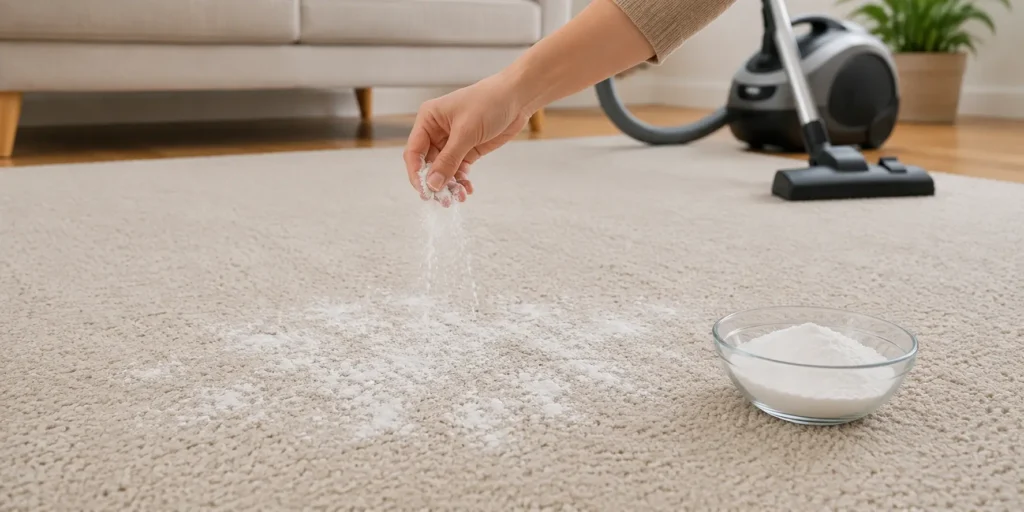
Vacuum the carpet first. Sprinkle a light layer of baking soda over the smelly area.
Leave it for 30 minutes to a few hours. Then vacuum slowly and carefully.
Do not use too much baking soda. Fine powder can stay inside the carpet and may be hard on some vacuums.
For strong pet smells, baking soda may not be enough. You may need an enzyme cleaner.
6. Hydrogen Peroxide Stain Remover for Light Carpets
Hydrogen peroxide can help with some tough stains, but it must be used carefully.
It works best on light-colored carpets. It can bleach or lighten dark carpet.
Recipe
- 2 tablespoons 3% hydrogen peroxide
- 1 tablespoon warm water
- 1 tiny drop clear dish soap
How to Use
Test the mixture on a hidden area first. Wait a few minutes and check the carpet color.
If the color does not change, apply a small amount to the stain. Blot gently with a white cloth.
Rinse with clean water and blot dry.
Use this only when the mild dish soap solution is not enough.
7. Pet Stain and Odor Cleaner
Pet stains need quick action. Urine can soak into the carpet padding. If that happens, the smell may stay even after surface cleaning.
For fresh pet urine, follow these steps:
- Blot the urine with a dry towel.
- Add a small amount of clean water to dilute the area.
- Blot again.
- Clean the surface with mild dish soap and water.
- Rinse lightly.
- Blot dry.
- Use an enzyme cleaner if odor remains.
Vinegar and baking soda may help with mild odor, but they may not fully remove pet urine smell. Enzyme cleaners work better because they break down the odor source.
For old pet urine, repeated accidents, or strong smells, professional cleaning may be needed.
What Each Ingredient Does
Homemade carpet cleaners usually use simple household ingredients. Each one has a different job.
Mild Dish Soap
Dish soap helps break down dirt, grease, and food stains.
Use only a tiny amount. Too much soap can leave residue and make the carpet feel sticky.
Choose clear dish soap if possible. Avoid colored soap on light carpet. For sensitive homes, use fragrance-free dish soap.
White Vinegar
White vinegar can help with light odor and some residue.
But it is not safe for every carpet. Avoid vinegar on wool rugs, silk rugs, antique rugs, and delicate handmade rugs.
Do not use vinegar in a carpet cleaning machine unless the machine manual says it is allowed.
Baking Soda
Baking soda helps absorb odors. It does not wash the carpet like soap.
Use it as a dry deodorizer. Sprinkle lightly, wait, then vacuum well.
Avoid using too much because powder can stay in the carpet.
Hydrogen Peroxide
Hydrogen peroxide can help with some stains on light carpet.
Use only 3% hydrogen peroxide. Do not use strong peroxide made for hair or industrial cleaning.
Always patch test first because it can lighten carpet color.
Can You Use Homemade Solution in a Carpet Cleaner Machine?
You need to be careful with carpet cleaner machines.
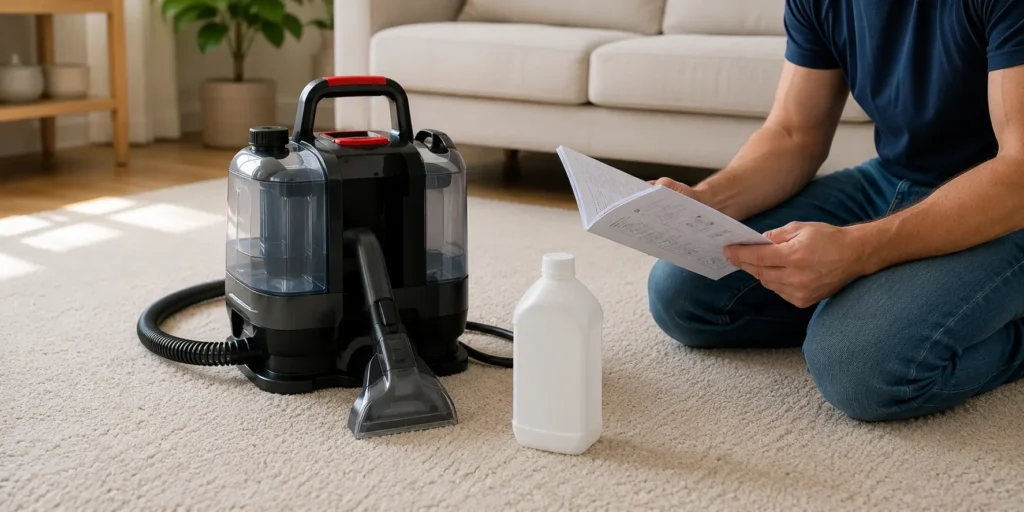
Machines like Bissell, Hoover, and Rug Doctor may require approved cleaning formulas. Using the wrong mixture can create too much foam, clog the machine, or affect the warranty.
Before using any homemade carpet cleaner in a machine, check the manual.
Avoid putting these in carpet cleaner machines:
- Baking soda powder
- Too much dish soap
- Foamy mixtures
- Strong vinegar mixtures
- Bleach
- Laundry detergent
- Fabric softener
- Essential oils
If your machine allows homemade solution, use a very mild mix. Also, run a clean-water rinse pass after cleaning if the machine allows it.
When in doubt, use the manufacturer-approved carpet shampoo.
Manual Cleaning vs Machine Cleaning
Manual cleaning is best for small stains and spots. It gives you more control and lowers the risk of over-wetting.
Use a cloth and blot gently. This works well for food spills, grease spots, muddy footprints, and light dirt.
Machine cleaning is better for larger carpet areas. But it also uses more water, so drying becomes more important.
For renters, small stains, or delicate areas, manual cleaning is usually the safer first choice.
Carpet Type Safety Chart
Not all carpets react the same way to DIY cleaners.
Use this chart before cleaning.
| Carpet Type | Safer DIY Option | Avoid |
|---|---|---|
| Nylon | Mild dish soap + water | Too much soap |
| Polyester | Mild dish soap + water | Oily residue |
| Olefin / polypropylene | Mild cleaner | Very hot water |
| Wool | Plain water or wool-safe cleaner | Vinegar, peroxide, strong detergent |
| Silk rugs | Professional cleaning | DIY wet cleaning |
| Antique rugs | Professional cleaning | Vinegar, peroxide, scrubbing |
| Dark carpet | Mild soap solution | Hydrogen peroxide without testing |
If you do not know your carpet type, test first or call a professional.
This is especially important for expensive rugs, rental carpets, and carpets under warranty.
What Not to Mix in Homemade Carpet Cleaner
Some cleaning mixtures are unsafe. Others can damage your carpet or machine.
Do Not Mix Vinegar and Bleach
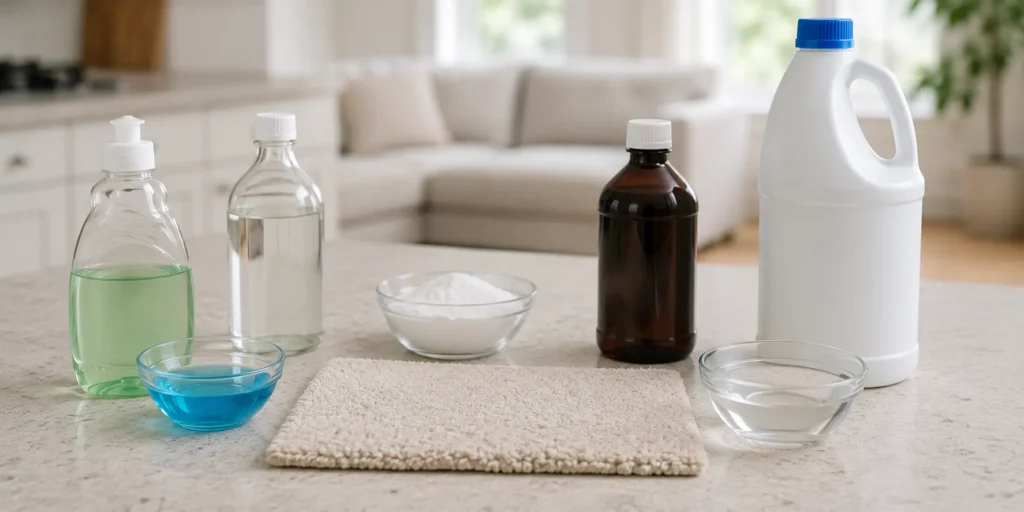
Never mix vinegar with bleach. This can create harmful fumes.
Do Not Store Hydrogen Peroxide and Vinegar Together
Do not mix hydrogen peroxide and vinegar in one bottle. Use them separately.
Do Not Put Baking Soda in a Carpet Cleaner Machine
Baking soda powder can clog the machine. It can also leave powder inside carpet fibers.
Do Not Use Too Much Dish Soap
Too much soap leaves sticky residue. Sticky carpet attracts dirt faster.
Do Not Use Hydrogen Peroxide Without Testing
Hydrogen peroxide can lighten or bleach dark carpet. Always test it first.
Do Not Use Essential Oils Around Pets
Some essential oils can bother pets. Avoid using them on carpet where pets lie, lick, or play.
How Often Should You Clean Carpets?
You do not need to deep clean carpets every week. Too much wet cleaning can harm the backing and padding.
Vacuum at least once or twice a week. Clean small stains as soon as they happen.
Use this simple guide:
| Carpet Area | Cleaning Frequency |
|---|---|
| Low-traffic rooms | Every 12 months |
| Busy family rooms | Every 6 to 12 months |
| Homes with pets | Every 3 to 6 months |
| Small stains | As soon as possible |
| Bad odor | As soon as you notice it |
| Rental move-out carpet | Before inspection, if stained |
If you have kids, pets, or allergies, you may need to clean more often.
When Homemade Carpet Cleaner Is Not Enough
Homemade carpet cleaner is helpful for small stains, but it cannot fix every problem.
Call a professional carpet cleaner if you have:
- Large pet urine stains
- Old pet odors
- Mold or mildew smell
- Flood-damaged carpet
- Red wine stains
- Ink stains
- Large dark stains
- Wool rugs
- Silk rugs
- Antique rugs
- Carpet under warranty
- Whole-house deep cleaning needs
A professional cleaner has stronger tools and better drying equipment. This can protect both your carpet and your home.
Conclusion
From experience, the biggest mistake people make with homemade carpet cleaners is assuming that stronger ingredients will produce better results. In reality, using too much soap, over-wetting the carpet, or mixing the wrong products often creates new problems, such as sticky residue, lingering odors, or damaged carpet fibers. For most everyday stains, a simple solution of warm water and a small amount of clear dish soap is usually the safest place to start. Always test any cleaner on a hidden area first, blot instead of scrubbing, and allow the carpet to dry completely. While homemade solutions work well for fresh spills, light stains, and mild odors, deep-set pet urine, flood damage, mold, or delicate rugs are situations where professional carpet cleaning is the better choice. Using the right method for the right problem will help your carpet stay cleaner, last longer, and save you unnecessary expense over time.
FAQs
What is the best homemade carpet cleaner?
The best homemade carpet cleaner for most small stains is 1 cup warm water mixed with 1/4 teaspoon clear mild dish soap. It is gentle, simple, and easy to rinse.
How do you make carpet cleaning solution at home?
Mix 1 cup warm water with 1/4 teaspoon clear dish soap. Apply a small amount to the stain, blot with a white cloth, rinse with clean water, and blot dry.
What can I use if I do not have carpet shampoo?
Use warm water with a tiny amount of clear dish soap. For odors, use baking soda and vacuum well. For tough stains on light carpet, hydrogen peroxide may help after patch testing.
Can I use vinegar and dish soap on carpet?
Yes, but only on carpets that can handle vinegar. Always patch test first. Avoid vinegar on wool, silk, antique rugs, and delicate handmade rugs.
Does baking soda make carpet fresh?
Yes, baking soda can help absorb carpet odors. Sprinkle a light layer, let it sit, and vacuum well. Do not use too much powder.
What is the best homemade carpet cleaner for pet stains?
For pet stains, blot first. Then clean the surface with mild dish soap and water. If odor remains, use an enzyme cleaner.
Can I use homemade carpet cleaner in a Bissell, Hoover, or Rug Doctor?
Only if the machine manual allows it. Avoid baking soda powder, foamy soap, bleach, strong vinegar mixtures, and laundry detergent in carpet cleaner machines.
Is homemade carpet cleaner safe for all carpets?
No. Be careful with wool, silk, antique rugs, dark carpet, and carpets under warranty. Always patch test before cleaning.
Why does my carpet feel sticky after cleaning?
No. Be careful with wool, silk, antique rugs, dark carpet, and carpets under warranty. Always patch test before cleaning.
How long does carpet take to dry after cleaning?
Small cleaned areas may dry in a few hours. Larger wet areas may take longer. Use fans, open windows, and avoid walking on the carpet until it is fully dry.

Muhammad Muaz
Muhammad Muaz shares practical cleaning, home care, improvement and everyday living guides for Urban Home Guide readers.
Related Home Guides