
What’s the Best Cleaning Routine for My Home?
“what’s the best cleaning routine for my home?” you may feel tired of seeing the same mess come back every day. Dishes pile up. Floors get dusty. Bathrooms need attention.…
“what’s the best cleaning routine for my home?” you may feel tired of seeing the same mess come back every day. Dishes pile up. Floors get dusty. Bathrooms need attention. Laundry never seems to end. I have seen this happen in many homes, especially when people try to clean everything in one day. That kind of routine is hard to keep. A better routine is simple, repeatable, and built around the way your home is really used.
After reviewing practical home cleaning schedules and health-based cleaning guidance, the best approach is clear: clean a little every day, do main room cleaning each week, handle hidden dirt once a month, and save bigger jobs for each season. This method works because it lowers stress and stops mess from building up. It also follows a smart cleaning rule: clean first, then sanitize or disinfect only when needed, such as when someone is sick or a surface needs extra germ control.
Quick Answer
The best cleaning routine for your home is a simple four-part plan.
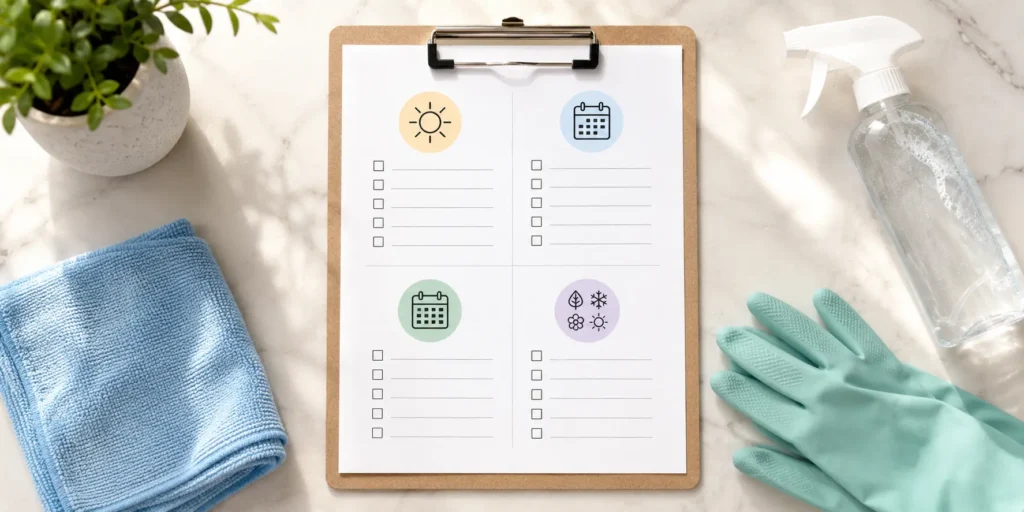
Do small reset tasks every day. Clean the main rooms once a week. Deep clean hidden dirt once a month. Then do bigger cleaning tasks every season.
Here is the simple version:
| Routine Type | Best Tasks |
|---|---|
| Daily | Dishes, counters, clutter, quick bathroom wipe, high-traffic floors |
| Weekly | Bathrooms, dusting, vacuuming, mopping, bedding, kitchen reset |
| Monthly | Appliances, baseboards, windows, closets, trash cans |
| Seasonal | Vents, curtains, carpets, garage, outdoor spaces, deep decluttering |
This routine works because it spreads the work out.
You do not have to clean your whole house in one day. You only need to do the right tasks at the right time.
Key Points
A good home cleaning routine should be simple and realistic.
It should fit your home, your time, and your energy. Some people have big homes. Some live in small apartments. Some have kids or pets. Some people work long hours and only have time at night or on weekends.
So the best cleaning schedule is not the same for everyone.
Still, most homes need the same basic cleaning habits.
Here are the key points:
- Clean a little every day.
- Focus on the kitchen and bathroom first.
- Clean high-touch surfaces often.
- Clean from top to bottom.
- Vacuum or sweep before mopping.
- Do weekly tasks on a set day.
- Do monthly tasks before dirt builds up.
- Clean first before you sanitize or disinfect.
- Keep your cleaning supplies easy to reach.
- Pick a routine that fits your life.
- Do not try to make your home perfect.
The goal is not perfection. The goal is a home that feels fresh, healthy, and comfortable.
Whole-Home Cleaning Schedule
A whole-home cleaning schedule helps you stay on track.
Without a schedule, it is easy to forget small jobs. Dust builds up. Laundry piles grow. Floors get dirty. Bathrooms become harder to clean.
A simple schedule prevents that.
Use this basic whole-home cleaning plan:
| How Often | What to Clean |
|---|---|
| Every day | Kitchen counters, dishes, clutter, bathroom sink, visible mess |
| Every week | Bathrooms, floors, dusting, bedding, towels, kitchen appliances |
| Every month | Baseboards, windows, blinds, oven, fridge, closets, trash cans |
| Every season | Curtains, carpets, vents, outdoor areas, storage spaces |
This schedule keeps your home clean without making cleaning feel like a full-time job.
Definitions
Before you build your routine, it helps to know three simple words.
These words are cleaning, sanitizing, and disinfecting.
They do not mean the same thing.
Cleaning removes dirt, dust, crumbs, grease, and many germs from surfaces.
Sanitizing lowers germs to a safer level after a surface is cleaned.
Disinfecting kills many germs on surfaces after cleaning.
For most homes, regular cleaning is enough most of the time. You may need to sanitize or disinfect when someone is sick, when a surface touches raw meat or poultry juice, or when someone in your home has a higher risk of getting sick.
Cleaning
Cleaning should be the first step in your home routine.
Cleaning removes dirt and many germs. It also helps sanitizers and disinfectants work better.
If a surface is dirty, a disinfectant may not work well. Dirt can block the product from reaching the germs.
So remember this rule:
Clean first. Then sanitize or disinfect only if needed.
For daily home care, cleaning is often enough.
Clean First and Clean Regularly
A good cleaning routine starts with regular cleaning.
You do not need to disinfect every surface every day. In most homes, simple cleaning is enough for normal daily life.
Clean high-use areas often.
These include:
- Kitchen counters
- Bathroom sinks
- Toilets
- Doorknobs
- Light switches
- Faucet handles
- Fridge handles
- Remote controls
- Phones
- Dining tables
Clean these areas more often if people visit your home. Also clean them more often if someone in your home is sick.
When to Clean Surfaces in Your Home
Clean surfaces when they look dirty.
Also clean surfaces after heavy use.
For example, wipe kitchen counters after cooking. Clean the bathroom sink if it has toothpaste, soap, or water spots. Sweep the entryway when dirt comes inside.
Some surfaces need more attention because people touch them many times a day.
These are called high-touch surfaces.
High-touch surfaces include:
- Door handles
- Light switches
- Cabinet handles
- Faucet handles
- Toilet handles
- Remote controls
- Phones
- Keyboards
- Appliance handles
Adding these small tasks to your routine can make your home feel cleaner.
How to Safely Clean Various Surfaces
Different surfaces need different care.
Always use a product that is safe for the surface. Also, read the product label before use.
Hard Surfaces
Hard surfaces include counters, sinks, floors, light switches, and tables.
Clean them with soap and water or a safe household cleaner. Dry the surface if needed.
Soft Surfaces
Soft surfaces include carpets, rugs, curtains, and fabric furniture.
Vacuum them often. Wash them if the care label allows it.
Laundry Items
Laundry includes clothes, towels, sheets, blankets, and cloth toys.
Wash laundry with detergent. Use the right water setting for the fabric. Dry items fully before putting them away.
Wash your hands after handling dirty laundry.
Electronics
Electronics include phones, tablets, remotes, keyboards, and touch screens.
Follow the maker’s cleaning instructions. Do not spray cleaner directly onto electronics. Use a lightly damp cloth if it is safe.
Sanitizing is not the same as cleaning.
Sanitizing
Sanitizing lowers germs after a surface has already been cleaned.
You may sanitize food areas, some toys, or baby items when needed. But daily sanitizing is not always needed in a normal home.
First, clean the surface. Then sanitize if needed.
When to Sanitize in Your Home
You may want to sanitize:
- Food-contact surfaces after raw meat or poultry juice
- Kitchen counters after food spills
- Baby feeding items
- Some toys
- The inside of the fridge after a food recall
- Surfaces after flooding or dirty water exposure
Always check the product label. Also follow the item’s care instructions.
How to Sanitize Safely
To sanitize safely:
- Clean the surface first.
- Use the right product.
- Follow the label.
- Let the surface air dry if needed.
- Keep products away from children and pets.
- Follow the maker’s instructions for baby items and toys.
Do not use strong chemicals when they are not needed.
Simple cleaning is enough for many daily tasks.
Disinfecting
Disinfecting kills many germs on surfaces.
It is useful when someone is sick. It may also be useful when someone in your home has a weak immune system.
But disinfecting should not replace cleaning.
You still need to clean first. Then disinfect if needed.
When to Disinfect
Disinfect when:
- Someone in your home is sick.
- A surface has body fluids on it.
- Someone at home has a higher risk of illness.
- You need extra germ control in the bathroom.
- You are cleaning after visitors during illness season.
You do not need to disinfect every room every day.
Use disinfecting with care.
How to Disinfect Safely
Disinfecting products can be strong.
Read the label before use. Wear gloves if the label says to. Open a window if the product has a strong smell.
Never mix cleaning chemicals.
Mixing products can create dangerous fumes.
Before Use
Before you disinfect:
- Clean the surface first.
- Read the product label.
- Wear gloves if needed.
- Open windows or improve airflow.
- Keep children and pets away.
- Check the surface type.
This helps you disinfect safely.
During Use
During use:
- Keep the surface wet for the time listed on the label.
- Do not wipe the product away too soon.
- Do not mix chemicals.
- Do not breathe in sprays.
- Do not use disinfectant on your skin.
- Do not use disinfectant on pets.
The wet time is called contact time. It helps the product work.
After Use
After use:
- Wash your hands.
- Put products away.
- Store chemicals safely.
- Keep them away from children and pets.
- Wash cleaning cloths if needed.
Safe storage is part of a safe cleaning routine.
Caution!
Some cleaning and disinfecting products can bother asthma or allergies.
If strong smells bother you, open windows. Use fans if it is safe. Choose gentler products when possible.
Also, do not overuse disinfectants.
Use them when needed, not all the time.
A good cleaning routine should protect your health, not cause new problems.
Best Order to Clean Your Home
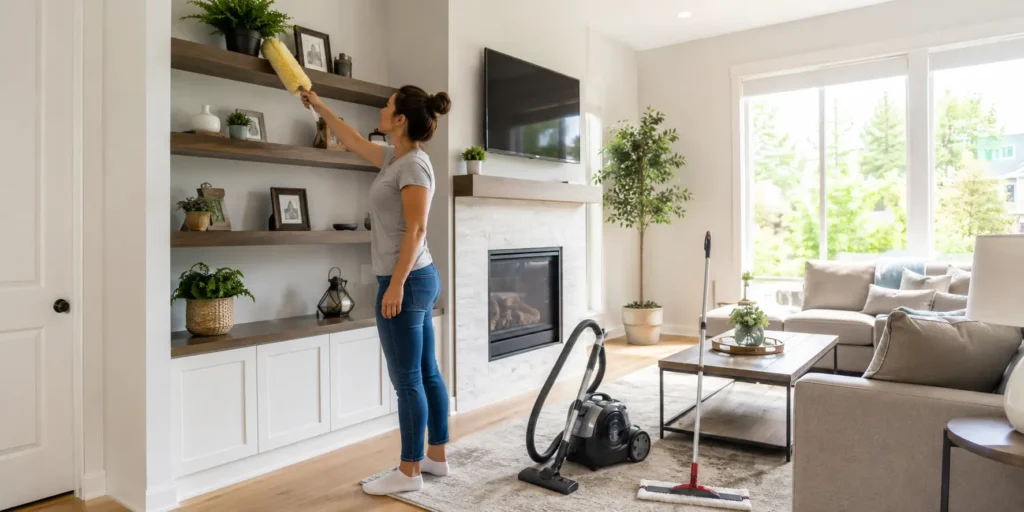
The order you clean in matters.
If you clean in the wrong order, you may create more work. For example, if you mop before dusting, dust may fall on your clean floor.
Use this simple order:
- Pick up clutter first.
- Dust high surfaces.
- Wipe counters and tables.
- Clean the kitchen.
- Clean the bathrooms.
- Vacuum or sweep floors.
- Mop last.
- Take out trash.
- Wash cleaning cloths and tools.
This top-to-bottom method saves time.
It also helps you avoid cleaning the same area twice.
Step 1: Get Ready
Before you start, make your routine simple.
Walk through your home with a notebook or your phone. Look at each room. Write down what needs regular cleaning.
Do not make a huge list at first. Start with the rooms you use most.
These usually include:
- Kitchen
- Bathroom
- Living room
- Bedroom
- Entryway
- Laundry area
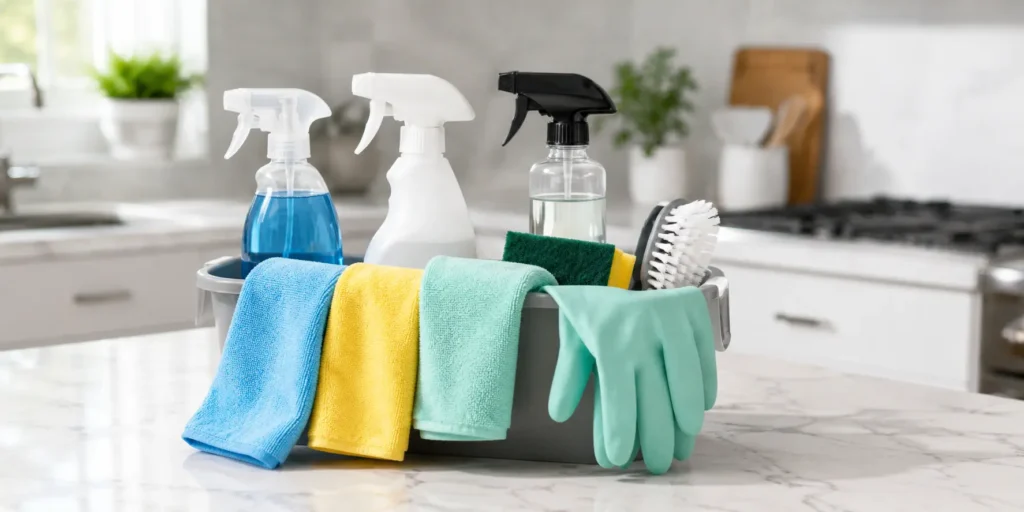
Next, gather basic cleaning supplies.
You may need:
- Microfiber cloths
- All-purpose cleaner
- Bathroom cleaner
- Glass cleaner
- Toilet brush
- Vacuum
- Mop
- Broom
- Trash bags
- Gloves
- Laundry detergent
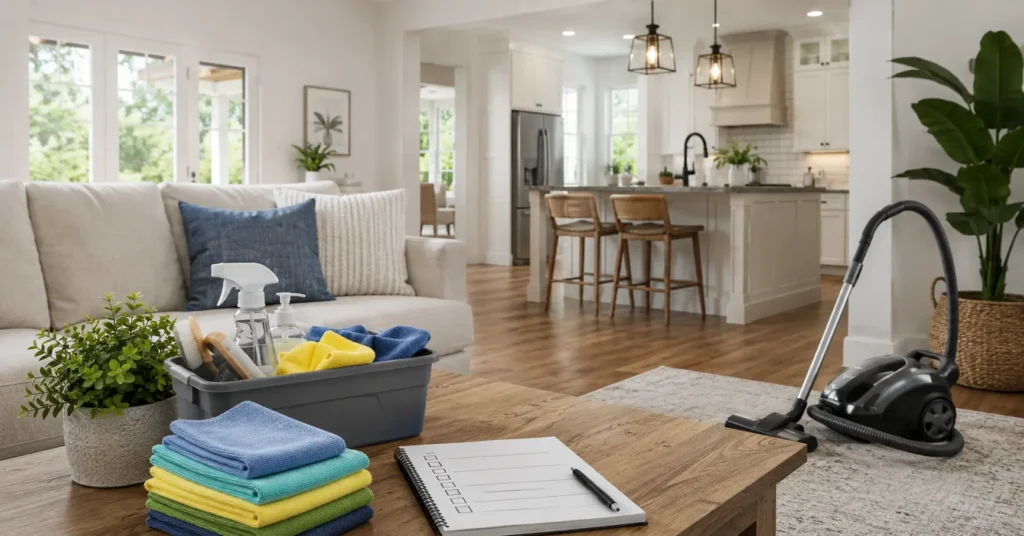
Keep your supplies in one place. A small cleaning caddy can help.
When supplies are easy to find, cleaning feels easier to start.
Step 2: Choose Your Rooms
Not every room needs the same amount of cleaning.
Start with the rooms that get dirty the fastest.
For most homes, these are the kitchen and bathroom. These areas have food, water, germs, and daily use.
Next, focus on floors, bedrooms, and shared living spaces.
Less-used rooms can wait. Guest rooms, storage rooms, and closets do not need daily cleaning. You can clean them monthly or seasonally.
Here is a simple room priority list:
| Priority | Rooms |
|---|---|
| High priority | Kitchen, bathrooms, entryway |
| Medium priority | Bedrooms, living room, laundry area |
| Low priority | Guest room, storage room, closets |
This keeps your cleaning routine realistic.
Step 3: Identify Cleaning Tasks
Now choose the tasks for each room.
Keep the tasks clear and simple. This helps you know exactly what to do.
Kitchen Tasks
- Wash dishes or load the dishwasher.
- Wipe counters.
- Clean the sink.
- Wipe the stove.
- Sweep the floor.
- Take out trash.
- Clean the microwave.
- Check the fridge for old food.
Bathroom Tasks
- Clean the toilet.
- Wipe the sink.
- Clean the mirror.
- Scrub the shower or tub.
- Replace towels.
- Empty trash.
- Wipe high-touch surfaces.
Bedroom Tasks
- Make the bed.
- Put clothes away.
- Change sheets.
- Dust surfaces.
- Vacuum or sweep the floor.
- Clear the nightstand.
Living Room Tasks
- Pick up clutter.
- Dust tables and shelves.
- Wipe electronics.
- Vacuum rugs.
- Fluff pillows.
- Put items back in place.
Entryway Tasks
- Shake out mats.
- Sweep dirt.
- Put shoes away.
- Wipe door handles.
- Clear mail and bags.
When you know the tasks, your routine becomes easier to follow.
Step 4: Build on This List
Once you have your basic list, build a routine around it.
Do not add too many tasks at once. That can make cleaning feel stressful.
Start with the most important jobs.
The best cleaning routine for your home should include:
- Daily reset tasks
- Weekly room cleaning
- Monthly deep cleaning
- Seasonal maintenance
You can also divide the work by day.
For example:
| Day | Cleaning Focus |
|---|---|
| Monday | Bathrooms |
| Tuesday | Dusting |
| Wednesday | Vacuuming |
| Thursday | Mopping |
| Friday | Kitchen reset |
| Saturday | Laundry and bedding |
| Sunday | Rest or catch-up |
This type of schedule works well for busy people. It keeps cleaning short and steady.
Clean with What You Have
You do not need fancy products to keep your home clean.
Most homes can be cleaned with simple tools. A cloth, a safe cleaner, a vacuum, and a mop can handle many jobs.
Use the right product for the right surface.
For example, do not use a rough scrubber on a surface that scratches easily. Do not use too much water on wood floors. Also, always read the product label.
A simple cleaning kit is better than a crowded cabinet full of products you never use.
Your basic kit should include:
- One all-purpose cleaner
- One bathroom cleaner
- One glass cleaner
- Microfiber cloths
- A vacuum
- A mop
- A duster
- Trash bags
- Gloves
Also, clean your tools often.
A dirty mop or cloth can spread dirt around. Wash cloths after use. Empty the vacuum. Rinse mop heads. Replace sponges often.
Step 5: Select Frequency
The best cleaning routine depends on how often each task needs to be done.
Some tasks should happen every day. Other tasks can wait.
Here is a simple guide.
Daily Tasks
Do these every day or almost every day:
- Make the bed.
- Wash dishes.
- Wipe kitchen counters.
- Clean the sink.
- Pick up clutter.
- Sweep high-traffic areas.
- Wipe the bathroom sink if needed.
- Take out trash if full.
Weekly Tasks
Do these once a week:
- Clean toilets.
- Scrub showers and tubs.
- Change bed sheets.
- Dust furniture.
- Vacuum carpets and rugs.
- Mop hard floors.
- Clean kitchen appliances.
- Wash towels.
- Empty old food from the fridge.
Monthly Tasks
Do these once a month:
- Clean baseboards.
- Wash windows and blinds.
- Clean inside the oven.
- Clean fridge shelves.
- Wipe cabinet fronts.
- Vacuum under furniture.
- Clean trash cans.
- Rotate the mattress.
- Organize closets.
Seasonal Tasks
Do these every season:
- Wash curtains.
- Deep clean carpets.
- Clean air vents.
- Wash outdoor furniture.
- Clean garage or storage areas.
- Declutter clothes.
- Clean ceiling fans.
- Check for mold or moisture.
This schedule keeps dirt from building up.
It also makes deep cleaning less difficult.
Daily Cleaning Tasks: The Foundation of a Fresh Home
Daily cleaning is the base of a clean home.
You do not need to spend hours. A short daily reset can make a big difference.
Aim for 10 to 20 minutes each day.
The goal is to stop mess from growing.
Morning Routine
A morning cleaning routine should be quick.
Try this:
- Make the bed.
- Open curtains or blinds.
- Put dirty clothes in the hamper.
- Wipe the bathroom sink if needed.
- Unload the dishwasher.
- Wipe kitchen counters.
- Sort mail or papers.
This helps your home feel fresh early in the day.
It also makes the evening easier.
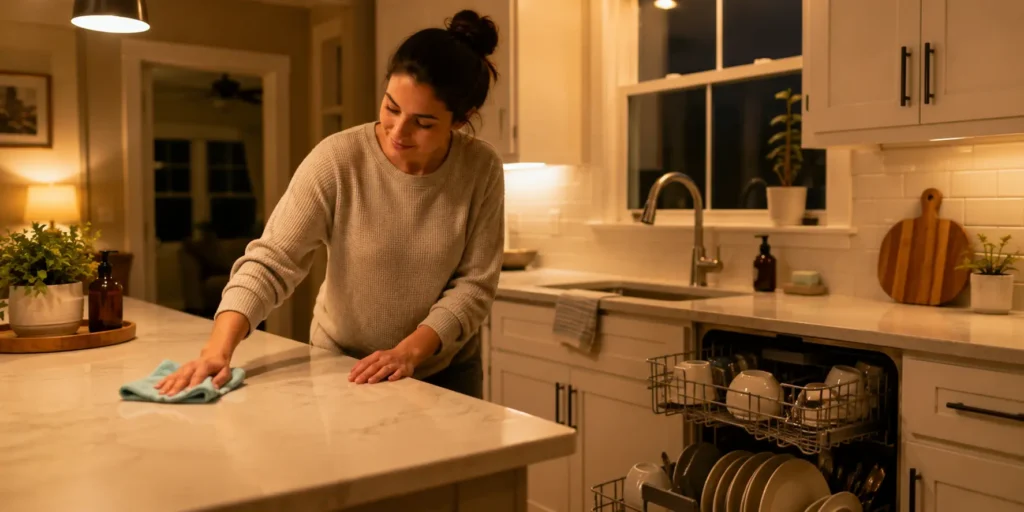
Evening Routine
An evening routine helps you wake up to a cleaner home.
Try this:
- Load the dishwasher.
- Clean the kitchen sink.
- Wipe counters.
- Put items back in place.
- Sweep the kitchen or entryway.
- Take out trash if needed.
- Set out items for the next day.
This routine is simple. But it can change how your home feels.
A clean kitchen at night makes the next morning less stressful.
Weekly Cleaning Tasks: Keeping Things in Order
Weekly cleaning handles the mess that daily cleaning does not cover.
This is when you clean bathrooms, floors, dust, and bedding.
You can do all weekly tasks in one day. Or you can split them across the week.
If you are busy, split the work. This makes it easier.
Kitchen
The kitchen needs regular care because it is used every day.
Weekly kitchen tasks include:
- Clean the stovetop.
- Wipe the microwave.
- Clean the backsplash.
- Wipe cabinet doors.
- Clean appliance handles.
- Throw away old food.
- Mop the floor.
- Wash dish towels.
- Clean the trash area.
Also, wipe high-touch areas. These include fridge handles, faucet handles, and light switches.
Bathrooms
Bathrooms should be cleaned weekly.
Weekly bathroom tasks include:
- Scrub the toilet.
- Clean the sink.
- Clean the mirror.
- Scrub the shower or tub.
- Replace towels.
- Wash bath mats.
- Empty trash.
- Wipe door handles and light switches.
- Mop the floor.
If many people use the bathroom, clean it more often.
A quick wipe during the week can also help prevent buildup.
Living Areas & Bedrooms
Living rooms and bedrooms need dusting, vacuuming, and clutter control.
Weekly tasks include:
- Dust furniture.
- Dust shelves.
- Wipe electronics.
- Vacuum rugs.
- Mop hard floors.
- Change sheets.
- Wash pillowcases.
- Put clothes away.
- Clear surfaces.
Also, clean under furniture when you can.
Dust and pet hair often hide there.
Monthly Cleaning Tasks: Tackling Hidden Dirt
Monthly cleaning is for the areas you do not clean every week.
These tasks help keep your home fresh over time.
Monthly cleaning tasks include:
- Clean inside the fridge.
- Wipe pantry shelves.
- Clean the oven.
- Clean the dishwasher filter.
- Wash windows.
- Dust blinds.
- Clean baseboards.
- Vacuum upholstery.
- Rotate the mattress.
- Wash trash cans.
- Organize closets.
- Clean under beds and sofas.
Monthly cleaning does not need to happen all in one day.
You can do one task each weekend.
For example:
- First weekend: Clean appliances.
- Second weekend: Clean windows and blinds.
- Third weekend: Clean closets.
- Fourth weekend: Clean baseboards and furniture.
This keeps monthly cleaning simple.
Seasonal Cleaning Tasks: Preparing for Weather Changes
Seasonal cleaning helps your home stay fresh all year.
Each season brings different messes.
Spring may bring pollen. Summer may bring dust and outdoor dirt. Fall may bring leaves and mud. Winter may bring wet shoes and more indoor time.
Use each season as a reset.
Spring Cleaning: Freshen Up After Winter
Spring is a good time to remove dust and stale air from your home.
Spring tasks include:
- Wash windows.
- Clean screens.
- Deep clean carpets.
- Wash curtains.
- Wipe baseboards.
- Clean walls where needed.
- Organize closets.
- Store winter items.
- Check bathrooms for mold or moisture.
Spring cleaning does not need to be perfect.
Focus on fresh air, dust, and clutter.
Summer Cleaning: Keep It Cool and Fresh
Summer can bring heat, dust, sweat, and outdoor dirt.
Summer tasks include:
- Clean ceiling fans.
- Wipe air vents.
- Wash outdoor furniture.
- Sweep patios or decks.
- Clean light fixtures.
- Wash pet bedding.
- Check for odors in trash cans.
- Keep entryways clean.
Also, clean the kitchen often in summer.
Food smells and trash odors can build up faster in warm weather.
Fall Cleaning: Prepare for Cooler Weather
Fall is a good time to prepare your home for colder months.
Fall tasks include:
- Clean entry mats.
- Organize coats and shoes.
- Wash blankets.
- Clean windows before winter.
- Dust vents.
- Clean under furniture.
- Declutter closets.
- Prepare guest spaces before holidays.
Fall cleaning helps your home feel ready for busy months.
Winter Cleaning: Stay Cozy and Germ-Free
Winter often means more time indoors.
It can also mean more dust, clutter, and high-touch surface use.
Winter tasks include:
- Wash bedding often.
- Wipe high-touch surfaces.
- Clean doorknobs.
- Clean light switches.
- Vacuum rugs.
- Dust shelves.
- Keep bathrooms dry.
- Wash throw blankets.
- Clean humidifiers if you use them.
During winter, clean high-touch surfaces more often, especially when someone is sick.
Best Cleaning Routine by ICP/Home Type
The best cleaning routine for your home depends on your lifestyle.
A small apartment does not need the same plan as a large home. A home with pets may need more vacuuming. A busy family may need more clutter control.
Use this guide to adjust your routine.
| ICP or Home Type | Main Problem | Best Routine |
|---|---|---|
| Busy homeowners or renters | Not enough time | 10-minute daily reset plus weekly cleaning |
| Working professionals | Too tired after work | Short evening routine plus weekend reset |
| Families with kids | Clutter builds up fast | Daily clutter pickup plus weekly bathroom and floor cleaning |
| Pet owners | Pet hair and odors | Vacuum more often and wash pet bedding weekly |
| Apartment renters | Small spaces get messy fast | Daily reset plus one weekly small-space clean |
| First-time homeowners | Do not know what to clean | Beginner daily, weekly, monthly checklist |
| Low-energy readers | Cleaning feels overwhelming | Minimum routine: dishes, trash, counters, bathroom sink |
| Allergy-sensitive homes | Dust and allergens | Dust, vacuum, wash bedding, and clean vents often |
| Large homes | Too many rooms | Clean by zones, rooms, or floors |
| Guest-ready homes | Need fast results | Clean visible areas first |
| Health-conscious readers | Worry about germs | Clean first, then sanitize or disinfect when needed |
| Budget-conscious readers | Do not want many products | Use a basic cleaning kit |
You do not need to copy someone else’s schedule.
Choose the routine that fits your home.
Best Cleaning Routine for Busy People
Busy people need a routine that is fast and easy.
Do not wait until the whole house is messy. Do small tasks every day.
Use this simple plan:
| Time | Task |
|---|---|
| Morning | Make bed, put clothes away, unload dishwasher |
| Evening | Load dishwasher, wipe counters, pick up clutter |
| Weekend | Clean bathrooms, vacuum, mop, wash bedding |
This routine works well because it keeps the mess from growing.
It is better to clean for 10 minutes every day than to spend your whole weekend cleaning.
Cleaning Routine for Working Professionals
If you work long hours, keep your weekday routine short.
You may not have energy for deep cleaning after work. That is normal.
Try this weekday plan:
- Monday: Wipe bathroom sink and mirror.
- Tuesday: Dust one room.
- Wednesday: Vacuum high-traffic areas.
- Thursday: Wipe kitchen appliances.
- Friday: Pick up clutter and take out trash.
Then use the weekend for bigger tasks.
Weekend reset:
- Clean bathrooms.
- Wash bedding.
- Vacuum or mop floors.
- Clean the kitchen.
- Reset the entryway.
This keeps your home clean without making weeknights too hard.
Cleaning Routine for Families with Kids
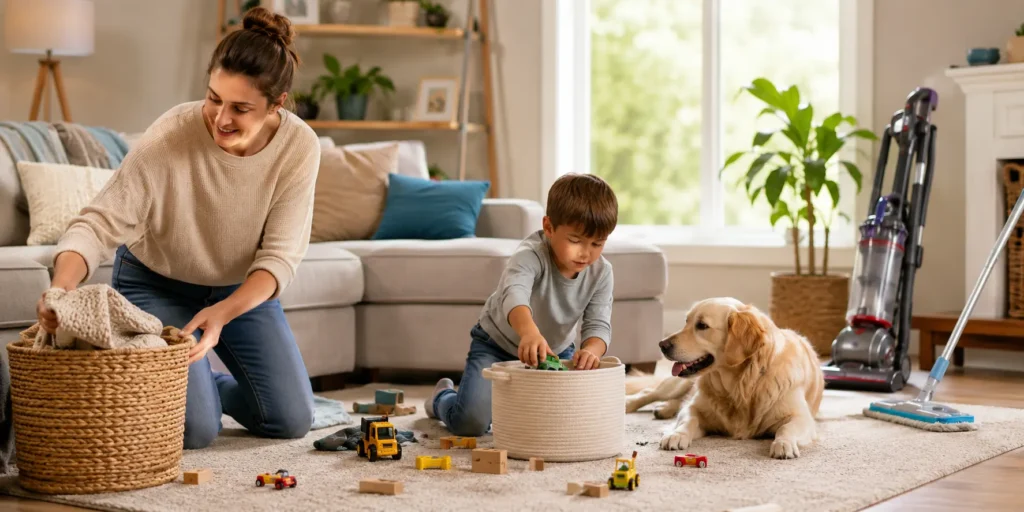
Families need a routine that controls clutter.
Kids bring toys, clothes, crumbs, school papers, and shoes into many rooms.
The goal is to make cleanup simple.
Try this family cleaning routine:
- Use baskets for toys and clutter.
- Do a 10-minute family pickup each evening.
- Wipe the table after meals.
- Sweep the kitchen daily.
- Wash towels and bedding weekly.
- Clean bathrooms weekly.
- Give kids simple chores.
Simple chores for kids may include:
- Put toys in a basket.
- Put clothes in the hamper.
- Make the bed.
- Wipe a table.
- Match socks.
- Put shoes away.
Keep chores short and clear.
A family cleaning routine works best when everyone helps a little.
Cleaning Routine for Pet Owners
Pet owners need to focus on hair, smells, floors, and bedding.
Pets can bring in dirt. They can also leave hair on rugs, sofas, and beds.
Use this pet-friendly cleaning routine:
| How Often | Pet Cleaning Task |
|---|---|
| Daily | Sweep food area, clean bowls, pick up visible hair |
| 2–3 times weekly | Vacuum rugs, sofas, and high-traffic areas |
| Weekly | Wash pet bedding and clean pet areas |
| Monthly | Deep clean upholstery and check for odors |
Also, keep a lint roller or small vacuum nearby.
This makes quick cleanups easier.
If your pet sheds a lot, vacuum more often during shedding season.
Apartment Cleaning Routine
Small spaces can get messy fast.
But they are also faster to clean.
If you live in an apartment, focus on visible areas and storage.
Use this apartment routine:
- Make the bed daily.
- Wash dishes daily.
- Wipe counters daily.
- Take out trash before it smells.
- Sweep or vacuum high-traffic floors.
- Clean the bathroom weekly.
- Dust shelves weekly.
- Declutter one drawer or shelf each week.
Small spaces need less deep cleaning than large homes, but clutter shows faster.
Keep surfaces clear.
This makes the apartment feel bigger and cleaner.
Beginner Cleaning Routine for First-Time Homeowners
If this is your first home, cleaning can feel confusing.
You may not know what to clean or how often to clean it.
Start with a simple beginner plan.
Daily:
- Make the bed.
- Wash dishes.
- Wipe kitchen counters.
- Pick up clutter.
Weekly:
- Clean bathrooms.
- Vacuum and mop.
- Dust furniture.
- Change sheets.
- Wash towels.
Monthly:
- Clean appliances.
- Wash windows.
- Clean baseboards.
- Organize closets.
- Clean under furniture.
Do not try to learn every cleaning trick at once.
Start with the basics. Then build your routine over time.
Low-Energy Cleaning Routine
Some days you may feel tired, stressed, or overwhelmed.
On those days, do not try to clean everything.
Use a minimum cleaning routine.
Focus only on what makes the biggest difference.
Low-energy routine:
- Put dishes in the sink or dishwasher.
- Throw away visible trash.
- Wipe kitchen counters.
- Pick up clutter from one main area.
- Wipe the bathroom sink.
- Start one load of laundry if needed.
That is enough for a hard day.
A small reset is better than doing nothing.
Cleaning Routine for Allergy-Sensitive Homes
If your home has dust, pet hair, or pollen, cleaning can help keep the air feeling fresher.
Focus on dust control.
Try this routine:
- Dust with a damp cloth.
- Vacuum carpets and rugs often.
- Wash bedding weekly.
- Clean vents often.
- Wipe windowsills.
- Keep shoes near the entryway.
- Wash curtains or blinds seasonally.
- Clean pet areas often.
Do not dry dust if it spreads dust into the air.
Use a damp cloth or microfiber cloth instead.
Also, change HVAC filters as recommended by the filter maker or system guide.
Zone Cleaning Routine for Large Homes
Large homes can feel hard to manage.
The best method is zone cleaning.
This means you clean one area at a time.
Example zone plan:
| Day | Zone |
|---|---|
| Monday | Bathrooms |
| Tuesday | Bedrooms |
| Wednesday | Kitchen |
| Thursday | Living areas |
| Friday | Entryway and laundry area |
| Saturday | Floors |
| Sunday | Rest or catch up |
You can also clean by floor.
For example, clean the upstairs one day and downstairs another day.
Zone cleaning keeps large homes from feeling overwhelming.
Fast Guest-Ready Cleaning Routine
Sometimes guests are coming soon.
You may not have time for deep cleaning.
Focus on what people will see and use.
Fast guest-ready routine:
- Clear the entryway.
- Pick up living room clutter.
- Wipe kitchen counters.
- Load dishes.
- Clean the guest bathroom.
- Empty trash.
- Vacuum visible floors.
- Put fresh towels in the bathroom.
Do not waste time cleaning hidden areas.
Focus on visible spaces first.
Budget-Friendly Cleaning Routine
You do not need expensive products to keep your home clean.
A simple cleaning kit is enough for most daily and weekly tasks.
Budget-friendly supplies include:
- Microfiber cloths
- All-purpose cleaner
- Dish soap
- Bathroom cleaner
- Glass cleaner
- Broom
- Mop
- Vacuum
- Trash bags
- Gloves
Buy fewer products and use them well.
Also, avoid using too much cleaner. More product does not always mean better cleaning. Too much product can leave sticky buildup.
The 10-Minute Cleaning Routine for Busy Days
Some days are too busy for a full routine.
On those days, do the minimum.
Here is a simple 10-minute cleaning routine:
- Put dishes in the sink or dishwasher.
- Wipe kitchen counters.
- Throw away visible trash.
- Pick up clutter from one main area.
- Wipe the bathroom sink.
- Sweep or vacuum the most visible floor area.
- Take out trash if needed.
This quick routine will not deep clean your home.
But it will make your home feel better fast.
Step 6: Identify Your Cleaning Style
The best cleaning routine for your home should match your cleaning style.
Some people like to clean one room at a time.
Others like to do one task at a time.
For example, you may clean all bathrooms on Monday. Or you may dust the whole house on Tuesday.
There is no single right way.
Choose the style you can repeat.
Room-by-Room Cleaning
This means you finish one room before moving to the next.
It works well if you like clear progress.
Example:
- Clean the bathroom.
- Then clean the kitchen.
- Then clean the living room.
Task-Based Cleaning
This means you do one task in the whole house.
It works well if you like speed.
Example:
- Dust every room.
- Then vacuum every room.
- Then mop floors.
Timer Cleaning
This means you clean for a set time.
It works well if you get overwhelmed.
Example:
- Set a timer for 15 minutes.
- Clean as much as you can.
- Stop when the timer ends.
This helps you build a habit without stress.
Step 7: Practice Your Cleaning Schedule
Your first cleaning schedule does not need to be perfect.
Try it for one month.
Notice what works. Notice what feels too hard.
If a task takes too long, split it into smaller parts.
For example, do not clean the whole kitchen in one night. Clean counters today. Clean the microwave tomorrow. Mop on the weekend.
A good cleaning routine should help you. It should not make you feel bad.
Step 8: Stay On Track
To stay on track, make cleaning easy to start.
Use simple reminders.
You can:
- Keep a checklist on the fridge.
- Use a phone reminder.
- Clean at the same time each day.
- Keep supplies in one place.
- Play music while cleaning.
- Use a timer.
- Ask family members to help.
Also, connect cleaning to habits you already have.
For example:
- Wipe the sink after brushing your teeth.
- Start the dishwasher after dinner.
- Make the bed after getting dressed.
- Take trash out when you leave the house.
Small habits save time.
Step 9: Reevaluate Your Cleaning Schedule
After a few weeks, check your routine.
Ask yourself:
- Is this routine easy to follow?
- Are some tasks missing?
- Are some tasks too often?
- Which room gets dirty fastest?
- What can I make simpler?
If the schedule does not work, change it.
You did not fail. The routine just needs to fit your life better.
A cleaning routine should be flexible.
Step 10: Make It a Habit
A clean home comes from repeat habits.
You do not need to clean all day. You just need to clean often enough.
Start small.
Choose one daily habit first.
For example:
- Make the bed every morning.
- Wipe counters every night.
- Do one load of laundry each day.
- Pick up clutter for 10 minutes.
Once that feels easy, add another habit.
This is how a cleaning routine becomes natural.
Step 11: Seasonal Tasks
Seasonal tasks are not daily or weekly jobs.
They are bigger jobs that keep your home fresh over the year.
Examples include:
- Washing curtains
- Deep cleaning carpets
- Cleaning air vents
- Decluttering closets
- Washing windows
- Cleaning outdoor spaces
- Organizing storage areas
You can do seasonal cleaning at the start of each season.
This helps your home stay ready for weather changes, holidays, and family life.
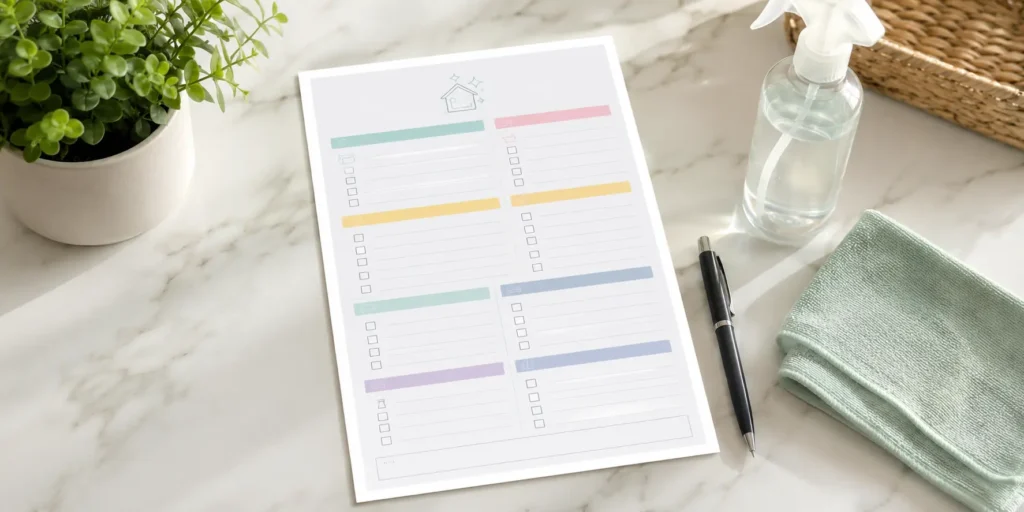
Printable Home Cleaning Checklist
Use this checklist as a simple home cleaning schedule.
You can print it, save it, or copy it into your notes app.
| Frequency | Cleaning Checklist |
|---|---|
| Daily | Make bed, wash dishes, wipe counters, pick up clutter, sweep high-traffic areas |
| Weekly | Clean toilets, scrub showers, dust furniture, vacuum rugs, mop floors, change sheets |
| Monthly | Clean oven, clean fridge, wash windows, dust blinds, clean baseboards, organize closets |
| Seasonal | Wash curtains, deep clean carpets, clean vents, declutter storage, clean outdoor areas |
You can also use this simple weekly plan:
| Day | Task |
|---|---|
| Monday | Clean bathrooms |
| Tuesday | Dust furniture and shelves |
| Wednesday | Vacuum carpets and rugs |
| Thursday | Mop floors |
| Friday | Clean kitchen appliances |
| Saturday | Wash bedding and towels |
| Sunday | Rest or catch up |
This routine is easy to adjust.
If one day is busy, move the task to another day.
Common Cleaning Routine Mistakes
Many people struggle with cleaning because their routine is too hard.
Avoid these common mistakes:
- Trying to clean the whole house in one day
- Mopping before vacuuming
- Using too much cleaning product
- Forgetting high-touch surfaces
- Mixing cleaning chemicals
- Not reading product labels
- Ignoring clutter before cleaning
- Using dirty cleaning cloths
- Not cleaning tools after use
- Making the schedule too strict
A good cleaning routine should make life easier.
Conclusion
The best cleaning routine for your home is the one you can actually follow. From experience, most people do better with small daily habits than with one long cleaning day that leaves them tired. Start with dishes, counters, clutter, and one bathroom task. Then add weekly floors, dusting, bedding, and deeper monthly or seasonal jobs. If you have kids, pets, allergies, a large home, or a busy work schedule, adjust the routine instead of forcing a perfect plan. My best advice is simple: keep the routine realistic, clean from top to bottom, use the right products safely, and clean first before you sanitize or disinfect. A clean home is not about doing everything at once. It is about doing the right tasks at the right time, in a way you can repeat.
FAQs
What is the best cleaning routine for my home?
The best cleaning routine for your home is a simple daily, weekly, monthly, and seasonal schedule.
Do small tasks every day, such as dishes, counters, and clutter. Then clean bathrooms, floors, dust, and bedding once a week. Do deeper tasks once a month or every season.
How often should I clean my house?
You should clean small messes every day and do bigger cleaning once a week.
Monthly and seasonal tasks can be spread out over time. You do not need to deep clean the whole house every week.
What should I clean every day?
Clean dishes, kitchen counters, visible clutter, and high-use areas every day.
You can also wipe the bathroom sink if it gets dirty. Sweep high-traffic floors when needed.
What should I clean once a week?
Clean bathrooms, floors, bedding, towels, dust, and kitchen appliances once a week.
If you have pets, kids, or a large family, you may need to clean some areas more often.
Should I clean my house daily or weekly?
You should do both.
Daily cleaning keeps mess under control. Weekly cleaning handles bigger tasks. This balance keeps your home fresh without making cleaning feel too hard.
What is a good cleaning routine for busy people?
A good cleaning routine for busy people is a 10-minute daily reset plus one weekly cleaning session.
Do dishes, counters, trash, and clutter daily. Then clean bathrooms, floors, dust, and bedding once a week.
What is a good cleaning routine for families with kids?
A good family cleaning routine should focus on clutter, dishes, floors, bathrooms, and laundry.
Do a 10-minute family pickup each evening. Use baskets for toys and clutter. Give children small chores they can do.
What is a good cleaning routine for pet owners?
Pet owners should vacuum more often, wash pet bedding weekly, clean pet bowls, and sweep food areas daily.
If your pet sheds a lot, vacuum rugs, sofas, and high-traffic areas two to three times a week.
What is a good apartment cleaning routine?
A good apartment cleaning routine includes daily dishes, counters, trash, and clutter pickup.
Clean the bathroom weekly. Dust shelves and vacuum floors weekly. Declutter one small area each week.
What is a low-energy cleaning routine?
A low-energy cleaning routine focuses on the most important tasks.
Do dishes, trash, counters, one bathroom wipe, and one clutter pickup. Stop there if you need to.
Do I need to disinfect my home every day?
No, most homes do not need daily disinfecting.
Regular cleaning is enough most of the time. Disinfect when someone is sick, when someone has a higher risk of illness, or when a surface needs extra germ control.
Should I clean or disinfect first?
Clean first.
Cleaning removes dirt and many germs. After that, you can sanitize or disinfect if needed.
What is the fastest way to clean a messy house?
Start with visible mess.
Pick up trash, gather clutter, load dishes, wipe counters, and clean one bathroom. Then vacuum or sweep the main floor area.
This will make your home look cleaner fast.
How often should you clean the shower?
Clean the shower once a week.
If many people use it, clean it more often. You can also wipe wet areas after use to help prevent soap scum and mildew.
How often should you clean the toilet?
Clean the toilet once a week.
If your bathroom is used by many people, clean it more often. A quick wipe during the week can also help.
How often should you mop the floors?
Mop high-traffic floors once a week.
These areas include kitchens, bathrooms, hallways, and entryways. Rooms with less traffic may only need mopping every two weeks or once a month.
Can you over clean a house?
Yes, you can over clean some surfaces.
Too much scrubbing can damage finishes. Too much water can hurt wood floors. Too much product can leave sticky buildup.
The best cleaning routine is balanced. Clean often, but use the right method for each surface.

Muhammad Muaz
Muhammad Muaz shares practical cleaning, home care, improvement and everyday living guides for Urban Home Guide readers.
Related Home Guides